
Multi Cavity Injection Molds vs. Family Injection Molds
The choice between multi-cavity and family injection molds depends on whether you need repeated copies of one part or different components for an assembly. Production volume, part geometry, resin, machine capacity, quality requirements, and total tooling cost should be evaluated together. For a focused overview of the first option, see our multi-cavity injection molds page.
What Defines a Multi Cavity Mold in Production?
A multi-cavity mold contains multiple impressions of the same part within one mold base. It can produce several parts per cycle when the press, runner, cooling, and process are sized for the application.
Achieving High-Precision Tolerances
These molds are designed so each cavity produces the same part, but cavity-to-cavity variation still has to be controlled. Achievable part tolerance depends on the drawing, resin, geometry, process, mold construction, and inspection plan.
Optimizing Runner Systems for Flow
Maintaining consistent pressure and temperature across all cavities is the primary engineering challenge. Balanced runner systems ensure the resin reaches every part of the tool simultaneously.
Efficient Cycle Time Management
Think about it. Why settle for one part per shot when you can have eight?
- High-volume output per machine hour.
- Reduced energy consumption per unit.
- Lower wear and tear on the injection press.
Key Takeaway: Multi-cavity tools focus on “one part, many copies” to drive extreme efficiency in mass production.
| Metric | Multi Cavity Detail | |
|---|---|---|
| Part Identity | Repeated geometry across cavities | |
| Tolerance | Defined by the part and process | |
| Output Type | Multiple parts per cycle |
Runner balance, cooling, cavity construction, process control, and maintenance influence how consistently the cavities perform over the planned tool life.
Why Choose Multi Cavity Molds for High Volumes?
For higher annual demand, a multi cavity mold can increase output per cycle. The suitable cavity count still depends on part size, machine capacity, runner and cooling design, expected demand, and the economics of the project.
Reducing Lead Times for Batch Orders
Increasing cavitation can reduce the number of cycles needed for a given order, provided the cycle remains stable and the machine can support the mold.
Lowering the Unit Cost of Production
Although tooling cost generally rises with cavitation, unit economics may improve at sufficient volume. The result should be calculated from cycle time, yield, labor, energy, maintenance, machine rate, and forecast demand.
Compatibility with Advanced Automation
Here is the kicker. Identical parts are much easier to handle with robotics.
- Simple End-of-Arm Tooling (EOAT) design.
- Direct-to-box packaging workflows.
- Minimal human sorting required.
Key Takeaway: Multi-cavity configurations can support higher output, but the business case depends on demand, process stability, yield, and total tooling cost.
| Scaling Factor | Project Consideration | |
|---|---|---|
| Output | Cavity count and stable cycle | |
| Labor | Handling and automation plan | |
| Material | Runner design, yield, and regrind policy |
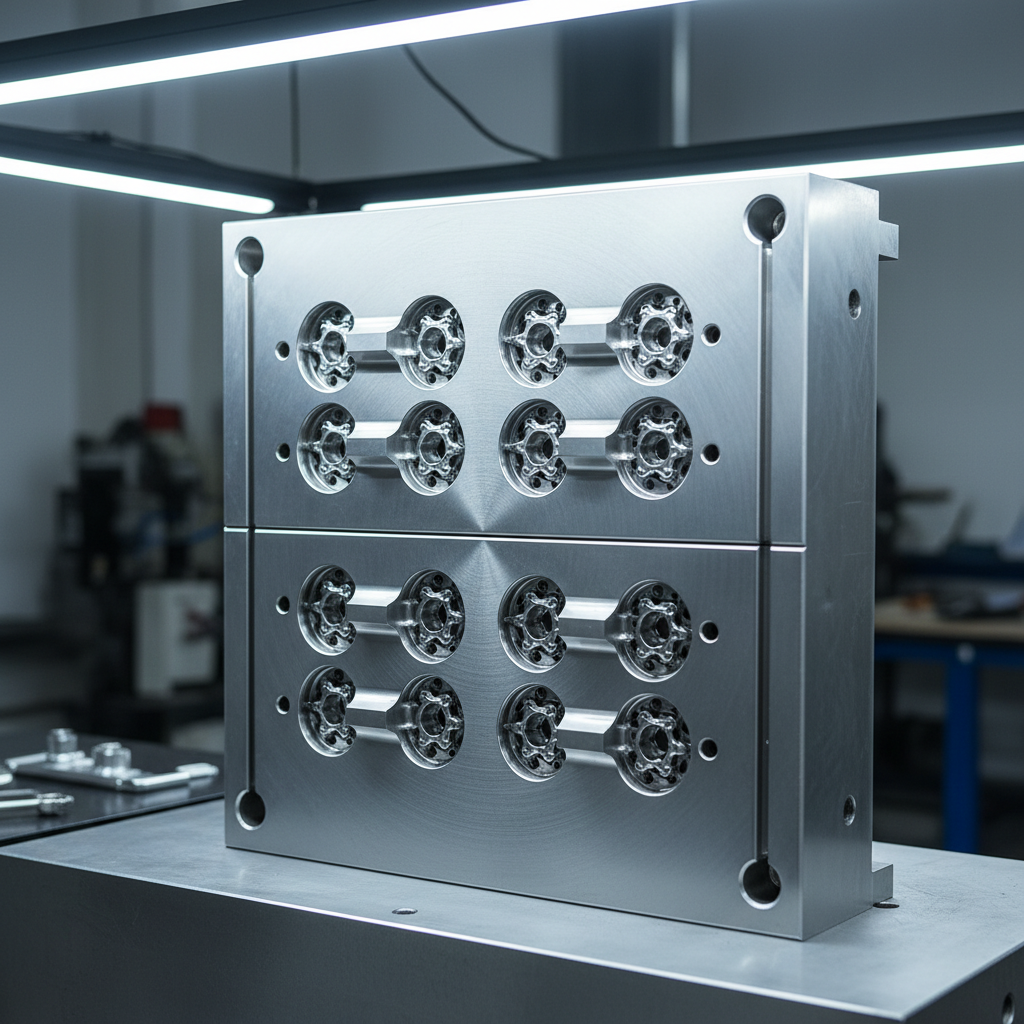
Multi-cavity tooling is one way to increase output when the demand forecast and process capability support the added tooling complexity.
What Is a Family Injection Mold Exactly?
A family injection mold contains different part shapes—often components from the same assembly—within one mold base. When the cavity quantities are matched to the assembly, it can produce a set of components in one cycle.
Prototyping and Kit Production Use
These molds are ideal for low-volume production or prototyping where you need one of every component to test a fit. It saves you from building five or six individual tools for a single project.
Material and Color Limitations
Because all parts are injected at once, every component in the “family” must use the same resin and color. This restriction limits design flexibility but simplifies material logistics.
Challenges with Manual Sorting
But that’s not all. Because the parts are different, they require sorting.
- Manual separation from the runner.
- Higher risk of kitting errors.
- Increased labor costs per shot.
Key Takeaway: Family molds reduce initial tooling investment for assemblies but introduce significant labor and quality trade-offs.
| Feature | Family Mold Detail | |
|---|---|---|
| Part Identity | Different “Sibling” Parts | |
| Primary Use | Product Kits / Prototypes | |
| Material | Must be Identical |
Using family molds requires a strategic choice between lower entry costs and higher operational labor.
How Do These Molds Impact Your Tooling Budget?
Deciding between a family mold and a multi cavity mold depends on your total production lifecycle and available capital. Initial prices can be misleading if you do not account for long-term maintenance and scrap rates.
Initial Tooling Investment Comparison
A family mold may cost less than several separate tools, while a multi-cavity tool may reduce the cycles required for repeated parts. Return on investment must be calculated from tooling, machine time, yield, maintenance, labor, and forecast volume.
Maintenance and Repair Considerations
Maintaining a multi-cavity tool is often easier because the cavities are interchangeable. If one cavity in a family mold is damaged, the entire assembly kit production may stop.
Impact of Scrap Rates on ROI
Different cavity geometries can make filling and cooling balance more difficult in a family mold, which may increase scrap if the design and process are not adequately controlled.
- Higher scrap rates on small parts.
- Frequent tool “tuning” required.
- Potential for uneven cooling.
Key Takeaway: You must look beyond the initial sticker price to evaluate the total cost of ownership (TCO) over the project life.
| Cost Element | Multi Cavity | Family Mold | |
|---|---|---|---|
| Initial Tooling | Often higher with added cavitation | May replace several separate tools | |
| Cost Per Part | Evaluate at forecast volume | Evaluate yield and handling | |
| Maintenance | Depends on tool construction | Depends on cavity differences and mechanisms |
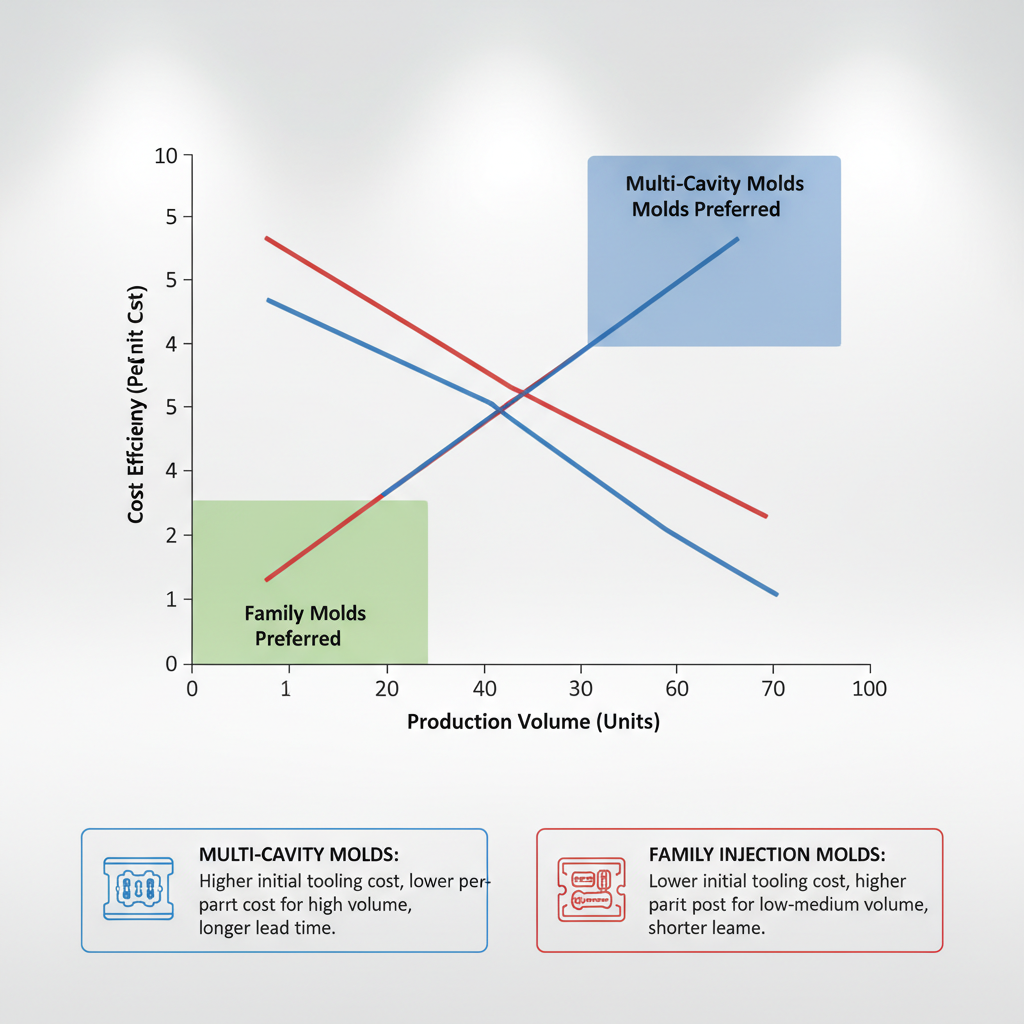
Long-term profitability is usually found in the high-efficiency performance of multi-cavity systems.
Why Do Family Molds Struggle With Precision?
Flow balance requires attention in any multi-cavity mold. Family molds add complexity because different cavity volumes, flow lengths, and wall thicknesses can respond differently to a shared runner and process.
The Physics of Filling Imbalances
A large part in a family mold might still be filling while a smaller part has already solidified. This discrepancy leads to flash on small parts and short shots on larger ones.
Achieving Tight Tolerances
Identical cavities can simplify balancing compared with different cavity geometries, but neither layout guarantees a fixed tolerance. Required dimensions should be reviewed against the resin, geometry, mold design, process, and measurement method.
Risk of Aesthetic Defects
What does this mean for you? You may see visual inconsistencies.
- Sink marks on thicker components.
- Warping due to uneven cooling.
- Variation in surface finish.
Key Takeaway: For precision-focused components, the imbalance inherent in family molds represents a significant quality risk.
| Quality Metric | Multi Cavity | Family Mold | |
|---|---|---|---|
| Flow Balance | Similar cavities can simplify balancing | Different cavities require additional balancing work | |
| Defect Risk | Depends on design and process control | Depends on design and process control | |
| Precision | Controlled to project requirements | Controlled to project requirements |
Precision applications may use single-cavity, multi-cavity, or family tooling depending on the part set, volume, capability study, and validation plan.
How Does Mold Type Affect Your Automation Strategy?
The long-term profitability of your multi cavity mold project is often determined by your floor-level labor requirements. Automation thrives on predictability, which is where these two mold types diverge.
Robotics in Multi-Cavity Setups
Repeated part geometry can simplify end-of-arm tooling and downstream handling. The achievable automation level and labor effect depend on the part, runner, inspection, packaging, and production-cell design.
Manual Labor in Family Molding
Family molds usually require a human operator to clip parts and sort them into bins. This manual handling adds a hidden cost to every cycle that can erode your margins.
Tool Life and Stability
Tool life and maintenance frequency depend on steel selection, resin, cavitation, mechanisms, molding conditions, preventive maintenance, and the required part quality. They should be specified for the project rather than inferred from the mold category.
Key Takeaway: Multi-cavity tools often suit automated high-output cells, but the viable architecture depends on the complete part and production plan.
| Labor Factor | Multi Cavity | Family Mold | |
|---|---|---|---|
| Sorting | Automated | Manual | |
| Packaging | Direct | Kitting Needed | |
| Monitoring | Low | High |
Automation compatibility is the key to maintaining a competitive edge in global manufacturing markets.
Can Multi Cavity Molds Support Automotive Standards?
Automotive projects can impose customer-specific quality-system, traceability, capability, and validation requirements. A multi-cavity mold may suit repeated high-volume parts, while a family mold may still be considered where the component set, risk analysis, and validation support it.
Meeting Quality Management Systems
Automotive customers may define process-capability targets and control plans for critical characteristics. Meeting them requires validated tooling, a capable molding process, measurement, and ongoing controls; mold type alone does not ensure compliance.
High-Volume Global Supply Chains
Tier 1 and Tier 2 suppliers must move millions of units per year. Multi-cavity tooling allows for the 24/7 high-speed production required to keep automotive assembly lines moving.
Advanced 2K and Overmolding
The best part? Multi-cavity systems are more stable for complex double-injection molding.
- Superior bond strength.
- Consistent multi-color aesthetics.
- Reduced assembly operations.
Key Takeaway: Automotive tooling decisions should follow the customer requirements, part risk, volume, capability plan, traceability needs, and validated total cost.
| Industry Need | Project Response | |
|---|---|---|
| Repeatability | Validate the tool and molding process | |
| Traceability | Define cavity and lot controls as required | |
| Compliance | Follow customer and program requirements |

Automotive-grade quality is built on the foundation of balanced and identical multi-cavity tooling.
How Does DFM Analysis Optimize Mold Performance?
Before steel is cut for a multi cavity mold, an engineering and DFM review can identify risks in part geometry, draft, gating, runners, cooling, ejection, tolerance, and material selection. The formal review scope is confirmed after project launch.
Optimizing Gate and Runner Locations
Where project risk warrants it, flow analysis can support runner and gate decisions. It helps engineers compare fill and pressure behavior, but it does not guarantee that every cavity fills at the exact same instant.
Managing Wall Thickness and Cooling
Proper cooling is the secret to fast cycle times and part quality. DFM helps engineers design cooling channels that wrap around each cavity for uniform heat removal.
Reducing Tooling Modification Costs
Finding a design risk before steel cutting can reduce the likelihood and extent of later tooling changes, although the cost effect depends on the issue and project stage.
- Optimized draft angles for ejection.
- Elimination of air traps.
- Reduced weld line visibility.
Key Takeaway: Use DFM and, where appropriate, flow analysis to review high-cavitation tooling risks before steel cutting; results still require validation in the built tool and molding process.
| DFM Checkpoint | Benefit | |
|---|---|---|
| Mold Flow | Balances Pressure | |
| Cooling | Reduces Warpage | |
| Draft | Easy Ejection |
A DFM review can reduce avoidable rework by identifying relevant risks before mold design and steel cutting; the outcome depends on the project and the changes adopted.
Which Mold Type Offers the Best Long-Term Value?
Deciding between a family mold and a multi-cavity mold requires an assessment of annual usage, part mix, machine capacity, quality requirements, handling, maintenance, and total cost.
Evaluating Estimated Annual Usage (EAU)
There is no universal annual-volume threshold. Compare feasible cavity counts using demand, cycle time, machine rate, yield, tooling cost, maintenance, and the program horizon.
Assessing Tolerance and Fit Needs
Functional components with tight fits require the balance of a multi-cavity tool. Family molds are better suited for non-critical, lower-precision kits or consumer goods.
Analyzing Strategic Business Goals
You might be wondering. Should I start small?
- Start with a family mold for market testing.
- Switch to multi-cavity for mass scaling.
- Use multi-cavity for core product stability.
Key Takeaway: Choose based on where you want your production to be in two years, rather than just solving today’s budget constraint.
| Decision Factor | Multi Cavity | Family Mold | |
|---|---|---|---|
| Volume | Repeated demand for one part | Matched demand for different parts | |
| Precision | Validate cavity-to-cavity capability | Validate balance across different geometries | |
| Strategy | Higher output per cycle | Consolidated tooling for a part set |
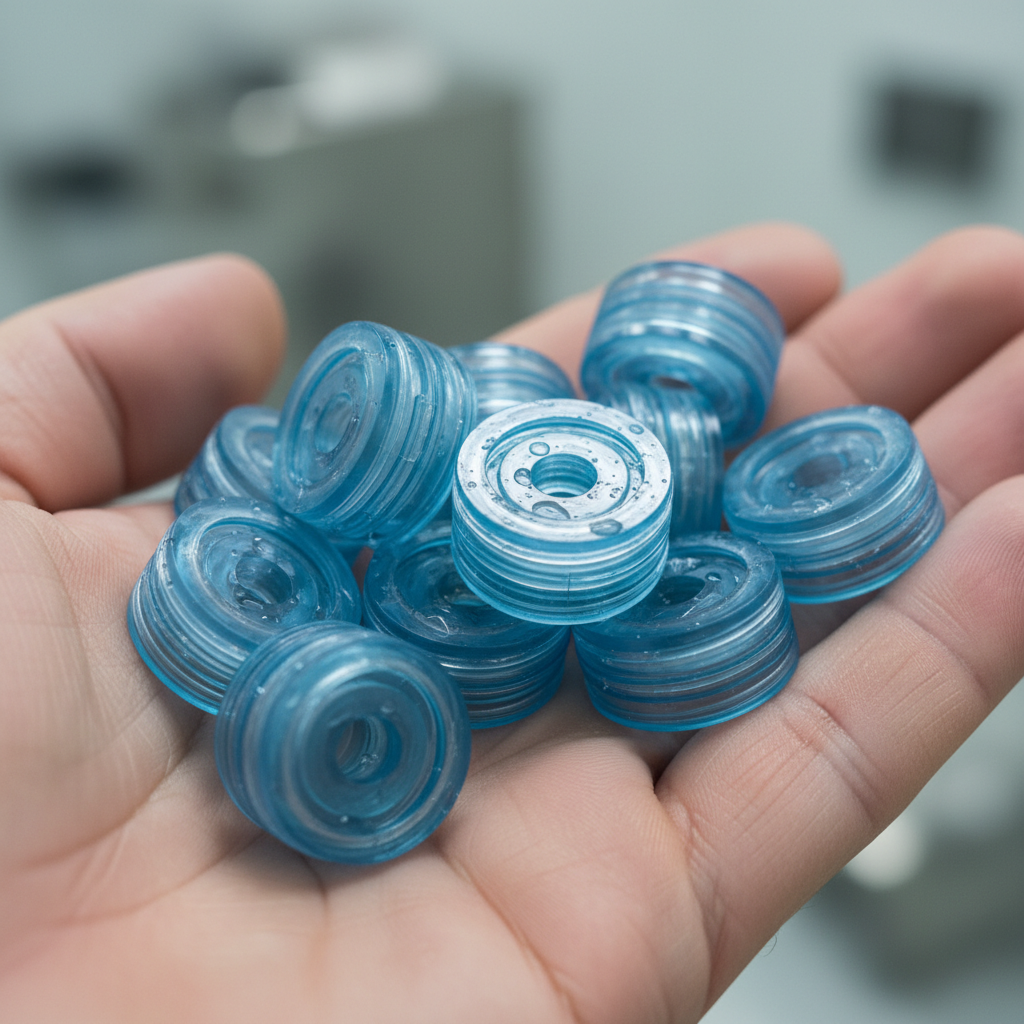
Investing in the right mold type today prevents costly production re-tooling tomorrow.
What Steps Should You Take to Select a Mold?
Selecting the right multi cavity mold design is a process that involves your engineering, procurement, and production teams. Follow a structured workflow to ensure you select the tool that matches your growth trajectory.
Conduct a Production Audit
Review your sales forecasts and historical data to determine if your EAU justifies high cavitation. If you are launching a new product, consider starting with lower cavitation and scaling up.
Request a Technical Consultation
Engage with your mold manufacturer early to discuss material selection, gating, runner balance, cooling, ejection, and validation. Early review can reduce avoidable troubleshooting after the tool is built.
Finalize Your Quality Requirements
Here is the best part. Defining your standards early ensures the mold is built to last.
- Specify mold steel grades (e.g., S136).
- Set tolerance limits.
- Confirm automated inspection needs.
Key Takeaway: A successful molding project starts with clear communication and a data-driven selection of tooling architecture.
| Selection Step | Action | |
|---|---|---|
| Volume Check | Confirm EAU | |
| DFM Review | Simulate Flow | |
| Steel Choice | Pick Durable Material |
Your choice of mold architecture is the single most important decision for your manufacturing profitability.
Selecting between multi-cavity and family molds requires a project-specific review of part mix, demand, process capability, automation, maintenance, and validation requirements. Our team has 15+ years of industry experience supporting mold engineering and manufacturing. To review the suitable architecture for your part and production plan, contact our tooling team .
FAQ: Common Questions About Multi Cavity Tooling
Can I mix different materials in a family mold?In a conventional single-material family mold, the cavities share the same resin and color. Multi-material molding is a different tooling and machine configuration that must be evaluated separately.
What’s the best way to handle different parts if I can’t use a family mold?The best way is to build separate single or multi-cavity molds for each part to ensure balanced flow and higher quality control.
Can I convert a single-cavity mold into a multi cavity mold later?No, you generally cannot convert them because the mold base and runner system are designed specifically for the initial number of cavities.
How many cavities can a single mold hold?It depends on part size and machine tonnage, but small components can often be produced in 64, 128, or even higher cavitation molds.
What is the typical lead time for a multi cavity mold?Lead time is quoted by project. Part complexity, cavitation, steel, hot-runner and cooling systems, surface requirements, and validation scope all affect the schedule; the documented general mold range is typically 4–8 weeks.