Precision tooling · Dongguan, China

Precision Mold Making

Precision mold making for small and medium plastic parts with tight fits, fine features and stable multi-cavity output. WOKE Molds designs the tool, machines and fits the inserts, trials the mold and verifies the agreed critical features before handover.

Start with your 3D model and 2D drawing; resin, volume and receiving-press details can follow during project review.

Precision injection mold with paired mold halves and small insert details
Small inserts, tight shutoffs and balanced cavities are planned from the first design review.
  • 15+15+ years of team industry experience in molds
  • 1,800 m²Factory floor in Chang’an, Dongguan
  • CMMLeader CMM 1200 × 1000 × 800 mm for insert and part measurement
  • WeeklyWeekly photo updates during the build

Fit for purpose

Where precision injection molds make the difference

A precision injection mold is not defined by one tolerance number. It is defined by which features must repeat from shot to shot and cavity to cavity, and by how the tool is designed, built and verified to hold them. We focus on small and medium parts where those features decide whether the product assembles and works.

Typical parts

Where it fits

Connectors and terminal housings, small gears and clips, snap-fit enclosures, sensor and electronic housings, optical and light-guide parts, medical-style and consumer components with fine features or mating fits.

What usually drives the tool

Fit and assembly dimensions, thin walls, small cores and pins, cavity-to-cavity consistency, gate vestige, flatness and cosmetic zones.

Use this route when the part's function depends on a few critical features repeating reliably.

Where it is not the right route

Limits we state early

Large molds are possible but are not our focus. Parts whose drawing tolerance is tighter than the resin and geometry can hold need design or material changes, not only a better tool.

How we handle it

The DFM review names the features at risk, proposes part or tolerance changes and agrees the measuring method before steel is released.

Machine and process capability is not finished-part tolerance; part tolerances are controlled per drawing.

Multi-cavity precision

Balanced runners, matched inserts and cavity identification for small parts made in volume.

See our multi-cavity injection molds for cavity count and balance decisions.

Micro and fine features

Thin ribs, small pins and fine details that need EDM, careful venting and stable shot control.

See our micro injection molds for very small parts and features.

Complex mechanisms

Slides, lifters, unscrewing cores, inserts and two-shot actions that must move precisely every cycle.

See two-shot, insert and unscrewing molds.

Precision into steel

How precision mold making is planned, machined and fitted

Precision comes from the whole chain: design, steel, machining route, fitting and trial. Each stage below has a defined output so the accepted condition can be traced later.

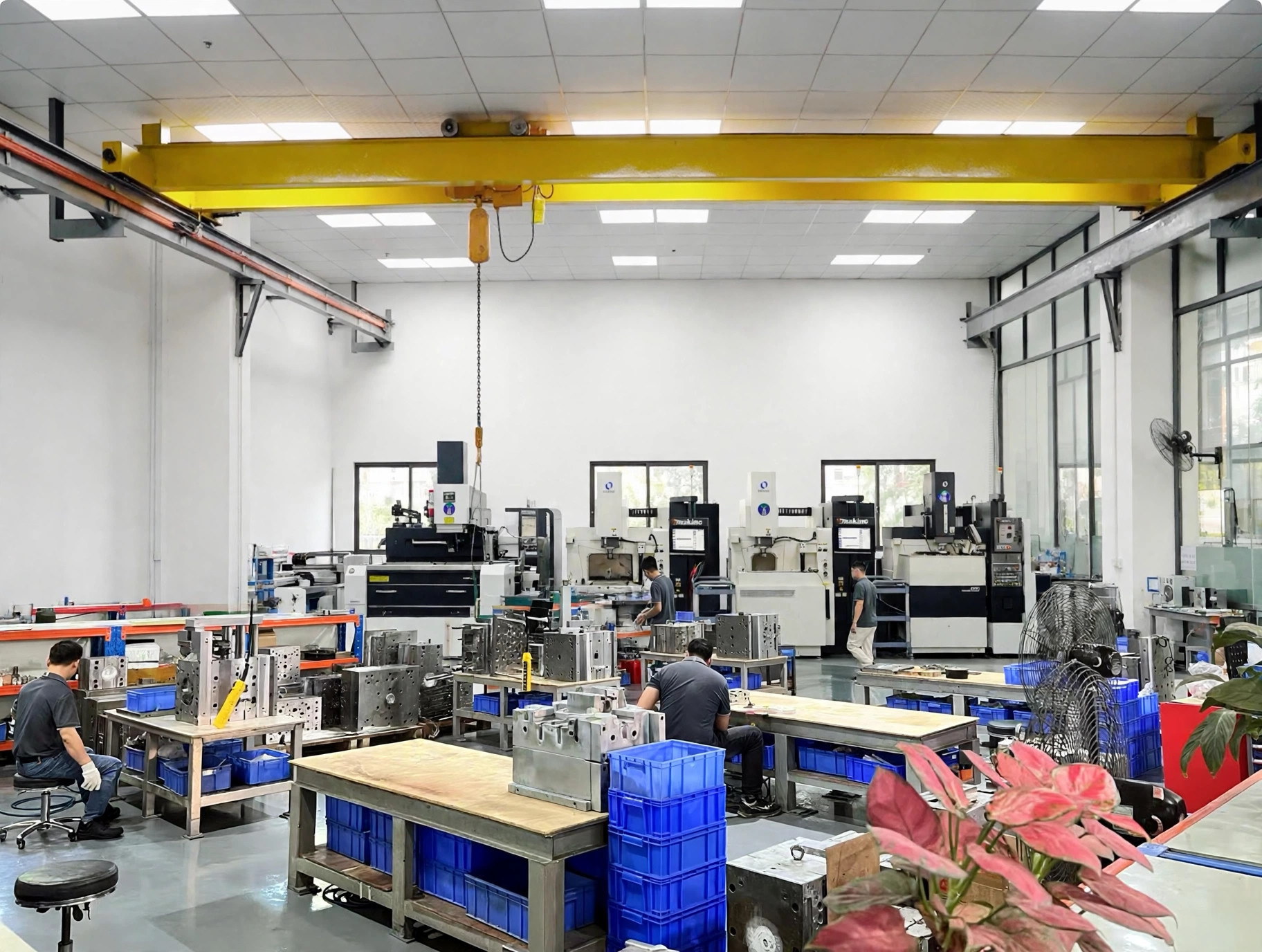
Technicians fitting and assembling a precision injection mold
01

Design the tool around the critical features

Starts with

3D and 2D files, resin grade, critical dimensions, cosmetic zones, annual volume and receiving press.

Formal DFM after kickoff reviews gate position, parting line, shutoffs, cooling, venting and ejection against the critical features. Mold design is done in Siemens NX; Moldflow is applied when complexity or customer requirements justify it. Read our guide to injection mold design review.

Output: Approved mold design, steel list and agreed measuring plan.

02

Choose steel and standard components

Starts with

Expected mold life, resin abrasion or corrosion, polish or texture and maintenance needs.

Steels such as 718H, H13 / 1.2344 or S136 / 1.2083 are selected per insert, with HASCO, Meusburger, DME, STRACK, CUMSA or MISUMI components as specified. Learn more in how to choose mold steel.

Output: Steel and component order basis with certificates where available.

03

Machine inserts with the right process

Starts with

Released manufacturing data and checked steel.

Makino 5-axis and 3-axis machining centers form accessible geometry; Makino sinker EDM forms ribs and fine details; Makino wire EDM cuts through profiles; Okamoto grinders finish datum and fit surfaces. See wire EDM and sinker EDM.

Output: Inserts measured against their drawings before fitting.

04

Fit, trial and correct

Starts with

Assembled mold, trial plan and agreed acceptance criteria.

Shutoffs, slides and ejection are fitted by hand, the mold is trialed on our Toshiba 100 T or Haitian 250 T two-shot trial machine where suitable, and samples are measured by cavity. Corrections are agreed, made and rechecked.

Output: Trial samples, measurement results and an approved correction history.

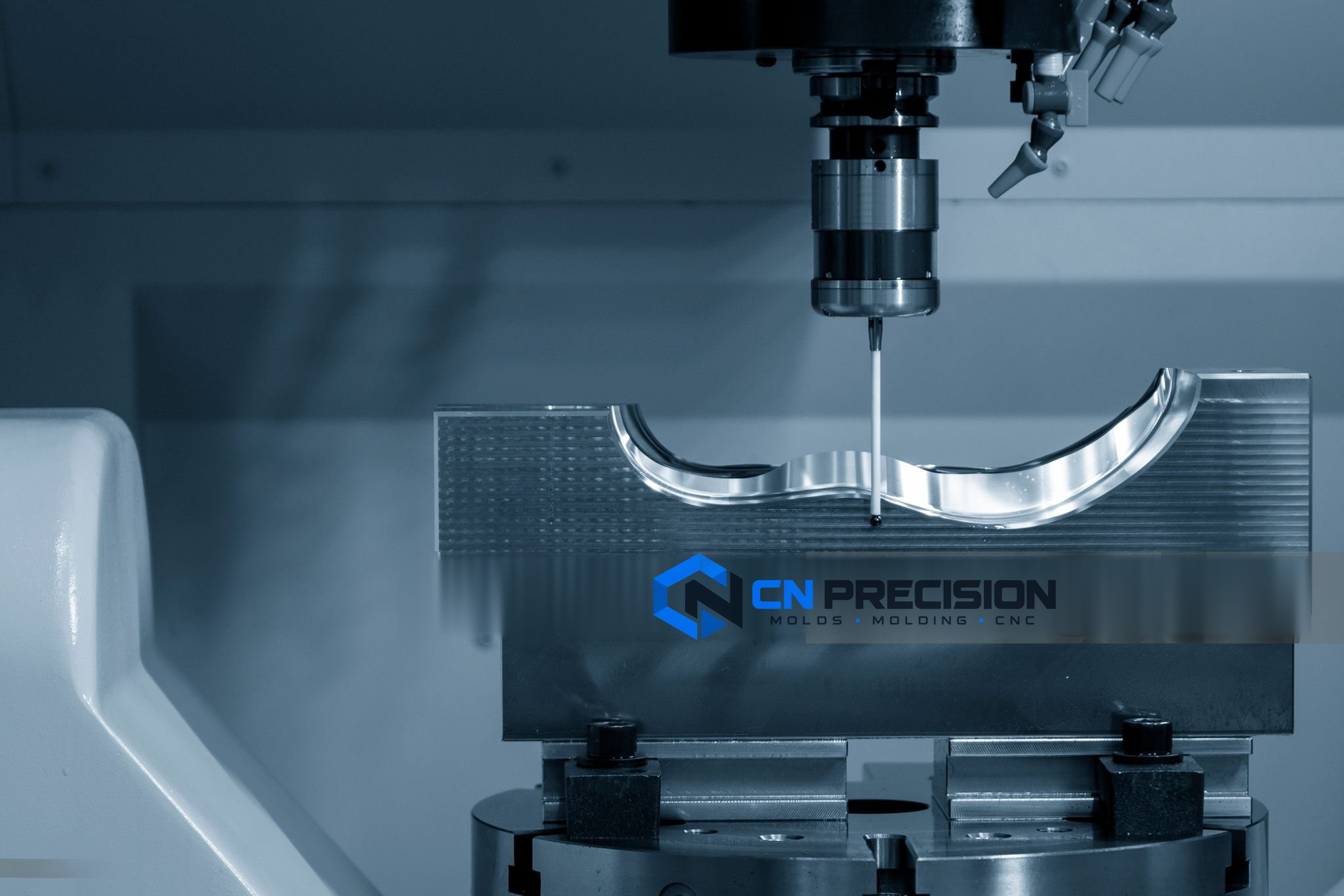
Precision measurement of an injection mold cavity insert
Critical insert and part features are measured against the agreed plan.

Verification

Verify the features that decide the part works

Measurement follows the critical features agreed in DFM. Reports are selected per project; they are supplied on request, not by default.

  1. Insert measurement

    Critical cavity, core and insert dimensions are checked on CMM or profile projector before fitting.

  2. Fitted mold checks

    Shutoffs, slide and lifter movement, ejector travel, water circuits and venting are checked before trial.

  3. Trial part measurement by cavity

    Agreed critical dimensions, appearance zones and functional fits are measured with cavity identification.

  4. Report package on request

    Inspection report, full dimensional or CMM report, FAI, material certificate and mold trial report as defined in the quotation.

Our Shenzhen molding plant is certified to IATF 16949 and ISO 9001; quality documents are supplied per project when required.

From RFQ to handover

A clear route for your precision injection mold

  1. 1

    Files and quotation

    We review your 3D model and 2D drawing, list critical features and open assumptions, and quote the tool scope.

  2. 2

    Kickoff and DFM

    Formal DFM confirms gates, parting line, steel, cooling and the measuring plan before steel release.

  3. 3

    Build with weekly photos

    Inserts are machined, measured, fitted and assembled, with weekly photo updates against the schedule.

  4. 4

    Trial and correction

    The standard quote includes up to three mold trials and 10-shot samples; corrections are agreed and rechecked.

  5. 5

    Acceptance and export

    Accepted molds are protected with anti-rust oil, vacuum packed and shipped in fumigated wooden cases, with paid spare parts on request.

  6. 6

    Optional production

    Approved molds can continue into molded-part production in our Shenzhen plant under a separate scope.

ScheduleTypical mold lead time is 4–8 weeks, depending on complexity, steel, hot runner, texture and validation scope.

Trade termsEXW or FOB as standard; DDP and other terms can be quoted by project.

Buyer questions

Precision Mold Making FAQs

What is precision mold making?

It is the design and build of injection molds whose critical features repeat closely from shot to shot and cavity to cavity, using controlled design, steel, machining, fitting and measurement.

What tolerances can a precision injection mold hold?

Mold steel can be machined very accurately, but finished part tolerance depends on resin, geometry, gate and process. We review the drawing in DFM and agree achievable tolerances and measuring methods per feature.

Which parts are suitable?

Small and medium plastic parts such as connectors, gears, clips, housings, optical parts and parts with snap fits or mating features.

Do you make large molds?

Large molds are possible but are not our focus. Our strength is small and medium precision molds, including multi-cavity, micro, insert, two-shot and unscrewing molds.

Which mold steels do you use?

Steel is selected per insert, for example 718H, H13 / 1.2344 or S136 / 1.2083, with certificates where available.

Is Moldflow used on every project?

No. Moldflow is applied when part complexity or customer requirements justify specific fill, cooling or warpage questions.

What do I need to send for a quote?

Your 3D model and 2D drawing are enough to start. Resin, volume, press and documentation needs can follow.

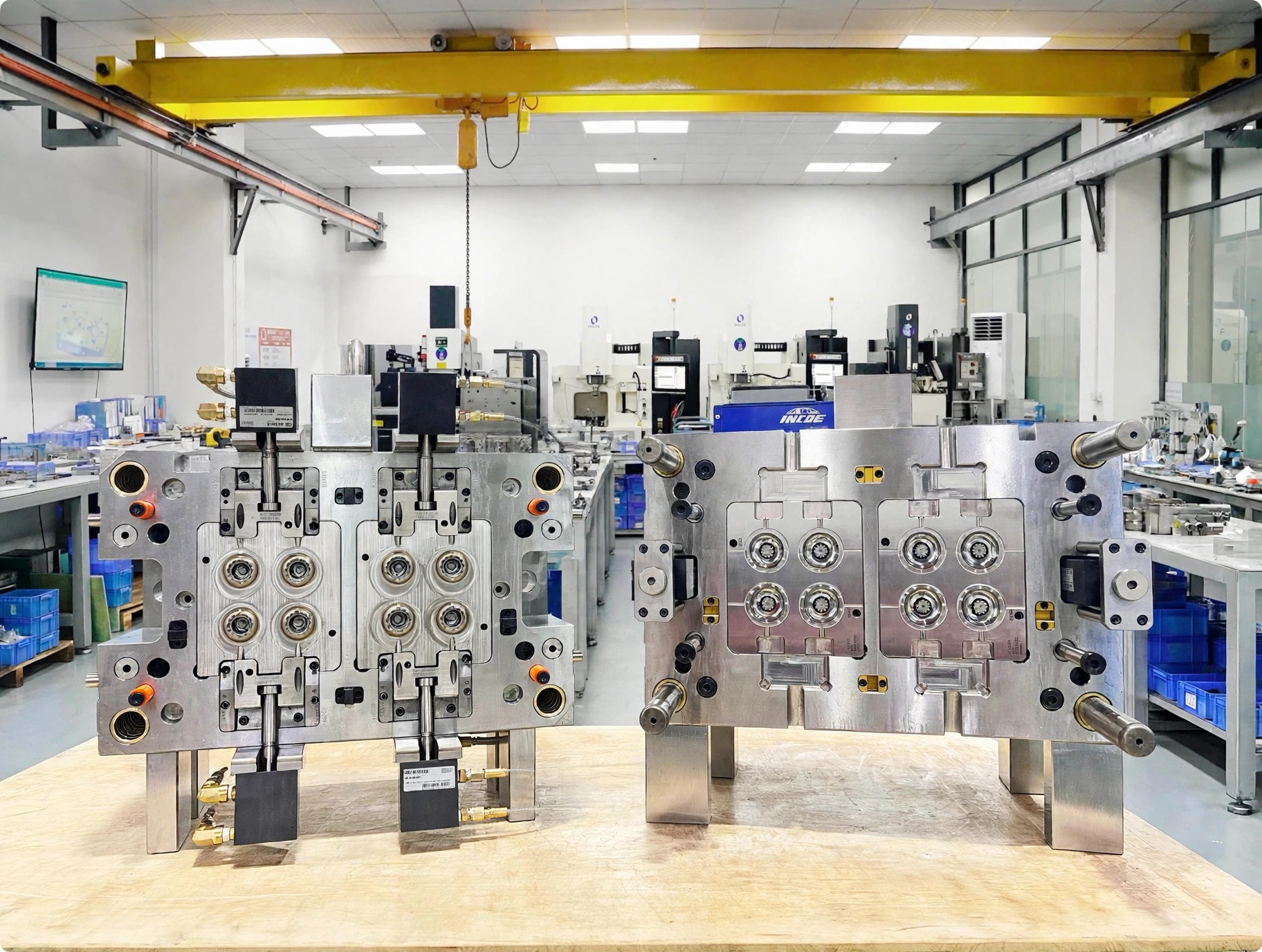
Open multi-cavity precision injection mold halves on a workbench
Start with what you have

Discuss Your Precision Mold

Share your 3D model and 2D drawing, then add the resin, expected demand, receiving machine, critical features and validation needs you already know.

Project review for precision injection tooling

Have 3D models or 2D drawings? Email your files to peter@wokemolds.com.

Please review our Privacy Policy before sending project details.