Wire EDM services · Sinker EDM · Precision grinding

Wire EDM Services and Precision Grinding for Mold Components

Get hardened mold components, punches, inserts and precision parts cut and finished by wire EDM, sinker EDM and precision grinding in our factory in Dongguan, China. The same equipment that builds our injection molds is available for your mold components, die parts and hardened machined parts.

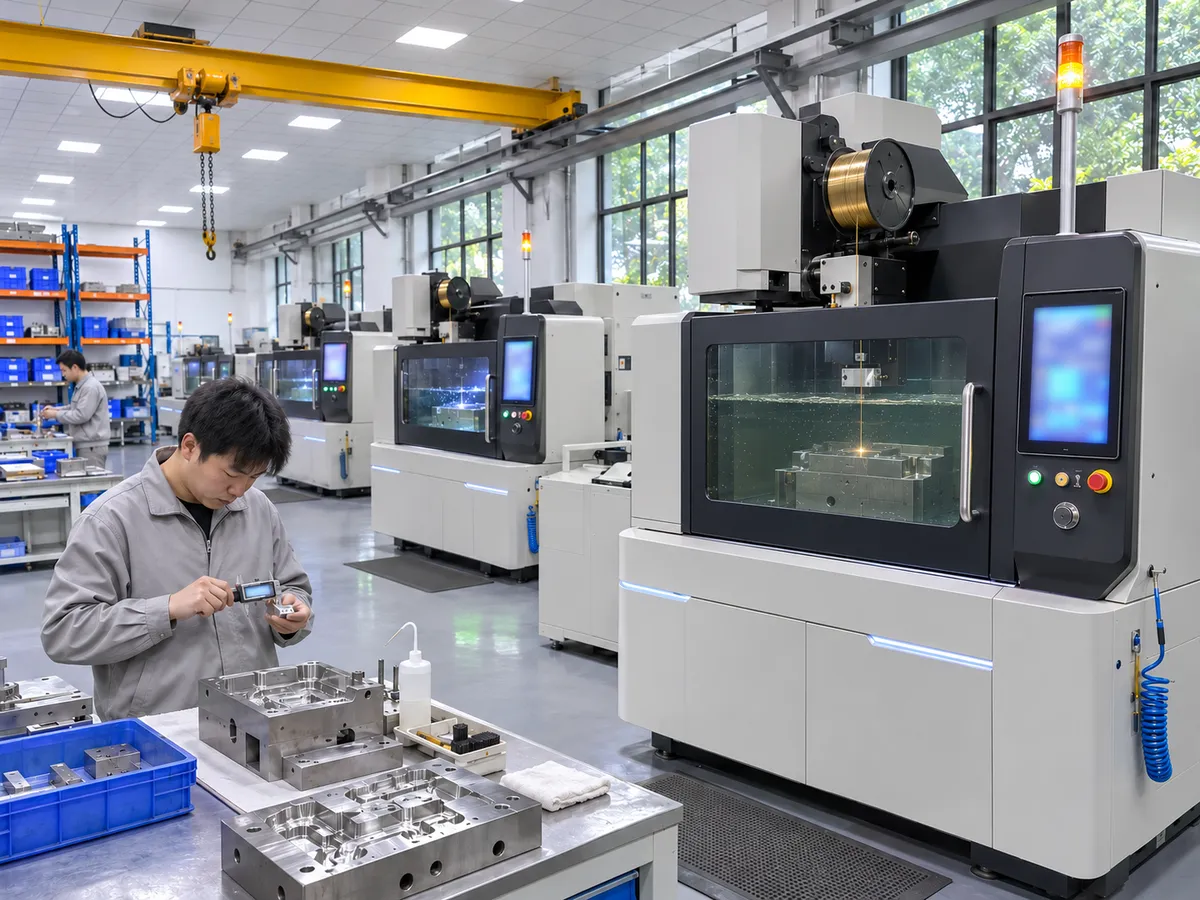
Wire EDM services in a mold workshop with machines cutting hardened inserts
Wire EDM machines cutting hardened mold inserts in our Dongguan factory.
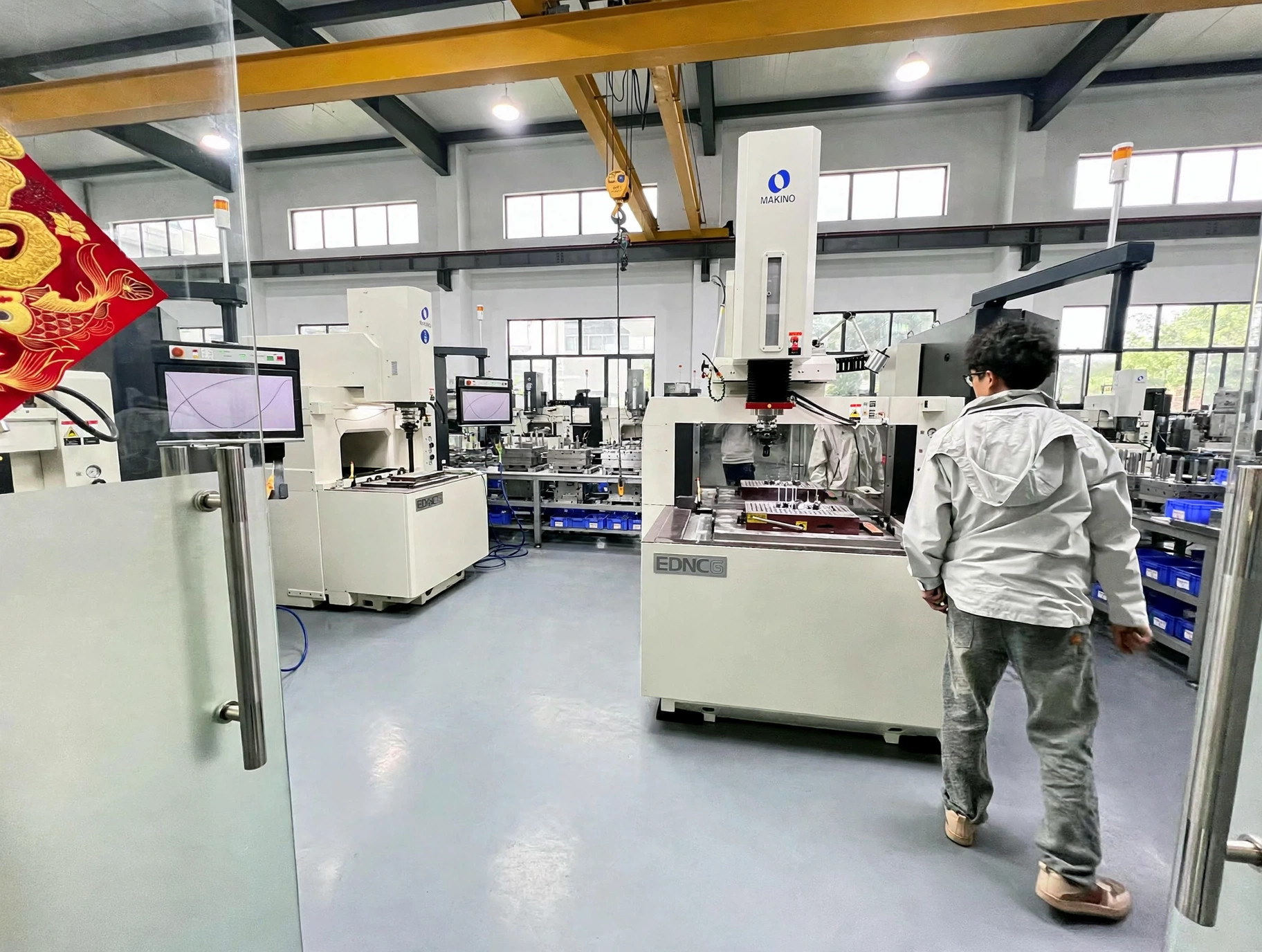
  • Makino wire EDM × 2 and Makino sinker EDM × 4 with automatic electrode change
  • Okamoto surface grinders × 3 and internal/external grinder × 1
  • Graphite and copper electrodes machined in house
  • Leader CMM 1200 × 1000 × 800 mm for inspection

Processes

EDM machining services and grinding in one factory

EDM and grinding are where precision mold components get their final shape. We combine wire EDM, sinker EDM and grinding with CNC machining and CMM inspection, so hardened parts move through one team from steel to finished component.

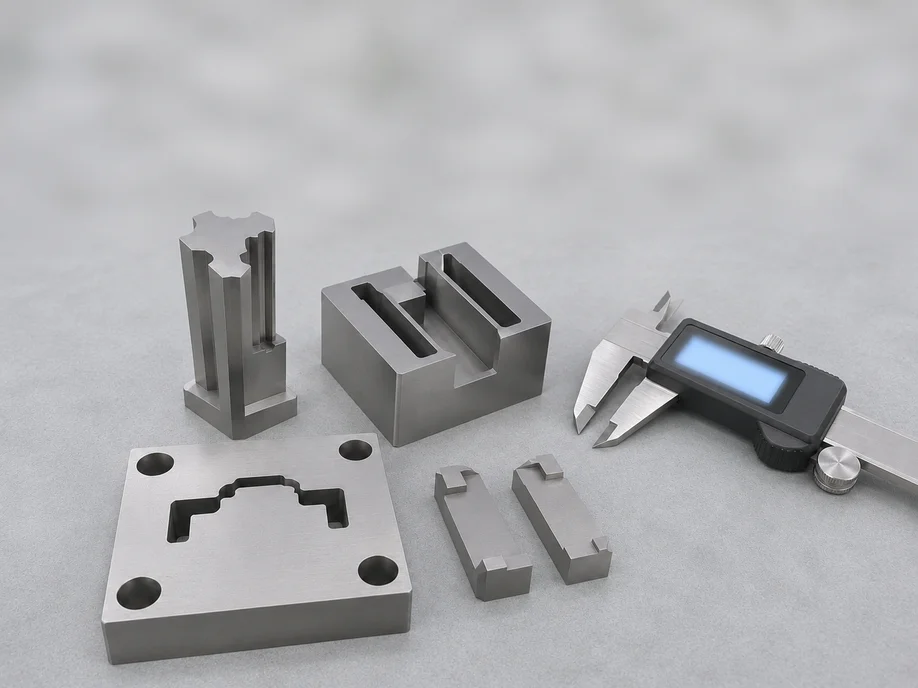
Wire EDM cut hardened tool steel punch, slotted insert and die plate

Wire EDM

Through profiles, slots, punches, die openings, slide inserts and lifter parts in hardened tool steel, cut after heat treatment.

Focus: Profile accuracy, corner radii, start-hole position, surface texture of the cut and straightness on tall parts.

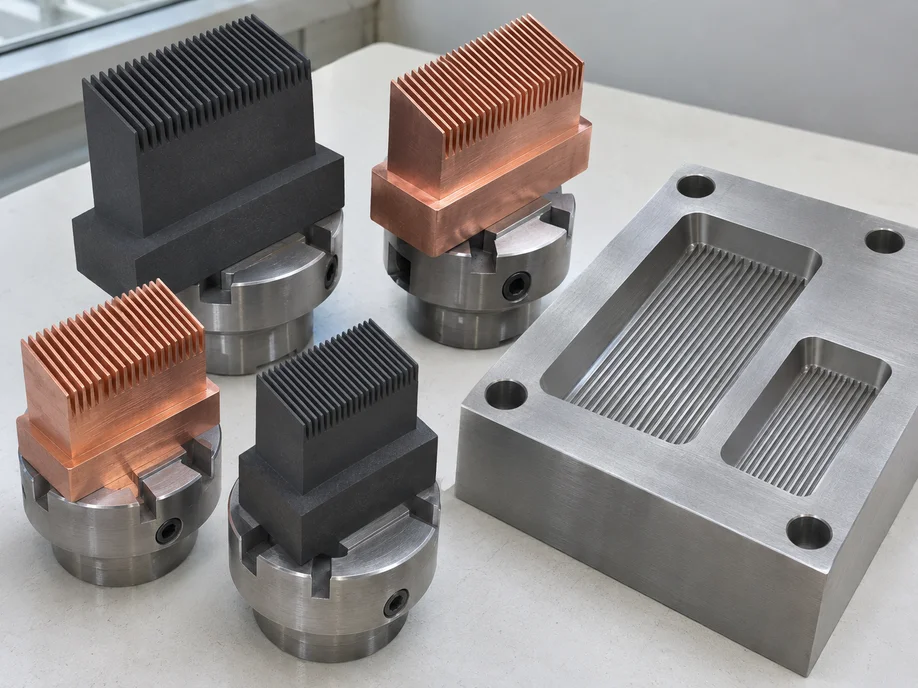
Graphite and copper sinker EDM electrodes beside a burned mold rib cavity

Sinker EDM and electrodes

Deep ribs, sharp internal corners, textured cavities and blind features in hardened mold inserts, with graphite or copper electrodes.

Focus: Electrode design and undersize, burn depth, corner sharpness, surface finish and VDI texture where specified.

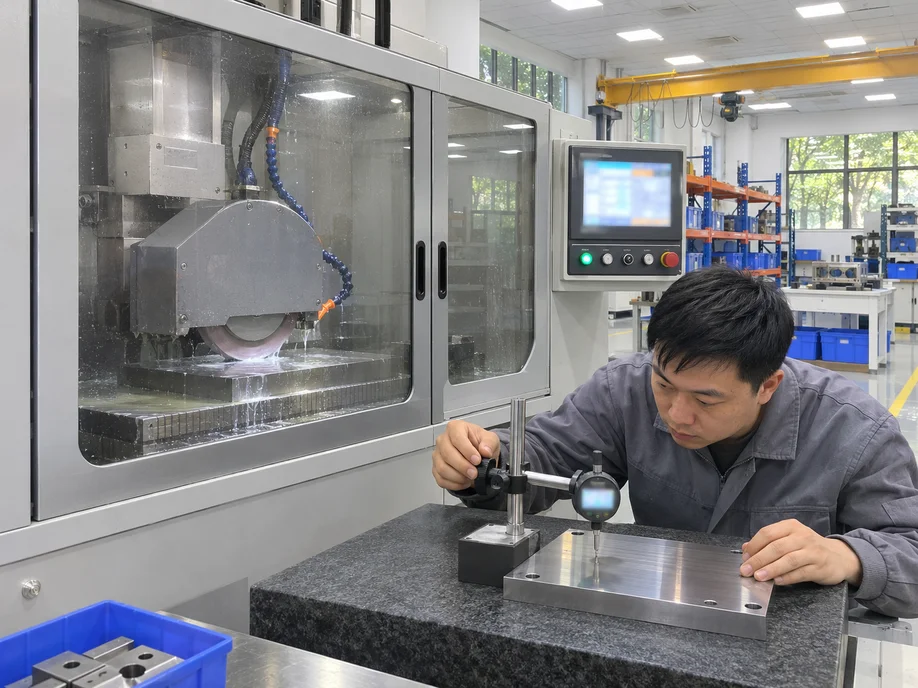
Precision surface grinding of a hardened mold plate with flatness check

Precision grinding

Flat and parallel faces on mold plates and inserts, ground pins, sleeves and bores on hardened components.

Focus: Flatness, parallelism, squareness, diameter fits and surface roughness on the agreed functional faces.

Machine and process capability is not finished-part tolerance. Wire EDM process capability of about ±0.003 mm and grinder flatness of about 0.002 mm describe the equipment; finished tolerances are controlled per drawing, material and measurement method.

Material direction

Materials for wire EDM services and grinding

EDM cuts any conductive material regardless of hardness, which is why it is used after heat treatment. Common workpieces are hardened tool steels such as H13, S136/420 and P20, stainless steels, carbon steels, copper alloys and titanium. Grinding suits hardened steels and other metals where flatness and fits matter.

For background, see our guides to wire EDM, sinker EDM and tool steel grades.

Possible starting families H13, S136 / 420, NAK80, 718H

Cavity and core inserts are rough machined, heat treated, then finished by wire EDM, sinker EDM and grinding so the final shape is cut at full hardness.

Requirements that narrow the exact grade
  • Material grade and supplied condition
  • Final hardness and heat-treat stage
  • Critical profiles, corners and radii
  • Flatness, parallelism and fits on ground faces
  • Surface finish or VDI texture after EDM
  • Start-hole and wire entry restrictions
  • Recast layer limits if specified
  • Inspection method and report format

Tell us whether the part is supplied hardened, or whether we arrange heat treatment, because EDM and grinding are usually the last steps after hardening.

Engineering before tooling

Plan EDM and grinding before the steel is hardened

Formal review after kickoff checks how a hardened part will be held, which faces are ground as datums, where wire start holes go and which features need electrodes. The order of roughing, heat treatment, grinding and EDM decides accuracy and cost.

Related guides cover surface grinding, cylindrical grinding and mold inserts.

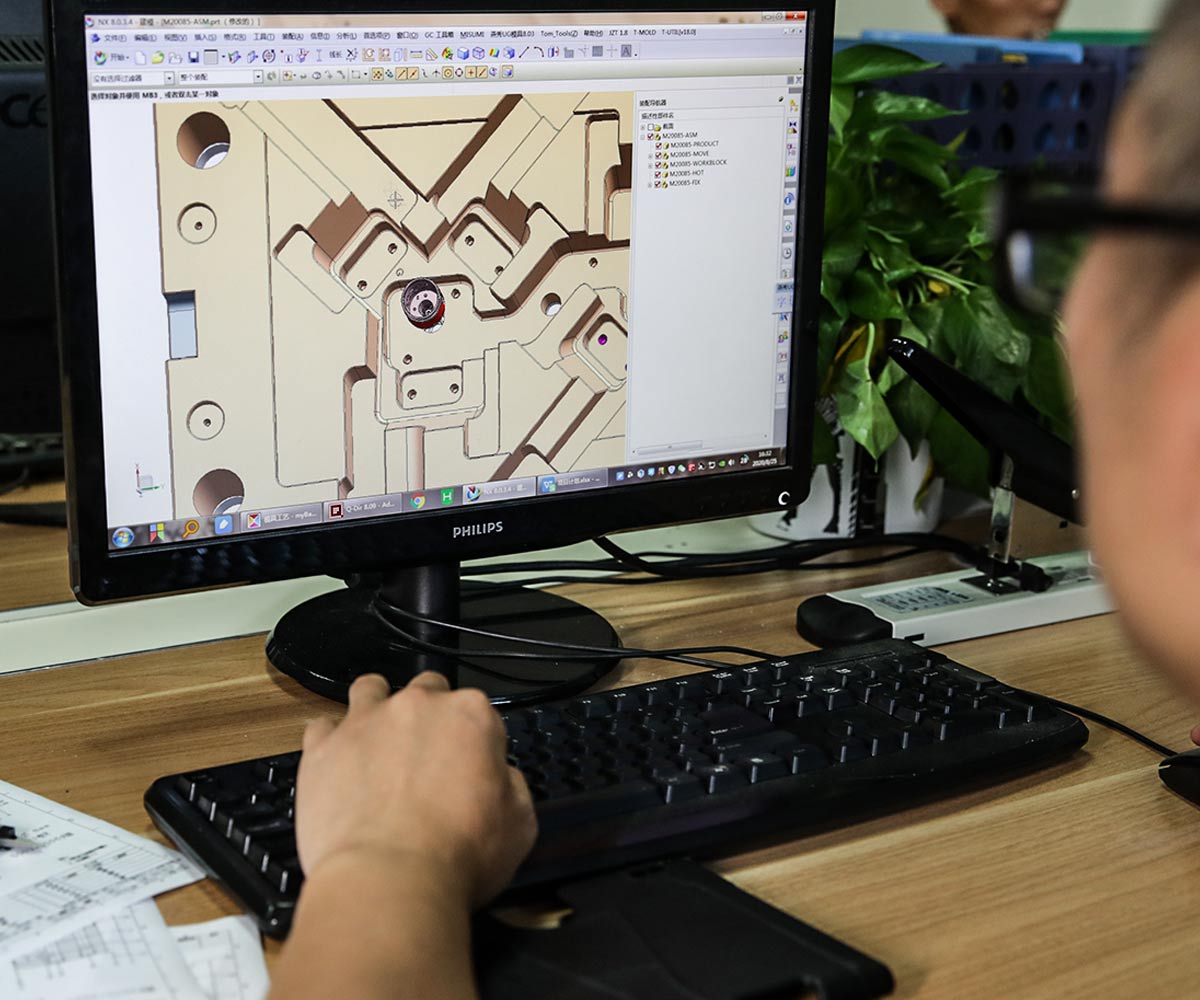
Engineer reviewing a mold insert design in CAD before EDM and grinding
Mold insert design reviewed in CAD to plan datums, electrodes and wire paths before hardening.
Datums and ground faces

QuestionWhich faces locate the part for EDM and inspection?

Engineering actionGrind square datum faces first, then cut profiles relative to them on the wire EDM.

ValidationCheck squareness and profile position on the CMM against the drawing datums.

Internal corners and ribs

QuestionCan the corner radius be cut by wire, or does it need an electrode?

Engineering actionUse wire EDM for through features and sinker EDM for blind ribs and sharp corners; design electrodes with the right undersize.

ValidationMeasure rib width, depth and corner radius on the finished insert.

Tall or thin parts

QuestionWill a tall or thin section move during cutting?

Engineering actionPlan skim cuts, stress relief and support tabs so the part stays straight.

ValidationCheck straightness and taper along the cut height.

Surface finish and texture

QuestionWhich surfaces need a fine EDM finish or VDI texture?

Engineering actionAdd finishing passes on functional faces and match sinker EDM settings to the specified VDI grade.

ValidationCompare surface finish with reference plates and measure Ra where required.

Project route

From drawing to finished EDM and ground parts

Each stage produces a clear output, so hardened components arrive ready to fit into the mold or assembly.

  1. 01

    Drawing review

    Check material, hardness, critical profiles, fits and finish requirements.

    Stage output: Quotation with process route and open questions.

  2. 02

    Rough machining and heat treatment

    Rough the part with grinding stock, then harden and temper as specified.

    Stage output: Hardened blank with hardness record.

  3. 03

    Grinding

    Grind datum faces, diameters and fits.

    Stage output: Square, flat blank ready for EDM.

  4. 04

    Wire and sinker EDM

    Cut profiles, slots, ribs and textures at full hardness.

    Stage output: Finished features with in-process checks.

  5. 05

    Inspection and packing

    Measure critical features on the CMM, protect surfaces and pack against rust.

    Stage output: Inspection report and protected parts.

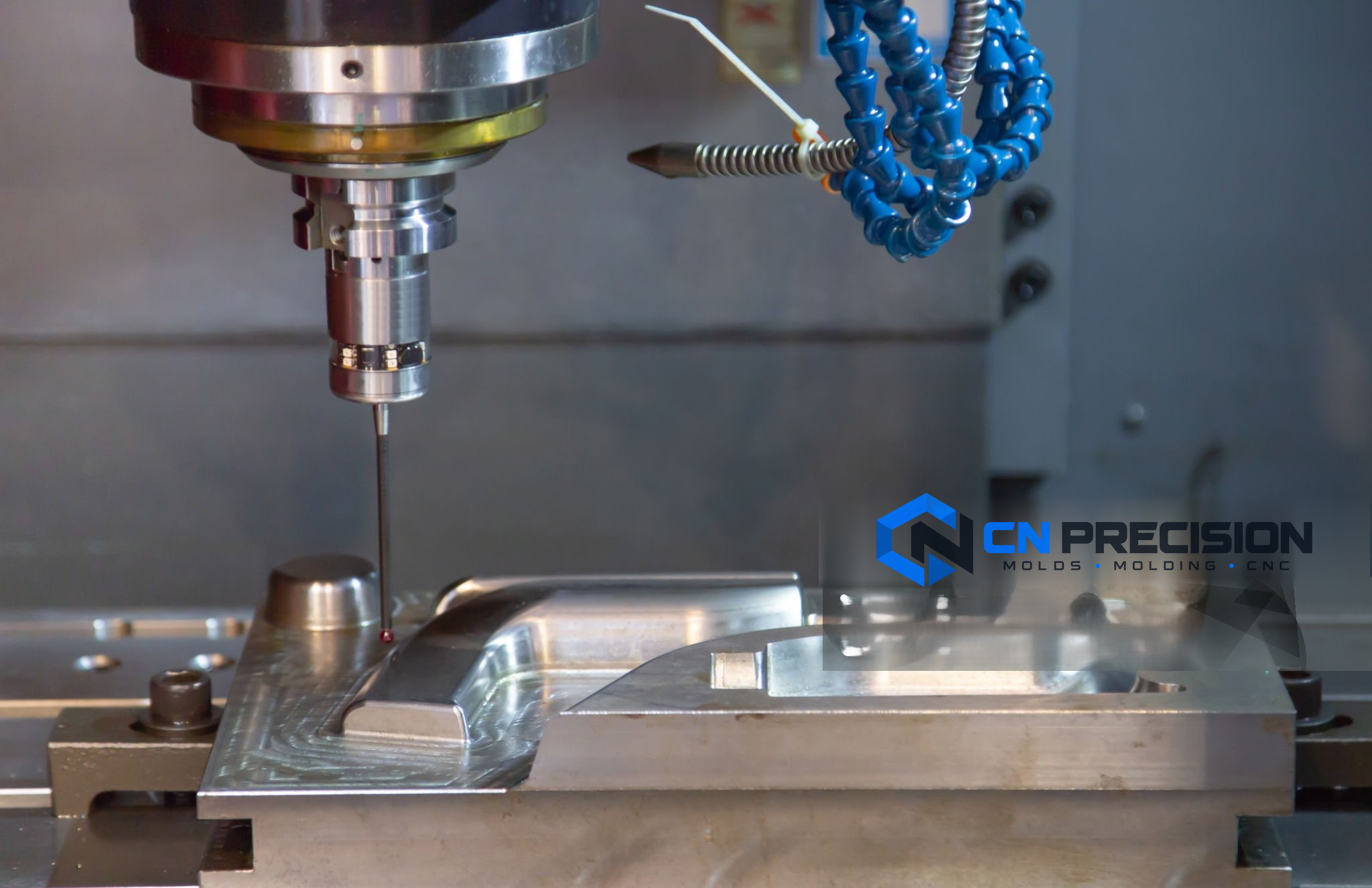
Probe measuring a machined mold plate with pocket features
Mold plate features measured against the drawing datums.

Acceptance plan

Inspection for EDM and ground components

Inspection focuses on the features that make a component fit and work in the mold or assembly.

Profiles and positions

CMM measurement of wire EDM profiles and hole positions relative to ground datums.

Flatness and fits

Flatness, parallelism and diameter checks on ground faces, pins and bores.

Surface condition

EDM finish, VDI texture and burr-free edges checked against references.

Hardness and records

Hardness checks and material records when the drawing requires them.

Quote economics

What drives the cost of EDM and grinding

Cost depends on material and hardness, cut length and height, the number of skim passes, electrode count, ground area and tolerance, plus inspection and documentation.

01

Setup and electrodes

Programming, fixturing, start holes and electrode machining for each feature.

02

Machine time

Wire cut length and height, burn depth and finishing passes, and grinding time per face.

Give the engineering team enough context to quote the right production route

Start with the controlled files and requirements you already have. Open items can be identified during review; the goal is to avoid a low-confidence quote built on silent assumptions.

  • Part definition3D CAD and controlled 2D drawing · Revision and units · CTQs, datums and mating/assembly information
  • Material and useExact approved grade or required performance · Color, reinforcement and flame/regulatory needs · Temperature, chemicals, moisture, UV, load and wear conditions
  • Demand and approvalAnnual forecast and typical release quantity · Current program stage and target timing · Dimensional, appearance, function and documentation expectations
  • Supply scopeNeed for project tooling and any available tooling records · Packaging and label requirements · Ship-to country and preferred Incoterm

Practical answers

Wire EDM services questions

What can wire EDM cut?

Any electrically conductive material, including hardened tool steel, stainless steel, copper and titanium, in through profiles, slots and openings.

When is sinker EDM used instead of wire EDM?

For blind features such as deep ribs, sharp internal corners, cavities and textures that a wire cannot reach.

Do you make graphite electrodes?

Yes. Graphite and copper electrodes are designed and machined in our Dongguan factory.

Can you supply mold components without the full mold?

Yes. Inserts, pins, sleeves, slides and other components can be made to drawing as separate parts.

What tolerance can wire EDM hold?

Our wire EDM process capability is about ±0.003 mm, but finished tolerances depend on the part, material and measurement and are agreed per drawing.

Do you offer jig grinding?

No. We offer surface grinding and internal/external cylindrical grinding; features that need jig grinding are reviewed for alternative routes such as wire EDM.

EDM workshop with an operator working at sinker EDM machines

Start with your controlled files

Discuss your EDM and grinding parts

Send the drawing, material and hardness of your components. We will review the EDM and grinding route and reply with questions or a quotation.

Have 3D models or 2D drawings? Email your files to peter@wokemolds.com.

Please review our Privacy Policy before sending project details.