Automotive plastic parts · Injection molding in China

Automotive Plastic Parts Made by Injection Molding

Source automotive plastic parts and components for interior, electrical, under-hood and EV assemblies from drawing to repeat production. WOKE Molds handles DFM, tooling, injection molding and inspection for small and medium precision automotive plastic components in our own factories in Dongguan and Shenzhen, with series molding in our IATF 16949-certified Shenzhen molding plant.

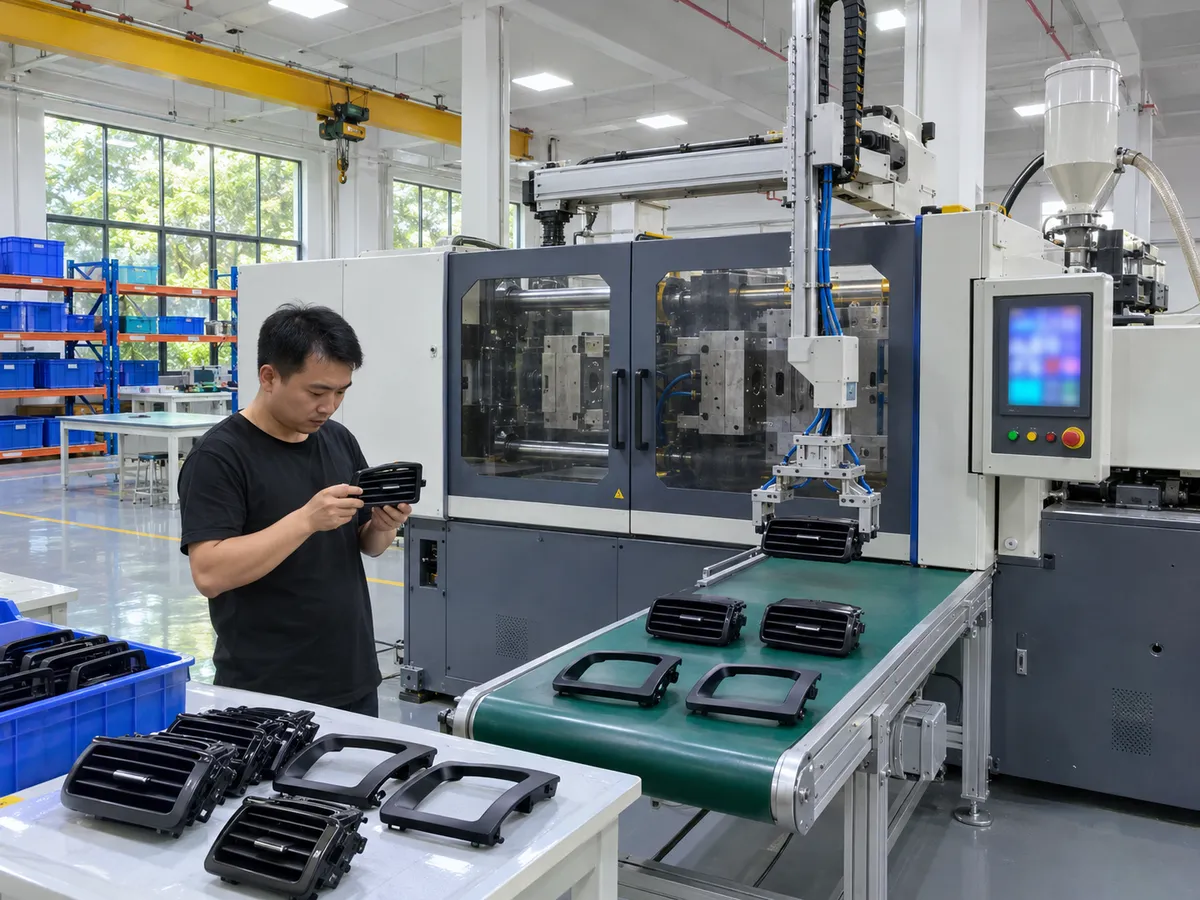
Automotive plastic parts coming off an injection molding machine with a robot
Molded automotive interior parts leaving the press for inspection.
  • 15+ years of team experience with molded components
  • 41 presses from 30 to 380 T, including two-shot, in our Shenzhen plant
  • Insert molding and overmolding for metal and soft-touch interfaces
  • PPAP, FAI, CMM and 8D documents scoped per project

What we mold

Automotive plastic components built to drawing

As an automotive plastic parts manufacturer working to customer drawings, we focus on small and medium precision parts where resin grade, dimensional stability and repeatable appearance decide whether the part passes assembly. Typical buyers are Tier 2 and Tier 3 suppliers, aftermarket brands and equipment makers that build parts for vehicles.

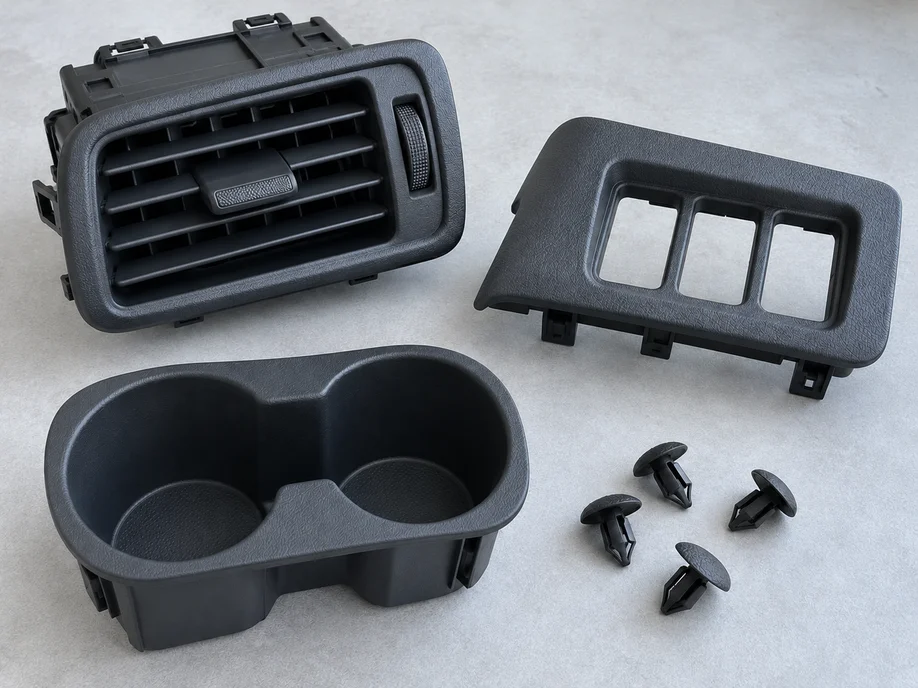
Black injection molded automotive interior parts including vent louvers, bezels and trim clips

Interior trim and functional parts

Vent louvers, switch bezels, trim clips, cup holder inserts, storage parts and small covers in PP, ABS, PC/ABS and POM.

Focus: Texture match, gloss, visible weld lines, clip retention, scratch resistance and low-odor or low-emission grades where specified.

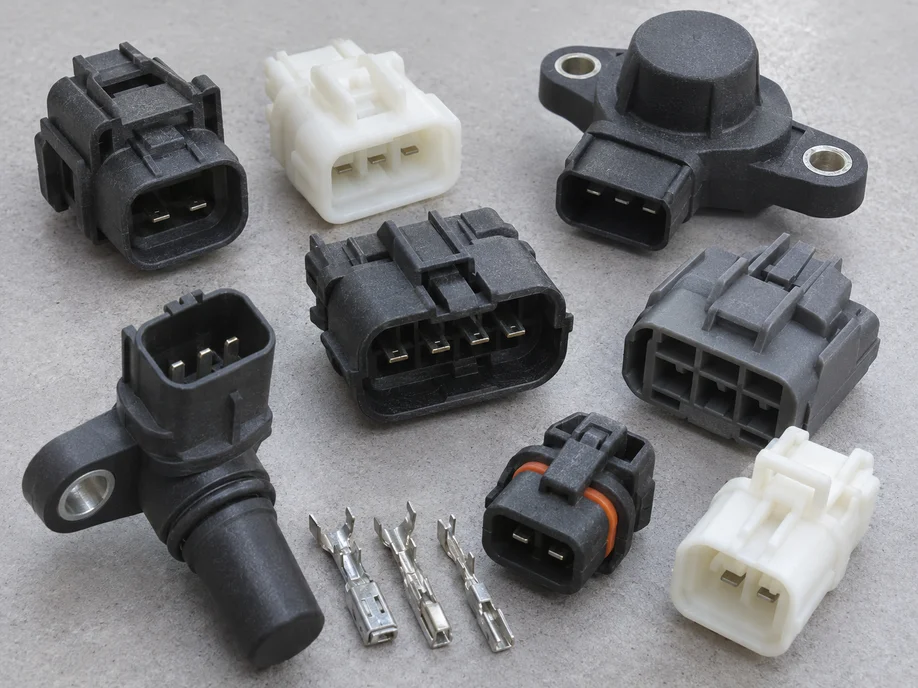
Glass-filled PBT automotive connector and sensor housings with molded-in terminals

Connectors, sensor and electrical housings

Connector bodies, sensor housings, relay and fuse covers and terminal carriers in PBT GF, PA66 GF, PPA and LCP.

Focus: Terminal position, shutoffs and flash, thin walls, flame and CTI requirements, and insert molding of metal contacts.

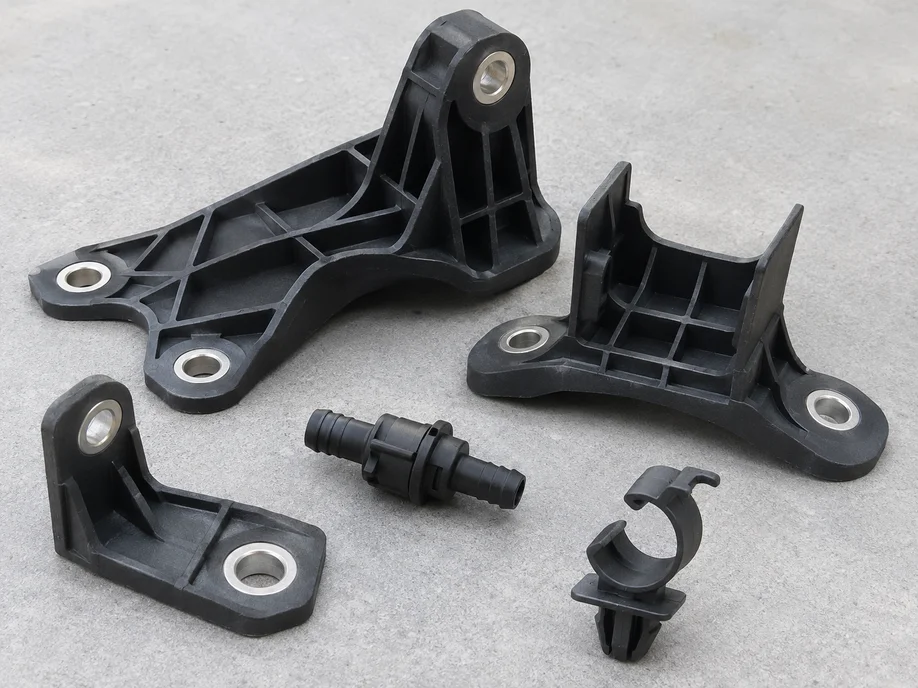
Glass-filled nylon automotive brackets with molded-in metal bushings

Brackets, fittings and EV components

Brackets, cable and pipe holders, fluid connectors, battery module frames and covers in PA66 GF, PPA, PPS and PBT.

Focus: Stiffness at temperature, creep around bolts, moisture effects on PA, compression limiters and fiber orientation at load points.

We work to customer drawings and approval plans. We do not claim direct supply to vehicle manufacturers, and customer and vehicle names are never used as references.

Material direction

Choose automotive grades for heat, fluids and vibration

Automotive plastic parts face temperature cycling, vibration, fuels, oils, coolants, cleaning agents and UV. Candidate families include PP and talc-filled PP, ABS, PC/ABS, PA6 and PA66 with glass, PBT, POM, PPA, PPS, TPE and TPU. The exact grade follows the customer specification or an approved equivalent.

For background, compare the types of plastics used in the automotive industry and the guide to glass filled nylon before the grade is confirmed against the drawing.

Possible starting families PP, talc-filled PP, ABS or PC/ABS

Interior parts balance stiffness, texture, scratch response, heat aging and emission or odor limits. Grade and color are fixed with the texture on molded samples, because the same color can read differently on different VDI textures.

Requirements that narrow the exact grade
  • Customer or OEM material specification, or approved equivalents
  • Operating temperature range and heat aging requirement
  • Fluids: fuel, oil, coolant, washer fluid, cleaners
  • UV and weathering for exterior parts
  • Flame, CTI or electrical requirements for connectors
  • Odor, fogging or emission limits for interior parts
  • Color, gloss and texture standard
  • Conditioning state for dimensions and testing

Automotive programs often name exact grades. When an equivalent is proposed, its data and the validation needed to approve it are agreed before tooling.

Engineering before tooling

Resolve automotive risks before the mold is cut

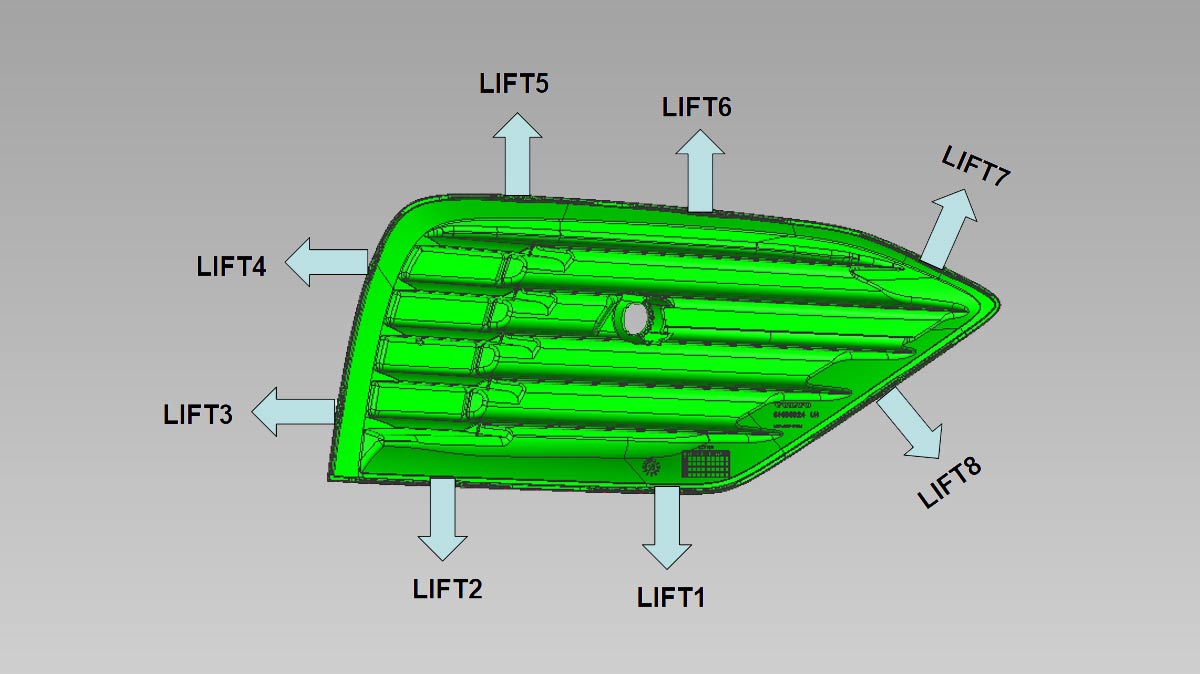
Formal DFM after kickoff checks walls, ribs, gates, draft, texture allowance and datum strategy against the functions that matter in a vehicle: clip retention, sealing, terminal position, vibration and heat. Moldflow is applied when warpage, fiber orientation or filling balance justify it.

Related guides cover automotive injection molding, snap fit design and warpage in plastic parts.

DFM view showing release directions around a ribbed plastic part
Approved DFM release-direction reference; shown as an engineering example, not a matched finished-part case.
Clips and snap fits

QuestionWill the clip hold and release at the specified force after heat and moisture exposure?

Engineering actionReview undercut depth, root radii, material creep and how the latch is released from the mold by lifters or slides.

ValidationMeasure insertion and retention force on conditioned trial parts against the agreed limits.

Textured and visible surfaces

QuestionWill texture, gloss and color match the reference on every visible face?

Engineering actionConfirm texture grade, draft on textured walls, gate and weld positions away from visible zones, and ejector locations.

ValidationApprove appearance against master samples under the agreed light and viewing distance.

Glass-filled structural parts

QuestionWill fiber orientation and shrinkage keep the part flat and strong where it is loaded?

Engineering actionPosition gates for fiber direction at load points, balance walls and add compression limiters at bolted joints.

ValidationCheck flatness, hole positions and load or torque tests on molded parts.

Inserts and terminals

QuestionWill metal inserts and terminals stay in position and sealed?

Engineering actionDesign insert support, shutoffs and locating features; plan insert loading by hand or robot.

ValidationMeasure insert position, pull-out force and flash at shutoffs during trials.

Project route

From RFQ to approved automotive production

Automotive projects move through clear approval stages so that tooling, samples and documents line up with the customer plan, including PPAP when it is required.

  1. 01

    RFQ and feasibility

    Review 3D and 2D data, material specification, annual volume, CTQs, appearance standard and the documents the program requires.

    Stage output: Quotation with tooling concept, cavity plan, assumptions and open risks.

  2. 02

    DFM and mold design

    Resolve draft, texture, gates, inserts, slides and lifters; run Moldflow where justified.

    Stage output: Approved DFM and mold design.

  3. 03

    Tooling and T1 samples

    Build the production mold, mold T1 parts and measure them against the drawing.

    Stage output: T1 samples with dimensional report and trial report.

  4. 04

    Corrections and approval

    Correct steel, re-trial and complete FAI, capability studies or PPAP elements as scoped.

    Stage output: Approved samples and release conditions.

  5. 05

    Production and supply

    Run with controlled material, process and inspection; pack to the agreed specification.

    Stage output: Production lots with lot traceability and outgoing inspection records.

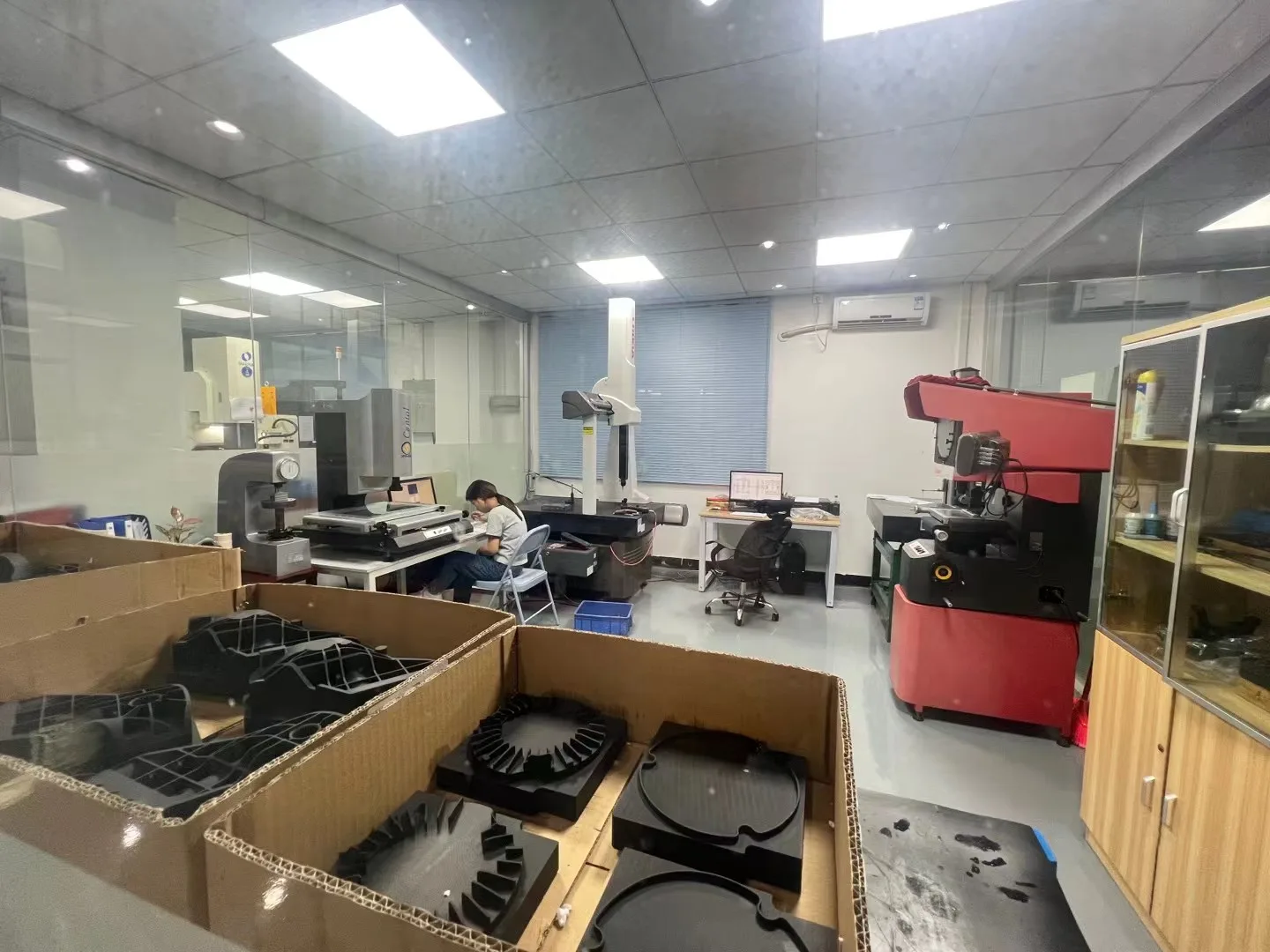
Inspection room with measuring equipment and molded plastic parts in cartons
Inspection room context for molded-part measurement and lot review.

Acceptance plan

Inspection for automotive plastic parts

Inspection is planned around the features that decide fit and function in the vehicle, with records that tie each lot to its material and process.

Critical dimensions

CMM and gauge checks on datums, clip positions, terminal positions and sealing faces, with SPC where agreed.

Appearance

Texture, gloss, color and defect limits checked against master samples under defined lighting.

Function

Clip force, insert pull-out, assembly fit and other agreed functional checks.

Traceability

Material lot, production date and cavity identification recorded for each shipment.

Quote economics

What drives the cost of automotive plastic parts

Cost per part depends on resin grade, part weight, cycle time, cavity count, inserts, secondary operations and the inspection and documentation the program needs.

01

One-time costs

Mold, fixtures and gauges, trials, and approval documents such as FAI or PPAP elements.

02

Recurring costs

Resin, molding, insert loading, inspection, packaging and freight under EXW, FOB or DDP terms.

Give the engineering team enough context to quote the right production route

Start with the controlled files and requirements you already have. Open items can be identified during review; the goal is to avoid a low-confidence quote built on silent assumptions.

  • Part definition3D CAD and controlled 2D drawing · Revision and units · CTQs, datums and mating/assembly information
  • Material and useExact approved grade or required performance · Color, reinforcement and flame/regulatory needs · Temperature, chemicals, moisture, UV, load and wear conditions
  • Demand and approvalAnnual forecast and typical release quantity · Current program stage and target timing · Dimensional, appearance, function and documentation expectations
  • Supply scopeNeed for project tooling and any available tooling records · Packaging and label requirements · Ship-to country and preferred Incoterm

Practical answers

Automotive plastic parts questions

Which automotive plastic parts do you make?

Small and medium precision parts such as interior trim and clips, connector and sensor housings, brackets, cable and pipe holders, fluid fittings and EV module components, made to customer drawings.

Are you IATF 16949 certified?

Yes. Our Shenzhen molding plant (Shenzhen Changsheng Mould Ltd.) is certified to IATF 16949:2016 and ISO 9001:2015 by SGS. PPAP elements, FAI, CMM reports and 8D are supplied per project when the program requires them.

Which materials are used for automotive plastic components?

Common grades include PP, PC/ABS, ABS, POM, PA6 and PA66 with glass fiber, PBT, PPA, PPS, TPE and TPU, chosen against the customer material specification.

Can you mold parts with metal inserts or soft-touch areas?

Yes. Metal insert molding and two-shot or overmolding routes are available for terminals, bushings, threaded inserts and TPE grips or seals.

What volumes do you support?

From pilot lots to repeat production in the hundreds of thousands per year, depending on part size and cavity plan. There is no fixed minimum order.

What do you need for a quote?

A 3D model and a 2D drawing to start. Material specification, annual volume, appearance standard and required documents help us quote the right route.

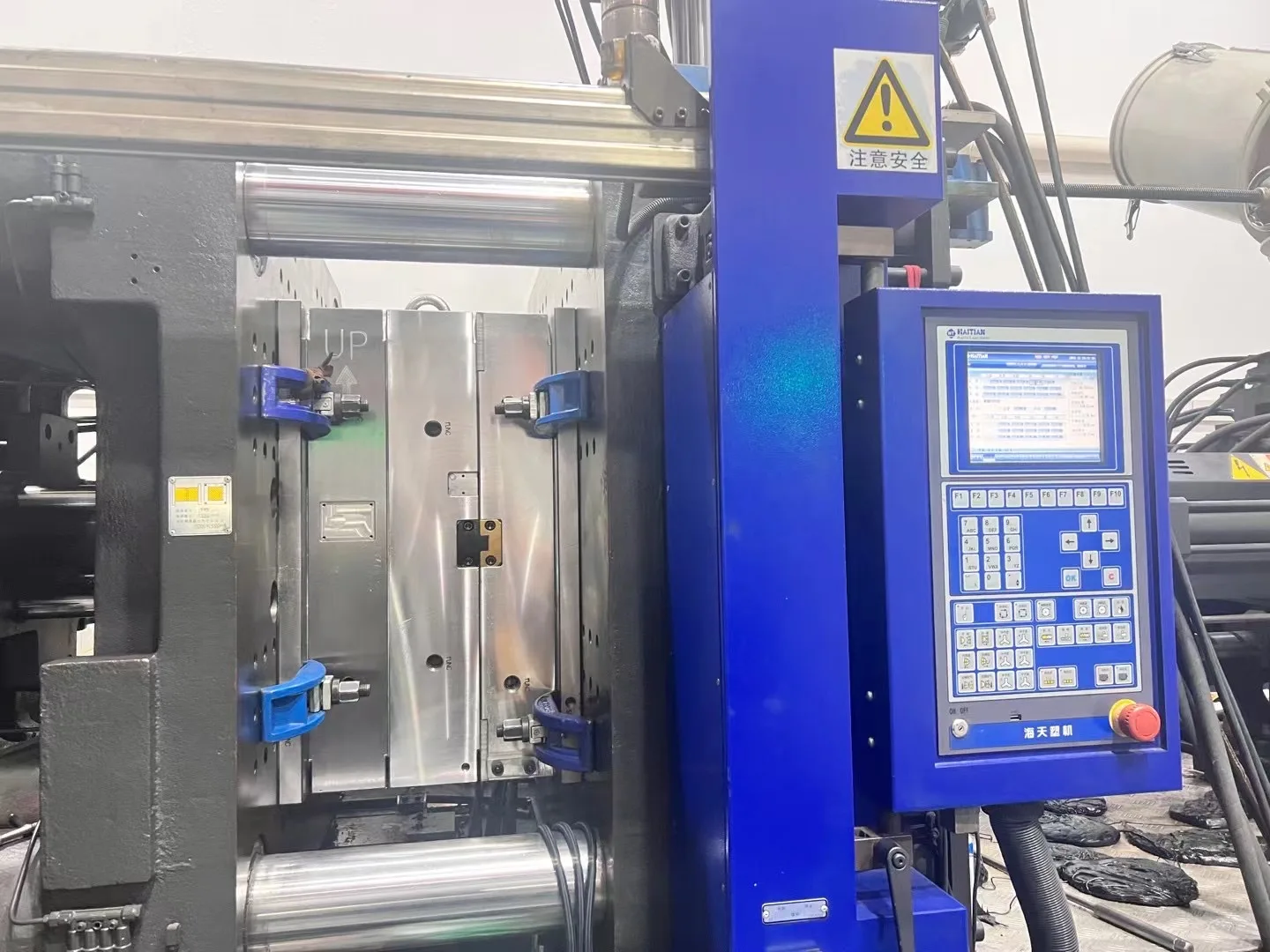
Injection molding machine with a mounted mold and control panel

Start with your controlled files

Discuss your automotive plastic parts project

Send the part model, drawing and the requirements you already know. We will review feasibility, tooling and the documents your program needs, and reply with the next questions or a quotation.

Have 3D models or 2D drawings? Email your files to peter@wokemolds.com.

Please review our Privacy Policy before sending project details.