
Sinker EDM: Electrodes, Accuracy and Surface Finish
Sinker EDM (also called ram EDM or die-sinking EDM) shapes hard metal by eroding it with a shaped electrode, usually graphite or copper, that is lowered into the workpiece under a dielectric oil. Sparks between the electrode and the part copy the electrode’s shape into the steel. It is essential in mold making for deep ribs, sharp internal corners, fine details, textures and features in hardened steel that milling cannot reach.
Sinker EDM is powerful but slow, and its results depend heavily on electrode design. For example, a deep, thin rib in a hardened mold cavity can be burned accurately with a well-designed graphite electrode, while the same rib milled would need a long, fragile tool and still leave rounded corners. In this guide, we explain sinker EDM: how it works, where it is used, electrode materials and design, accuracy and surface finish, design tips and how it compares with wire EDM and milling. For through-profiles, see our guide to wire EDM.
Sinker EDM uses a shaped electrode, typically graphite or copper, to erode a matching cavity in a conductive workpiece submerged in dielectric oil. It makes blind cavities, deep narrow ribs, sharp internal corners, fine text and EDM textures in hardened tool steels and carbide without cutting forces. Accuracy depends on electrode accuracy, wear and spark gap (overburn), with roughing and finishing electrodes often used. Finishes range from fine polish-ready surfaces to textured surfaces. It is slower than milling, so it is used where milling cannot reach or hold the geometry.
In short: sinker EDM copies electrode shapes into hard steel; use it for blind details milling cannot make.
Key points:
- Blind features: cavities, ribs and corners in hard steel.
- Electrodes: graphite or copper, often roughing plus finishing.
- Finish: from fine to textured surfaces.
How Does Sinker EDM Work?
Sinker EDM works by producing controlled sparks between a shaped electrode and the workpiece in dielectric oil.
Process basics:
- Electrode shaped as the negative of the feature
- Dielectric oil insulates, cools and flushes debris
- Spark gap (overburn) set by power settings
- Orbiting motion to finish walls and improve flushing
- Multiple electrodes for roughing and finishing
For example, a mold cavity rib may be roughed with one graphite electrode and finished with a second electrode cut to final size. Our Dongguan factory uses Makino sinker EDM machines with automatic electrode change. Machine capability is not finished-part tolerance; tolerances are confirmed per drawing.
Key Takeaway: Above all, the electrode defines the shape; the spark gap defines the final size.
Where Is Sinker EDM Used?
Sinker EDM is used where hard material, deep features or sharp details make milling impractical.
Typical uses:
- Deep, narrow ribs in mold cavities
- Sharp internal corners in blind pockets
- Fine details: logos, text, small features
- Hardened tool steel after heat treatment
- EDM textures on molded surfaces
- Carbide dies and wear parts
For example, a connector mold core with thin ribs between pins is often finished by sinker EDM. Our injection mold manufacturing process combines milling, EDM and grinding.
Key Takeaway: In other words, sinker EDM reaches where cutters cannot.
Which Electrode Materials Are Used in Sinker EDM?
Electrode materials in sinker EDM are chosen for wear, finish and machinability.
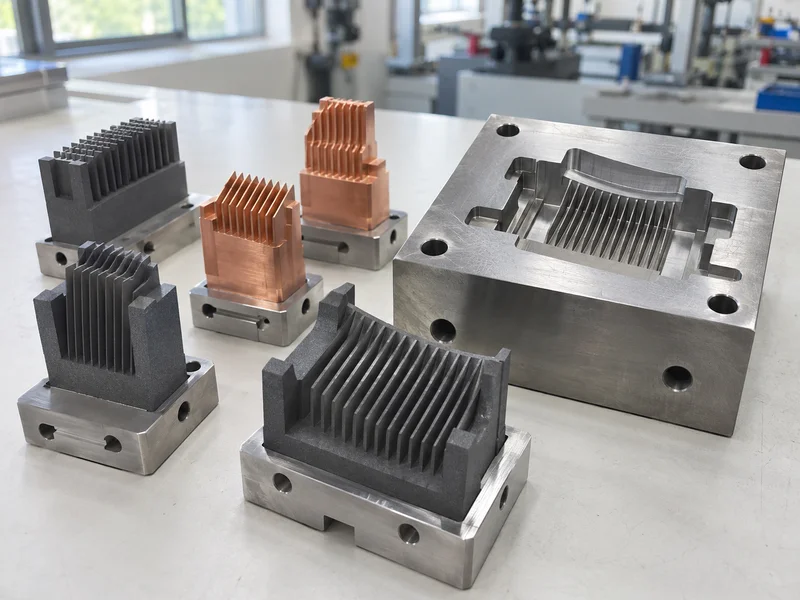
| Electrode | Advantages | Typical uses |
|---|---|---|
| Graphite | Fast machining, low wear, light | Most mold work, roughing and finishing |
| Copper | Fine finishes, polish-ready surfaces | Fine details, mirror finishes |
| Copper-tungsten | Very low wear | Carbide, precision small features |
For example, a deep rib electrode may be milled from fine-grain graphite for speed and low wear, while a mirror-finish area uses copper. Our guide to machinability of copper explains copper electrode machining.
Key Takeaway: For this reason, most mold electrodes are graphite unless a fine finish needs copper.
How Accurate Is Ram EDM?
Sinker EDM accuracy depends on electrode accuracy, electrode wear, spark gap and setup.
Factors:
- Electrode accuracy: machined on precision mills
- Electrode wear: compensated with multiple electrodes
- Overburn: controlled by settings
- Setup: electrode and part alignment
- Depth control: CNC axes
For example, using a roughing electrode and a separate finishing electrode with smaller overburn keeps rib widths accurate. Our guide to tight tolerance machining explains tolerance planning.
Key Takeaway: Overall, accuracy starts with precise electrodes and planned wear compensation.
What Surface Finishes Can Spark Erosion Produce?
Sinker EDM can produce surfaces from fine and polish-ready to deliberately textured.
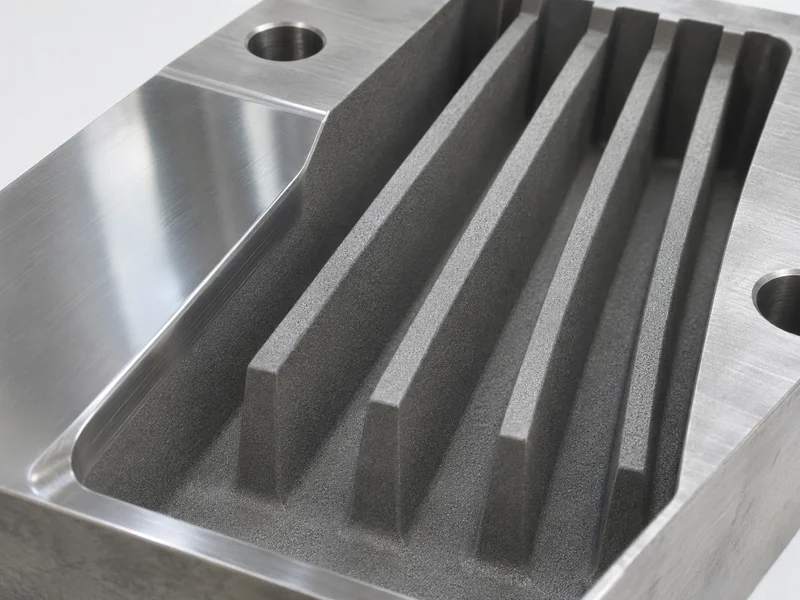
- Fine finishing: low-power settings for smooth surfaces
- EDM textures: standard VDI 3400 texture grades on molded parts
- Recast layer: thin re-solidified layer that may need removal on critical surfaces
- Polishing after EDM for gloss surfaces
For example, a VDI 27 EDM texture gives a uniform matte finish on a molded housing without separate texturing. Our guide to mold texture explains texture options. VDI texture grades are widely referenced in mold specifications.
Key Takeaway: Equally, specify EDM texture grade or polish requirement for EDM’d molding surfaces.
How Should Features Be Designed for Sinker EDM?
Features should be designed for sinker EDM with realistic depths, radii and electrode access.
Design tips:
- Depth-to-width ratio: very deep thin slots need flushing and time
- Small radii are possible but limited by electrode wear
- Draft on ribs helps electrode life and part ejection
- Group details so one electrode can make several features
- Avoid unnecessary sharp corners
For example, adding 0.5° draft to deep ribs reduces electrode wear and helps the molded part eject. Our guide to draft angle guidelines explains draft.
Key Takeaway: As a rule, small design allowances save electrodes and EDM hours.
How Does Sinker EDM Compare With Wire EDM and Milling?
Sinker EDM compares with wire EDM and milling by the feature types each handles best.
| Process | Best for | Limits |
|---|---|---|
| Sinker EDM | Blind cavities, ribs, textures in hard steel | Needs electrodes, slower |
| Wire EDM | Through-profiles, sharp corners | Through-features only |
| High-speed milling | Fast removal, most cavity shapes | Deep narrow ribs, sharp corners |
For example, a cavity insert may be hard-milled for most surfaces and sinker EDM’d only for ribs and corners. Our CNC machining services include wire and sinker EDM. EDM terminology is described in standards from ISO.
Key Takeaway: Finally, use sinker EDM only for features milling cannot do well.
FAQ
- Q: What is sinker EDM?
- A process that erodes a shaped cavity in conductive metal using a shaped electrode and sparks.
- Q: What is the difference between sinker EDM and wire EDM?
- Sinker EDM makes blind shapes with an electrode; wire EDM cuts through-profiles with a wire.
- Q: What electrodes are used in sinker EDM?
- Mainly graphite and copper, sometimes copper-tungsten.
- Q: Can sinker EDM make textures?
- Yes, EDM textures such as VDI grades.
- Q: Why is sinker EDM used in mold making?
- To make deep ribs, sharp corners and details in hardened steel.
Conclusion
Sinker EDM copies precise electrode shapes into hard steel, making ribs, corners, details and textures that milling cannot. Design for electrode access, specify finishes and combine it with milling and wire EDM. To review a mold or precision part, send your 3D model and 2D drawing to our engineers.