
Machinability of Copper: Grades, Challenges and Tips
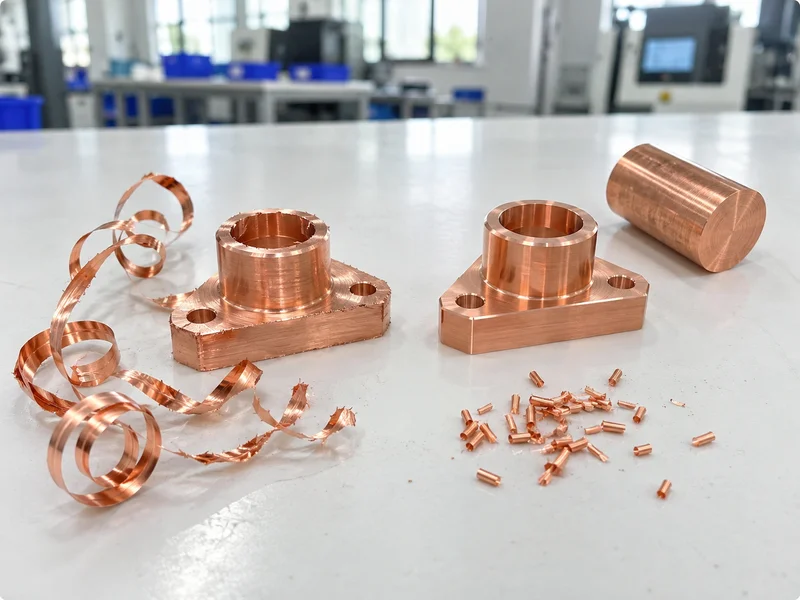
The machinability of copper depends heavily on the grade. Pure copper, such as C101 or C110, is soft, ductile and sticky, so it forms long chips, builds up on the cutting edge and leaves burrs. Free-machining copper alloys, such as tellurium copper or leaded brass, cut cleanly and quickly. Many machined copper parts are bus bars, electrodes, heat sinks, connectors and RF components, where conductivity matters as much as dimensions.
Buyers often specify “copper” without a grade and then wonder why the price or lead time is high. For example, a heat spreader in C110 may take much longer to machine and deburr than the same part in a free-machining alloy, while a bus bar may truly need high-conductivity copper. In this guide, we explain the machinability of copper by grade, what makes it difficult, how to machine it well, finishing and the questions to ask before quoting. For comparisons with brass and bronze, see our guide to bronze vs brass vs copper alloy.
The machinability of copper is low for pure grades (C101, C102, C110), typically rated around 20% of free-cutting brass, because pure copper is soft, ductile and prone to built-up edge, long chips and burrs. Free-machining copper alloys such as tellurium copper (C145) or sulfur copper (C147) reach about 80–85%, with only a small loss in conductivity. Good results need sharp, polished tools with high rake angles, good chip control, adequate coolant and careful deburring. Choose the grade by the balance between conductivity and machinability.
In short: pure copper is conductive but hard to machine cleanly; free-machining copper keeps most conductivity and cuts far better.
Key points:
- Pure copper: high conductivity, low machinability.
- Free-machining copper: slightly lower conductivity, much better machinability.
- Ask early: which property really drives the grade?
What Determines the Machinability of Copper?
The machinability of copper is determined by its softness, ductility and the presence of chip-breaking elements.
Main factors:
- Ductility: pure copper deforms instead of shearing, forming long chips.
- Built-up edge: copper welds to the tool edge, spoiling the finish.
- Thermal conductivity: heat leaves quickly, which helps tool life but can affect fixturing.
- Alloying elements: tellurium, sulfur or lead break chips.
- Temper: harder tempers (such as half hard) often machine better than annealed.
For example, annealed C110 can produce long, stringy chips that wrap around the tool, while half-hard C110 cuts more cleanly. Copper alloy designations are listed in standards such as those from ASTM International.
Key Takeaway: Specify temper as well as grade. Harder tempers often improve machining.
How Does the Machinability of Copper Compare by Grade?
The machinability of copper varies widely by grade, from about 20% to 85% of free-cutting brass.
| Grade (typical) | Machinability rating (approx.) | Electrical conductivity (approx., %IACS) | Typical uses |
|---|---|---|---|
| C101 / C102 (oxygen-free) | 20% | 100–101% | Vacuum, RF, high-purity parts |
| C110 (ETP) | 20% | 100% | Bus bars, general electrical |
| C145 (tellurium copper) | 80–85% | 90–93% | Connectors, welding tips, machined electrical parts |
| C147 (sulfur copper) | 80–85% | 93–95% | Screw-machine parts |
| C360 (free-cutting brass) | 100% (reference) | 26–28% | Fittings, general machined parts |
For example, a machined terminal that needs high conductivity and many small features is often a good candidate for C145. Values vary with temper and supplier, so check the material data.
Key Takeaway: If conductivity above about 90% is enough, a free-machining copper can cut cost significantly.
Why Is Pure Copper Difficult to Machine?
Pure copper is difficult to machine because it smears, sticks and burrs rather than cutting cleanly.
Common problems:
- Built-up edge on the tool, giving a torn surface
- Long chips that wrap and scratch the part
- Burrs on edges, holes and threads
- Dimensional springback in thin sections
- Soft surfaces that dent easily during handling
For example, tapping small threads in pure copper can tear the thread flanks. Thread milling or roll tapping often gives better threads. Our guide to threaded holes compares the methods.
Key Takeaway: Plan deburring and handling for pure copper. They often cost as much as the cutting.
How Do You Improve the Machinability of Copper in Production?
You improve the machinability of copper in production with the right tools, parameters and coolant.
Practical methods:
- Sharp, polished tools with high positive rake
- Uncoated or DLC-coated carbide to reduce sticking
- Chip breakers or interrupted cuts for long chips
- Adequate coolant with lubricity
- Climb milling and light finishing passes
- Soft-jaw fixtures to protect surfaces
For example, switching from a general-purpose coated end mill to a polished, high-rake tool can remove built-up edge on a copper heat sink. Our CNC milling and CNC turning services machine copper and brass parts to drawing.
Key Takeaway: Tool geometry matters more than speed for good copper surfaces.
What Finishes and Inspection Suit Machined Copper Parts?
Machined copper parts often need finishing and careful inspection, because copper oxidizes and scratches easily.
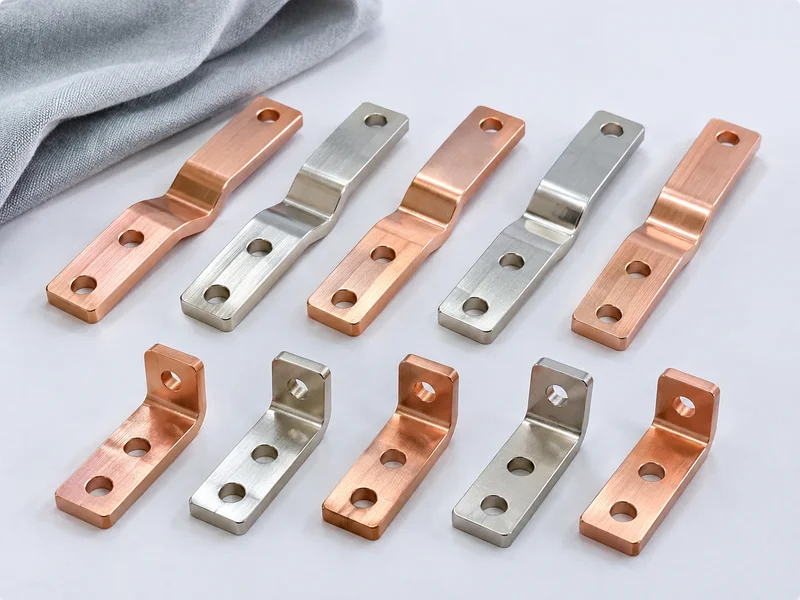
Common finishes:
- Nickel plating for corrosion and contact stability
- Tin or silver plating for electrical contacts
- Passivation or anti-tarnish treatment for storage
- Bright dip or polishing for appearance
Inspection points:
- Burrs on edges and holes
- Surface scratches and dents
- Flatness on contact faces
- Plating thickness when specified
For example, a bus bar contact face may require flatness and silver plating thickness checks. Our quality control and inspection process measures specified features and supplies reports on request.
Key Takeaway: Pack copper parts to prevent tarnish and scratches between machining and finishing.
What Should You Ask About Copper Stock Before Quoting?
You should ask about copper stock before quoting so the grade, temper and form match both function and machinability.
Questions:
- Which property matters most: conductivity, thermal performance or cost?
- Is a free-machining grade acceptable?
- Which temper is required?
- Which form: bar, plate or extrusion?
- Is a material certificate required?
- Which finish follows machining?
For example, a customer may specify C101 by habit while C110 or C145 would meet the requirement at lower cost. Asking early avoids a redesign later. Our guide to CNC machining materials compares common metals.
Key Takeaway: Confirm the real requirement behind “copper” before quoting.
FAQ
- Q: Is copper easy to machine?
- Pure copper is not; it is soft and sticky. Free-machining copper alloys machine much more easily.
- Q: What is the machinability rating of copper?
- About 20% for pure copper and about 80–85% for tellurium or sulfur copper, compared with free-cutting brass at 100%.
- Q: Which copper is best for machining?
- Tellurium copper (C145) or sulfur copper (C147), when slightly lower conductivity is acceptable.
- Q: Why does copper form burrs when machined?
- Its ductility makes it deform instead of shearing cleanly.
- Q: What coating suits machined copper parts?
- Nickel, tin or silver plating, depending on corrosion and electrical needs.
Conclusion
The machinability of copper depends on grade and temper: pure copper is conductive but difficult, while free-machining alloys cut far better with small conductivity loss. Choose the grade by the real requirement, use sharp high-rake tools and plan finishing. To review a copper part, send your 3D model and 2D drawing to our engineers.