
Flame Retardant Plastics: How to Pick the Best One and Save Money
Flame retardant plastics are resin grades modified so that a molded part resists ignition, slows flame spread or self-extinguishes. They are specified for electrical housings, connectors, switchgear parts, chargers and appliance components, usually to meet a UL 94 rating. Choosing one is not only about the rating, however. The flame retardant package changes strength, color, moldability, tracking resistance and cost.
A common mistake is to specify “V-0” without saying at what thickness, in what color, or with which other requirements. For example, a grade rated V-0 at 1.5 mm may only reach V-2 at 0.8 mm, and a color change can require new evidence. In this guide, we explain how to shortlist flame retardant plastics for a molded part: ratings, additive types, CTI vs UL 94, common grades, evidence after a color change and how to specify them. For material families, see our injection molding material selection guide.
Flame retardant plastics for molded parts are usually selected by UL 94 rating (HB, V-2, V-1, V-0, 5VA/5VB) at the part’s minimum wall thickness and in the required color. Common grades include FR PC, PC/ABS, PA66, PBT, PPS and LCP, using halogen-free or halogenated additive systems. The additive package affects impact strength, flow, surface quality and comparative tracking index (CTI). Specify the rating, thickness, color, CTI and any glow-wire or RoHS/REACH requirement, and confirm the exact grade’s evidence before production.
In short: define rating, thickness, color and CTI together, then shortlist grades whose evidence covers all four.
Key points:
- Thickness: UL 94 ratings apply at a stated thickness.
- Color: pigments can affect flame performance.
- Trade-offs: additives change strength, flow and CTI.
What Are Flame Retardant Plastics?
Flame retardant plastics are polymers compounded with additives, or made from inherently flame-resistant polymers, so that they resist burning.
Two routes:
- Additive systems: halogenated (bromine-based) or halogen-free (phosphorus, nitrogen, metal hydroxides) packages added to PC, ABS, PA, PBT or PP.
- Inherently flame resistant polymers: PPS, LCP, PEEK and PEI resist burning without large additive loadings.
For example, an FR PC/ABS charger housing uses an additive package, while an LCP connector is inherently flame resistant. Restrictions on certain halogenated additives are published by ECHA under REACH.
Key Takeaway: Know whether the flame resistance comes from additives or the base polymer. It changes the trade-offs.
How Are Flame Retardant Plastics Rated?
Flame retardant plastics are commonly rated by UL 94, which classifies burning behavior of a specimen at a given thickness.
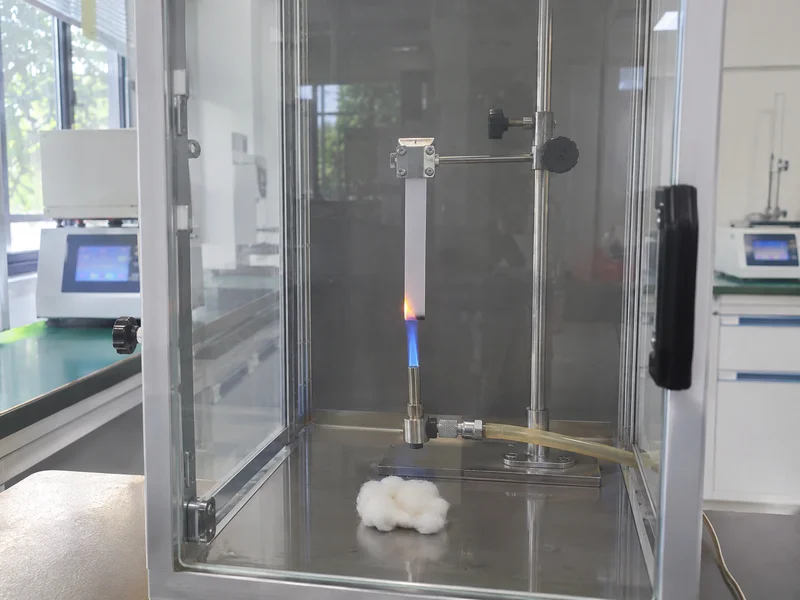
| Rating (UL 94) | Test orientation | Typical meaning |
|---|---|---|
| HB | Horizontal | Slow burning; lowest rating |
| V-2 | Vertical | Self-extinguishes; flaming drips allowed |
| V-1 | Vertical | Self-extinguishes within a longer time; no flaming drips |
| V-0 | Vertical | Self-extinguishes quickly; no flaming drips |
| 5VA / 5VB | Vertical, larger flame | For enclosures; 5VA without burn-through |
Other tests may apply, such as glow-wire tests in IEC 60695 for appliances, published by the IEC. The UL 94 standard itself is maintained by UL.
Key Takeaway: Always state the UL 94 rating together with the minimum wall thickness.
Which Flame Retardant Plastics Are Common in Molded Parts?
Common flame retardant plastics in molded parts include FR grades of PC, PC/ABS, PA66, PBT, PP, and inherently flame resistant PPS and LCP.
- FR PC and PC/ABS: housings, covers, chargers; good appearance.
- FR PA66 (often glass filled): connectors, breaker parts; high strength.
- FR PBT: connectors, coil formers; good dimensional stability.
- FR PP: lower-cost appliance parts; lower heat resistance.
- PPS and LCP: thin-wall connectors and high-temperature parts.
- BMC/DMC: thermoset insulation parts with high CTI.
For example, a thin-wall connector with 0.5 mm walls often uses LCP, because it flows well and keeps a V-0 rating at low thickness. Our guide to PBT injection molding explains PBT connector design.
Key Takeaway: Shortlist by wall thickness first. Thin walls narrow the choice quickly.
How Do Flame Retardant Additives Change Molded Parts?
Flame retardant additives change molded parts because they dilute the polymer and interact with heat during molding.
Common effects:
- Lower impact strength, especially with high additive loading
- Changed flow, sometimes better, sometimes worse
- Thermal sensitivity: some additives degrade if overheated, causing splay or corrosion
- Mold deposits on vents and cavity surfaces
- Surface quality: blooming or dull areas in some grades
For example, an FR PA66 grade held too long in a hot barrel can release gases that corrode the mold and cause splay. Short residence times and clean vents prevent this. Our guide to splay in injection molding explains degradation marks.
Key Takeaway: Follow the resin supplier’s melt temperature and residence-time limits for FR grades.
What Is the Difference Between CTI and UL 94?
The difference between CTI and UL 94 is what they measure: UL 94 rates burning behavior, while CTI rates resistance to surface electrical tracking.
- UL 94: flame behavior after ignition.
- CTI (IEC 60112): voltage at which tracking forms under contamination.
A grade can be V-0 but have a low CTI, because some flame retardant packages reduce tracking resistance. Electrical parts often need both. Our guide to the comparative tracking index explains CTI groups.
Key Takeaway: For electrical insulation parts, specify UL 94 and CTI together.
What Evidence Is Needed After a Color Change?
Evidence is needed after a color change because pigments and masterbatches can affect flame performance and CTI.
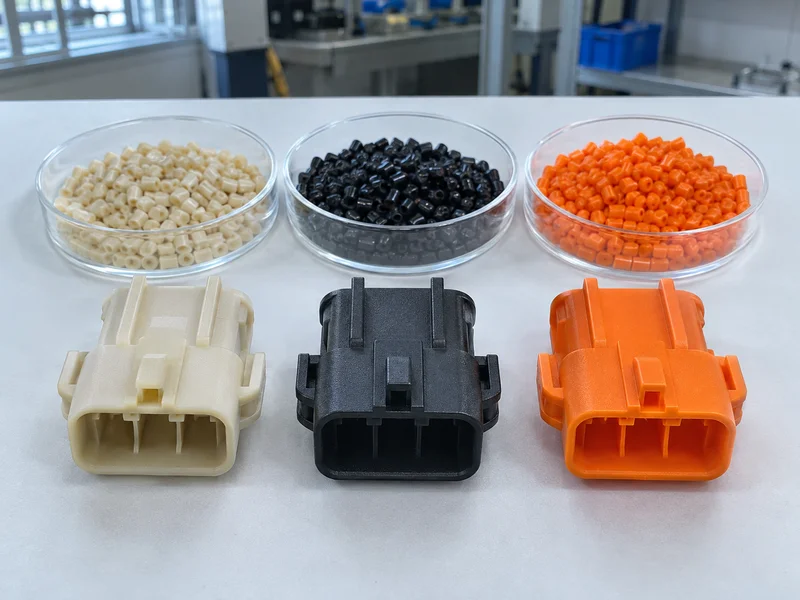
Practical steps:
- Check the grade’s listing: some ratings apply to all colors, others to specific colors.
- Use the supplier’s pre-colored grade when possible.
- Review masterbatch effects if coloring in-house.
- Retest or obtain data when the listing does not cover the color.
- Record the change in the part’s change control.
For example, switching a V-0 natural PA66 to a custom orange masterbatch may need confirmation that the color is covered. Our guide to clear plastic injection molding covers color approval control.
Key Takeaway: Treat a color change on an FR part as a material change, not a cosmetic one.
How Should Flame Retardant Plastics Be Specified?
Flame retardant plastics should be specified with the rating, thickness, color and related electrical or regulatory requirements.
Specification items:
- UL 94 rating at the minimum wall thickness
- Color and whether the rating must cover it
- CTI or PLC class for electrical parts
- Glow-wire requirements, if any
- Halogen-free, RoHS and REACH requirements
- Approved grade or equivalents
For example, “PBT-GF30, UL 94 V-0 at 0.8 mm, black, CTI ≥ 250 V, halogen-free” is clear. We mold flame-retardant grades and supply material certificates on request; exact grade evidence is confirmed per project. See our plastic injection molding service.
Key Takeaway: A complete flame specification has at least four items: rating, thickness, color and CTI.
FAQ
- Q: What are flame retardant plastics?
- Plastics with additives or inherent chemistry that resist ignition and self-extinguish.
- Q: What does UL 94 V-0 mean?
- The specimen self-extinguishes quickly in a vertical test with no flaming drips, at a stated thickness.
- Q: Which plastics are naturally flame resistant?
- PPS, LCP, PEEK and PEI resist burning without large additive loadings.
- Q: Does color affect flame rating?
- It can. Check that the grade’s rating covers the chosen color.
- Q: Is a V-0 material always good for electrical insulation?
- Not always. Check CTI too, because some flame retardants lower tracking resistance.
Conclusion
Flame retardant plastics should be chosen by rating, thickness, color and CTI together, then confirmed with evidence for the exact grade. Expect trade-offs in strength and moldability, and control color and material changes. To review material for your part, send your 3D model and 2D drawing to our engineers.