
PBT Injection Molding: Grades, Drying and Warpage Control
PBT injection molding produces stiff, dimensionally stable parts with good electrical properties, which is why polybutylene terephthalate is common in connectors, sensor housings, relay bases, coil formers, switch parts and automotive electrical components. Glass-filled and flame-retardant PBT grades are especially popular. However, PBT is a semi-crystalline polyester, so it needs careful drying, mold temperature control and design for anisotropic shrinkage.
Most PBT problems trace back to moisture, mold temperature or fiber orientation. For example, a glass-filled PBT connector molded with damp resin can look fine but crack at the latch during assembly, because hydrolysis lowered its toughness. In this guide, we explain PBT injection molding for dimensional fit: grades, design rules, drying, tooling, process settings, common defects and RFQ inputs. For electrical requirements, see our guide to flame retardant plastics.
PBT injection molding requires drying to about 0.02–0.04% moisture (typically around 120 °C for 2–4 hours), melt temperatures roughly 240–270 °C and mold temperatures about 60–90 °C, depending on grade. PBT crystallizes quickly, giving short cycles and good dimensional stability, but shrinkage is anisotropic in glass-filled grades (often around 0.3–0.6% along flow and higher across it). Design with uniform walls, generous radii and gate locations that control fiber orientation, and specify grade, flame rating, CTI and critical dimensions in the RFQ.
In short: dry it well, control mold temperature and gate for fiber orientation to keep PBT parts in tolerance.
Key points:
- Drying: essential to avoid hydrolysis and brittleness.
- Shrinkage: directional in glass-filled grades.
- Uses: connectors and electrical parts with tight fits.
What Is PBT Injection Molding Used For?
PBT injection molding is used for parts that need stiffness, dimensional stability, electrical insulation and moderate heat resistance.
Typical parts:
- Connectors and terminal housings
- Sensor and switch housings
- Relay bases and coil formers
- Automotive electrical components
- Appliance parts near heat and electricity
For example, a 30% glass-filled PBT connector housing can keep its pin positions accurate through soldering and assembly. Our plastic injection molding service molds PBT, including glass-filled and flame-retardant grades.
Key Takeaway: Choose PBT for stable, electrically insulating parts with moderate heat exposure.
Which PBT Grades Are Common?
Common PBT grades include unfilled, glass-filled, flame-retardant and blended types.
| Grade (typical) | Key property | Typical uses |
|---|---|---|
| Unfilled PBT | Good surface, toughness | Housings, keycaps |
| PBT-GF15 / GF30 | Stiffness, heat resistance | Connectors, brackets |
| FR PBT (V-0) | Flame resistance | Electrical parts |
| PBT/PET blends | Surface quality, cost | Appliance parts |
| PBT/ASA or PBT/PC | Weathering or impact | Exterior parts |
For example, a terminal block may use FR PBT-GF30 rated V-0 at 0.8 mm with a specified CTI. Our guide to the comparative tracking index explains tracking classes, and flame ratings follow UL 94.
Key Takeaway: Select the grade by stiffness, flame rating and CTI together.
How Should Parts Be Designed for PBT Injection Molding?
Parts for PBT injection molding should be designed with uniform walls, generous radii and features that tolerate directional shrinkage.
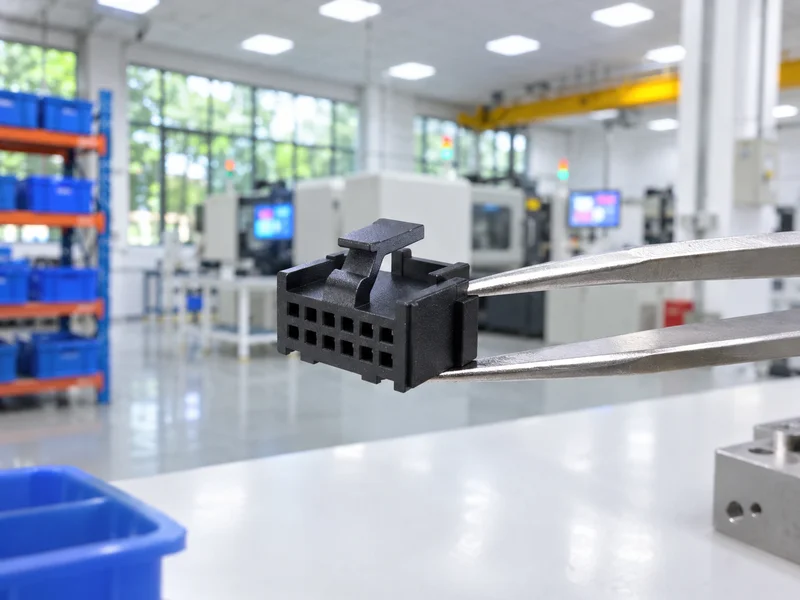
Design rules:
- Wall thickness: about 0.8–3 mm, kept uniform
- Radii: at least about 0.5 mm internal, larger at snap fits
- Ribs: about 50–60% of the wall
- Draft: about 0.5–1° typical, more on textured faces
- Snap fits: short deflections, because glass-filled PBT has low elongation
- Tolerances: account for different shrinkage along and across flow
For example, a latch on a glass-filled PBT connector may crack if its strain is designed like an unfilled ABS latch. Our guide to snap fit design explains allowable strain.
Key Takeaway: Design snap fits on filled PBT for low strain.
How Should PBT Be Dried and Processed?
PBT should be dried thoroughly and processed within the supplier’s temperature and residence-time limits.
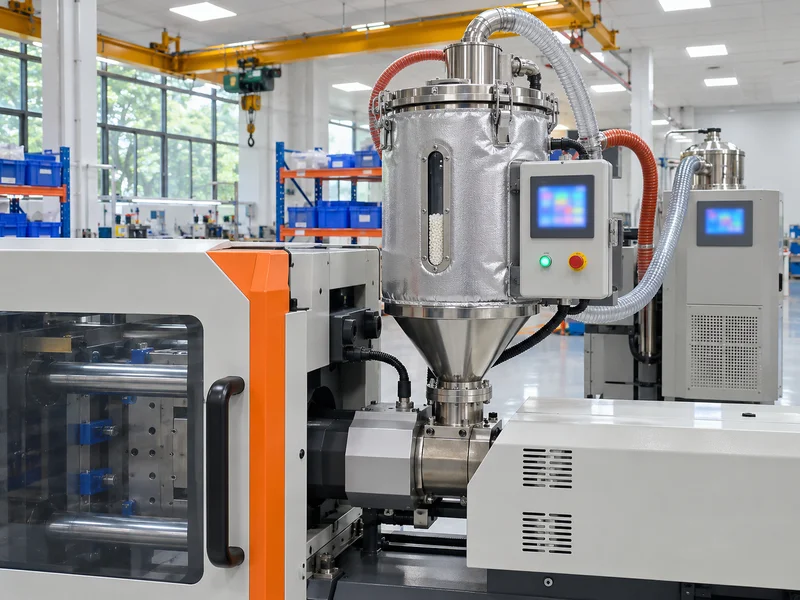
Processing guidance (typical, confirm per grade):
- Drying: about 120 °C for 2–4 hours to below about 0.04% moisture
- Melt temperature: about 240–270 °C
- Mold temperature: about 60–90 °C; higher for better surface and crystallinity
- Injection speed: fast for thin walls and glass-filled grades
- Residence time: short, to avoid degradation
For example, molding PBT that sat in an open hopper for hours can cause brittle parts even if they look normal. Hydrolysis is not always visible. Our guide to plastic resin drying explains dew-point drying.
Key Takeaway: Check moisture at the press for PBT. Brittle parts often trace back to drying.
How Do You Control Shrinkage and Warpage in PBT Injection Molding?
You control shrinkage and warpage in PBT injection molding by balancing cooling, gating for consistent fiber orientation and keeping walls uniform.
Methods:
- Gate location to give consistent flow direction
- Balanced cooling on core and cavity
- Uniform walls and coring of thick areas
- Consistent mold temperature for stable crystallinity
- Tool steel adjustments after trial measurements
For example, a long PBT-GF30 connector gated at one end may bow. Gating centrally or adding a second gate balances orientation. Our guide to warpage plastic parts explains diagnosis.
Key Takeaway: For filled PBT, gate location is a dimensional control.
What Defects Are Common in PBT Injection Molding?
Common defects in PBT injection molding include brittleness, warpage, flash, splay and surface fiber marks.
- Brittleness: usually moisture or degradation
- Warpage: fiber orientation or uneven cooling
- Flash: low viscosity at high melt temperature
- Splay: moisture or degraded flame retardant
- Fiber marks: low mold temperature or slow injection
For example, flash on fine connector features can be reduced by lowering melt temperature, improving venting and maintaining tight shut-offs. Our guide to injection molding defects and solutions maps defects to causes.
Key Takeaway: Check drying and mold temperature first when PBT parts fail.
What Should a PBT Injection Molding RFQ Include?
A PBT injection molding RFQ should include the grade requirements, electrical properties, critical dimensions and volumes.
RFQ items:
- 3D model and 2D drawing
- Grade or required properties: glass content, flame rating, CTI
- Color and whether ratings must cover it
- Critical dimensions and fit requirements
- Annual volume and cavity expectations
- Inserts or overmolding, if any
- Quality documents needed
For example, “PBT-GF30 FR, V-0 at 0.8 mm, CTI ≥ 250 V, black, pin positions ±0.05 mm” gives a clear basis. We confirm grade and process per project during DFM.
Key Takeaway: Include electrical and flame requirements in the RFQ, not just “PBT”.
FAQ
- Q: What is PBT used for in injection molding?
- Connectors, sensor housings, relay bases and electrical parts that need stiffness and stability.
- Q: Does PBT need drying before molding?
- Yes, typically around 120 °C for 2–4 hours to avoid hydrolysis.
- Q: What mold temperature is used for PBT?
- Often about 60–90 °C, depending on grade and surface needs.
- Q: Why do glass-filled PBT parts warp?
- Glass fibers make shrinkage different along and across the flow direction.
- Q: Is PBT a good electrical insulator?
- Yes, with good dielectric properties; check CTI for tracking-sensitive parts.
Conclusion
PBT injection molding delivers stable, insulating parts when the resin is dried, mold temperature is controlled and the design accounts for directional shrinkage. Specify grade, flame rating and CTI clearly. To review a PBT part, send your 3D model and 2D drawing to our engineers.