
Plastic Resin Drying: 10 Essential Production Checks
Plastic resin drying prepares industrial thermoplastic pellets for injection molding by controlling moisture against the requirements of the exact grade. When moisture limits, air conditions, or time are guessed, a processor can carry an avoidable material risk into the press.
That risk is easy to miss because pellets may look unchanged while their storage or drying history has changed. Plastic resin drying is therefore a grade-and-lot control question, not a universal temperature setting; a useful review starts with the resin data sheet and continues through the injection molding process.
Drying requirements depend on resin grade, initial moisture, and equipment conditions. Confirm the supplier’s temperature, time, and moisture target, then preserve that condition between the dryer and the machine. A reading of air dew point is not a direct measurement of moisture in the pellets.
In short: identify the exact grade, use its current drying instructions, and keep evidence of the material’s condition through feeding.
Key points:
- Hygroscopic pellets can hold moisture inside the polymer; other resins may mainly carry surface moisture.
- Heat, dry-air dew point, time, and airflow work together, so one setpoint cannot establish a complete drying cycle.
- Record grade, lot, exposure, drying conditions, measurement method, and time to molding before changing the mold or process.
Which plastic resins need drying before injection molding?
Some thermoplastic grades need pre-drying to reduce moisture held inside pellets; others mainly need surface moisture removed, and some may not require the same internal drying step. Start with the exact grade’s supplier instructions, because “plastic resin” covers different moisture behaviors.
Hygroscopic resin can hold moisture inside pellets. Non-hygroscopic resin may still carry surface water from condensation or handling. The drying objective differs, but the exact grade sheet still controls.
For hygroscopic pellets, check internal moisture against the grade’s drying conditions. For non-hygroscopic pellets, control surface moisture from condensation or handling. If the material identity is unknown or mixed, identify it before applying a recipe.
Compare the resin family with the exact grade on its processing sheet. The injection molding material selection guide helps with material choice; drying instructions must match the purchased grade.
Key Takeaway: Determine whether the exact grade needs internal moisture removal, surface drying, or another supplier-defined handling step before setting the dryer.
What can happen when moisture is wrong at molding?
Excess moisture can affect appearance or material performance, while insufficient or uneven drying can leave the process exposed to moisture-related defects. These risks depend on resin and application; a visual symptom alone cannot prove that moisture caused it.
Novatec notes that too much or too little moisture can cause processing or product problems. BASF’s B3EG7 data sheet warns that excessive drying may increase melt viscosity for that grade. Yet splay, bubbles, and inconsistency can have other causes, including contamination or process settings. Treat a defect as a prompt to check records, not as a diagnosis.
Compare affected and unaffected lots by grade, package history, dryer record, feed timing, and any actual moisture result. Where practical, change one condition at a time and document it. That is more informative than raising temperature or extending time without a grade-specific reason.
Key Takeaway: Use moisture as one testable cause among several; connect the symptom to lot and process evidence before changing settings.
How do you find the correct drying temperature, time, and moisture limit?
Use the current technical data sheet for the exact resin grade, and confirm the document revision with the supplier when the specification is unclear. A resin family name alone may not identify the right target, and a dryer display does not prove that pellets reached that condition.
BASF’s September 2026 sheet for Ultramid B3EG7 PA6-GF35 lists 0.03–0.06% recommended residual moisture, 80°C dry air, and four hours. It warns excessive drying may increase melt viscosity. These values apply to that grade only. See the current BASF B3EG7 processing data sheet.
| Data-sheet item | Confirm before production | Why it matters |
|---|---|---|
| Resin and grade | Full trade name, grade code, and lot identity | Similar polymer names can have different recommendations. |
| Moisture target | Supplier’s target and specified test method | Prevents treating a dryer setting as a pellet-moisture result. |
| Temperature and duration | Grade-specific values and required dryer type | A time/temperature pair is only meaningful under its stated conditions. |
| Revision and scope | Current document, grade, color/filler, and application notes | Avoids reusing an outdated or mismatched instruction. |
When values conflict between a general guide and a grade-specific sheet, ask the resin supplier to clarify the intended grade and conditions. Keep that confirmation with the lot record.
Key Takeaway: Copy the moisture target, temperature, time, and method from the current grade-specific instructions; do not build a recipe from another material’s example.
Why is one drying recipe not valid for every resin grade?
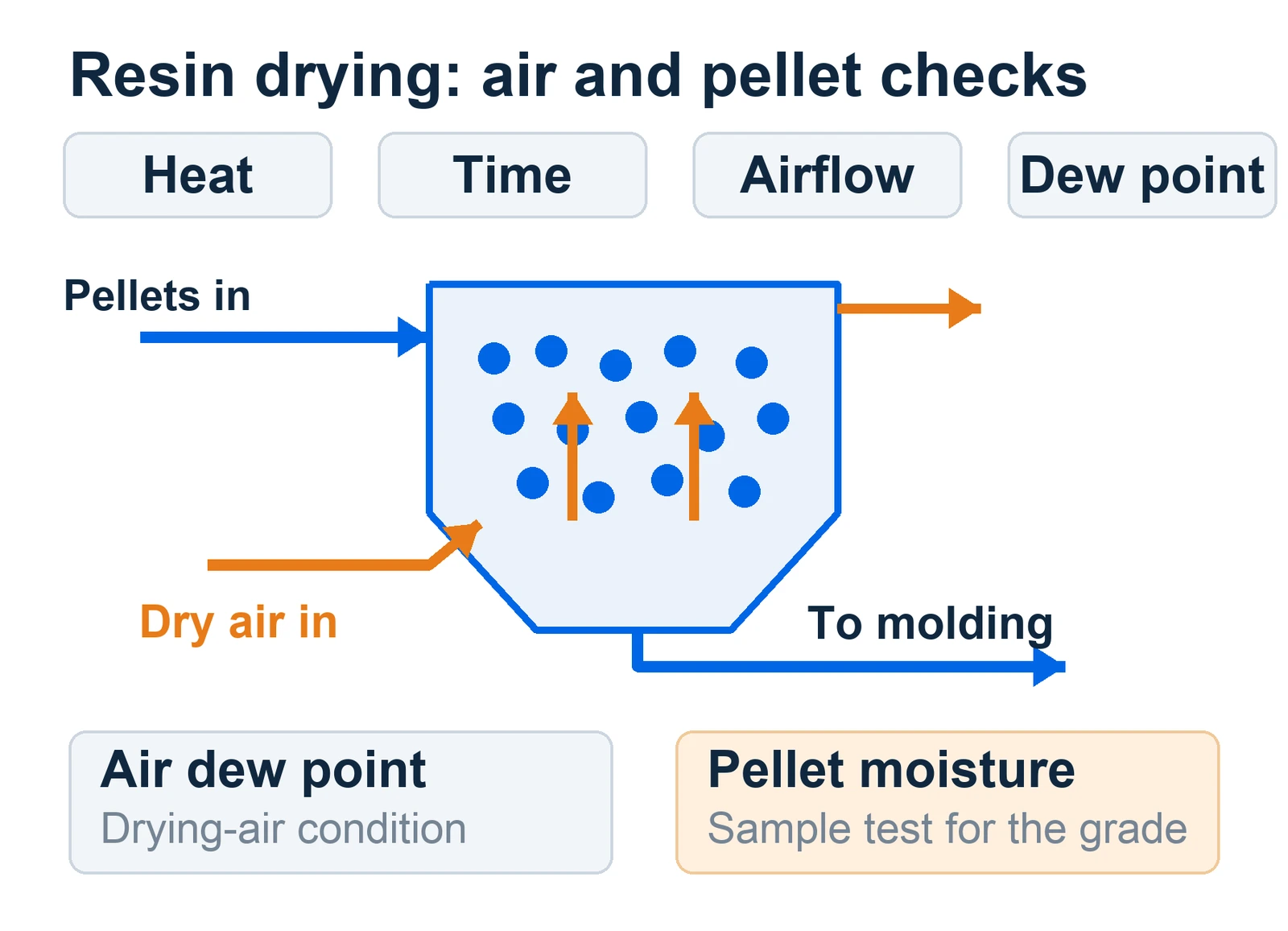
A single drying recipe is not valid for every grade because moisture affinity, pellet condition, target moisture, and equipment requirements can differ. The Novatec resin drying basics describes heat, dew point, time, and airflow as connected drying parameters, while the BASF example shows values tied to one named PA6-GF35 grade.
Additives, reinforcement, color, and supplier guidance can change instructions within a resin family. Do not assume nylon, ABS, PC, or recycled content shares one setting. Reuse an old process sheet only when grade and conditions match.
Before reusing a cycle, match its grade and supplier document. Review a substitute or regrind blend against its own guidance and customer requirements.
Key Takeaway: Carry a recipe forward only when the resin grade, equipment, and supplier conditions are demonstrably the same.
How do heat, dew point, drying time, and airflow work together?
Heat, dry-air dew point, time, and airflow must work together for the grade’s drying cycle; a single temperature setting is not enough. Heat supports moisture movement, low-dew-point air provides a drier surrounding condition, time allows moisture to move, and airflow carries heat and moisture through the hopper.
Ask four questions: did material reach the required temperature, was air dry enough, did pellets receive the required time, and could air move through the bed? One weak condition can undermine the cycle while another display looks normal.
| Parameter | What it describes | Evidence to review |
|---|---|---|
| Heat | Temperature applied to the material/air | Setpoint and, where available, material or hopper temperature record |
| Dew point | Moisture condition of the drying air | Dryer reading, alarm history, and applicable supplier target |
| Time | Duration under the required drying conditions | Start time, residence history, and any interruptions |
| Airflow | Movement of dry air through the material | Dryer status, filters/lines, hopper loading, and maintenance record |
These are process indicators, not interchangeable moisture measurements. Use the supplier’s specified test when a residual pellet-moisture result is required.
Key Takeaway: Check the full drying system and its records; no one display proves that the whole cycle met the grade’s requirements.
Is air dew point the same as moisture in the pellets?
No. Air dew point describes moisture in the drying air, while pellet moisture describes water associated with the resin; one reading cannot stand in for the other. A low air dew point can support drying conditions, but it does not directly establish a lot’s residual moisture.
When a specification sets a pellet-moisture limit, confirm the test method, sample point, timing, and lot link. Do not relabel a room humidity reading as a resin-moisture result unless the method is validated for that use.
If no valid measurement is available, record that gap and ask the supplier what evidence is appropriate. A dryer setpoint or visual check cannot replace the result.
Key Takeaway: Keep air dew-point evidence and pellet-moisture evidence in separate fields, with the method identified for each.
How should resin be handled between the package, dryer, and hopper?
For plastic resin drying, keep material protected between its sealed package, dryer, and machine feed, following supplier handling instructions. Packaging condition and open time can change its history before it reaches the hopper.
Confirm the label and lot, store unopened material dry, log opening, then reseal what remains. BASF advises keeping B3EG7 containers closed and dry and warming cold containers before opening to reduce condensation. Follow the current instructions for other grades.
Practitioner choice: When a sealed container arrives cold, allow it to equalize before opening instead of exposing cold pellets to warmer humid air. The consequence is less opportunity for condensation to change the material’s surface condition before drying.
After drying, review conveying, hopper residence, and waiting time. Exposure limits depend on grade and site conditions; do not invent a universal time.
Key Takeaway: Preserve the material’s identity and dry condition at each handoff, and record package opening and interruptions that could affect it.
How can throughput and hopper residence affect drying?
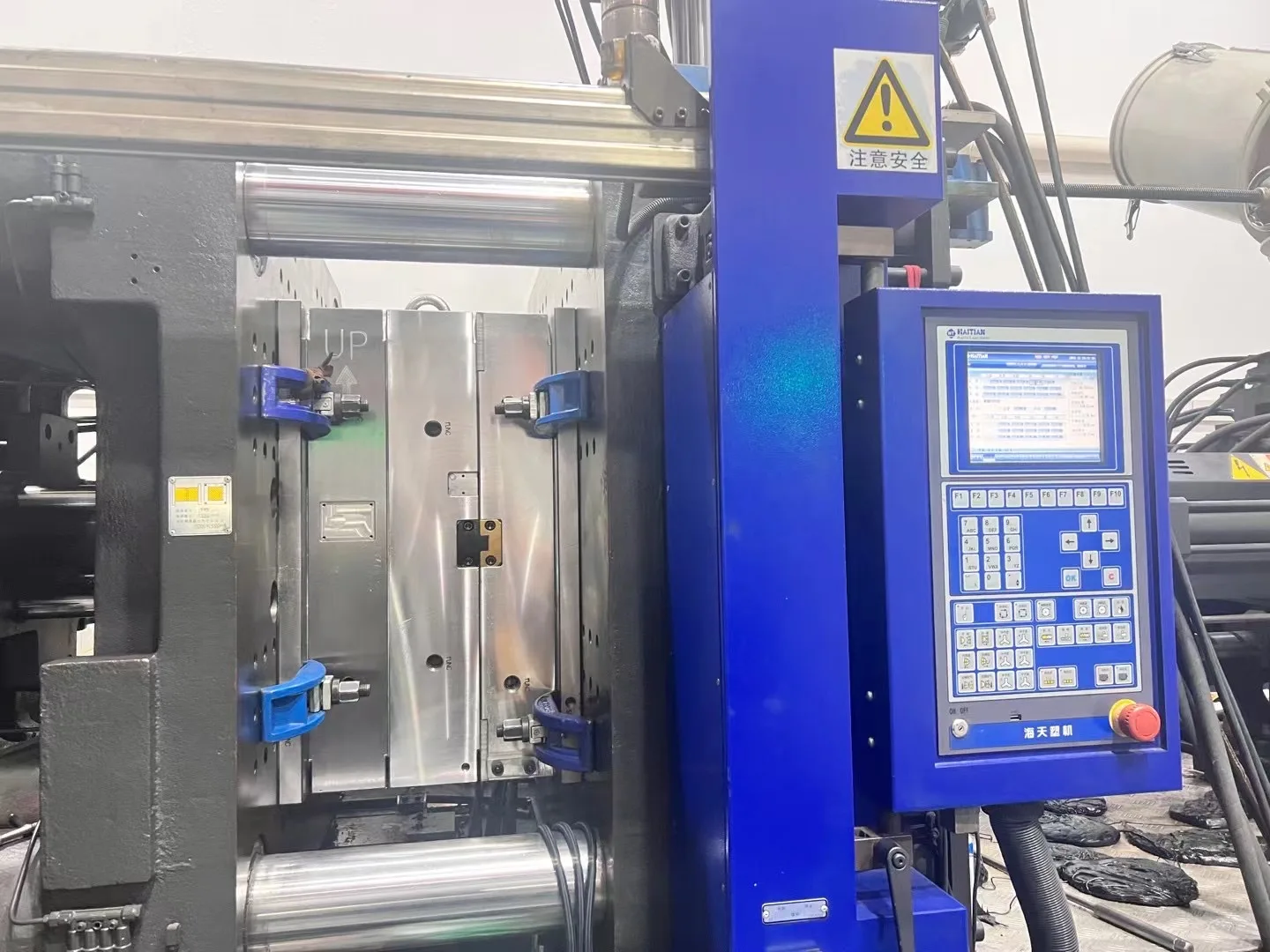
Throughput and residence time affect how long pellets remain under the specified drying conditions, so they should be checked whenever production rate or hopper loading changes. A nominal cycle is not enough if the actual material flow shortens the time available in the hopper.
Compare the grade’s required duration with material flow through the hopper. Check loading, airflow, and interruptions. If throughput changes, review residence conditions with the equipment supplier or process engineer before raising temperature.
Practitioner choice: If output rises, verify the material’s actual residence and temperature profile before changing a setpoint. The consequence is a more targeted correction and less risk of over-drying or creating a new inconsistency.
At higher output, confirm residence and dryer capacity against the stated conditions. After a refill or interruption, check whether the supplier’s cycle continued as required. For a new grade or blend, start with its own sheet rather than reusing the previous settings.
Key Takeaway: Treat throughput as part of the drying condition; verify time under grade-appropriate conditions when the feed rate changes.
What should a processor record to verify a resin drying lot?
Record enough information to connect each lot to its grade-specific drying instructions and the condition at machine feed. The records help distinguish a material issue from a process or mold issue during a later review.
Use a concise log. Record a moisture result only when a valid test was performed; a blank field is not evidence of measurement capability.
| Record field | Example of useful evidence |
|---|---|
| Material identity | Supplier, grade, lot number, color/filler if applicable |
| Instruction used | Data-sheet title/revision and target values for this grade |
| Package history | Receipt/storage condition, open time, resealing, and exposure notes |
| Dryer conditions | Dryer identification, air dew point, temperature, start/stop, interruptions |
| Material flow | Hopper/refill events, approximate throughput, and feed timing |
| Moisture result | Value, sample point, time, and test method—or “not measured” |
Keep this record with the lot and part program, not just a setpoint in a machine note. It makes deviations traceable and supplier questions more precise.
Key Takeaway: Keep grade identity, drying conditions, exposure, flow, and any actual moisture result in one traceable lot record.
How should teams investigate splay before changing the mold?
Check the material identity, drying history, and handling record before changing the mold, but treat splay as a symptom with multiple possible causes. Moisture can be one contributor for some grades, yet appearance alone does not prove it.
Check grade, lot, current data sheet, logged dryer conditions, and any valid moisture result. Then review contamination, material substitution, process settings, and venting with the molding team. If evidence points to drying, adjust the grade-specific condition under controlled review and record the outcome.
For nylon-specific part and process context, see Nylon Injection Molding; it does not replace the supplier data for a particular nylon grade. Keep troubleshooting steps linked to the material lot and production run so the next decision reflects evidence rather than assumption.
Key Takeaway: Rule in or out drying with lot-level evidence before making a mold change based on a visual defect alone.
FAQ
- Does every plastic resin need to be dried before injection molding?
- No. Drying depends on the resin grade and its supplier instructions; some materials mainly need surface moisture control, while others require grade-specific pre-drying.
- Is four hours at 80°C a standard resin-drying recipe?
- No. Those values apply to BASF Ultramid B3EG7 PA6-GF35 in its September 2026 processing sheet, not to every resin or nylon grade.
- Does a low dew-point reading prove that pellets are dry?
- No. Dew point describes the drying air; pellet moisture requires the applicable resin test method and a result tied to the material lot.
- Can resin become wet again after it leaves the dryer?
- Yes. Packaging, conveying, hopper conditions, and exposure can affect material condition, so follow the grade’s handling instructions through machine feed.
- Can drying a resin for too long cause problems?
- It can. BASF warns that excessive drying may increase melt viscosity for B3EG7; use the current supplier guidance for the exact grade.
- Does splay always mean the resin was not dried correctly?
- No. Moisture is one possible cause, but contamination, process conditions, material changes, and other factors may also contribute.
Conclusion
A reliable resin-drying decision follows the grade, its supplier data, and the material’s handling history through the hopper. If you are comparing molding requirements for a project, contact WOKE Molds with the resin grade, lot needs, and relevant processing specification.