
Injection Molding for Polypropylene (PP) Parts
Polypropylene injection molding can produce low-density parts with useful chemical and fatigue behavior when the selected PP grade, geometry, tool and process fit the application. Copolymer type, melt flow, fillers, clarifiers, stabilizers and color all change performance. Start with the material selection guide rather than treating PP as one uniform resin.
Why is Polypropylene ideal for manufacturing?
PP is often considered for low density, selected chemical exposures and living-hinge behavior. Resin price and part economics vary by grade, additives, geography, volume, cycle and quality requirements, so compare total project cost rather than claiming a universal lowest cost.
Can You Benefit from Chemical Inertness?
PP can resist selected chemicals, but compatibility depends on the exact grade, concentration, temperature, stress, exposure time and additives. Test the molded part under the intended conditions.
- Resists aggressive cleaning agents
- Medical use requires an exact healthcare grade, intended-contact review and current documentation
- High environmental stress crack resistance
Industrial bins or medical trays are possible examples, not proof of suitability; load, cleaning, sterilization, contact type and market requirements must be verified.
| Feature | Advantage | |
|---|---|---|
| Low Density | Lower shipping costs and easier handling | |
| High Resistance | Longevity in corrosive environments |
Low density may be useful in a weight-sensitive design, but strength-to-weight comparisons require exact grades, conditioning, test methods and the actual load case.
Key Takeaway: Evaluate the total project cost and the selected PP grade’s chemical compatibility, exposure time, temperature and mechanical requirements before specifying the application.
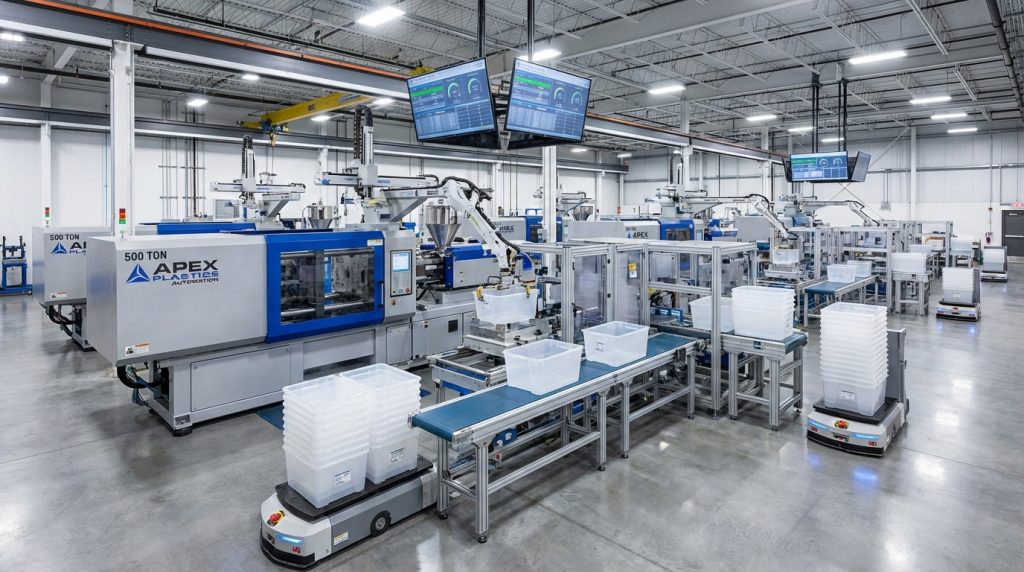
What are the essential properties of PP resins?
PP generally has low moisture uptake and selected grades can support repeated flexing, but numeric properties and resin handling instructions remain grade-specific. Follow the supplier’s storage and processing guidance; contamination, additives or blended materials can change conditioning needs.
Is Fatigue Resistance Important?
A PP living hinge may support repeated flexing when the exact grade, flow orientation, hinge geometry, molding conditions and use environment are designed and tested together.
- Hinge life to be defined and tested for the exact grade and geometry
- High impact strength
- Dimensional stability in humid zones
Living-hinge performance is a common reason to evaluate PP, but it is not guaranteed by polymer name or price category.
| Property | Selection record required | |
|---|---|---|
| Moisture uptake | Exact grade, conditioning method, test standard, exposure time and temperature | |
| Flexural modulus | Exact grade, filler, specimen condition, temperature, direction and test method |
The data indicates that PP remains the most reliable choice for components requiring repetitive mechanical movement.
Key Takeaway: Low moisture uptake can reduce one source of variation, while dimensions still depend on grade, crystallization, shrinkage, geometry, processing, temperature and load.
How do you design PP parts for peak success?
PP part design should account for exact-grade shrinkage, anisotropy, crystallization, wall transitions, ribs, draft and cooling. Obtain shrinkage data with its test direction and process conditions, then establish tool compensation and warpage expectations through analysis and trials.
How Do You Manage Shrinkage?
Draft ranges are starting points only. Final draft depends on the exact grade, texture, depth, shrinkage, tool surface and ejection design, and must be reviewed for the part.
- Uniform wall thickness
- Ribbing for strength
- Strategic gate placement
Early design review can identify changes before tooling is finalized. Any cost effect depends on the actual design, tool construction, revisions and validation scope.
| Design element | Inputs before finalizing | |
|---|---|---|
| Draft angle | Exact grade, depth, texture, shrinkage, tool surface and ejection layout | |
| Wall thickness | Load, flow length, grade, ribs, appearance, gate, cooling and process capability |
These values are starting points only. The exact grade, drawing, surface, tool and trials determine the final design, process window and demonstrated dimensional capability.
Key Takeaway: DFM can identify sink and warpage risks, while trials and inspection determine whether the revised design meets the project’s acceptance criteria.
Which applications best suit molded PP parts?
PP is used in automotive, packaging and household applications, but food-contact, medical or other regulated suitability is not inherent to the polymer family. Verify the exact grade, additives, color, processing, intended contact conditions, target market and current documentation; chemical compatibility also requires application-specific testing.
Are Consumer Goods a Good Fit?
Dishwasher exposure is possible only for a grade and part validated for the actual temperature, detergent, load and repeated cycle; food-contact status must be checked separately for the target market.
- Reusable food trays
- Toy components only after grade, design, use, market and applicable safety testing are verified
- Automotive door panels
Think about it: one material covers nearly every room in a modern home.
| Industry | Primary Use Case | |
|---|---|---|
| Automotive | Interior panels and battery housings | |
| Packaging | Living hinges and flip-top caps |
PP may replace another resin when the drawing, load, temperature, chemical exposure, appearance and regulatory requirements are met. There is no defensible universal replacement percentage.
Key Takeaway: The versatility of PP allows you to consolidate material types across various product lines to save costs.
Is PP suitable for complex thin-wall molding?
Selected high-flow PP grades may support thin-wall molding, but melt-flow index alone does not prove cavity fill or part performance. Use the material selection guide, exact-grade rheology, geometry, gate and machine constraints, then validate thin-wall features through analysis and trials.
Why Does Flow Matter?
A suitable high-flow PP grade may help fill thin sections, but cycle time depends on geometry, tool cooling, crystallization, machine, process window and part-quality requirements.
- High MFI capability
- Required clamping force must be calculated for the part, cavities, projected area and process
- Energy use must be measured for the actual machine, mold and validated cycle
Make no mistake, flow is the secret to high-speed production.
| Thin-wall input | Evidence required | |
|---|---|---|
| Melt flow or rheology | Exact grade, test load and temperature, plus project-relevant flow analysis | |
| Cooling behavior | Part geometry, grade, tool circuit, machine and trial measurements |
These values are illustrative only and do not prove a universal best resin. Select the exact grade and cavity strategy using supplier data, rheology, tool analysis and controlled trials.
Key Takeaway: High flow rates enable you to design lighter parts, reducing both material usage and cycle times.
How does the thermal molding cycle operate?
The thermal molding cycle operates by heating PP pellets to a molten state before injecting them into a temperature-controlled mold. Consistent barrel temperatures in PP injection molding are vital to prevent thermal degradation while ensuring the plastic remains fluid. You must manage the “pack and hold” phase carefully to ensure the high-shrinkage material fully populates the mold cavity.
How Is Cooling Managed?
The mold needs a cooling layout matched to part geometry and heat load. Conventional or more complex channels should be selected and validated project by project.
- Controlled melt temperature
- Precise injection pressure
- Optimized cooling time
The bottom line is that thermal control determines your final part quality.
| Cycle Phase | Focus Area | |
|---|---|---|
| Injection | High pressure for full filling | |
| Ejection | Temperature-monitored pin release |
Cooling changes may reduce warpage risk, but the result must be checked for the exact grade, geometry, settings and inspected part.
Key Takeaway: Thermal control can improve stability, while dimensional acceptance still requires a validated process and inspection against the drawing.
What challenges occur during the molding process?
Warpage, sink and flash can arise from interactions among the exact PP grade, geometry, tool condition, venting, clamp setup and process window. Diagnose each defect from trial evidence rather than linking the material-family name to one cause.
Can You Prevent Warpage?
Mold-temperature control may reduce bowing or twisting when cooling imbalance is a contributing cause; verify the change through controlled trials and dimensional inspection.
- Adjusted gate locations
- Increased pack pressure
- Accurate mold venting
The truth is, even the best material needs an expert operator.
| Challenge | Solution | |
|---|---|---|
| Flash | Increase clamping force and improve mold fit | |
| Sink Marks | Reduce wall thickness and adjust pressure |
These solutions demonstrate that technical expertise can overcome the inherent physical limitations of the resin.
Key Takeaway: Troubleshooting during sampling can close identified issues before approval, while timing impact remains project-dependent.
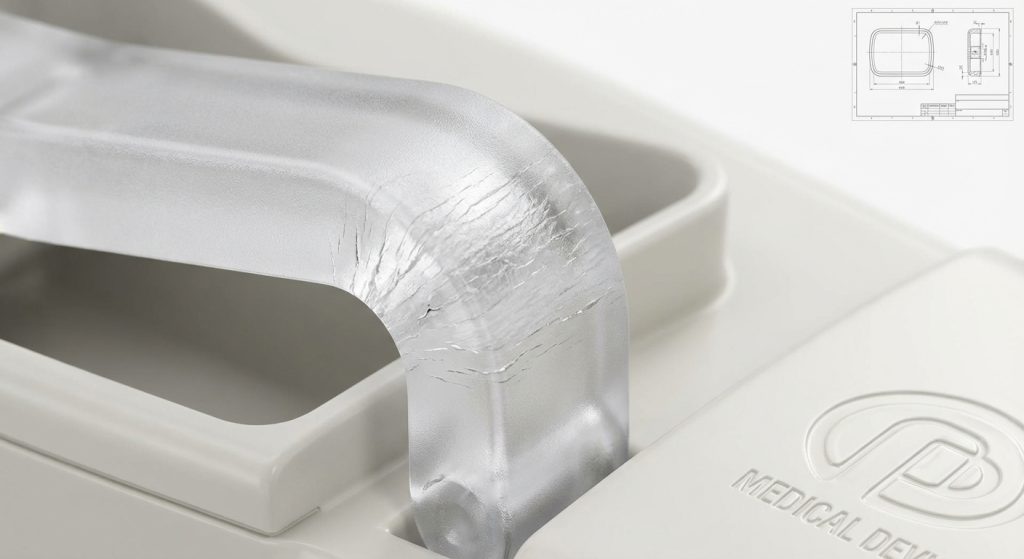
How does PP compare to other common resins?
PP, PE and ABS each cover many grades. PP is often evaluated for living hinges, low density and selected chemicals; ABS for stiffness and surface finish; and PC for clarity or impact requirements. Temperature, microwave, chemical and stiffness decisions must use exact-grade data, stated test conditions and application testing rather than family-wide rankings.
Is PP More Cost-Effective?
You will generally pay less per unit for PP because it is a commodity resin with high global availability.
- Better fatigue life than ABS
- Higher heat resistance than PE
- Cost versus PC is grade-, market-, volume- and application-dependent
It’s a win-win for budget and performance.
| Resin Type | Fatigue Resistance | Chemical Resistance | |
|---|---|---|---|
| Polypropylene | Excellent | High | |
| ABS | Poor | Moderate |
The comparison is a screening aid only. Confirm the exact PP, ABS or PC grade, additives, test conditions and molded-part requirements before selection.
Key Takeaway: PP may reduce material or part cost in some designs, but savings and durability must be calculated and validated for the specific grade, geometry, volume and use conditions.
Why partner with professional molding experts?
A PP project needs the exact resin grade, shrinkage and flow behavior tied to the drawing, mold concept, machine selection and trial plan. Evaluate injection mold manufacturing scope, engineering review, sampling and inspection evidence rather than assuming a certification, machine range or generic precision level.
What Project Evidence Should You Review?
Agree which features are inspected, by which method, at what frequency and against which drawing or approved sample.
- High-volume scalability
- Technical DFM support
- Multi-material expertise
Review the supplier’s relevant scope, trial evidence, measurement capability and change-control plan for the actual project.
| Service Feature | Business Value | |
|---|---|---|
| DFM Simulation | Identifies selected risks for project review | |
| Quality Audits | Provides evidence within the agreed audit and sampling scope |
No certificate guarantees schedule or dimensional results. Timing and capability must be defined and demonstrated for the specific project.
Key Takeaway: Engineering oversight, controlled trials and agreed inspection evidence can reduce risk, but they do not eliminate process variation.

How do you maximize ROI on your PP projects?
Project economics may improve through an appropriate cavity count, exact grade and reduced secondary operations, but each option changes tooling, validation, maintenance and capacity assumptions. Overmolding is one project-specific option whose material compatibility, bonding, cycle and assembly case must be evaluated.
Can Multi-Cavity Tooling Save Money?
A multi-cavity mold can produce several parts per cycle, but cavity count and cost depend on part size, balance, machine, tooling investment, maintenance and demonstrated cavity-to-cavity capability.
- Optimized material grades
- Reduced secondary operations
- Automated quality inspection
The faster you produce, the sooner you can get to market.
| Strategy | Business-case inputs | |
|---|---|---|
| Multi-cavity mold | Tool premium, balance, machine, cycle, maintenance, demand and cavity-to-cavity capability | |
| Grade selection | Resin price, usage, process window, performance, approvals, scrap and supply risk |
This approach can support a business case, but tooling cost, maintenance, cycle, quality and demand assumptions must be quantified for the project.
Key Takeaway: Strategic planning during the design and tooling phases is the most effective way to drive down long-term costs.
Conclusion
PP can be a candidate for cost, chemical and fatigue requirements, but it does not solve them automatically. Select the exact grade and verify the molded part under the project’s load, temperature, chemicals, cycling and acceptance criteria.
Compare PP with ABS injection molding and polycarbonate injection molding using the actual grade, geometry, environment, quality plan and volume. Share the 3D model, 2D drawing, resin requirement and timing assumptions with WOKE Molds; contact us to define the engineering, tool, trial and inspection scope.
FAQ
Can I use polypropylene for parts that require transparency?Some clarified PP grades can improve clarity, but optical performance depends on exact grade, color, thickness, surface, processing and test method. Compare molded samples with the project’s quantified optical requirement.
What’s the best way to reduce warpage risk in large PP parts?Review exact-grade shrinkage, wall transitions, flow orientation, gate, packing, cooling and ejection together. Confirm changes through controlled trials and dimensional inspection rather than assuming one universal cause or solution.
How do I know if PP is better than polyethylene for my project?Compare exact grades for hinge behavior, stiffness, impact, chemical exposure and temperature using supplier data with test conditions. Dishwasher or other heat-exposed use requires testing the molded part under the actual cycle and load.
Can I overmold polypropylene onto other materials?Potentially. PP has low surface energy, so exact material pairing, mechanical interlocks, surface treatment, processing windows, geometry and environmental testing determine whether the bond is acceptable.