
Thermoplastic Elastomer vs Silicone: How to Pick the Best
The thermoplastic elastomer vs silicone choice depends mostly on temperature, sealing life and cost. Silicone rubber handles extreme heat and cold and keeps its seal for years, while thermoplastic elastomer (TPE) molds faster, costs less and can be overmolded directly onto rigid plastics. Both feel soft and rubbery, so buyers often treat them as interchangeable until a part fails in service.
The difference usually shows up in two places. For example, a TPE seal that works perfectly at room temperature can take a permanent set near a hot motor. On the other hand, a silicone grip can cost far more than needed when a TPE overmold would bond in one cycle. In this guide, we compare both materials for molded parts, with a focus on the decisions that affect function and price in plastic injection molding projects.
Thermoplastic elastomer (TPE) is a rubber-like plastic that melts and can be injection molded, recycled and overmolded onto substrates such as PP, ABS or PC. Silicone is a cross-linked rubber that cures permanently and keeps its properties across a much wider temperature range, roughly from −50 °C to above 200 °C for many grades. Choose TPE for grips, soft-touch overmolds and cost-driven seals at moderate temperatures; choose silicone for high-heat, long-life sealing and demanding medical or food uses.
In short: if heat or long-term sealing decides the part, start with silicone; if cost, overmolding and cycle time decide it, start with TPE.
Key points:
- Temperature: many silicone grades work well above 200 °C, while most TPEs stay below about 100–130 °C.
- Sealing: silicone usually keeps lower compression set, especially at high temperature.
- Cost and processing: TPE molds on standard machines, bonds to plastics and can be reground.
What Is the Difference Between Thermoplastic Elastomer vs Silicone?
The difference between thermoplastic elastomer vs silicone is how they hold their shape. TPE is a thermoplastic: its rubbery behavior comes from physical bonds that soften when heated. Silicone is a thermoset: its polymer chains are chemically cross-linked during curing, so it does not melt again.
That one difference drives most of their behavior:
- TPE can be melted, molded, reground and reused, much like PP or ABS.
- Silicone cures in a hot mold and cannot be remelted.
- TPE softens and creeps as temperature rises.
- Silicone keeps its elasticity over a much wider temperature range.
“TPE” is also a family, not one material. It includes styrenic TPE (TPE-S), thermoplastic vulcanizates (TPV), thermoplastic polyurethane (TPU) and copolyester elastomers (TPC). Silicone parts are usually made from liquid silicone rubber (LSR) or high-consistency rubber (HCR).
Key Takeaway: Compare the exact TPE type with the exact silicone grade. A TPV behaves very differently from a soft TPE-S.
How Do Temperature Limits Compare for Thermoplastic Elastomer vs Silicone?
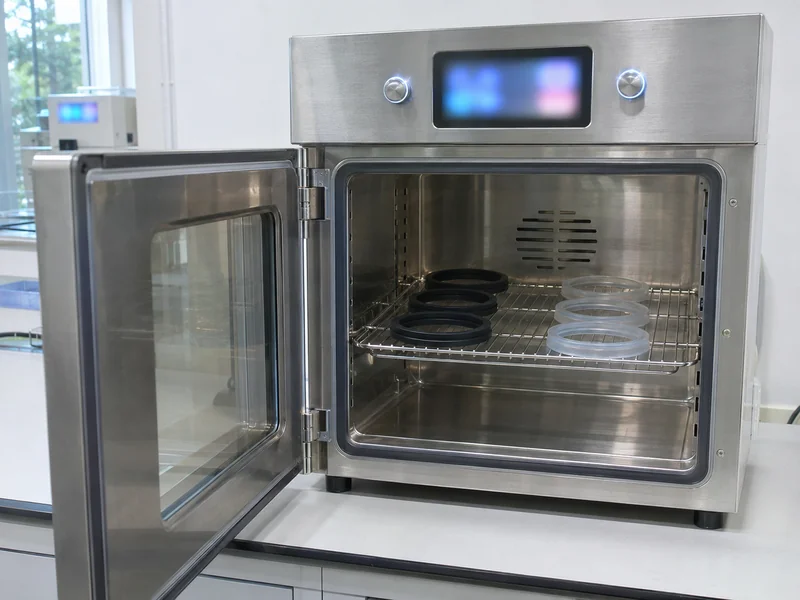
Temperature limits are where thermoplastic elastomer vs silicone differ most. Many silicone grades work continuously from about −50 °C to 200 °C, and some higher. Most TPEs work from about −40 °C to 100 °C, while some TPV grades reach about 135 °C.
| Factor (typical) | TPE (TPE-S / TPV) | Silicone (LSR / HCR) |
|---|---|---|
| Continuous upper limit | about 80–135 °C, grade dependent | about 200 °C, some grades higher |
| Low-temperature flexibility | Good, often to about −40 °C | Excellent, often to about −50 °C or below |
| Behavior near the limit | Softens, creeps, loses seal force | Keeps elasticity |
| Steam sterilization | Limited grades | Commonly suitable |
Therefore, parts near heaters, motors, lighting or engines usually favor silicone. Parts in consumer products at room temperature, by contrast, rarely need silicone’s heat range.
Key Takeaway: Write the maximum service temperature and its duration on the drawing. That single value often decides thermoplastic elastomer vs silicone.
Which Seals Better Over Time: Thermoplastic Elastomer or Silicone?
Silicone usually seals better over time, especially at high temperature, because it has lower compression set. Compression set measures how much a rubber stays deformed after being squeezed; a lower value means the seal keeps pushing back.
For sealing parts, that matters in three ways:
- Long-life seals lose force as compression set grows, which leads to leaks.
- Hot seals take a set faster, and TPE is more sensitive to heat than silicone.
- Repeated opening and closing stresses the seal surface every cycle.
TPV grades narrow the gap at moderate temperatures. For example, many appliance and automotive seals at moderate heat use TPV successfully. However, a seal that sits at 150 °C for years usually needs silicone or another cross-linked rubber.
Key Takeaway: Ask for compression set data at your service temperature, not only at room temperature. That test predicts seal life better than hardness.
How Do Hardness, Feel and Colors Compare?
Hardness, feel and colors compare closely, which is why both materials compete for soft-touch parts. Both cover a wide hardness range, and both can be colored.
- Hardness: TPE ranges from very soft gels to about Shore 90A and beyond; silicone typically ranges from about Shore 10A to 80A.
- Feel: silicone feels smooth and slightly tacky; TPE can be tuned from grippy to dry and silky.
- Color: both color well; translucent silicone is common, and translucent TPE grades exist.
- Surface: silicone attracts dust more easily; TPE surfaces depend on the grade and mold texture.
In practice, users often cannot tell them apart on a grip. Therefore, feel alone rarely justifies silicone’s higher cost.
Key Takeaway: If the requirement is only “soft and colored”, TPE usually meets it at a lower cost. Reserve silicone for function, not feel.
Which Is Better for Medical and Food Contact?
Both materials can be used for medical and food-contact parts, but the specific grade must carry the right compliance documents. Silicone has a longer track record in high-temperature, sterilized and long-contact uses.
For food contact in the United States, rubber articles for repeated use fall under regulations administered by the U.S. Food and Drug Administration, so buyers should request a compliance statement for the exact grade. In Europe, food-contact rules differ, so the statement must match the target market.
Key questions to ask:
- Which regulation or standard does the grade comply with, for which use?
- Is the grade tested for biocompatibility where the part touches the body?
- Does the part need repeated sterilization, and by which method?
- Are colorants and additives covered by the same compliance statement?
Key Takeaway: Never assume compliance from the material family. Request documents for the exact grade, color and use.
How Are TPE and Silicone Molded Differently?
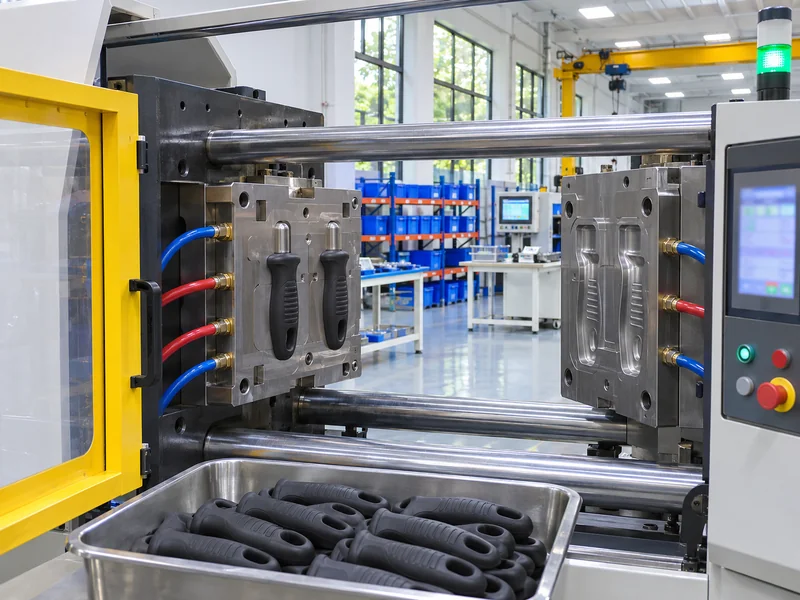
TPE and silicone are molded differently because one melts and the other cures. TPE runs on standard injection molding machines with a heated barrel and a cooled mold. Liquid silicone rubber runs on dedicated LSR equipment with a cooled feed and a hot mold.
| Molding factor | TPE | LSR (liquid silicone rubber) |
|---|---|---|
| Barrel and mold | Hot barrel, cooled mold | Cooled feed, hot mold that cures the part |
| Runner scrap | Can often be reground | Cannot be reused |
| Flash risk | Moderate | High; very tight shut-offs needed |
| Overmolding onto plastics | Direct, with bonding grades | Possible with special grades and processes |
| Post-processing | Usually none | Post-cure may be required for some uses |
Because TPE bonds to many plastics, it is the usual choice for soft grips molded onto rigid parts. As a result, a handle with a PP core and a TPE grip can come out of one two-shot cycle. Our overmolding service covers this type of part.
Key Takeaway: If the soft material must bond to a plastic part in one process, TPE is usually the simpler route.
Which Costs Less: Thermoplastic Elastomer vs Silicone?
Thermoplastic elastomer usually costs less than silicone per finished part. TPE resin is often cheaper, cycles are short and runner scrap can be reused. Silicone material costs more, flash trimming may be needed, and dedicated equipment adds cost.
However, the cheapest part is not always the cheapest program. For example, a silicone seal that lasts the product’s life can cost less than replacing failed TPE seals under warranty. Therefore, compare cost per year of reliable service, not cost per part.
Key Takeaway: Use TPE where it meets the function; pay for silicone only where heat, sealing life or compliance require it.
How Do You Choose Thermoplastic Elastomer vs Silicone?
You choose thermoplastic elastomer vs silicone by ranking temperature, sealing life, bonding, compliance and cost for your part.
- Above about 130 °C, or long-term sealing under heat? Choose silicone.
- Soft-touch grip or overmold on PP, ABS, PC or PA? Choose TPE.
- Repeated steam sterilization? Usually silicone.
- High volume, cost-driven, moderate temperature? Usually TPE.
- Recyclability or regrind required? TPE.
We mold TPE and TPU grades, including overmolded and two-shot parts. For more context on overmolded designs, see our guide to insert molding vs overmolding and our material selection guide.
Key Takeaway: Decide by the hardest requirement first. If temperature does not force silicone, a well-chosen TPE grade is usually the better business choice.
FAQ
- Q: Is TPE the same as silicone?
- No. TPE is a thermoplastic that melts and can be remolded. Silicone is a cross-linked rubber that cures permanently and handles much higher temperatures.
- Q: Which is more heat resistant, TPE or silicone?
- Silicone. Many silicone grades work around 200 °C, while most TPEs stay below about 100–135 °C.
- Q: Can TPE replace silicone in seals?
- At moderate temperatures and loads, often yes, especially with TPV grades. For hot, long-life seals, silicone usually performs better.
- Q: Can TPE be overmolded onto plastic?
- Yes. Bonding grades of TPE adhere to PP, ABS, PC, PA and other substrates in overmolding or two-shot molding.
- Q: Which is cheaper, TPE or silicone?
- TPE is usually cheaper per part because of lower material cost, shorter cycles and reusable runners.
Conclusion
The thermoplastic elastomer vs silicone decision depends on temperature, sealing life and how the soft material joins the rest of the part. Use silicone where heat and long-term sealing demand it, and TPE where cost and overmolding matter more. To review your soft-touch or sealing part, send your 3D model and 2D drawing to our engineers.