
PPAP Level 3 Requirements: How to Pass the First Time
PPAP level 3 requirements call for the Part Submission Warrant, product samples and complete supporting data for all applicable PPAP elements, submitted to the customer for review. In practice, that means dimensional results, material and performance test results, process flow, PFMEA, control plan, measurement system analysis and initial capability studies, all tied to parts made on the production tool and process.
Level 3 is the default in most automotive supply chains, so it is also where most submissions get rejected. For example, a molded part can pass every dimension and still fail approval because the capability study used too few parts or the gauge study was missing. In this guide, we explain what PPAP level 3 requirements mean for molded and machined parts, and how to prepare a submission that passes the first time. If you are still deciding whether you need PPAP at all, start with our comparison of PPAP vs FAI.
PPAP level 3 requirements, as defined in the AIAG PPAP manual, include submitting the Part Submission Warrant (PSW), product samples and complete supporting data to the customer. Supporting data covers the applicable elements of the 18-element PPAP list, such as design records, dimensional results, material test results, process flow, PFMEA, control plan, MSA and initial process studies. Customer-specific requirements can add to, or change, what Level 3 must include.
In short: Level 3 means “send everything that applies”, so plan the evidence before the production trial, not after it.
Key points:
- Level 3 is the most common default submission level in automotive supply.
- All applicable elements must be submitted, not only kept on file.
- Customer-specific requirements always come first when they differ from the manual.
What Are PPAP Level 3 Requirements?
PPAP level 3 requirements are the documents and samples a supplier submits to prove that its production process makes conforming parts at the quoted rate. Under Level 3, the supplier sends the warrant, samples and complete supporting data, and the customer reviews them before approving production.
The key words are “complete” and “production”. Parts must come from the production tool, production equipment, production materials and production operators, at a significant production run. Therefore, a submission based on prototype tooling or a short engineering trial usually fails.
For molded parts, Level 3 typically applies to:
- New parts and new molds
- Mold replacements or major mold repairs
- Material or supplier changes
- Process moves to a new machine or location
- Corrections of earlier non-conforming submissions
Key Takeaway: Treat PPAP level 3 requirements as proof of the production process. Plan the run on final tooling and settings.
Which PPAP Elements Apply Under PPAP Level 3 Requirements?
At Level 3, every applicable element of the 18-element list must be submitted or explained. Some elements do not apply to every part, but the supplier must state why.
| # | PPAP element | Typical content for molded parts |
|---|---|---|
| 1 | Design records | Customer drawing and 3D model, ballooned |
| 2 | Engineering change documents | Approved changes not yet on the drawing |
| 3 | Customer engineering approval | When the customer requires it |
| 4 | Design FMEA | Only if the supplier is design-responsible |
| 5 | Process flow diagram | Material receipt to shipping |
| 6 | Process FMEA | Molding, secondary operations, packing |
| 7 | Control plan | Production control plan |
| 8 | Measurement system analysis | Gauge R&R for key gauges |
| 9 | Dimensional results | All characteristics, per cavity |
| 10 | Material and performance test results | Resin certificates, functional tests |
| 11 | Initial process studies | Capability on special characteristics |
| 12 | Qualified laboratory documentation | Scope of the lab used |
| 13 | Appearance approval report | For appearance items |
| 14 | Sample production parts | Per customer request |
| 15 | Master sample | Retained and signed |
| 16 | Checking aids | Fixtures and gauges used |
| 17 | Customer-specific requirements | Per customer manual |
| 18 | Part Submission Warrant | Summary and declaration |
In practice, molded parts often skip Element 4 because the customer owns the design. However, the submission must still say so. In other words, PPAP level 3 requirements cover every applicable element, not a selected few.
Key Takeaway: Build a checklist from all 18 elements and mark each one as “submitted” or “not applicable, because…”. Missing explanations cause rejections.
How Do PPAP Level 3 Requirements Differ From Other Levels?
PPAP level 3 requirements differ from other levels in what is physically sent to the customer. At every level, the supplier must still complete and keep the full file.
- At Level 1, only the warrant is sent, plus appearance approval if required.
- Level 2 adds samples and limited supporting data.
- With Level 3, the warrant, samples and complete supporting data are all sent.
- Under Level 4, the customer defines what else must be sent with the warrant.
- Finally, Level 5 sends the full package and adds a review at the supplier’s site.
Therefore, a supplier cannot “skip” work by agreeing to Level 1 or 2. The evidence must exist either way; the level only decides what goes into the submission.
Key Takeaway: Agree the level on the purchase order, but prepare Level 3-quality evidence for every new part.
What Dimensional Results Does PPAP Level 3 Need for Molded Parts?
Dimensional results for PPAP level 3 need to cover every characteristic on the drawing, for every cavity, measured on parts from the significant production run. For multi-cavity molds, that multiplies the work.
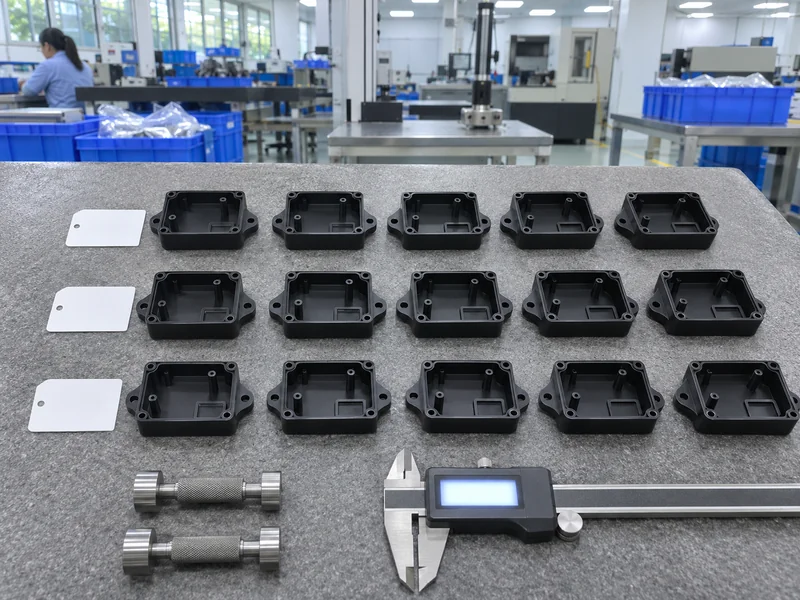
A solid dimensional package includes:
- A ballooned drawing, with each characteristic numbered
- Results per cavity, with the actual value and pass or fail
- The measurement method for each characteristic, such as CMM, gauge or visual
- Notes and deviations, with approved changes referenced
For example, a 16-cavity mold with 40 characteristics needs 640 recorded results for a single part per cavity. As a result, the inspection plan, fixtures and CMM programs should be ready before the run. Meeting PPAP level 3 requirements for dimensions starts with that plan. Our quality control and inspection process supports full dimensional and CMM reports when the project requires them.
Key Takeaway: Count cavities × characteristics early. Dimensional results are usually the longest task in a Level 3 submission.
What Capability Studies Does PPAP Level 3 Expect?
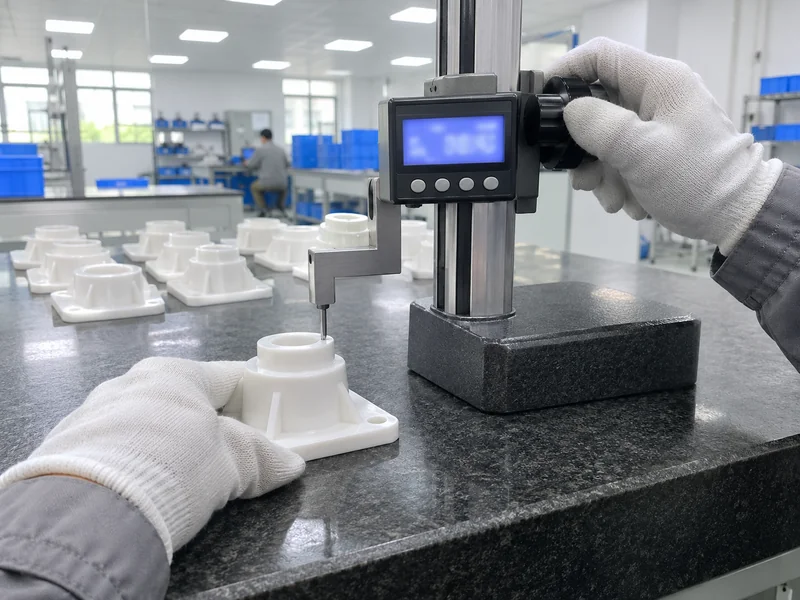
PPAP level 3 expects initial process studies on special characteristics, usually expressed as Ppk. The common acceptance guidance in the AIAG manual is:
- Ppk ≥ 1.67: meets acceptance criteria
- 1.33 ≤ Ppk < 1.67: may be acceptable, often with conditions
- Ppk < 1.33: does not meet acceptance criteria; corrective action needed
Capability statistics only make sense with a stable process and a capable gauge. The NIST Engineering Statistics Handbook explains how capability indices compare process spread with specification limits.
Measurement system analysis comes first. Gauge R&R results commonly fall into three bands: under 10% is acceptable, 10–30% may be acceptable depending on the application, and above 30% is not acceptable. Therefore, a gauge with high variation can make a good process look incapable. That is why PPAP level 3 requirements place MSA before capability.
Key Takeaway: Run the gauge study before the capability study. Otherwise, poor measurement can reject a good process.
How Do PFMEA and the Control Plan Fit PPAP Level 3?
PFMEA and the control plan fit PPAP level 3 as the link between risks and controls. The PFMEA lists what can go wrong in each process step; the control plan shows how each risk is controlled in production.
For molded parts, typical PFMEA items include:
- Wet resin causing splay or brittleness
- Wrong regrind ratio affecting properties
- Short shots, flash or sink marks on critical features
- Mixed cavities or wrong packaging labels
Each high-risk item should map to a control: drying checks, process monitoring, first-off approval, sampling frequency or error-proofing. As a result, a reviewer can trace every special characteristic from drawing to control.
Key Takeaway: Make the process flow, PFMEA and control plan use the same step names and numbers. Mismatches are a common reason for rejection.
What Is the Part Submission Warrant?
The Part Submission Warrant is the summary document that declares the parts meet all requirements and lists the submission level, part weight and reason for submission. It is signed by an authorized supplier representative.
Common warrant details include:
- Part number, revision and drawing date
- Reason for submission, such as new part or tooling change
- Submission level
- Part weight
- Declaration of conformance and signature
Key Takeaway: Fill the warrant last, after every element is verified. A warrant that does not match the supporting data invites rejection.
What Causes Rejections Against PPAP Level 3 Requirements?
PPAP level 3 rejections usually come from missing evidence, inconsistent documents or results from a non-representative run.
- Parts made on prototype tooling or with non-production settings
- Missing cavities in dimensional results
- No gauge study, or a gauge study above acceptable limits
- Capability studies with too few parts or an unstable process
- PFMEA, control plan and process flow that do not match
- Customer-specific requirements ignored
For example, a submission can include perfect results for cavities 1–7 and forget cavity 8. That single gap rejects the whole package.
Key Takeaway: Review the package against the customer’s checklist before sending it. Most rejections are completeness errors, not quality failures.
How Long Does a PPAP Level 3 Submission Take?
A PPAP level 3 submission typically takes several weeks after the mold is approved, depending on cavities, characteristics, tests and customer review. The main time drivers are the production run, measurement and capability studies.
A realistic plan:
- Mold approval after trials and corrections
- Significant production run on final settings
- Dimensional measurement, tests and MSA
- Capability analysis and document assembly
- Customer review and approval
At WOKE Molds, PPAP, control plans, PFMEA, process flows, FAI and full dimensional or CMM reports are supplied on request when the project requires them. Our RFQ guide, the injection molding quote checklist, shows how to state these needs up front.
Key Takeaway: Put PPAP time into the launch schedule from day one. It cannot be compressed into the last week before production.
FAQ
- Q: What does PPAP level 3 include?
- It includes the Part Submission Warrant, product samples and complete supporting data for all applicable PPAP elements, submitted to the customer.
- Q: How many PPAP elements are there?
- The AIAG PPAP manual lists 18 elements, from design records to the Part Submission Warrant.
- Q: What Ppk is required for PPAP?
- Common guidance is Ppk ≥ 1.67 for acceptance, 1.33–1.67 as conditionally acceptable, and below 1.33 as not acceptable.
- Q: Is PPAP level 3 the default?
- In most automotive supply chains, yes, unless the customer specifies another level.
- Q: Do all 18 elements apply to every part?
- No. Some, such as design FMEA, may not apply, but the submission must explain why.
Conclusion
PPAP level 3 requirements ask for complete evidence that the production process makes conforming parts. Plan the run, gauges, cavities and documents before the trial ends. To plan the quality documents for your project, send your drawing and PPAP requirements to our team.