Do I need to choose one of the seven mold types before asking for a quote?+
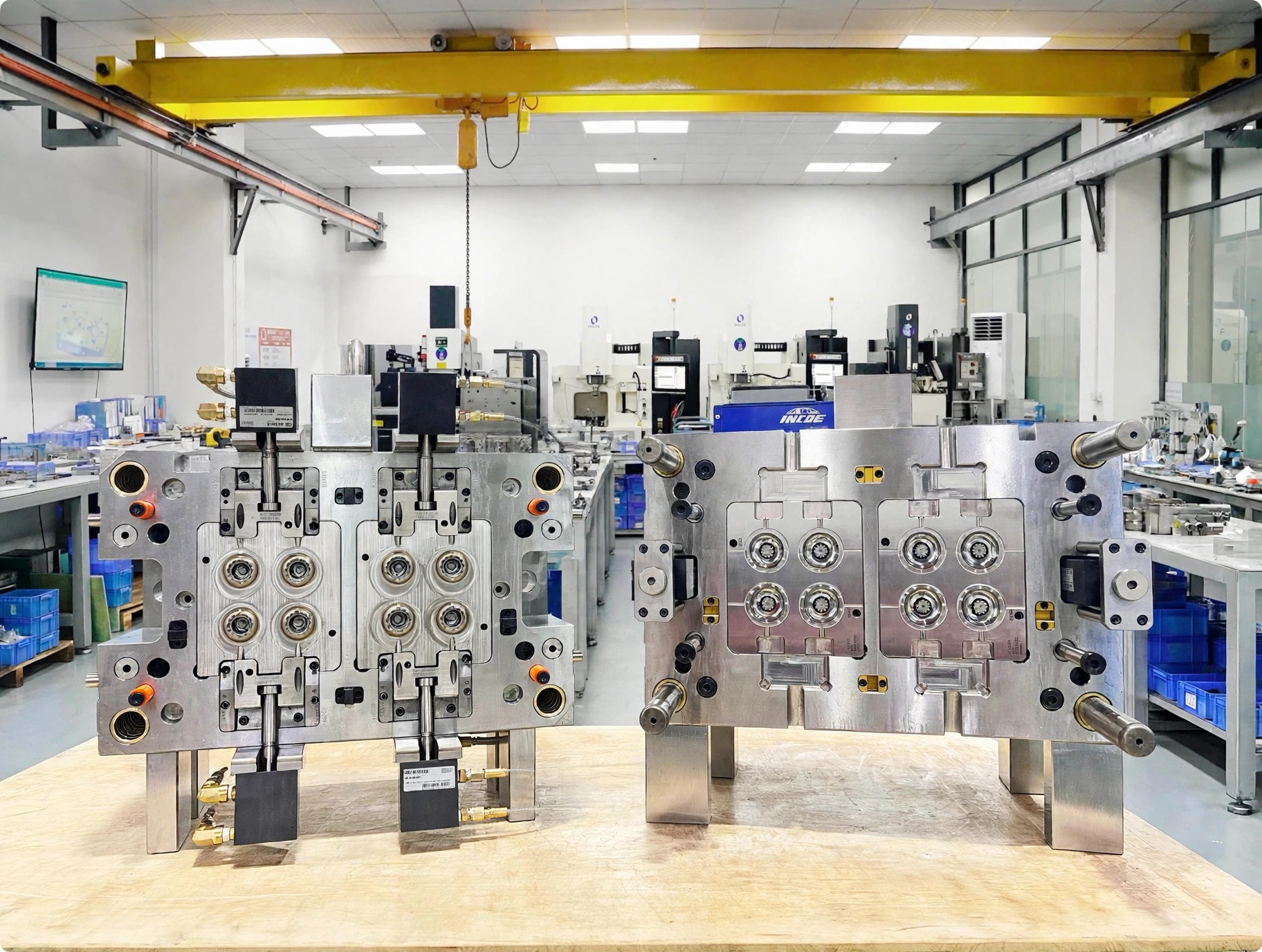
Send the part and production information first. The seven types describe engineering architectures that can overlap. A conventional tool may be sufficient, or the project may combine multi-cavity, insert, overmolding or another feature where the part requires it.
How is the cavity count selected?+
Cavity count is reviewed against demand, shot size, projected area, press fit, runner balance, cooling, part stability, cavity-level quality needs, tool investment and maintenance. The selected count balances useful output with stable operation and lifetime service needs.
Should my mold use a hot runner or a cold runner?+
A cold runner can be simpler to operate and maintain, while a hot runner can reduce recurring runner material and support some gating layouts. Resin sensitivity, gate vestige, color change, controller availability, tool cost, maintenance and approved regrind rules determine the better route.
Which mold steel should I specify?+
Select steel by component role, expected production life, resin abrasion or corrosion, humid or cooling-water exposure, molding temperature, polish or texture, section size, toughness, heat treatment, repair strategy and local service. Prehardened, through-hardening and corrosion-resistant grades are different solution families rather than automatic quality tiers. The plastic resin, mold steel and cavity finish are related decisions but are not the same specification.
When does formal DFM begin, and is Moldflow used on every project?+
Available files support quotation assumptions and an initial feasibility review. Formal DFM begins after project kickoff. Moldflow is added when complexity or customer requirements justify defined questions about filling, packing, cooling, weld lines, air traps or warpage.
How do you confirm that the mold will fit our molding machine?+
The project records platen and tie-bar space, locating and nozzle details, opening and ejector requirements, hot-runner zones, water and electrical connections, robot access and other relevant interfaces. Trial-cell differences are compared with the receiving press before handover.
What quality documents can accompany the mold?+
The package is selected by project and may include released drawings, approved-change records, inspection or CMM reports, steel or component records, material information, trial records, setup information, FAI or other customer formats, and maintenance or spare lists. The quotation should name the exact package rather than assume every record is standard.
Can critical dimensions be traced by cavity?+
Yes, when cavity-level traceability is needed and included in the inspection plan. The trial and measurement records should preserve mold version, resin, machine condition and cavity identity for the selected critical dimensions.
What happens if trial parts need a change?+
The team reviews whether the finding comes from the tool, part design, material, process or acceptance method. The proposed action and approval are recorded, affected drawings or records are updated, and the revised condition is verified in the agreed way.
Are spare parts included with the export mold?+
Spare and wear items such as ejector elements, springs, heating elements or other project-specific components can be identified and quoted according to customer requirements. The supplied list is confirmed in the mold scope.
How long does a custom injection mold take?+
Typical mold lead time is 4–8 weeks. Complexity, steel and component availability, runner system, specialty mechanisms, texture or surface work, customer approvals and validation scope can change the actual schedule.
Can you ship under EXW, FOB or DDP terms?+
EXW, FOB or DDP can be quoted according to the project and destination. The selected Incoterm, responsibilities and included costs are stated in the quotation.