
3 Axis CNC Machining: How to Design Parts the Right Way
3 axis CNC machining moves a rotating cutting tool along three straight axes, X, Y and Z, while the workpiece stays fixed on the table. It is the most common and usually the most economical way to mill flat faces, pockets, slots and holes. However, the tool can only approach the part from above, so features on other faces need extra setups.
That limit is where many part designs get expensive. For example, one angled hole or a pocket on the side of a housing can add a full extra setup, a new fixture and another inspection step. In this guide, we explain what 3 axis CNC machining does well, where it stops, and how to design parts that stay cheap to make in our CNC milling work.
3 axis CNC machining cuts parts with a tool that moves in X, Y and Z while the tool axis stays vertical. It is ideal for prismatic parts whose features face one or two directions, such as plates, brackets, housings and fixtures. Features on several faces need more setups, and undercuts or compound angles usually need 3+2 or 5-axis machining.
In short: 3 axis CNC machining is the cost-effective default, as long as the part’s features face the spindle.
Key points:
- Best for flat faces, pockets, slots, drilled and tapped holes on one or two sides.
- Limited by fixed tool direction: angled features and undercuts need extra setups or more axes.
- Cost driver: the number of setups, not the number of features.
What Is 3 Axis CNC Machining?
3 axis CNC machining is a milling process where the cutting tool moves along three linear axes while the part stays clamped. The X and Y axes move the table or spindle sideways, and the Z axis moves the tool up and down.
Because the tool axis never tilts, the cutter always points straight down at the part. As a result, the machine reaches every feature that can be “seen” from above. Typical operations include:
- Face milling to create flat, parallel surfaces
- Pocketing to remove material inside a boundary
- Contouring around the outside profile
- Drilling, tapping and boring of vertical holes
- Slotting and chamfering along visible edges
Most vertical machining centers are 3-axis machines. In our core facility, 3-axis centers include Makino V33i and F5 models, alongside YCM and Qiaofeng machines. However, machine capability is not the same as finished-part tolerance, which is always controlled per drawing.
Key Takeaway: Treat 3 axis CNC machining as the baseline. If every important feature faces up or down, it is usually the cheapest route.
What Part Features Can 3 Axis CNC Machining Reach?
3 axis CNC machining can reach any feature that is accessible from the direction of the tool. In practice, that means features on the top face, plus features on other faces after the part is re-clamped.
| Feature | Fit for 3-axis | Notes |
|---|---|---|
| Flat faces and steps | Excellent | Face milling gives good flatness |
| Pockets with vertical walls | Excellent | Inside corners carry the tool radius |
| Through and blind holes (vertical) | Excellent | Drilled, reamed or bored |
| Tapped holes | Excellent | Standard thread sizes are fastest |
| 2.5D profiles and slots | Excellent | Most common milled geometry |
| 3D surfaces from the top | Good | Ball-end milling, longer cycle |
| Holes on side faces | Possible | Needs another setup |
| Angled holes and faces | Limited | Needs fixtures or 3+2 machining |
| Undercuts | Limited | Needs special cutters, if possible at all |
For example, a mounting plate with holes and pockets on one side is a perfect 3-axis part. In contrast, a manifold with ports on four faces and two angled holes needs several setups or a 5-axis machine.
Key Takeaway: Map each feature to the face it sits on. The more faces involved, the more setups the part needs.
Where Does 3 Axis CNC Machining Hit Its Limits?
3 axis CNC machining hits its limits when features cannot be reached from a vertical tool, even after re-clamping. Then, extra setups, special tools or more axes become necessary.
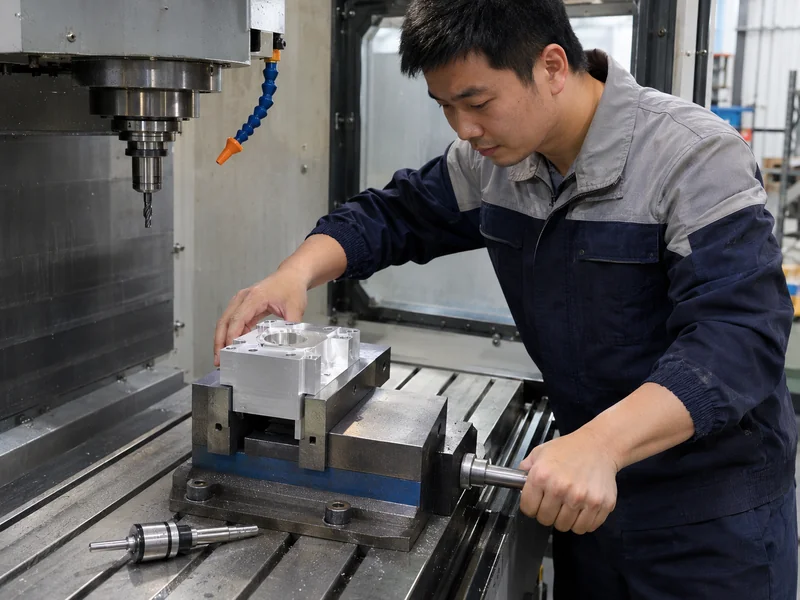
Geometry that pushes beyond 3 axes
- Holes or faces at compound angles
- Undercuts behind walls or under lips
- Sculpted surfaces that curve over the sides of the part
- Deep features on several faces that need tight positional relationships
What happens when the part needs more setups
- Each re-clamp adds a small location error between features.
- Each setup needs its own fixture, zero point and first-piece check.
- Lead time grows because the part waits for the next machine slot.
Here’s the thing: the problem is rarely whether a 3-axis machine can make the part. Instead, the problem is whether it can make it with acceptable tolerance between features on different faces. For example, two holes on opposite faces that must align within a tight position tolerance are hard to hold across two separate clampings.
Key Takeaway: Watch for tolerances that link features on different faces. That is usually where 3 axis CNC machining becomes risky or expensive.
How Do Setups Affect Accuracy and Cost in 3 Axis CNC Machining?
Setups affect accuracy and cost in 3 axis CNC machining more than any other factor. Each setup means stopping, re-clamping, re-zeroing and re-checking the part, which adds time and error.
A typical part might need:
- Setup 1: top face, pockets and main holes
- Setup 2: flip, bottom face and back features
- Setup 3: side holes or slots, in a vise or angle fixture
As a result, a part with three setups often costs noticeably more than the same part redesigned for one or two. The cutting time may be similar, but the handling, fixturing and checking are not.
Accuracy follows the same logic. Features cut in one setup share the same reference, so their positions relate closely. Features cut in different setups depend on how precisely the part was relocated. Therefore, a good datum strategy puts critical features in the same setup whenever possible.
Key Takeaway: Count setups before you count features. Group related features into one setup, and choose datums the machinist can locate repeatably.
3 Axis vs 3+2 vs 5 Axis: Which Fits Your Part?
3 axis CNC machining fits most prismatic parts, 3+2 machining fits parts with features on several angled faces, and simultaneous 5-axis machining fits complex sculpted surfaces. The right choice depends on geometry and volume, not on which machine sounds more advanced.
| Machining type | How it works | Best for | Trade-offs |
|---|---|---|---|
| 3-axis | Tool moves X, Y, Z; tool axis fixed | Plates, brackets, housings, pockets | Extra setups for multi-face parts |
| 3+2 (positional 5-axis) | Part tilts to a fixed angle, then 3-axis cutting | Angled holes and faces, multi-side parts in one clamping | Higher machine rate, more programming |
| Simultaneous 5-axis | All axes move together | Impellers, complex molds, organic surfaces | Highest rate and programming effort |
For example, a bracket with holes on two faces is cheaper on a 3-axis machine with two setups. A housing with angled ports on five faces, by contrast, can be cheaper on a 5-axis machine because one clamping replaces four. Our core facility also runs a Makino D500 5-axis machining center for those cases.
If you are deciding between turning and milling first, our guide on choosing a CNC lathe or a CNC mill covers that step.
Key Takeaway: Do not pay for 5-axis by default. Choose more axes only when they remove setups or make a tolerance achievable.
How Should You Design Parts for 3 Axis CNC Machining?
You should design parts for 3 axis CNC machining by keeping features on as few faces as possible, using tool-friendly geometry and avoiding features the tool cannot reach. These choices cut both cost and lead time.
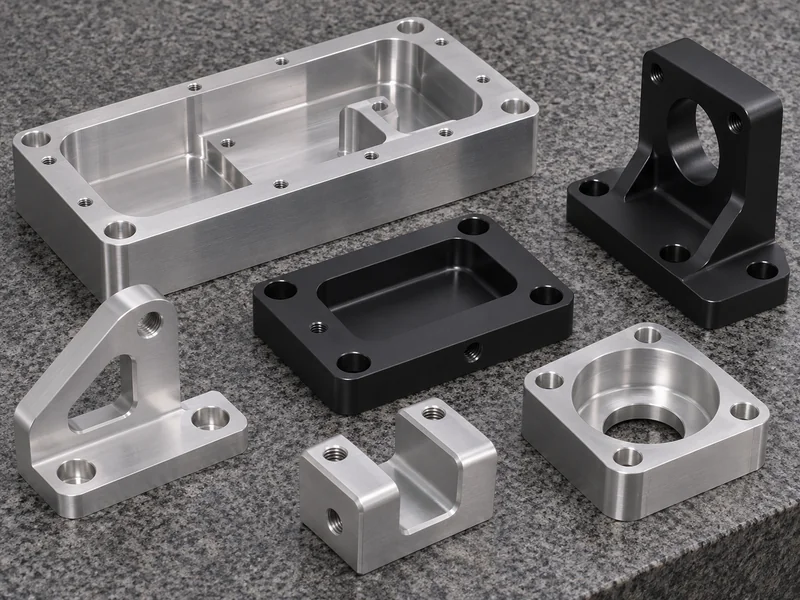
Practical design rules:
- Inside corners: use a radius slightly larger than a standard cutter radius, and keep pocket corner radii consistent.
- Pocket depth: keep depth within about 3–4 times the cutter diameter where possible.
- Hole sizes: use standard drill and tap sizes, and avoid very deep small holes.
- Thin walls: keep metal walls above about 0.8 mm and plastic walls above about 1.5 mm where the design allows.
- Faces: put holes and pockets on the top and bottom faces, rather than on the sides.
- Undercuts: avoid them, or use standard T-slot or dovetail cutter shapes.
- Text and logos: shallow engraved text is cheaper than raised text.
In addition, mark the faces that need tight flatness or finish. Then the machinist can plan the setup that controls them.
Key Takeaway: Design for the tool you have. Most cost savings in 3 axis CNC machining come from corner radii, standard holes and fewer machined faces.
What Tolerances and Finishes Can 3 Axis CNC Machining Hold?
3 axis CNC machining can hold general tolerances such as ISO 2768-1 class m without special effort, and tighter tolerances on selected features with suitable setups and inspection. The achievable tolerance depends on material, part size, setup count and feature type.
For general tolerances, class m allows ±0.2 mm on a 6–30 mm dimension, while class f allows ±0.1 mm on the same range. Specific features, such as bearing bores or dowel holes, often get individual tolerances on the drawing.
Surface finish depends on the tool, feed and material:
- As-machined faces commonly reach about Ra 3.2 µm.
- Finishing passes can reach about Ra 1.6 µm or better on suitable materials.
- Bead blasting, anodizing or polishing change the final appearance.
However, tight tolerances everywhere raise inspection time and cost. Therefore, apply them only to functional features. Our quality control and inspection process uses CMM measurement where the drawing requires it.
Key Takeaway: Tighten only what functions need. General tolerances on the rest of the part keep 3 axis CNC machining fast and affordable.
Which Materials Suit 3 Axis CNC Machining?
Most common metals and engineering plastics suit 3 axis CNC machining. The material mainly changes cutting speed, tool wear and how much the part moves after machining.
- Aluminum machines fast and is the most common choice for brackets and housings.
- Stainless steel needs slower speeds and steady chip load because it work-hardens.
- Carbon and tool steel suit fixtures and wear parts; hardened parts may need grinding or EDM.
- Copper and brass machine well and suit electrical parts.
- Titanium needs rigid setups and controlled heat.
- PEEK, POM and nylon machine well but can move with heat and clamping force.
We machine aluminum, stainless steel, tool steel, carbon steel, copper, brass, titanium, PEEK, POM and nylon, with finishes such as anodizing, hard anodizing, plating, passivation, powder coating and bead blasting.
Key Takeaway: Material affects speed and stability more than access. Flag plastics and thin-walled parts early, because they may need stress-relief or extra setups.
How Do You Get a Quote for 3 Axis CNC Machining Parts?
You get an accurate quote for 3 axis CNC machining parts by sending a 3D model and a 2D drawing with tolerances, material, finish and quantity. With this, the supplier can plan setups and fixtures before pricing.
A complete RFQ package includes:
- 3D model (STEP preferred) for programming
- 2D drawing with datums, tolerances, threads and surface finish
- Material and finish, such as 6061-T6 with clear anodizing
- Quantity for prototypes and production
- Inspection documents, such as FAI, CMM report or material certificates
Our CNC machining services cover prototypes through production, with 3-axis and 5-axis milling, turning, EDM and grinding.
Key Takeaway: Send the drawing, not a machine request. The supplier will choose 3-axis, 3+2 or 5-axis based on the lowest-risk route.
FAQ
- Q: What is 3 axis CNC machining used for?
- It is used for prismatic parts such as plates, brackets, housings, fixtures and mold components, where most features face one or two directions.
- Q: What is the difference between 3 axis and 5 axis CNC machining?
- A 3-axis machine keeps the tool vertical, while a 5-axis machine can also tilt or rotate the part or tool. 5-axis reaches angled features in fewer setups but costs more per hour.
- Q: Can 3 axis CNC machining make undercuts?
- Only simple undercuts made with special cutters, such as T-slot or dovetail tools. Complex undercuts usually need more axes or a design change.
- Q: Why does my part need several setups?
- Each setup lets the vertical tool reach a different face. Features on more faces mean more setups, which add time and location error.
- Q: Is 3 axis CNC machining cheaper than 5 axis?
- Usually yes for parts that fit it, because the machine rate and programming effort are lower. For complex multi-face parts, 5-axis can be cheaper overall by removing setups.
Conclusion
3 axis CNC machining is the most economical route for parts whose features face the spindle. Design for fewer faces, standard tools and functional tolerances, and the part stays fast to make. To get a machining plan and quote, upload your 3D model and 2D drawing for our engineers to review.