
Strength of Titanium vs Steel: How to Pick the Best One and Save Money
The strength of titanium vs steel depends on which steel and which titanium you compare. Commercially pure titanium is about as strong as mild steel. Ti-6Al-4V, the most common titanium alloy, is as strong as many quenched and tempered alloy steels, at about 56% of the weight. However, high-strength steels can be stronger in absolute terms, and steel is about twice as stiff as titanium.
That is why the choice for a strength-critical machined part is rarely obvious. For example, a highly loaded aerospace-style bracket can save weight in Ti-6Al-4V. A compact shaft that must not deflect, however, is usually better in alloy steel, because titanium bends about twice as much. In this guide, we compare the strength of titanium vs steel for machined parts, including tensile and yield strength, strength-to-weight, stiffness, fatigue, machining and cost. For a lighter comparison, see our guide to titanium weight vs aluminum weight.
In the strength of titanium vs steel, Ti-6Al-4V (Grade 5) has a typical yield strength of about 880 MPa and tensile strength of about 950 MPa at a density of 4.43 g/cm³. Mild steel has about 250 MPa yield, 4140 quenched and tempered steel often about 650–1,000 MPa, and 17-4PH stainless about 1,000–1,170 MPa in H900 condition, all at about 7.8–7.9 g/cm³. Titanium wins on strength-to-weight and corrosion; steel wins on stiffness (about 200 GPa vs 114 GPa), cost and machinability.
In short: titanium for strength per kilogram and corrosion; steel for absolute strength, stiffness and lower cost.
Key points:
- Absolute strength: high-strength steels can match or exceed Ti-6Al-4V.
- Strength-to-weight: titanium is much higher.
- Stiffness: steel is about 1.8 times stiffer.
How Does the Strength of Titanium vs Steel Compare?
The strength of titanium vs steel overlaps. Different grades cover a wide range, so the comparison must be grade by grade.
| Material (typical) | Yield strength | Tensile strength | Density | Elastic modulus |
|---|---|---|---|---|
| CP titanium Grade 2 | about 275 MPa | about 345 MPa | 4.51 g/cm³ | about 105 GPa |
| Ti-6Al-4V (Grade 5) | about 880 MPa | about 950 MPa | 4.43 g/cm³ | about 114 GPa |
| Mild steel (e.g. 1018) | about 250–370 MPa | about 400–440 MPa | 7.87 g/cm³ | about 200 GPa |
| 4140 Q&T | about 650–1,000 MPa | about 900–1,100 MPa | 7.85 g/cm³ | about 205 GPa |
| 17-4PH H900 | about 1,170 MPa | about 1,310 MPa | 7.8 g/cm³ | about 197 GPa |
Values depend on heat treatment and product form. Design values should come from the material specification, such as those published by ASTM International.
Key Takeaway: Compare specific grades and conditions. “Titanium” and “steel” alone are too broad.
What Is the Strength of Titanium vs Steel by Weight?
Yes. In the strength of titanium vs steel by weight, titanium is much stronger. Ti-6Al-4V has a specific strength about 1.5–2.5 times that of common alloy steels.
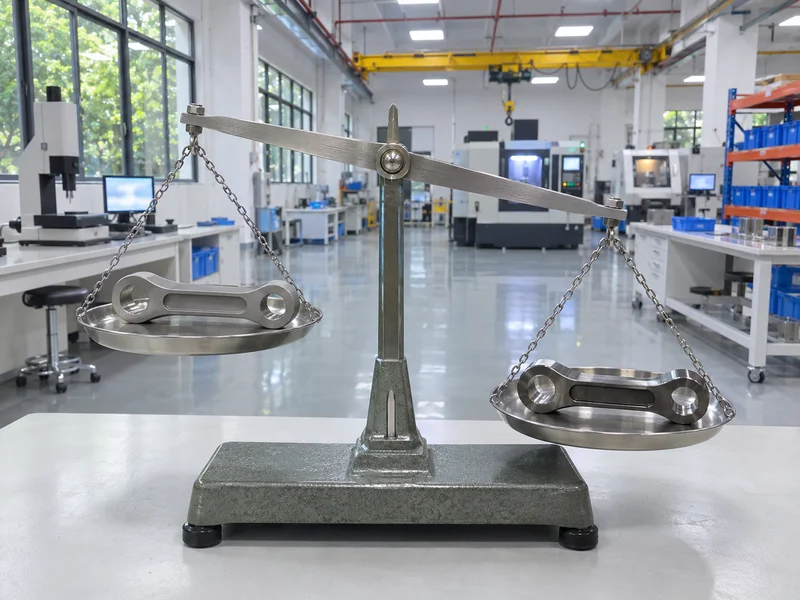
A simple comparison of yield strength divided by density:
- Ti-6Al-4V: 880 ÷ 4.43 ≈ 199
- 4140 Q&T (850 MPa): 850 ÷ 7.85 ≈ 108
- Mild steel (300 MPa): 300 ÷ 7.87 ≈ 38
For example, a tension link sized by strength can be about 45% lighter in Ti-6Al-4V than in 4140 at the same safety factor. That is why titanium is common in aerospace, motorsport and high-performance equipment.
Key Takeaway: When weight matters and strength sets the size, titanium usually wins.
Why Does Stiffness Change the Titanium vs Steel Decision?
Stiffness changes the decision because titanium’s elastic modulus is about 114 GPa, while steel’s is about 200 GPa. Under the same load and shape, a titanium part deflects about 1.75 times as much as a steel part.
Stiffness-limited parts include:
- Shafts and spindles that must stay aligned
- Long arms and beams
- Precision fixtures and bases
- Thin-walled housings that hold bearings
For example, replacing a steel shaft with a titanium shaft of the same diameter saves weight but increases bending. To match stiffness, the titanium shaft needs a larger diameter, which removes much of the weight saving.
Key Takeaway: If deflection, not strength, limits the part, steel is usually the better choice.
How Does Fatigue Affect the Strength of Titanium vs Steel?
In the strength of titanium vs steel, fatigue performance depends on surface finish, notches and the environment, as well as the grade.
General points:
- Ti-6Al-4V has good fatigue strength, but it is very sensitive to notches and surface damage.
- High-strength steels also have good fatigue strength, but corrosion can reduce it.
- Surface finish strongly affects both; machining marks and sharp corners start cracks.
- Shot peening improves fatigue life in both materials.
For example, a titanium part with a sharp internal corner may fail earlier than a steel part with a generous radius, even though titanium has the higher specific strength. Therefore, radii, finish and stress concentrations matter as much as the material.
Key Takeaway: For fatigue-critical parts, specify radii and surface finish on the drawing.
How Do Corrosion and Temperature Affect the Choice?
Beyond the strength of titanium vs steel, corrosion and temperature favor titanium in many environments. Titanium forms a stable oxide layer, so it resists seawater, chlorides and many chemicals far better than carbon and alloy steels.
Key differences:
- Seawater and chlorides: titanium excellent; carbon steel needs coating; stainless varies.
- Elevated temperature: Ti-6Al-4V keeps useful strength to about 300–400 °C; many steels go higher.
- Galvanic contact: titanium can accelerate corrosion of steel or aluminum in contact with it in wet conditions.
For example, a marine fitting in titanium needs no coating, while a steel fitting needs plating or paint and periodic inspection. Our guide to 316L SS vs 316 SS covers stainless options for corrosive service.
Key Takeaway: In corrosive service, compare titanium with stainless steel, not with carbon steel.
How Does Machining Titanium Compare With Steel?
Machining titanium is slower and harder than machining most steels. Titanium has low thermal conductivity, so heat stays at the cutting edge, and its low stiffness makes thin parts vibrate.
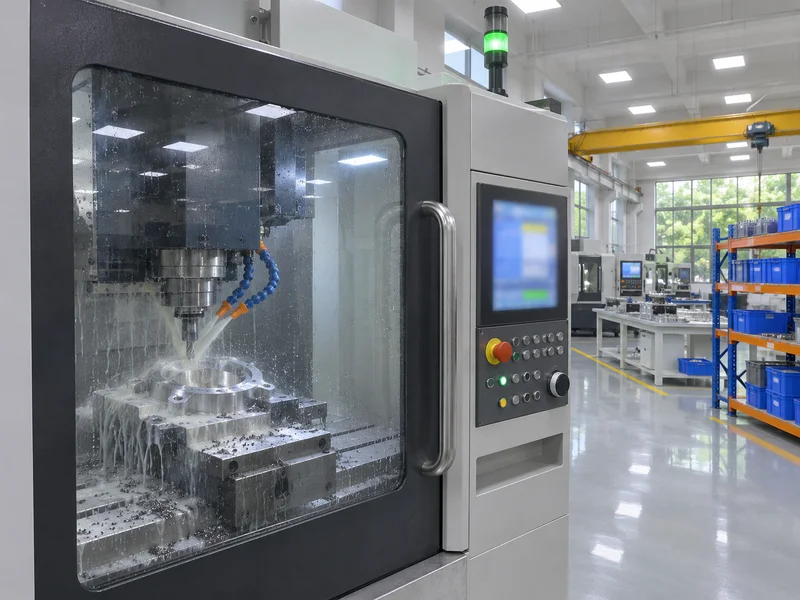
Practical differences:
- Cutting speeds: lower for titanium, which increases machining time.
- Tool wear: faster in titanium, especially at high temperature.
- Coolant: high-pressure coolant helps remove heat and chips.
- Workholding: rigid setups reduce chatter on thin titanium walls.
- Chips: titanium chips can ignite in fine form, so housekeeping matters.
For example, a titanium bracket can take noticeably longer to machine than the same bracket in 4140. Our CNC machining services cover titanium, tool steel, carbon steel and stainless steel from prototype to production, with tolerances controlled per drawing.
Key Takeaway: Budget more machining time for titanium. Material and machining together drive its cost.
Titanium or Steel for a Strength-Critical Machined Part?
You choose between titanium and steel for a strength-critical machined part by deciding what limits the design: strength, weight, stiffness, corrosion or cost.
- Strength per weight critical? Ti-6Al-4V.
- Highest absolute strength in a small space? High-strength alloy or PH stainless steel.
- Stiffness or deflection critical? Steel.
- Corrosive or marine service? Titanium or a suitable stainless steel.
- Cost-sensitive part? Steel.
For example, a bicycle-style rocker arm suits titanium, while a gearbox shaft suits alloy steel. Our CNC milling and CNC turning services handle both, so we can quote the same design in each material.
Key Takeaway: Ask for quotes in both materials. The cost difference often settles the decision.
FAQ
- Q: Is titanium stronger than steel?
- Ti-6Al-4V is as strong as many alloy steels, but high-strength steels can be stronger in absolute terms. By weight, titanium is much stronger.
- Q: Is titanium stiffer than steel?
- No. Titanium’s elastic modulus is about 114 GPa, compared with about 200 GPa for steel.
- Q: Why is titanium used if steel can be stronger?
- Because titanium gives high strength at about 56% of the weight and resists corrosion very well.
- Q: Is titanium harder to machine than steel?
- Yes. It needs lower speeds, rigid setups and good coolant, so machining time is longer.
- Q: Which is cheaper, titanium or steel?
- Steel is much cheaper in both raw material and machining time.
Conclusion
The strength of titanium vs steel depends on the grades, but titanium leads in strength-to-weight and corrosion, while steel leads in stiffness, absolute strength and cost. Decide what limits your part, then compare real grades. To quote your part in both materials, send your 3D model and 2D drawing to our engineers.