
Low Volume Injection Molding: When It Makes Sense
Low volume injection molding makes molded parts in quantities from a few hundred to tens of thousands, using tools and production plans scaled to that volume. It gives real molded parts, in production resins, at a lower tool cost than full production molds. It also bridges the gap between prototypes and mass production, including pilot production runs.
The difficulty is knowing when it makes sense. For example, 300 parts in a simple shape may be cheaper by CNC machining, while 3,000 parts with snap-fits and thin walls are almost always cheaper molded. In addition, a low-volume tool that is designed carelessly may need to be rebuilt when demand rises. In this guide, we explain when low volume injection molding makes sense, how to compare it with other processes, how to plan the tool and how to use it for pilot production. For the tool options, see our guide to rapid tooling.
Low volume injection molding makes sense when you need roughly 500 to 50,000 parts per year, the design is stable, and the part needs real molded properties, such as snap-fits, thin walls or a specific resin. It uses simpler single-cavity or insert-based tools in aluminum or pre-hardened steel, so tool cost is lower and lead time shorter. It is less suitable for very small quantities, where machining or 3D printing is cheaper, or for very high volumes, where multi-cavity hardened tools give lower part cost.
In short: low volume injection molding fits stable designs at hundreds to tens of thousands of parts, especially as a pilot step before mass production.
Key points:
- Volume range: about 500 to 50,000 parts per year.
- Tools: simpler, single-cavity or insert-based.
- Pilot production: proves process and supply before scale-up.
What Is Low Volume Injection Molding?
Low volume injection molding is injection molding planned for small or medium quantities. The molding process is the same as in mass production. However, the tool, setup and production planning are scaled to the volume.
Typical features:
- Single-cavity or simple family tools
- Aluminum or pre-hardened steel, such as P20 or 718H
- Hand-loaded inserts instead of automatic slides, where acceptable
- Shared mold bases with interchangeable inserts
- Smaller presses and shorter runs
For example, a medical device startup may need 2,000 housings per year for the first two years. A single-cavity steel tool fits that volume well. We offer plastic injection molding from T1 trial to volume production, with no fixed MOQ.
Key Takeaway: Plan the tool for the next two to three years of demand, not only the first order.
When Does Low Volume Injection Molding Make Sense?
Low volume injection molding makes sense when the part benefits from molding and the volume is high enough to pay for a tool.
It fits well when:
- Volume is about 500 to 50,000 parts per year
- The design is stable after prototyping
- The part needs molded features, such as clips, living hinges or thin walls
- A specific resin or color is required
- Market demand is uncertain, so a full production tool is risky
It fits less well when:
- Only tens of parts are needed
- The design changes often
- Volume will soon reach hundreds of thousands, where multi-cavity tools are better
For example, a product launch with uncertain demand often starts with a low-volume tool. If demand grows, a multi-cavity tool follows. Our guide to multi-cavity injection molding explains when that step is justified.
Key Takeaway: Low volume molding reduces risk when demand is uncertain but the design is ready.
How Does Low Volume Injection Molding Compare With CNC and 3D Printing?
Low volume injection molding compares with CNC machining and 3D printing mainly on tool cost, part cost and part properties.
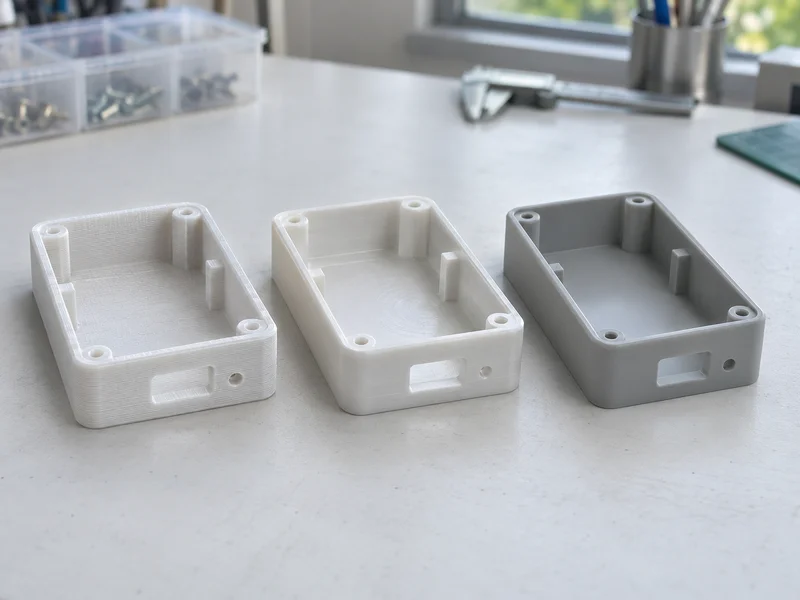
| Factor (typical) | 3D printing | CNC machining | Low volume injection molding |
|---|---|---|---|
| Tool cost | None | None or low | Moderate |
| Part cost | High | Medium to high | Low |
| Lead time to first part | Days | Days | Weeks |
| Material choice | Limited | Wide (stock shapes) | Wide (production resins) |
| Molded features | Not real | Not real | Real |
| Best quantity | 1–100 | 1–500 | 500–50,000 |
For example, 50 brackets may be cheapest by CNC. At 1,000 parts, however, the mold cost is spread widely enough that molding wins. Our CNC machining services and molding services can quote both routes for the same part.
Key Takeaway: Calculate the break-even quantity. Tool cost divided by the part cost saving gives a quick estimate.
How Should a Low Volume Tool Be Planned?
A low volume tool should be planned so it makes good parts now and does not block the path to higher volume later.
Planning points:
- Steel or aluminum: steel if volume may grow or resin is abrasive
- Gate and parting line: same as a future production tool would use
- Undercuts: hand-loaded inserts for low volume; slides if labor cost is too high
- Cooling: good enough for consistent parts, not maximum speed
- Mold base: standard, so inserts can be reused or replaced
For example, a tool with hand-loaded inserts may be fine for 1,000 parts per year, but too slow and labor-intensive at 20,000. Choosing slides from the start may then be cheaper overall. Our guide to mold bases for short production runs explains shared-base strategies.
Key Takeaway: Ask for tool quotes at two volume levels. The difference shows the cost of flexibility.
How Does Low Volume Injection Molding Support Pilot Production?
Low volume injection molding supports pilot production by producing real parts in real conditions before full production starts.
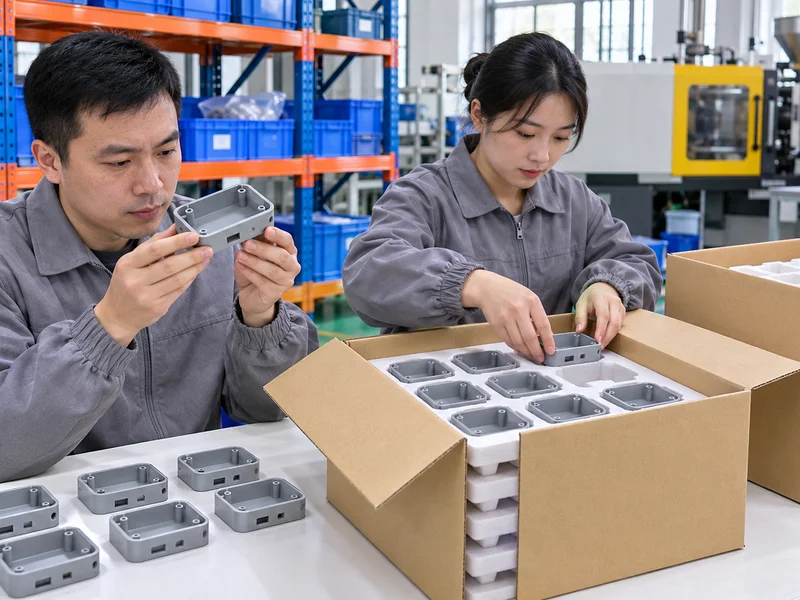
A pilot production run is used to:
- Validate the process on the production machine and resin
- Test assembly lines and packaging
- Supply early customers or field trials
- Check supply chain timing, including shipping
- Collect data for capability and cost
Typical pilot steps:
- Approve T1–T3 trial samples.
- Run a pilot lot, often a few hundred to a few thousand parts.
- Measure key dimensions and record process data.
- Review issues and adjust the tool or process.
- Release for regular production.
For example, a pilot run of 2,000 parts may reveal a packing problem that scratches parts in transit. Fixing it before mass production avoids larger losses. Our standard mold quote includes up to 3 trials and 10-shot samples, and pilot lots are planned per project.
Key Takeaway: Treat the pilot run as a rehearsal for production, including inspection and packing.
What Does Low Volume Injection Molding Cost?
Low volume injection molding cost is made of tool cost, setup cost and part cost. At low volumes, the tool and setup share is high, so tool design matters most.
Main cost drivers:
- Tool complexity: undercuts, slides and surface finish
- Tool material: aluminum or steel
- Setup per run: mold change, drying and first-article checks
- Cycle time and labor: especially with hand-loaded inserts
- Resin price and minimum material quantities
For example, ordering 5,000 parts in one run usually costs less per part than five runs of 1,000, because setup is repeated less often. We do not publish fixed prices; each quote follows the drawing and volume plan. Our guide to how to estimate injection molding cost explains the calculation.
Key Takeaway: Combine orders into fewer runs where storage allows. Setup cost is a large share at low volume.
What Are the Limits of Short-Run Molding?
Low volume injection molding has limits, so plan for them in design and supply.
Common limits:
- Lead time: weeks for the tool, compared with days for machining
- Design changes: each change needs tool work
- Part cost: higher than in multi-cavity mass production
- Tool life: aluminum and soft steel wear sooner
- Minimum run size: setup cost makes very small runs inefficient
For example, a design that is still changing after the first molded parts may cost more in tool changes than it saves. Typical mold lead times are 4–8 weeks, depending on complexity, so schedule the tool after design freeze. Quality expectations can be set with references such as ISO tolerance standards.
Key Takeaway: Freeze the design before cutting steel. Late changes erase the cost advantage.
FAQ
- Q: What is low volume injection molding?
- It is injection molding planned for hundreds to tens of thousands of parts, with tools scaled to that volume.
- Q: How many parts count as low volume?
- Typically about 500 to 50,000 parts per year, depending on the part and industry.
- Q: Is low volume injection molding cheaper than CNC machining?
- Above a break-even quantity, usually a few hundred to a thousand parts, molding is cheaper per part.
- Q: What is pilot production in injection molding?
- A limited production run used to validate the process, assembly and supply chain before full production.
- Q: Is there a minimum order for low volume molding?
- We have no fixed MOQ. Quantities are planned per project.
Conclusion
Low volume injection molding makes sense for stable designs at hundreds to tens of thousands of parts, and as a pilot step before mass production. Plan the tool for future volume, compare costs with machining and use the pilot run to prove the process. To plan your project, send your 3D model and 2D drawing to our engineers.