
Casting vs Machining: How to Pick the Best One Without Waste
Casting vs machining is a choice between making a near-net shape in a mold and cutting the part from solid stock. Casting gives low part cost for complex shapes at volume, but it needs a pattern or die and usually some machining afterward. CNC machining needs no tooling, gives tight tolerances and strong wrought material, but it costs more per part and wastes more material.
Many custom components end up using both. For example, a pump housing may be cast to shape, then machined on its sealing faces and bores. In contrast, a small bracket ordered in 50 pieces is usually cheaper machined from plate. In this guide, we compare casting vs machining for custom components by cost, volume, geometry, tolerances, material properties and lead time, and explain when to combine them. For machining large parts, see our guide to metals for large CNC machined parts.
Casting vs machining: casting (sand, investment or die casting) forms a near-net shape from molten metal, with low part cost at volume and freedom for internal cavities, but it needs tooling, has wider tolerances and may contain porosity. CNC machining cuts parts from wrought stock with no tooling, tight tolerances and consistent properties, but higher part cost and material waste. Machining suits prototypes and low volumes; casting suits complex shapes at higher volumes. Many parts are cast, then machined on critical features.
In short: machine for low volume and precision; cast for complex shapes at volume; combine both for precise features on cast bodies.
Key points:
- Tooling: casting needs it; machining does not.
- Tolerances: machining is tighter.
- Combined route: cast near-net, machine critical features.
How Do Casting vs Machining Compare?
Casting vs machining compare on several factors that decide cost and quality.
| Factor (typical) | Casting | CNC machining |
|---|---|---|
| Tooling | Pattern, mold or die | None (fixtures only) |
| Part cost at volume | Low | Higher |
| First part lead time | Weeks | Days |
| Tolerances | Wider (ISO 8062 grades) | Tight (drawing dependent) |
| Internal cavities | Possible with cores | Limited to drillable shapes |
| Material structure | Cast; possible porosity | Wrought; consistent |
| Material waste | Low | Higher |
Casting tolerances are often specified with ISO 8062 grades from ISO. For example, a cast part may have general tolerances of several tenths of a millimeter, while a machined part can hold much tighter tolerances on key features.
Key Takeaway: Compare the finished part, including any machining a casting still needs.
Which Casting Processes Are Used for Custom Components?
The casting processes used for custom components differ in tooling cost, accuracy and suitable volumes.
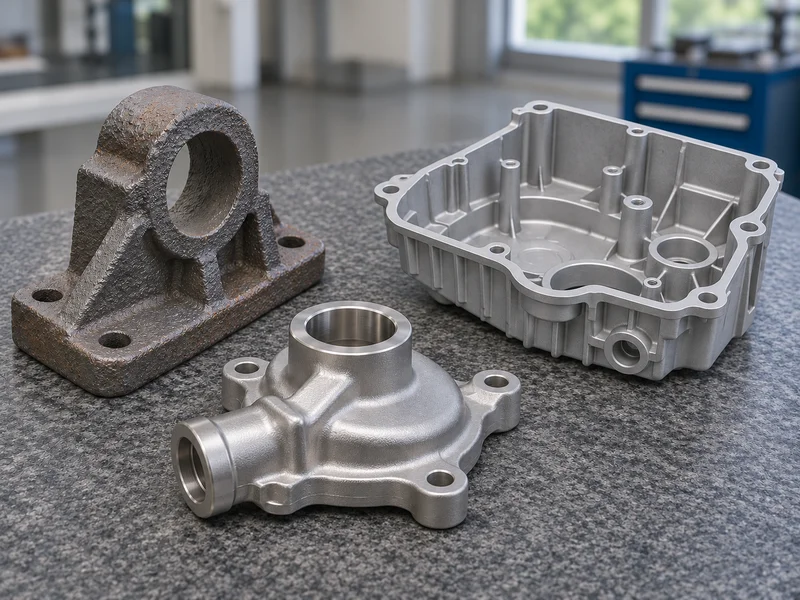
- Sand casting: low tooling cost, large parts, rough surfaces; suits low to medium volumes.
- Investment casting: fine detail and good surfaces; suits small to medium complex parts.
- Die casting: high tooling cost, thin walls and fast cycles; suits aluminum and zinc at high volume.
- Permanent mold casting: between sand and die casting in cost and finish.
For example, a 200-piece run of complex stainless valve bodies may suit investment casting, while 50,000 aluminum housings a year suit die casting. Each process needs machining for precise faces and threads.
Key Takeaway: Choose the casting process by volume, size and surface needs. It changes cost more than the casting decision itself.
Casting vs Machining: When Is CNC Machining the Better Choice?
CNC machining is the better choice when volume is low, tolerances are tight, the design may change or the part needs wrought properties.
Choose machining when:
- Quantities are low, such as prototypes and short runs
- Tolerances are tight across many features
- The design is still changing
- Strength and fatigue matter, and porosity is not acceptable
- Lead time is short, with no time for tooling
For example, a highly loaded lever in 7075-T6 is usually machined from plate, because wrought material gives consistent fatigue strength. Our CNC milling service machines aluminum, steel, stainless steel, titanium and plastics from prototype to production.
Key Takeaway: Machine when precision, properties or speed matter more than part cost.
Casting vs Machining: When Does Casting Pay Back?
Casting pays back when the part is complex, the volume is high enough to spread tooling cost, and the cast properties meet the requirements.
Casting fits when:
- Shapes are complex, with internal passages or ribs
- Volumes are medium to high
- Material removal by machining would be large
- Properties of cast alloys are acceptable
A simple break-even check:
Break-even quantity ≈ tooling cost ÷ (machined part cost − cast-and-finished part cost)
For example, if a pattern costs far less than the saving across a year’s volume, casting pays back quickly. However, the cast part still needs machining, so include that in the comparison. Our guide to cast iron vs steel aluminium industrial components explains cast iron’s advantages for bases.
Key Takeaway: Include machining of the casting in the cost comparison. The raw casting price is not the full cost.
How Do You Combine Casting and Machining?
You combine casting and machining by casting the overall shape, then machining only the features that need precision.
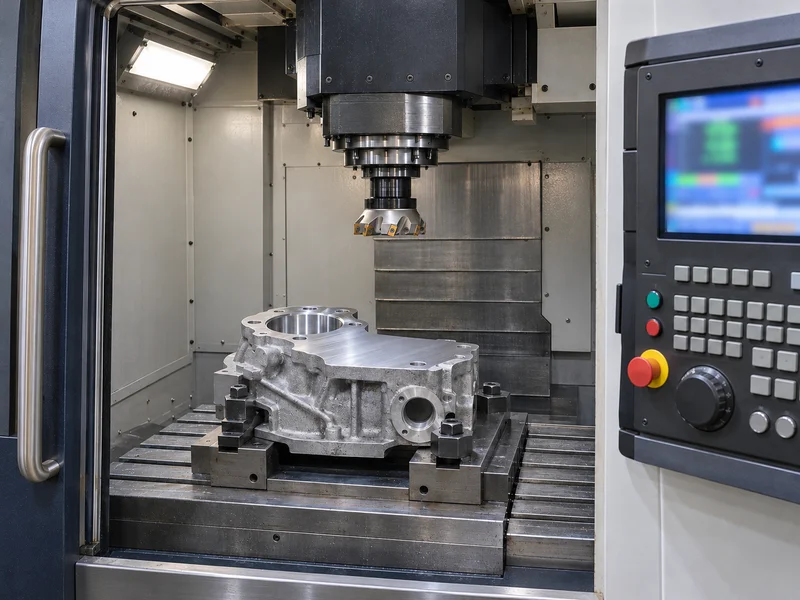
Typical machined features on castings:
- Sealing and mating faces
- Bores for bearings and shafts
- Threaded holes
- Datum surfaces for assembly
Design points:
- Machining allowance: enough stock on machined faces, often 1–3 mm.
- Datum targets: cast datum points for the first machining setup.
- Draft and radii: suited to the casting process.
- Porosity control: avoid thick sections at machined sealing faces.
For example, a cast aluminum gearbox housing may have 2 mm machining allowance on its bearing bores and faces, with three cast datum pads for the first setup. Our CNC machining services machine castings supplied by the customer or sourced per project.
Key Takeaway: Define cast datums and machining allowance on the casting drawing. They decide whether machining goes smoothly.
What Should You Specify for Cast-and-Machined Parts?
You should specify cast-and-machined parts with separate requirements for the casting and the machined features.
Include:
- Casting material and process
- General casting tolerances, such as an ISO 8062 grade
- Machined feature tolerances and surface finishes
- Porosity limits on critical areas, if needed
- Leak or pressure test requirements
- Inspection of machined features, such as CMM
For example, a hydraulic housing may require a pressure test after machining, because porosity can open up when the surface is cut. Our quality control and inspection process includes CMM measurement and inspection reports on request.
Key Takeaway: Test sealed cast parts after machining. Machining can expose porosity.
FAQ
- Q: Is casting cheaper than machining?
- At medium to high volumes, usually yes; at low volumes, machining is often cheaper because there is no tooling.
- Q: Which is more accurate, casting or machining?
- Machining. Castings usually need machining on precise features.
- Q: Are cast parts weaker than machined parts?
- Cast alloys can have lower ductility and may contain porosity, while wrought machined stock is more consistent.
- Q: Can a part be both cast and machined?
- Yes. Many parts are cast to shape, then machined on critical faces, bores and threads.
- Q: How much machining allowance does a casting need?
- Often about 1–3 mm on machined faces, depending on process and size.
Conclusion
Casting vs machining depends on volume, complexity, tolerances and material properties. Machine for low volume and precision, cast for complex shapes at volume, and combine both when a cast body needs precise features. To compare routes for your part, send your 3D model and 2D drawing to our engineers.