
Metals for Large CNC Machined Parts: How to Pick the Best One and Save Money
The best metals for large CNC machined parts are the ones that stay flat after heavy material removal. A strong datasheet is not enough. For most bigger plates and housings, that means stress-relieved 6061-T651 plate, cast tooling plate or normalized steel. However, the biggest saving often comes from a second question. Does the part need to be large at all?
Size magnifies every material problem. For example, a 1,000 mm aluminum plate machined deep on one side can bow visibly. In contrast, a 250 mm part from the same plate barely moves. Likewise, a thick stainless block can take many hours longer to machine than an aluminum one. In this guide, we explain how to pick metals for large CNC machined parts by stability, machinability and cost. We also show how a smaller precision design saves stock and machining time. We focus on small and medium precision parts and review larger parts case by case. For process planning, see our guide to large part CNC machining.
The best metals for large CNC machined parts are usually stress-relieved aluminum plate (6061-T651, 7075-T651 or 5083), cast aluminum tooling plate for flatness-critical plates, and normalized or stress-relieved carbon and alloy steels where stiffness or wear matters. Stainless steel and titanium suit big parts only when corrosion or strength justifies much longer machining. Because residual stress, raw block weight and machining time all rise with size, splitting a large part into smaller precision modules, or reducing its envelope, often saves more cost than changing the alloy.
In short: choose stress-relieved stock, keep the alloy common and keep precision parts small.
Key points:
- Stability: stress-relieved plate moves far less after machining.
- Machinability: aluminum cuts many times faster than steel or stainless.
- Size: smaller precision parts use less stock and hold tolerances more easily.
What Makes Metals for Large CNC Machined Parts Different?
Metals for large CNC machined parts behave differently because small effects grow with size. A stress that moves a small part a few microns can move a long plate far more.
The main differences:
- Residual stress: rolling and heat treatment leave stress in the stock; removing material releases it.
- Heat: long cycles warm the part, which expands and changes measured size.
- Stock availability: thick plate and large bar are not stocked in every alloy.
- Raw block weight: most of a big block often becomes chips.
Therefore, choosing metals for large CNC machined parts should start with stability and availability, then strength.
Key Takeaway: Ask “will it stay flat?” before “is it strong enough?”
Which Aluminum Grades Are the Best Metals for Large CNC Machined Parts?
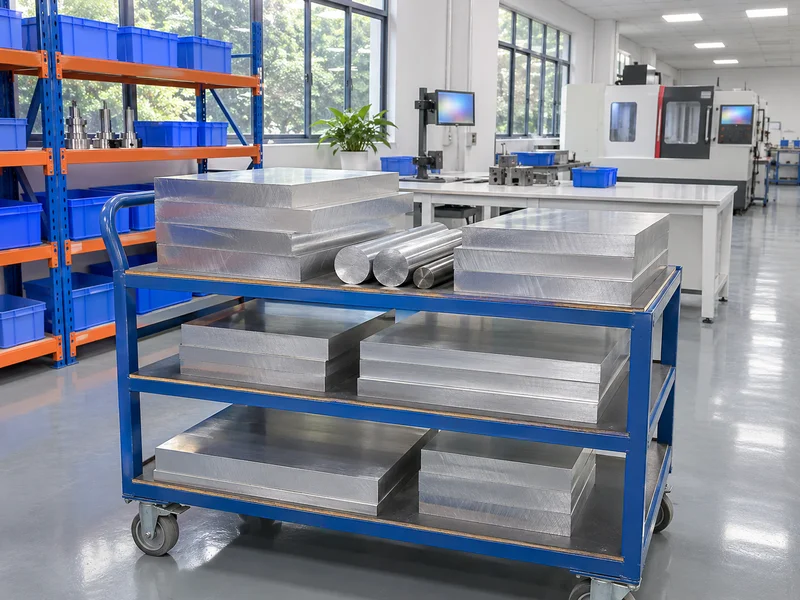
Among aluminum alloys, the best metals for large CNC machined parts are stress-relieved plate grades. The suffix T651 means the plate was stretched after heat treatment to relieve residual stress.
| Grade (typical) | Strength | Stability after machining | Typical uses |
|---|---|---|---|
| 6061-T651 | Medium | Good | Base plates, housings, brackets |
| 7075-T651 | High | Good; thick plate can still move | Highly loaded structures, fixtures |
| 5083 (H111/H321 or cast plate) | Medium | Very good | Vacuum plates, marine parts |
| Cast aluminum tooling plate | Lower | Excellent | Flatness-critical plates, fixtures |
For example, a flat vacuum plate often uses cast tooling plate or 5083. Both release very little stress. A highly loaded bracket may use 7075-T651 with balanced roughing. Our comparison of 6061 T6 aluminum vs 7075 T6 explains the strength trade-off.
Key Takeaway: For flat plates, specify a stress-relieved or cast plate grade on the drawing.
When Is Steel a Better Choice?
Steel is a better choice when stiffness, wear resistance or low cost per kilogram matters most.
Common steel choices:
- Low-carbon steel: simple frames and welded structures
- Medium-carbon steel (such as 1045 / C45): shafts, bases and stronger parts
- Pre-hardened tool steel (such as P20): mold plates and wear parts
- Alloy steels (such as 4140 / 42CrMo4): heavily loaded parts, often heat treated
Steel is about three times stiffer than aluminum, so a steel part deflects less for the same shape. However, it is also about three times heavier and machines more slowly. Steel grades are defined by standards such as those published by ASTM International and EN standards in Europe.
Key Takeaway: Choose steel when stiffness or wear rules the design. Ask for normalized or stress-relieved stock.
Are Stainless Steel and Titanium Good Metals for Large CNC Machined Parts?
Stainless steel and titanium are good metals for large CNC machined parts only when the application demands them. They machine slowly and cost more.
- Stainless steel (304, 316): corrosion resistant, but slow to machine and prone to work hardening.
- Precipitation-hardening stainless (such as 17-4PH): higher strength and better stability after aging.
- Titanium: excellent strength-to-weight ratio, but expensive and slow to machine in thick stock.
As a result, big stainless parts are often redesigned. Coated aluminum or small stainless inserts can do the same job. Our guide to titanium weight vs aluminum weight explains when titanium earns its cost.
Key Takeaway: Use stainless or titanium on big parts only when corrosion or strength truly require it.
Can a Smaller Design Save Material and Machining Cost?
A smaller design can save material and machining cost. Block weight, machining time and inspection effort all rise quickly with size.
Compare the stock:
- A 600 × 400 × 100 mm block weighs about 65 kg in aluminum and about 188 kg in steel.
- A 300 × 200 × 60 mm block weighs about 10 kg in aluminum and about 28 kg in steel.
Ways to make the precision part smaller:
- Split the part into a simple structure plus small precision modules located with dowel pins.
- Use plate cut close to size instead of a solid block.
- Reduce the envelope by moving features closer together.
- Keep tight tolerances local, on the modules that need them.
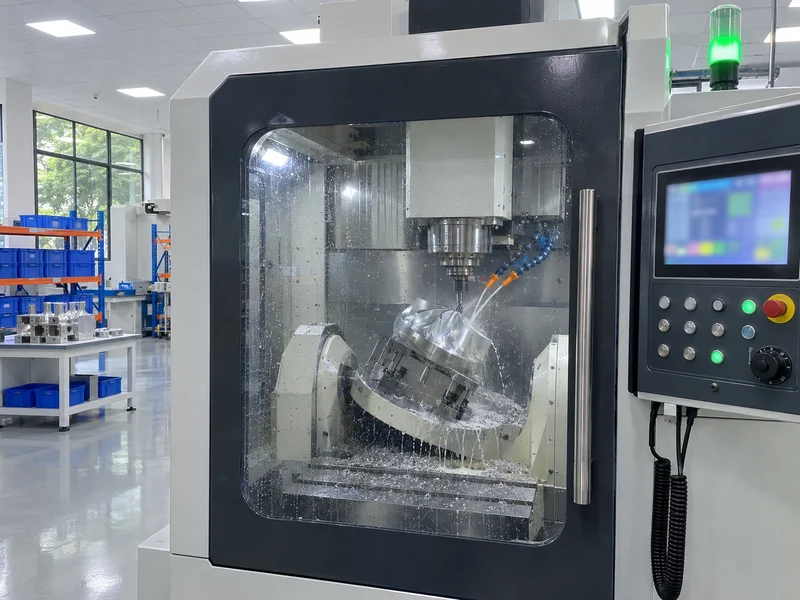
For example, a 900 mm frame with two bearing seats can become a plate frame plus two 200 mm bearing blocks. The blocks are machined in one or two setups and measured in one CMM setup. Our Dongguan factory includes a Makino 5-axis machining center for multi-face parts. Finished tolerances still depend on part, material and process.
Key Takeaway: Before choosing an expensive alloy, check whether the precision part can simply be smaller.
How Do You Specify Stock So the Part Stays Stable?
You specify stock by naming the alloy, temper and condition on the drawing. Add any stress relief or certificate required.
A complete stock specification includes:
- Alloy and temper, such as 6061-T651 or 1045 normalized
- Product form, such as plate, bar or cast plate
- Stress relief, if required before or after roughing
- Material certificate, if traceability is needed
- Acceptable alternatives, to protect lead time
General tolerances such as ISO 2768 help on non-critical features, while flatness and position on functional surfaces should be specified directly.
Key Takeaway: Write the temper and stress condition on the drawing. “Aluminum” or “steel” alone invites distortion.
Where Does WOKE Molds Fit?
WOKE Molds focuses on small and medium precision CNC machined parts. Typical materials are aluminum, steels, stainless steel, brass, copper, titanium, PEEK, POM and nylon.
- Best fit: housings, brackets, manifolds, fixtures and precision modules of larger assemblies
- Large parts: reviewed case by case; we tell you early if a part is outside our focus
- Material advice: grade and stock condition are confirmed per project
For example, we can machine the precision bearing blocks and brackets of a large machine while a structural frame is made elsewhere. See our CNC machining services and quality control and inspection process.
Key Takeaway: Send the whole assembly. We will say which parts fit our precision focus.
FAQ
- Q: What is the best aluminum for large CNC machined parts?
- Stress-relieved plate such as 6061-T651, or cast aluminum tooling plate when flatness is critical.
- Q: Why do large machined parts warp?
- Residual stress is released as material is removed. Heat from long cycles also moves the part.
- Q: What does T651 mean?
- The aluminum was solution heat treated, stretched to relieve residual stress and artificially aged.
- Q: When should steel be used instead of aluminum?
- When stiffness, wear resistance or lower material cost matters more than weight and machining time.
- Q: How can I reduce the cost of a large machined part?
- Use stress-relieved common alloys, and split precision features onto smaller modules where possible.
Conclusion
Selecting metals for large CNC machined parts starts with stability, availability and machining time, then strength. Use stress-relieved stock, keep alloys common, and keep precision features on parts that are as small as the design allows. To review material and design for your part, send your 3D model and 2D drawing to our engineers.