
Control Plans for Molded Parts: What to Include
A control plan is the manufacturing document that lists every process step, the product and process characteristics checked at that step, how they are measured, how often, and what happens when a check fails. For injection molded parts, it covers everything from resin receiving and drying through molding, secondary operations and packing. It turns the risks found in the PFMEA into daily checks on the shop floor.
A control plan is only useful if it matches what really happens. For example, a plan that says “dimensions checked every hour” but has no gauge, no record sheet and no reaction plan will not stop a drifting process. In this guide, we explain what a manufacturing control plan includes for injection molded parts, how it links to the PFMEA, and how buyers can review one. For the submission documents around it, see our guide to PPAP levels.
A control plan is a manufacturing process document that describes how each process step is controlled. For each step it lists the machine or tool, product and process characteristics, special characteristic markings, specifications and tolerances, measurement method, sample size and frequency, control method and reaction plan. Control plans are usually prepared in three phases: prototype, pre-launch and production. In automotive supply, the format follows AIAG guidance and the control plan is one of the PPAP elements.
In short: a control plan says what is checked, how, how often and what to do when it fails, for every process step.
Key points:
- Process steps: the plan follows the process flow from receiving to shipping.
- Characteristics: both product features and process settings are controlled.
- Reaction plan: every check has a defined response to failure.
What Is a Control Plan in Manufacturing?
A plan in manufacturing is the written method for keeping a process and its product within specification. It is not an inspection report; it is the plan that inspection and process monitoring follow.
A control plan answers six questions for every step:
- What is being made or done at this step?
- Which characteristics matter here?
- What is the specification?
- How is it measured?
- How often, and how many parts?
- What happens if it is out of specification?
The plan is one of a linked set of quality documents. The process flow diagram lists the steps, the PFMEA analyzes the risks, and the plan defines the controls. Therefore, the three should use the same step numbers and names.
Key Takeaway: Read the process flow, PFMEA and control plan together. If step names differ, the documents are not linked.
What Does a Control Plan Include?
A control plan includes a header with part and revision information, and a table with one or more rows for each process step.
| Column | What it contains |
|---|---|
| Process number and name | Step from the process flow, such as “20 Molding” |
| Machine, tool, fixture | Press, mold number, gauge or fixture used |
| Characteristic number | Link to the ballooned drawing |
| Product characteristic | Dimension, appearance, weight, function |
| Process characteristic | Melt temperature, mold temperature, hold pressure, drying dew point |
| Special characteristic class | Symbol for safety or critical features |
| Specification and tolerance | Nominal and limits |
| Evaluation and measurement technique | CMM, caliper, gauge, visual standard |
| Sample size and frequency | For example, 5 parts every 2 hours |
| Control method | Checklist, SPC chart, error-proofing, first-off approval |
| Reaction plan | Stop, quarantine, adjust, notify |
The header usually includes part number, revision, supplier, key contacts, approval dates and the phase: prototype, pre-launch or production.
Key Takeaway: Check that every special characteristic on the drawing appears in the plan with a measurement and reaction plan.
What Are the Three Types of Control Plan?
The three types of control plan match the three phases of a product launch: prototype, pre-launch and production.
- Prototype control plan: covers dimensional checks, material tests and performance tests on prototype parts.
- Pre-launch control plan: used after prototypes and before full production; often adds extra checks, higher frequencies and containment, because the process is still new.
- Production control plan: the long-term plan for series production, with stable frequencies and controls.
For example, a pre-launch plan for a new mold may require 100% visual inspection and hourly dimensional checks. After the process proves stable, the production plan can reduce visual checks to sampling, with the customer’s agreement.
Key Takeaway: Do not use the pre-launch frequency forever, or reduce checks without data. Move to production frequencies based on evidence.
What Should a Control Plan for Injection Molded Parts Cover?
A plan for injection molded parts should cover every step where the product or process can change, not only the molding machine.
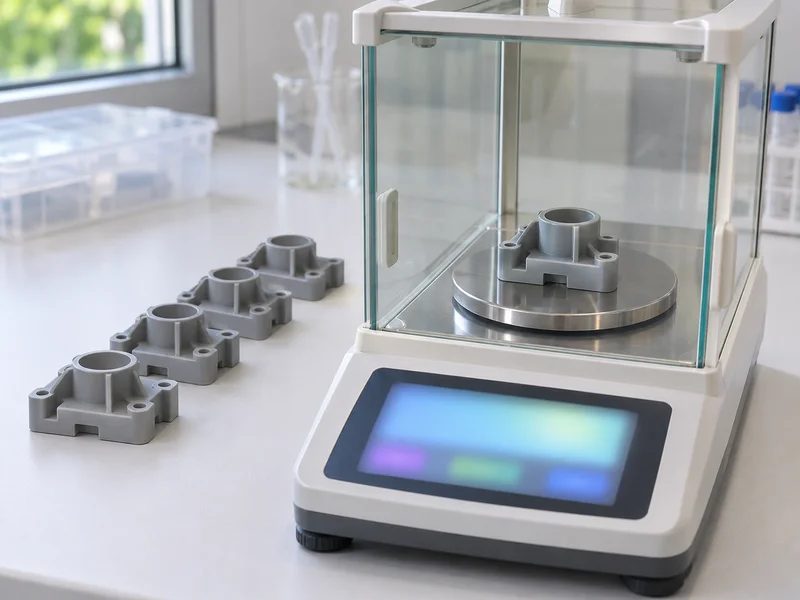
Typical steps and controls:
- Resin receiving: material certificate, grade and lot check
- Drying: dryer temperature, dew point, drying time, moisture check for hygroscopic resins
- Mold setup: mold number, cooling connections, first-off approval
- Molding: melt and mold temperatures, injection and hold pressures, cycle time, part weight
- Part removal and degating: gate vestige, cosmetic check
- Secondary operations: inserts, ultrasonic welding, assembly, printing
- Inspection: dimensions by cavity, appearance, functional tests
- Packing and labeling: quantity, labels, cavity separation if required
For example, monitoring part weight per shot is a simple and powerful control. A change in weight often warns of short shots or overpacking before dimensions drift. Our guide to the injection molding process explains each step in more detail.
Key Takeaway: Include drying, setup and packing in the control plan. Many defects start outside the molding cycle.
How Does a Control Plan Link to the PFMEA?
A control plan links to the PFMEA because each significant risk in the PFMEA should have a matching control in the plan. The PFMEA asks “what can go wrong?”; the plan says “how we prevent or detect it”.
The link works like this:
- The PFMEA lists failure modes for each process step.
- Each failure mode has causes and current controls.
- High-risk items get prevention or detection controls.
- Those controls appear as rows in the plan.
For example, a PFMEA failure mode “brittle parts” with cause “wet resin” should link to control plan rows for dryer dew point and moisture checks. If that link is missing, the risk is not controlled in practice.
Key Takeaway: Pick three high-risk PFMEA items and find them in the plan. It is a quick test of whether the documents work together.
How Are Measurement and Reaction Plans Defined?
Measurement and reaction plans are defined so that every check is reliable and every failure leads to a clear action.
Measurement must be capable:
- The gauge resolution must suit the tolerance.
- Gauge R&R studies confirm that measurement variation is acceptable.
- Calibration must be current.
Reaction plans must be specific:
- Stop the machine or cavity
- Quarantine parts since the last good check
- Notify the responsible person
- Correct the cause and verify
- Record the event
Measurement capability guidance, such as the NIST Engineering Statistics Handbook, explains how capability and measurement variation are evaluated. Our guide to CMM measurement covers dimensional methods for molded parts.
Key Takeaway: “Adjust process” is not a reaction plan. Name the containment step and who decides.
How Should Buyers Review a Supplier’s Control Plan?
Buyers should review a supplier’s control plan by checking that it is complete, specific and actually used on the shop floor.

A practical checklist:
- Every process step from the process flow is present.
- Special characteristics from the drawing are included and marked.
- Each check has a method, sample size and frequency.
- Measurement methods suit the tolerances.
- Reaction plans name containment and responsibility.
- The revision matches the current drawing and PFMEA.
- Records exist that show the checks are being done.
During a site visit, ask to see the record sheet or SPC chart for one control plan row. That shows whether the plan is real. At WOKE Molds, control plans, PFMEA and process flows are supplied on request when the project requires them, together with FAI, inspection reports and PPAP.
Key Takeaway: A good control plan is visible on the shop floor. Ask for the records, not only the document.
When Should a Control Plan Be Updated?
A control plan should be updated whenever the product, process or risk changes. It is a living document, not a one-time submission.
Typical triggers:
- Drawing or specification changes
- New mold, cavity or machine
- Material or supplier changes
- Customer complaints or 8D actions
- PFMEA updates
- Capability data that justifies changing frequencies
For example, an 8D for cracked parts should lead to new control plan rows that stop the cause from returning. Our guide to the 8D report explains how corrective actions feed into the plan.
Key Takeaway: Every 8D and every engineering change should end with a control plan revision.
FAQ
- Q: What is a control plan in manufacturing?
- It is a document that lists each process step, the characteristics controlled, how they are measured, how often and what to do when a check fails.
- Q: What are the three types of control plan?
- Prototype, pre-launch and production control plans.
- Q: What is the difference between a PFMEA and a control plan?
- The PFMEA analyzes what can go wrong and why. The plan defines the checks that prevent or detect those problems.
- Q: What should a control plan for injection molding include?
- Resin receiving and drying, mold setup, molding parameters, part checks by cavity, secondary operations, packing and reaction plans.
- Q: Is a control plan part of PPAP?
- Yes. The plan is one of the PPAP elements in automotive supply chains.
Conclusion
A control plan turns process risks into daily checks with clear measurements and reactions. For injection molded parts, cover drying, setup, molding, inspection and packing, and keep it linked to the PFMEA. To plan the quality documents for your project, send your drawing and quality requirements to our team, and see our quality control and inspection process.