
Injection Mold Steel Material: Grades, Wear and Inserts
Injection mold steel material decides how long a mold lasts, how well it polishes, how it resists corrosion and wear, and how easily it can be repaired. A mold is not made from one steel. Plates, cavity inserts, cores, slides, lifters and gate inserts each see different loads, so each may need a different grade and hardness.
Choosing one steel for the whole mold usually wastes money or life. For example, a fully hardened mold base adds cost without benefit, while a soft gate insert in a glass-filled part may wear out long before the cavity. In this guide, we explain injection mold steel material selection by zone: common grades, wear zones, replaceable inserts, steel certificates and hardness maps, and repair welding acceptance. For a general introduction, see our guide to how to choose mold steel.
Injection mold steel material is selected by zone. Mold plates often use pre-hardened steels such as 1.2311 / P20 (about 28–34 HRC); cavities and cores use pre-hardened 718H / 1.2738 for moderate volumes or hardened 1.2344 / H13 (about 48–52 HRC) and stainless 1.2083 / S136 for long life, polish or corrosion resistance. High-wear zones such as gates, shutoffs, slides and lifters use hardened or coated inserts that can be replaced. Steel certificates and a hardness map document each component, and repair welding needs matching filler, preheat and post-weld hardness checks.
In short: match each mold zone to its load, make wear zones replaceable, and document steel and hardness for every component.
Key points:
- By zone: plates, cavities, inserts and moving parts need different steels.
- Wear zones: gates, shutoffs and slides wear first.
- Records: certificates, hardness map and weld records.
Which Injection Mold Steel Material Grades Are Common?
The common injection mold steel material grades fall into pre-hardened, through-hardened and stainless groups.
| Grade (typical) | Type | Hardness | Typical use |
|---|---|---|---|
| 1.2311 / P20 | Pre-hardened | about 28–34 HRC | Plates, low-volume cavities |
| 718H / 1.2738 | Pre-hardened | about 33–38 HRC | Cavities and cores, medium volume |
| NAK80 | Pre-hardened | about 37–43 HRC | High-polish parts |
| 1.2344 / H13 | Through-hardened | about 48–52 HRC | Long-life cavities, filled resins |
| 1.2083 / S136 | Stainless, hardened | about 48–52 HRC | Polish, corrosion, medical, PVC |
| S7 / A2 tool steel | Hardened tool steels | about 54–60 HRC | Shutoffs, wear inserts, small parts |
S7 is valued for toughness and A2 for wear resistance and dimensional stability in heat treatment. Steel grades and properties are defined in standards such as those from ASTM International. Steel for our molds is sourced from suppliers such as LKM, ASSAB and Gröditz, with material certificates as available.
Key Takeaway: Name the grade and hardness for each major component in the mold specification.
How Do You Map Wear Zones in an Injection Mold?
You map wear zones in an injection mold by identifying where plastic flow, sliding or impact concentrates wear, then giving those areas harder or replaceable steel.
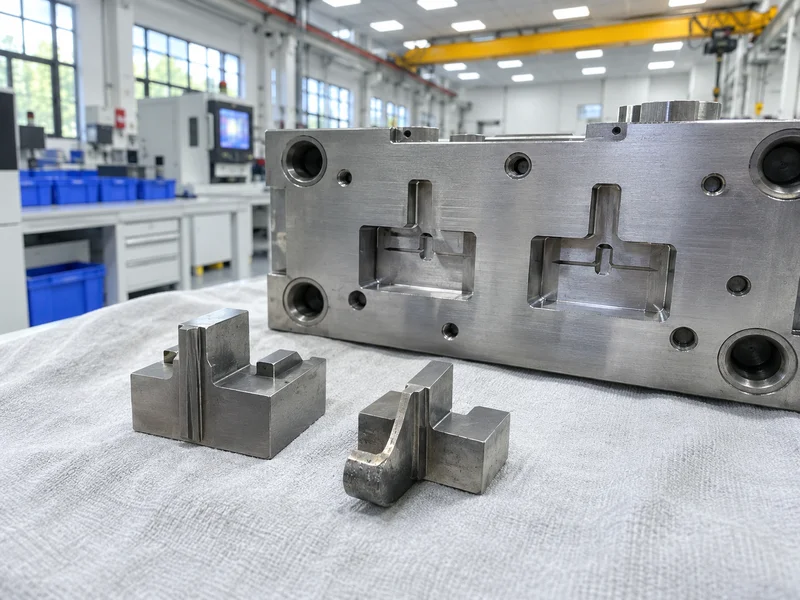
Typical wear zones:
- Gates and gate inserts, where melt flows fastest
- Shutoffs, where steel meets steel every cycle
- Slides, lifters and wear plates, where parts slide
- Thin cores and pins, which bend and erode
- Flow fronts near glass-filled material, which abrade surfaces
For example, a PA66-GF30 part can wear a soft gate area visibly within tens of thousands of shots, while the rest of the cavity is fine. A hardened gate insert solves this. Our guide to injection mold components explains where these parts sit.
Key Takeaway: Put wear zones in separate, harder inserts. Then the main cavity lasts much longer.
How Should Replacement Inserts Be Planned?
Replacement inserts should be planned during mold design, so worn zones can be changed quickly and accurately.
Planning points:
- Insert boundaries on non-cosmetic lines where possible
- Standard sizes and fixing methods
- Datum and tolerances that allow interchange without fitting
- Spare inserts for high-wear zones on high-volume molds
- Drawings for every insert, so spares can be made later
For example, a mold with replaceable gate and shutoff inserts can be restored in hours, while a mold with those features cut into the main cavity may need welding and re-machining. Paid spare parts, such as wear inserts, ejector pins and springs, are available on request.
Key Takeaway: Decide spare inserts at the mold quote stage. They cost less when made with the mold.
What Should Injection Mold Steel Material Certificates and Hardness Maps Show?
A steel certificate and hardness map should show what each mold component is made of and how hard it is, so performance and repairs can be traced.
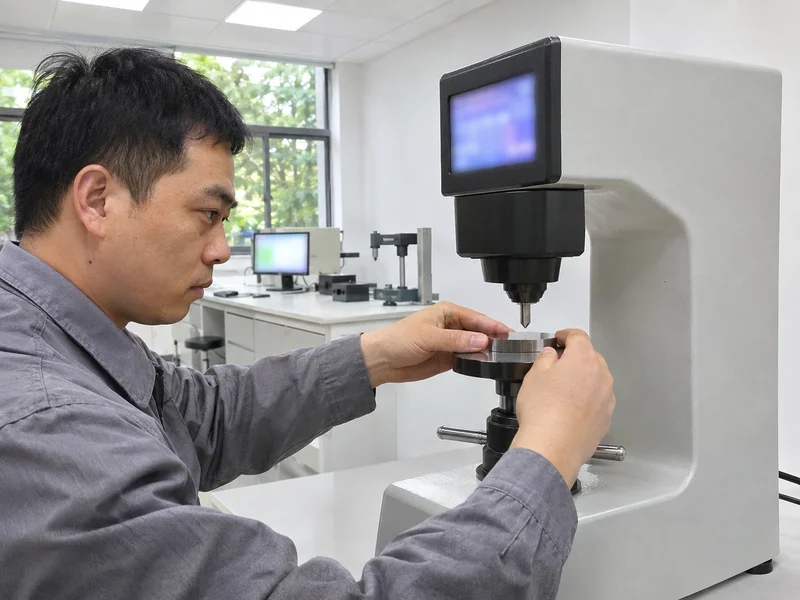
A steel certificate typically shows:
- Grade and standard
- Heat or batch number
- Chemical composition
- Supplier and mill
A hardness map typically shows:
- Each component (cavity, core, inserts, slides)
- Specified and measured hardness
- Heat treatment or surface treatment, such as nitriding or PVD
For example, if a core cracks after a year, the hardness map shows whether it was over-hardened or made from the wrong grade. Our quality control and inspection process supplies material certificates and inspection reports on request.
Key Takeaway: Ask for a hardness map with the mold documents. It makes later failures easy to investigate.
How Should Cavity Insert Repair Welding Be Accepted?
Cavity insert repair welding should be accepted only when the weld matches the base steel, the hardness is correct and the repaired surface meets the original finish.
Acceptance checks:
- Filler material matched to the base steel grade
- Preheat and post-weld treatment as recommended for the steel
- Hardness of the weld and heat-affected zone close to the base
- No cracks or porosity, checked visually and by dye penetrant where needed
- Surface finish matching the cavity after polishing or texturing
- Record of location, method and result
For example, a weld on a textured cavity may show as a different shade after texturing if the weld hardness differs. Matching filler and heat treatment reduces this. Our guide to injection molding surface finishes explains texture risks.
Key Takeaway: Ask for weld records on textured or polished cavities. Visible repairs often come from mismatched filler.
How Does Resin Choice Change Injection Mold Steel Material Selection?
Resin choice changes steel selection because some resins are abrasive, corrosive or need very high polish.
- Glass- or mineral-filled resins: hardened steels and wear inserts.
- PVC and some flame-retardant grades: stainless steels for corrosion resistance.
- Clear parts (PC, PMMA): high-polish steels such as S136 or NAK80.
- High-temperature resins (PEEK, PPS): steels stable at high mold temperatures.
- Unfilled commodity resins: pre-hardened steels often enough.
For example, a clear PC lens cover needs S136-type steel for mirror polish, while a glass-filled PBT connector needs hardened inserts. Our guide to PVC injection molding explains why corrosion-resistant steel matters for PVC.
Key Takeaway: Tell the toolmaker the exact resin and volume. Both drive the steel choice.
FAQ
- Q: What steel is used for injection molds?
- Common grades include P20/1.2311, 718H, NAK80, H13/1.2344 and S136/1.2083, chosen by zone and requirement.
- Q: What is the difference between pre-hardened and hardened mold steel?
- Pre-hardened steel is machined at about 28–40 HRC; hardened steel is heat treated to about 48–52 HRC or more for longer life.
- Q: Where does an injection mold wear first?
- Usually at gates, shutoffs, slides, lifters and thin cores.
- Q: What is a mold hardness map?
- A record of the specified and measured hardness of each mold component.
- Q: Can a mold cavity be repaired by welding?
- Yes, with matching filler, correct preheat and post-weld treatment, and hardness checks.
Conclusion
Injection mold steel material should be chosen zone by zone, with wear zones in replaceable inserts and every component documented by certificate and hardness. Plan repair welding rules before they are needed. To review steel selection for your mold, send your 3D model and 2D drawing to our engineers.