
PVC Injection Molding: Grades, Tooling and Common Defects
PVC injection molding makes rigid and flexible parts from polyvinyl chloride, such as pipe fittings, electrical boxes, cable glands, plugs and medical connectors. PVC is low cost, flame retardant and chemically resistant. However, it is also heat sensitive: if it is overheated or held too long in the barrel, it degrades and releases hydrochloric acid, which damages parts, molds and machines.
That makes supplier experience and equipment more important than with many plastics. For example, a PVC fitting molded on a machine set up for nylon may show burn streaks and black specks, and the mold may start to corrode within weeks. In this guide, we explain PVC injection molding for buyers: rigid and flexible grades, part design, mold and machine requirements, common defects and the questions to ask a supplier. For a broader material view, see our injection molding material selection guide.
PVC injection molding uses rigid (uPVC) or flexible (plasticized) PVC compounds, typically at melt temperatures of about 160–200 °C. PVC is heat and shear sensitive and releases corrosive HCl when it degrades, so it needs low residence time, careful temperature control, corrosion-resistant screws and molds (for example stainless or plated steel), generous gates and runners, and prompt purging. Rigid PVC parts need uniform walls and radii; flexible grades need allowance for plasticizer and lower stiffness. Buyers should confirm compound grade, regulatory needs and the supplier’s PVC equipment and experience.
In short: PVC is economical and flame retardant, but it needs corrosion-resistant tooling, low shear and a supplier set up for it.
Key points:
- Grades: rigid uPVC or flexible plasticized PVC.
- Heat sensitivity: degradation releases corrosive HCl.
- Tooling: stainless or plated steel and low-shear gates.
What Is PVC Injection Molding?
PVC injection molding is the injection molding of polyvinyl chloride compounds. PVC is supplied as compounds with stabilizers, lubricants and, for flexible grades, plasticizers.
Two main families:
- Rigid PVC (uPVC): stiff, strong and self-extinguishing; used for fittings, boxes and housings.
- Flexible PVC: soft and rubber-like; used for plugs, grommets, cable glands and medical tubing connectors.
For example, a drain pipe fitting is usually rigid PVC, while a cable strain relief may be flexible PVC or a TPE alternative. Our guide to TPR vs TPE compares flexible alternatives.
Key Takeaway: Specify rigid or flexible PVC and the exact compound. They mold and perform very differently.
Which PVC Grade Should You Specify?
You should specify the PVC grade by function, regulatory needs and processing behavior.
| Grade type (typical) | Key properties | Typical parts |
|---|---|---|
| Rigid PVC (uPVC) | Stiff, flame retardant, chemical resistant | Pipe fittings, electrical boxes |
| Impact-modified rigid PVC | Better toughness | Housings, profiles |
| Flexible PVC (plasticized) | Soft, flexible | Plugs, grommets, cable parts |
| Medical-grade PVC | Controlled additives | Connectors, drip chamber parts |
Regulatory requirements may limit plasticizers or heavy-metal stabilizers. For example, parts sold in the EU must meet REACH and RoHS requirements published by the European Chemicals Agency. Ask the compound supplier for compliance statements for the exact grade.
Key Takeaway: Put the compound name and compliance requirements in the RFQ. Generic “PVC” is not enough.
How Should Parts Be Designed for PVC Injection Molding?
Parts should be designed for PVC injection molding with uniform walls, generous radii and smooth flow paths, because PVC is shear sensitive.
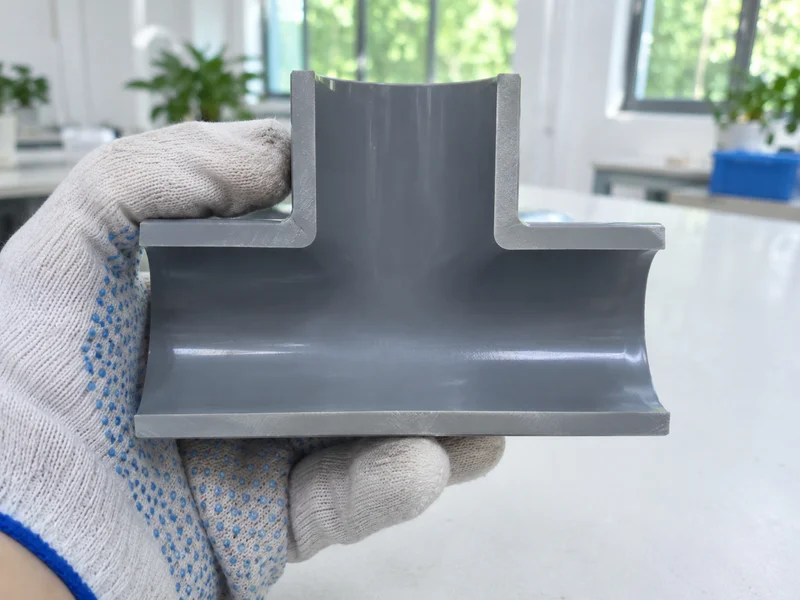
Design guidelines:
- Wall thickness: uniform, typically about 1.5–4 mm for rigid PVC.
- Radii: generous inside corners to reduce stress and shear.
- Gates: larger than for many other plastics, to reduce shear heating.
- Ribs: about 50–60% of the wall to avoid sink.
- Threads: rounded thread forms for fittings.
- Draft: about 1° or more.
For example, a rigid PVC fitting with a sharp internal corner may crack under pressure testing, while a radius of 0.5–1 mm improves strength. Our guide to basics of injection molding design covers general rules.
Key Takeaway: Design PVC parts for smooth, low-shear flow: big gates, round corners and even walls.
What Mold and Machine Does PVC Injection Molding Need?
PVC injection molding needs corrosion-resistant molds and a machine set up for heat-sensitive materials.
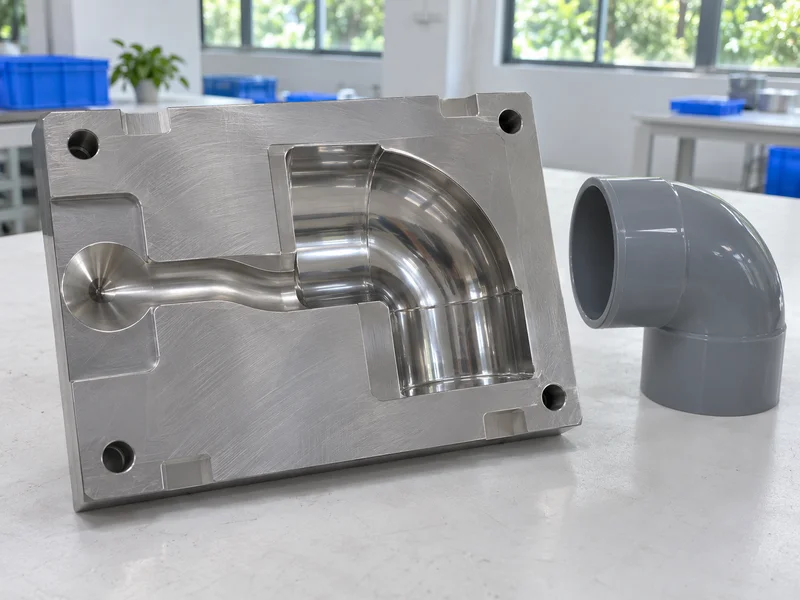
Mold requirements:
- Corrosion-resistant steel, such as stainless mold steels, or plated cavity surfaces
- Large, streamlined runners and gates, avoiding dead spots
- Good venting, so gases escape
- Cooling, uniform to avoid stress
Machine requirements:
- Corrosion-resistant screw and barrel, often chrome-plated
- Low-compression screw to limit shear heating
- Accurate temperature control with low residence time
- Purging routine before and after PVC runs
For example, running PVC in a standard nitrided screw can leave degraded material in the barrel, which later contaminates other resins. Our guide to how to choose mold steel explains stainless mold steel options.
Key Takeaway: Ask whether the supplier has PVC-ready screws and stainless or plated molds. Without them, quality and tool life suffer.
What Defects Are Common in PVC Injection Molding?
Common defects in PVC injection molding come from overheating, shear and moisture.
| Defect | Common cause |
|---|---|
| Burn streaks and black specks | Overheating, long residence time, dead spots |
| Yellowing or discoloration | Too high temperature, stabilizer exhausted |
| Splay | Moisture or volatile additives |
| Short shots | Low melt temperature, small gates |
| Brittleness | Degradation, wrong compound |
| Mold corrosion and staining | HCl release, poor cleaning |
For example, black specks that appear after a machine stop often come from material that degraded in the barrel during the stop. Purging before restarting fixes it. Our guide to injection molding defects and troubleshooting covers more defects.
Key Takeaway: Most PVC defects start with heat. Ask how temperature and stops are controlled.
What Questions Should You Ask a PVC Molding Supplier?
You should ask a PVC molding supplier questions that show real experience with PVC, not only general molding capability.
Supplier review questions:
- Which PVC compounds have you molded, rigid and flexible?
- Are your screws and barrels suitable for PVC?
- What mold steel or plating do you use for PVC tools?
- How do you purge before and after PVC runs?
- How do you handle machine stops with PVC in the barrel?
- How do you store and clean PVC molds?
- Can you provide compliance statements for the compound?
For example, a supplier that runs PVC on dedicated machines usually has fewer contamination and corrosion problems. PVC is not one of our standard listed resins, so we confirm the compound, equipment and process route for each PVC project before quoting. Our questions to ask an injection molding company list covers general questions.
Key Takeaway: Ask about dedicated PVC equipment and purging routines. They predict quality better than price.
FAQ
- Q: Can PVC be injection molded?
- Yes. Both rigid and flexible PVC compounds are injection molded, with careful temperature control.
- Q: Why is PVC difficult to mold?
- It is heat and shear sensitive and releases corrosive hydrochloric acid when it degrades.
- Q: What mold steel is used for PVC?
- Corrosion-resistant stainless mold steels or plated steels are commonly used.
- Q: What melt temperature is used for PVC?
- Typically about 160–200 °C, depending on rigid or flexible compound.
- Q: What causes black specks in PVC parts?
- Usually degraded material from overheating, long residence time or dead spots in the barrel or runner.
Conclusion
PVC injection molding gives low-cost, flame-retardant parts when the compound, tooling and machine are matched to PVC’s heat sensitivity. Specify the grade and compliance needs, design for low shear and check the supplier’s PVC setup. To review a PVC part, send your 3D model and 2D drawing to our engineers.
Planning a part like this? See our plastic injection molding service, or send your drawing for a free DFM review.