
Steel Alloy Composition: What Each Element Does
Steel alloy composition decides how a steel machines, hardens, resists wear and survives corrosion. Carbon sets the basic hardness potential, while elements such as chromium, molybdenum, nickel, manganese and vanadium change hardenability, toughness, strength at temperature and corrosion resistance. For machined parts, the composition on the material certificate explains why two “steels” behave so differently on the machine and in service.
Buyers often specify a grade without knowing what its composition implies. For example, 4140 (42CrMo4) and 1045 (C45) look similar on a drawing, but 4140’s chromium and molybdenum let it harden through thicker sections, which matters for a loaded shaft. In this guide, we explain steel alloy composition: the role of carbon and each main alloying element, how composition defines common grades, how it affects machining and heat treatment, and how to read and specify composition. For a grade comparison, see our guide to is alloy steel the same as stainless steel.
Steel alloy composition is the percentage of carbon and alloying elements in the steel. Carbon (about 0.05–1.0% in common grades) controls hardness and strength potential. Chromium increases hardenability and, above about 10.5%, makes steel stainless; molybdenum adds hardenability and strength at temperature; nickel adds toughness; manganese adds hardenability and helps deoxidize; vanadium refines grain and adds wear resistance; sulfur and lead improve machinability. Low-alloy steels contain a few percent of alloying elements, tool steels and stainless steels much more. Composition is shown on the mill certificate and defined by standards.
In short: carbon sets hardness potential; alloying elements tune hardenability, toughness, wear and corrosion.
Key points:
- Carbon: the main driver of hardness.
- Alloying elements: each adds specific properties.
- Certificates: confirm composition before machining critical parts.
What Is Steel Alloy Composition?
Steel alloy composition is the chemical makeup of a steel, given as weight percentages of carbon and other elements in iron.
Main groups:
- Carbon steels: mostly iron and carbon, with small manganese and silicon.
- Low-alloy steels: up to about 5% total alloying, such as 4140 or 4340.
- Tool steels: higher carbon and alloy content, such as D2, H13 or P20.
- Stainless steels: at least about 10.5% chromium, such as 304 or 316.
For example, 1045 contains about 0.45% carbon and little else, while 4140 adds about 1% chromium and 0.2% molybdenum. Steel grade standards are published by ASTM International and EN standards in Europe.
Key Takeaway: Above all, the grade name is shorthand for a composition range.
What Does Each Element Do in Steel Alloy Composition?
Each element in steel alloy composition adds specific properties.
| Element | Typical effect |
|---|---|
| Carbon (C) | Hardness and strength potential; lowers weldability |
| Manganese (Mn) | Hardenability, strength, deoxidizing |
| Chromium (Cr) | Hardenability, wear, corrosion resistance (stainless above ~10.5%) |
| Molybdenum (Mo) | Hardenability, strength at temperature, reduced temper brittleness |
| Nickel (Ni) | Toughness, especially at low temperature |
| Vanadium (V) | Grain refinement, wear resistance |
| Silicon (Si) | Strength, deoxidizing |
| Sulfur (S), lead (Pb) | Machinability (with some loss of toughness) |
For example, H13 tool steel uses chromium, molybdenum and vanadium for hot hardness, which is why it is common in die-casting dies.
Key Takeaway: In other words, read the composition to understand why a grade behaves as it does.
How Does Composition Define Common Steel Grades?
Composition defines common steel grades through standard ranges.
| Grade (typical) | Approximate key composition | Typical machined uses |
|---|---|---|
| 1018 / C15 | ~0.18% C | General low-strength parts |
| 1045 / C45 | ~0.45% C | Shafts, pins, bases |
| 4140 / 42CrMo4 | ~0.4% C, ~1% Cr, ~0.2% Mo | Loaded shafts, gears |
| 4340 / 34CrNiMo6 | ~0.4% C, Ni, Cr, Mo | High-strength tough parts |
| P20 | ~0.35% C, Cr, Mo | Mold bases and plates |
| D2 | ~1.5% C, ~12% Cr | Wear parts, cutting tools |
| 304 / 316 | ~18% Cr, ~8–10% Ni (316 adds Mo) | Corrosion-resistant parts |
Values vary by standard. Our guide to difference between carbon steel and alloy steel compares the families.
Key Takeaway: For this reason, choose the grade by the properties its composition gives.
How Does Steel Alloy Composition Affect Machining?
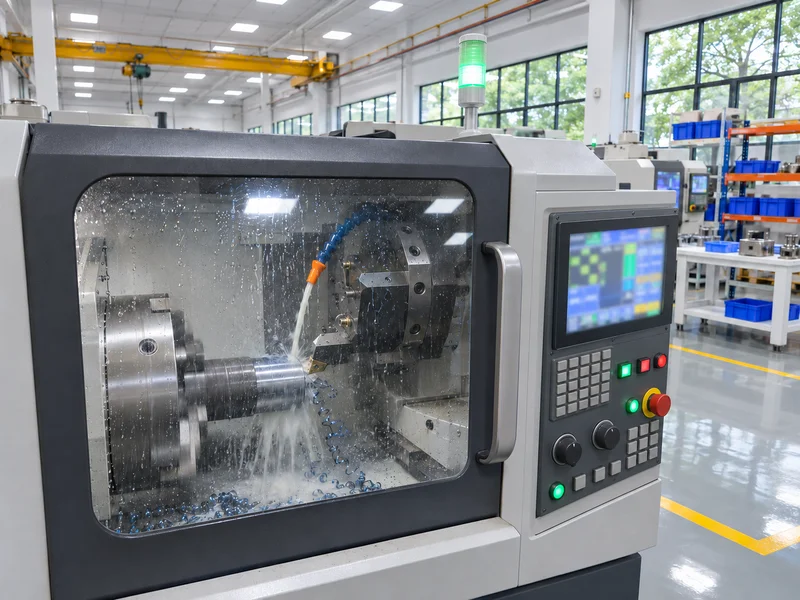
Steel alloy composition affects machining because carbon, alloying elements and free-machining additives change cutting behavior.
- Low-carbon steels: gummy, can form built-up edge.
- Medium-carbon steels: machine well in normalized condition.
- Alloy steels (4140, 4340): machine well annealed or pre-hardened, slower when hard.
- Tool steels: abrasive carbides wear tools; often machined annealed, then hardened and ground.
- Free-machining grades (12L14, 1215, 303): sulfur or lead give short chips.
For example, 4140 pre-hardened to about 28–32 HRC can be machined directly, avoiding heat treatment distortion. Our CNC machining services machine carbon, alloy, tool and stainless steels.
Key Takeaway: Overall, ask for the supply condition (annealed, normalized, pre-hardened) along with the grade.
How Does Composition Affect Heat Treatment?
Composition affects heat treatment because carbon sets the achievable hardness and alloying elements set how deep hardness reaches.
- Hardenability: Cr, Mo, Mn and Ni let thicker sections harden through.
- Achievable hardness: mainly set by carbon content.
- Distortion risk: higher in water-quenched carbon steels than in oil- or air-hardening alloys.
- Case hardening: low-carbon steels are carburized for a hard surface.
For example, a 60 mm diameter 1045 shaft may harden only near the surface, while 4140 hardens deeper. Our guide on how to choose mold steel explains hardening of tool steels.
Key Takeaway: Equally, match composition to the section size you need to harden.
How Should Steel Composition Be Read and Specified?
Steel composition should be read from the mill certificate and specified by grade and standard on the drawing.
Practice:
- Specify grade and standard, such as “42CrMo4 per EN 10083-3”
- State the condition, such as QT or annealed
- Request a material certificate (for example EN 10204 3.1) for critical parts
- Check certificate values against the standard ranges
- List acceptable equivalents, such as 4140 / 42CrMo4
For example, a certificate showing 0.42% C, 1.02% Cr and 0.21% Mo confirms a 42CrMo4 heat. Our quality control and inspection process supplies certificates on request.
Key Takeaway: As a rule, specify grade, standard and condition together.
FAQ
- Q: What is steel alloy composition?
- The percentages of carbon and alloying elements such as Cr, Mo, Ni, Mn and V in a steel.
- Q: What does chromium do in steel?
- It increases hardenability and wear resistance, and above about 10.5% makes steel stainless.
- Q: What does molybdenum do in steel?
- It increases hardenability and strength at high temperature.
- Q: What is the difference between 1045 and 4140 steel?
- 4140 adds chromium and molybdenum, giving deeper hardening and higher strength.
- Q: How is steel composition verified?
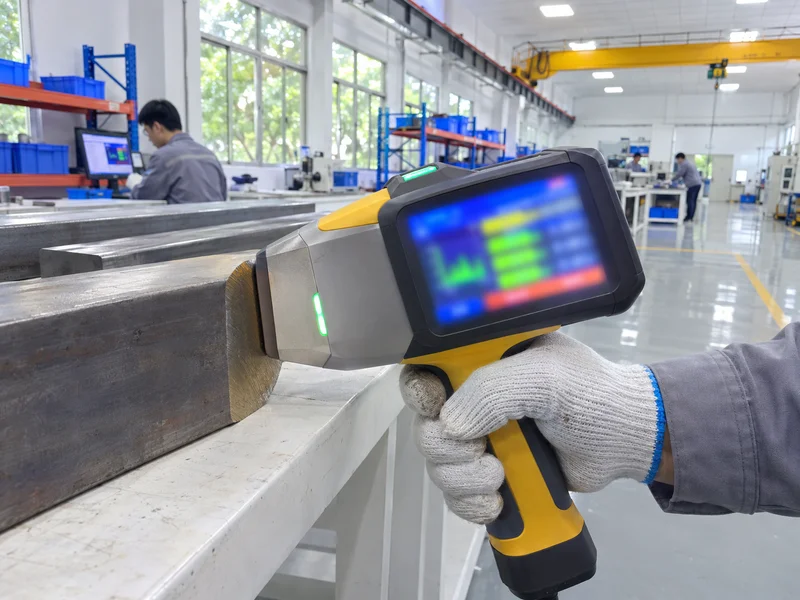
- By the mill certificate and, if needed, spectrometer testing.
Conclusion
Steel alloy composition explains how a steel machines, hardens and performs. Read the role of carbon and each alloying element, choose the grade for its properties, specify grade, standard and condition, and confirm with certificates. To review material for a machined part, send your 3D model and 2D drawing to our engineers.