
Carbon Steel vs Alloy Steel: How to Pick the Best One and Save Money
The difference between carbon steel and alloy steel is mainly what is added to iron and carbon. Carbon steel relies almost entirely on carbon for its strength, with only small amounts of manganese and silicon. Alloy steel adds deliberate amounts of elements such as chromium, molybdenum, nickel and vanadium, which improve hardenability, toughness, strength at temperature and wear resistance.
The choice affects machining, heat treatment and cost. For example, a small pin can be made perfectly well from 1045 carbon steel, while a loaded shaft with a thick cross-section may need 4140 alloy steel to harden through. In this guide, we explain the difference between carbon steel and alloy steel: composition, properties, heat treatment, machinability, corrosion, cost and how to choose for machined parts. For composition details, see our guide to steel alloy composition.
The difference between carbon steel and alloy steel: carbon steel contains iron, carbon (about 0.05–1.0%) and small manganese and silicon, and gets its properties mainly from carbon content and heat treatment. Alloy steel adds controlled amounts of elements such as chromium, molybdenum, nickel and vanadium (typically 1–5% total for low-alloy steels), giving deeper hardening, higher strength and toughness, and better performance at temperature. Carbon steel is cheaper and easy to machine and weld; alloy steel costs more but suits loaded, thicker or heat-treated parts. Neither is stainless unless chromium exceeds about 10.5%.
In short: carbon steel for simple, economical parts; alloy steel for strength, toughness and deep hardening.
Key points:
- Composition: alloying elements are the difference.
- Hardenability: alloy steels harden through thicker sections.
- Cost: carbon steel is cheaper and simpler.
What Is the Difference Between Carbon Steel and Alloy Steel in Composition?
The difference between carbon steel and alloy steel in composition is the presence of deliberate alloying elements.
| Steel type | Main elements | Examples |
|---|---|---|
| Low-carbon steel | C ≤0.25% | 1018 / C15, 1020 |
| Medium-carbon steel | C 0.25–0.6% | 1045 / C45 |
| High-carbon steel | C >0.6% | 1080, 1095 |
| Low-alloy steel | C plus Cr, Mo, Ni, V (few %) | 4140 / 42CrMo4, 4340 / 34CrNiMo6, 8620 |
| High-alloy steels | Larger amounts | Tool steels, stainless steels |
For example, 1045 and 4140 have similar carbon, but 4140 adds about 1% chromium and 0.2% molybdenum. Steel grade standards are published by ASTM International.
Key Takeaway: Above all, carbon content is shared; alloying elements make the difference.
What Is the Difference Between Carbon Steel and Alloy Steel in Properties?
The difference between carbon steel and alloy steel in properties shows in strength, toughness and hardenability.
| Property (typical, heat-treated) | Carbon steel (1045) | Alloy steel (4140) |
|---|---|---|
| Hardenability | Shallow | Deep |
| Strength after QT | Moderate to high | High |
| Toughness | Moderate | Good |
| Fatigue strength | Moderate | Higher |
| Strength at temperature | Lower | Better |
| Weldability | Good (low carbon) | Needs preheat |
For example, a 60 mm 1045 shaft may only harden near the surface, while 4140 hardens much deeper. Our guide to is alloy steel the same as stainless steel clarifies corrosion behavior.
Key Takeaway: In other words, alloy steels hold properties through thicker sections.
How Does Heat Treatment Differ?
Heat treatment differs because alloying elements change how steel responds to quenching.
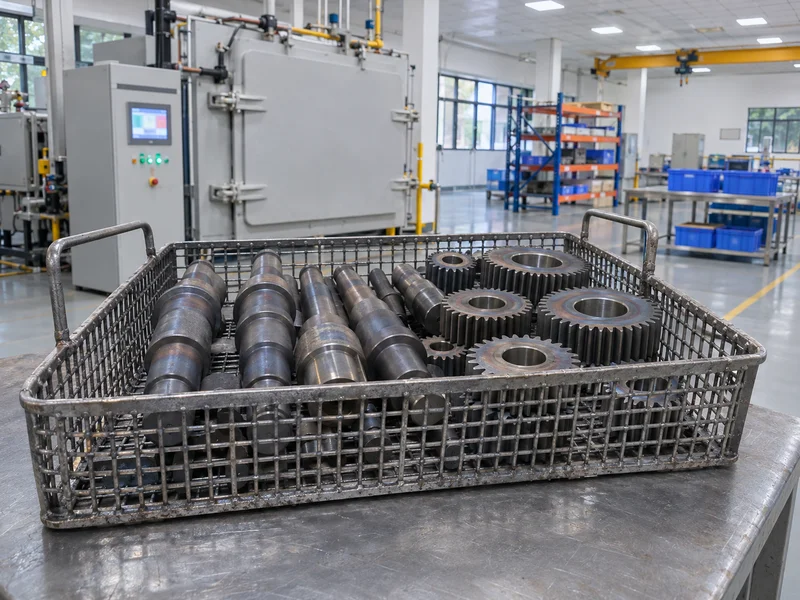
- Carbon steels: need fast quenching (often water) to harden; higher distortion and cracking risk.
- Alloy steels: harden with slower quenching (oil or air); lower distortion.
- Case hardening: low-carbon and low-alloy steels such as 8620 are carburized.
- Through hardening: medium-carbon alloy steels such as 4140 are quenched and tempered.
For example, a gear made from 8620 can be carburized for a hard surface and tough core, while a 1045 gear might be induction hardened. Our guide on how to choose mold steel covers tool steel heat treatment.
Key Takeaway: For this reason, alloy steels give more predictable heat treatment on complex parts.
How Do They Compare in Machining?
They compare in machining mainly by hardness and supply condition.
- Low-carbon steel: soft and gummy; can form built-up edge.
- Medium-carbon steel: machines well when normalized.
- Alloy steel annealed: machines well.
- Alloy steel pre-hardened (28–32 HRC): machinable directly, avoids later heat treatment distortion.
- Free-machining grades: 12L14, 1215 for high-volume turned parts.
For example, 4140 pre-hardened bar is popular for fixtures and shafts because it can be finished without heat treatment afterward. Our CNC machining services machine carbon, alloy and tool steels.
Key Takeaway: Overall, specify supply condition with the grade.
How Do Corrosion and Finishing Compare?
Corrosion and finishing compare similarly, because neither carbon nor low-alloy steel is stainless.
- Both rust without protection.
- Common finishes: black oxide, zinc plating, nickel plating, painting, phosphating.
- Alloy steels with chromium resist slightly better but still need protection.
- Stainless requires about 10.5% chromium or more.
For example, a 4140 shaft for a humid environment may be nickel plated or black oxided and oiled. Our guide to copper and nickel plating explains plating choices.
Key Takeaway: Equally, plan corrosion protection for both carbon and alloy steels.
How Do Cost and Availability Compare?
Cost and availability usually favor carbon steel.
- Material price: carbon steel is cheaper.
- Availability: common carbon and alloy grades are widely stocked.
- Heat treatment cost: may be lower for alloy steels due to less distortion rework.
- Total cost: depends on whether properties require alloy steel.
For example, a lightly loaded spacer in 4140 wastes money, while a heavily loaded shaft in 1045 may fail. Choosing by requirement keeps cost right. Our guide to CNC machining materials compares more grades.
Key Takeaway: As a rule, use carbon steel unless a property demands alloy steel.
How Does the Difference Between Carbon Steel and Alloy Steel Guide Your Choice?
The difference between carbon steel and alloy steel guides your choice through load, section size, heat treatment and environment.
Decision guide:
- Light loads, simple parts → low- or medium-carbon steel
- Thick sections needing through hardening → alloy steel
- Case-hardened gears and pins → carburizing alloy steel
- High fatigue or impact loads → alloy steel
- Welded structures → low-carbon steel
- Corrosion resistance → stainless steel instead
For example, a robotic arm shaft under cyclic load is a good candidate for 4140 QT, while its mounting plate can be low-carbon steel. Our quality control and inspection process supplies material certificates on request.
Key Takeaway: Finally, write grade, standard and condition on the drawing.
FAQ
- Q: What is the difference between carbon steel and alloy steel?
- Alloy steel adds elements such as Cr, Mo, Ni and V; carbon steel relies mainly on carbon.
- Q: Is alloy steel stronger than carbon steel?
- Often, especially after heat treatment and in thicker sections.
- Q: Is alloy steel stainless?
- No, unless it contains about 10.5% chromium or more.
- Q: Which is easier to weld?
- Low-carbon steel; alloy steels often need preheat.
- Q: Is 4140 a carbon or alloy steel?
- It is a low-alloy chromium-molybdenum steel.
Conclusion
The difference between carbon steel and alloy steel lies in alloying elements, which give alloy steels deeper hardening, higher toughness and better strength at temperature. Use carbon steel for simple, economical parts and alloy steel where loads and section sizes demand it. To review steel selection for a part, send your 3D model and 2D drawing to our engineers.