
Bearing Press Fit Tolerance Chart: How to Get Best Results
A bearing press fit tolerance chart tells you which shaft and housing tolerances to use so a rolling bearing is held firmly without being squeezed so tight that its internal clearance disappears. The right fit depends on which ring rotates relative to the load, how heavy the load is, the bearing size and the housing material. Get it wrong and bearings creep and wear their seats, or run hot and fail early.
Many fit problems come from copying a fit from another design. For example, a k5 shaft fit that works for a rotating shaft under normal load may be too tight for a light-load precision spindle, or too loose for a heavily loaded wheel hub. In this guide, we provide a practical bearing press fit tolerance chart, explain how to choose shaft and housing fits, cover thermal effects, aluminum housings and machining and inspection of bearing seats. For general fit principles, see our guide to tolerance for slip fit.
A bearing press fit tolerance chart pairs bearing load conditions with ISO 286 tolerance classes. The ring that rotates relative to the load needs an interference fit: for rotating shafts under normal loads, typical shaft fits are j5, k5 or m5 (larger and heavier loads move toward m6, n6 or p6), and typical housing fits are H7 or J7 for stationary outer rings. A ring stationary relative to the load can use a transition or clearance fit such as g6, h6 or H7. Interference reduces bearing internal clearance, so check the clearance class (such as C3) and account for temperature and housing material.
In short: the rotating ring gets interference, the stationary ring can float, and every fit must be checked against bearing clearance and temperature.
Key points:
- Rotating ring: interference fit.
- Stationary ring: transition or clearance fit.
- Check: internal clearance, temperature and housing material.
How Does a Bearing Press Fit Tolerance Chart Work?
A bearing press fit tolerance chart works by matching the load condition of each ring with a recommended ISO tolerance class.
Key concepts:
- Rotating load on the inner ring: typical for rotating shafts; inner ring needs interference.
- Stationary load on the outer ring: outer ring can be a transition fit.
- Load size: heavier loads need tighter fits.
- Bearing size: larger bearings usually need more interference.
For example, a motor shaft with a stationary radial load has a rotating load on the inner ring, so the shaft uses k5 and the housing H7. Tolerance classes are defined in ISO 286, published by ISO.
Key Takeaway: Above all, decide which ring rotates relative to the load before choosing any fit.
What Does a Typical Bearing Press Fit Tolerance Chart Show?
A typical bearing press fit tolerance chart for radial ball and roller bearings shows these common choices (guidance only; confirm with the bearing maker’s catalog):
| Application (typical) | Shaft fit | Housing fit |
|---|---|---|
| Rotating shaft, light load | j5 / js5 | H7 |
| Rotating shaft, normal load | k5 / k6 | H7 / J7 |
| Rotating shaft, heavy load | m5 / m6 / n6 | J7 / K7 |
| Rotating housing (wheel hubs, pulleys) | g6 / h6 | M7 / N7 / P7 |
| Floating (non-locating) bearing | h6 | H7 / G7 |
| Precision spindles | j5 / k5, tighter grade | JS5 / K5 |
For example, a floating bearing on a long shaft uses H7 in the housing so the outer ring can slide with thermal expansion. Bearing manufacturers publish detailed charts that should be followed for each bearing.
Key Takeaway: In other words, use the chart as a starting point and the bearing catalog as the final reference.
How Does a Press Fit Affect Bearing Internal Clearance?
A press fit affects bearing internal clearance because interference expands the inner ring or compresses the outer ring.
Effects:
- Inner ring interference expands the ring and reduces clearance.
- Outer ring interference compresses the ring and reduces clearance.
- Temperature difference between rings reduces clearance further in operation.
- Too little clearance causes heat, preload and early failure.
For example, a heavy interference fit on a shaft plus a hot inner ring may need a C3 bearing (larger clearance) instead of normal clearance. Bearing clearance classes are defined in standards from ISO.
Key Takeaway: For this reason, check the clearance class whenever fits are tight.
How Do Temperature and Housing Material Change the Fit?
Temperature and housing material change the fit because materials expand at different rates.
- Aluminum housings expand about twice as much as steel bearings; the fit loosens when hot.
- Plastic housings expand even more and creep.
- Hot shafts expand, tightening the inner ring fit.
- Steel inserts in aluminum or plastic housings keep fits stable.
For example, a bearing in an aluminum housing that is tight at 20 °C may become loose at 80 °C. A tighter housing fit or a steel sleeve compensates. Our guide to aluminium alloy 6061 properties gives thermal expansion values.
Key Takeaway: Overall, size housing fits for operating temperature, not only room temperature.
How Should Bearing Seats Be Machined?
Bearing seats should be machined to tolerance, form and finish together.
Requirements:
- Diameter tolerance per the fit class
- Roundness and cylindricity within a fraction of the tolerance
- Shoulder squareness for axial location
- Surface finish, typically Ra 0.4–0.8 µm for shafts and 0.8–1.6 µm for housings
- Runout between bearing seats on the same shaft
For example, a shaft seat that meets k5 in diameter but is oval can still damage the bearing. Turning or grinding in one setup keeps seats concentric. Our guide to high precision CNC turning covers turned seats.
Key Takeaway: Equally, form and finish matter as much as diameter on bearing seats.
How Should Bearing Seats Be Inspected?
Bearing seats should be inspected with instruments accurate enough for small tolerance bands.
Inspection methods:
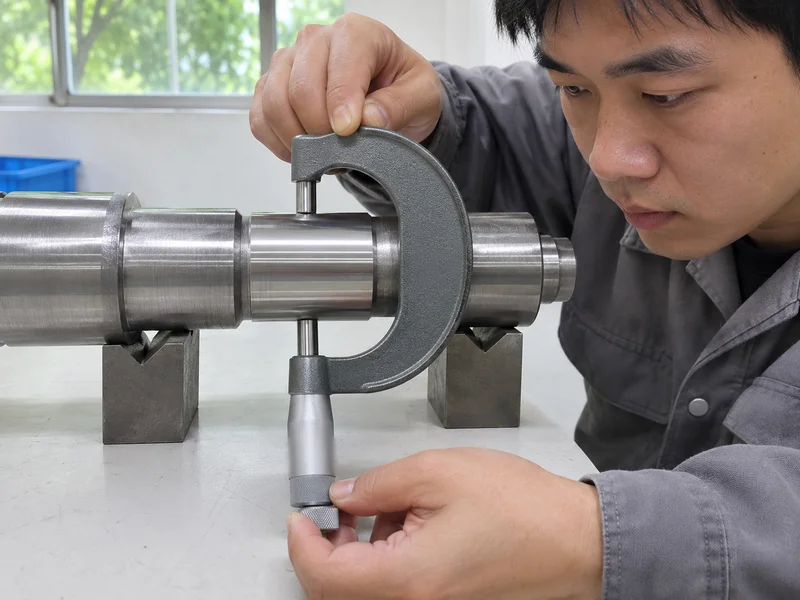
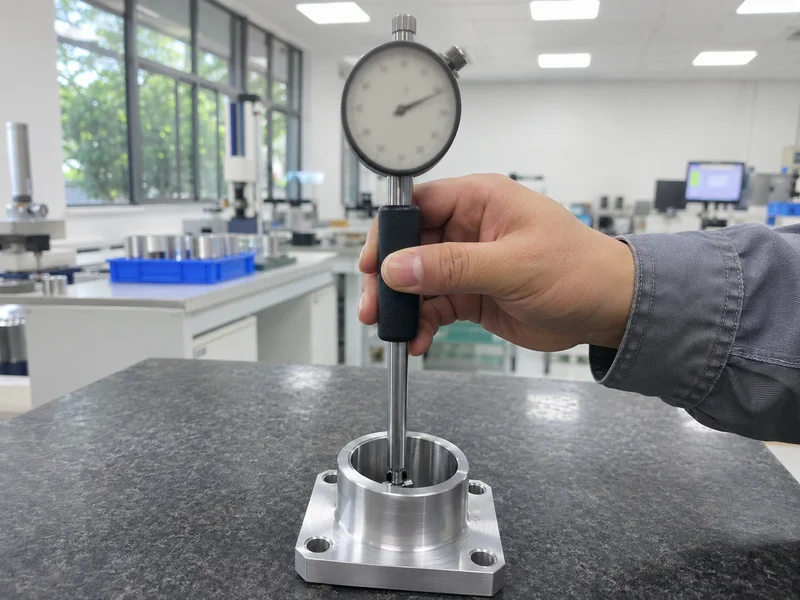
- Micrometers and bore gauges for diameters
- Air gauges for production checks
- Roundness testers or CMM for form
- Indicators for runout and shoulder squareness
- Temperature control during measurement
For example, a k5 tolerance on a 30 mm shaft spans only about 9 µm, so measurement must be stable and calibrated. Our quality control and inspection process measures critical seats and supplies reports on request.
Key Takeaway: As a rule, measure bearing seats at 20 °C with gauges of suitable resolution.
How Should a Bearing Press Fit Tolerance Chart Be Applied on Drawings?
Values from a bearing press fit tolerance chart should be shown on drawings with tolerance class, form, finish and related geometry.
Drawing items:
- Fit class, such as “Ø30 k5” or “Ø62 H7”
- Form tolerances: cylindricity or roundness
- Runout relative to the shaft axis
- Shoulder squareness and fillet radius smaller than the bearing chamfer
- Surface finish
For example, “Ø25 k5, cylindricity 0.003, runout 0.005 to A-B, Ra 0.4” fully defines a precision shaft seat. Our CNC turning service machines shafts and housings to such specifications.
Key Takeaway: Finally, always include form and runout with bearing fit tolerances.
FAQ
- Q: What is a bearing press fit?
- An interference fit between a bearing ring and its shaft or housing.
- Q: What shaft tolerance is used for bearings?
- Often j5, k5 or m5 for rotating shafts, depending on load and size.
- Q: What housing tolerance is used for bearings?
- Often H7 or J7 for stationary outer rings.
- Q: Why does a press fit reduce bearing clearance?
- Interference expands the inner ring or compresses the outer ring.
- Q: How does an aluminum housing affect bearing fits?
- It expands more than steel, so the fit loosens when hot.
Conclusion
A bearing press fit tolerance chart helps choose fits, but the final choice depends on which ring rotates, load, size, clearance, temperature and housing material. Machine seats with correct form and finish, and inspect them carefully. To review bearing seats on your part, send your 3D model and 2D drawing to our engineers.