
Aluminium Alloy 6061 Properties: T6 vs T651 Explained
Aluminium alloy 6061 properties explain why it is the most common aluminum for machined parts. 6061 combines medium strength, good corrosion resistance, excellent machinability, good weldability and very good anodizing response, at a moderate price and with wide availability in plate, bar and extrusions. It is used for housings, brackets, fixtures, manifolds, frames and countless precision components.
Knowing the details of 6061 helps avoid wrong choices. For example, 6061-T6 is strong enough for most brackets, but a highly loaded part may need 7075, and a flatness-critical plate may need 6061-T651 rather than T6. In this guide, we explain aluminium alloy 6061 properties: composition, mechanical and physical properties, tempers, machining, welding and finishing, and how 6061 compares with other alloys. For a direct comparison, see 6061 T6 aluminum vs 7075 T6.
Aluminium alloy 6061 properties (typical, T6 temper): density about 2.70 g/cm³, tensile strength about 290–310 MPa, yield strength about 240–275 MPa, elongation about 8–12%, hardness about 95 HB, elastic modulus about 69 GPa, thermal conductivity about 150–170 W/m·K and thermal expansion about 23.6 µm/m·°C. It is an Al-Mg-Si alloy (about 0.8–1.2% Mg, 0.4–0.8% Si, with small Cu and Cr). 6061 machines well, welds well (with strength loss in the heat-affected zone), anodizes evenly and resists atmospheric corrosion. T651 plate is stress relieved for better stability.
In short: 6061 is the balanced, all-round aluminum; choose T651 for stability and 7075 when higher strength is needed.
Key points:
- Strength: medium, about 275 MPa yield in T6.
- Machining and anodizing: very good.
- Tempers: T6 and T651 most common for machining.
What Is the Composition of Aluminium Alloy 6061?
The composition of aluminium alloy 6061 is aluminum with magnesium and silicon as the main alloying elements.
| Element | Typical range (%) |
|---|---|
| Magnesium (Mg) | 0.8–1.2 |
| Silicon (Si) | 0.4–0.8 |
| Copper (Cu) | 0.15–0.40 |
| Chromium (Cr) | 0.04–0.35 |
| Iron (Fe) | ≤0.7 |
| Aluminum | Balance |
Magnesium and silicon form magnesium silicide, which strengthens the alloy during heat treatment. The European equivalent is EN AW-6061 (AlMg1SiCu). Aluminum alloy specifications are published by ASTM International, for example ASTM B209 for plate.
Key Takeaway: Above all, Mg and Si make 6061 heat-treatable to medium strength.
What Are the Mechanical Aluminium Alloy 6061 Properties?
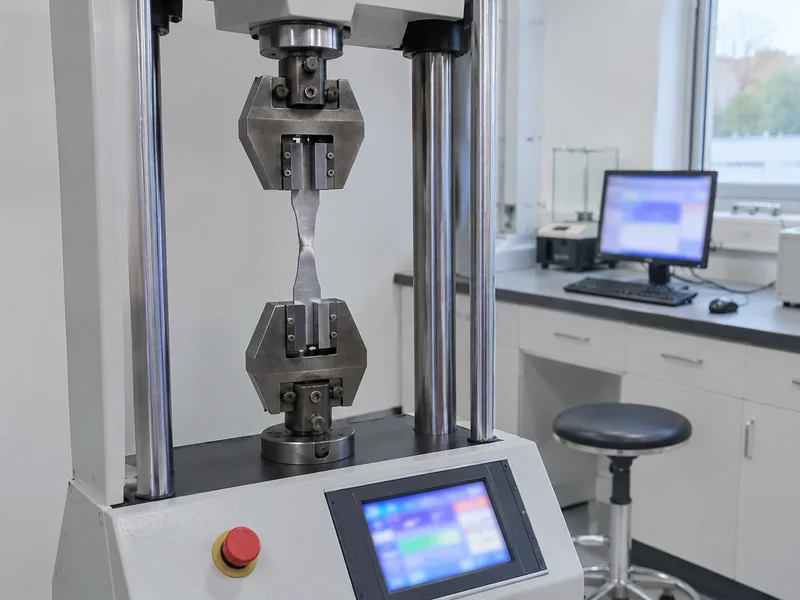
The mechanical aluminium alloy 6061 properties depend on temper; T6 is the common reference.
| Property (typical) | 6061-O | 6061-T4 | 6061-T6 / T651 |
|---|---|---|---|
| Tensile strength | ~125 MPa | ~240 MPa | ~290–310 MPa |
| Yield strength | ~55 MPa | ~145 MPa | ~240–275 MPa |
| Elongation | ~25% | ~20% | ~8–12% |
| Hardness | ~30 HB | ~65 HB | ~95 HB |
For example, a 6061-T6 bracket has roughly half the yield strength of 7075-T6, but it is easier to machine, weld and anodize. Values vary by product form and thickness.
Key Takeaway: In other words, T6 gives the best strength; O and T4 are softer and more formable.
What Are the Physical Aluminium Alloy 6061 Properties?
The physical aluminium alloy 6061 properties explain its use in thermal and lightweight parts.
- Density: about 2.70 g/cm³ (about one third of steel)
- Elastic modulus: about 69 GPa
- Thermal conductivity: about 150–170 W/m·K
- Thermal expansion: about 23.6 µm/m·°C
- Electrical conductivity: about 40–43% IACS (T6)
- Melting range: about 580–650 °C
For example, 6061’s good thermal conductivity makes it common for heat-spreading electronics housings. Its thermal expansion means tight fits should be measured at a defined temperature. Our guide to titanium weight vs aluminum weight compares densities.
Key Takeaway: For this reason, consider thermal growth in tight-tolerance 6061 assemblies.
What Is the Difference Between 6061-T6 and 6061-T651?
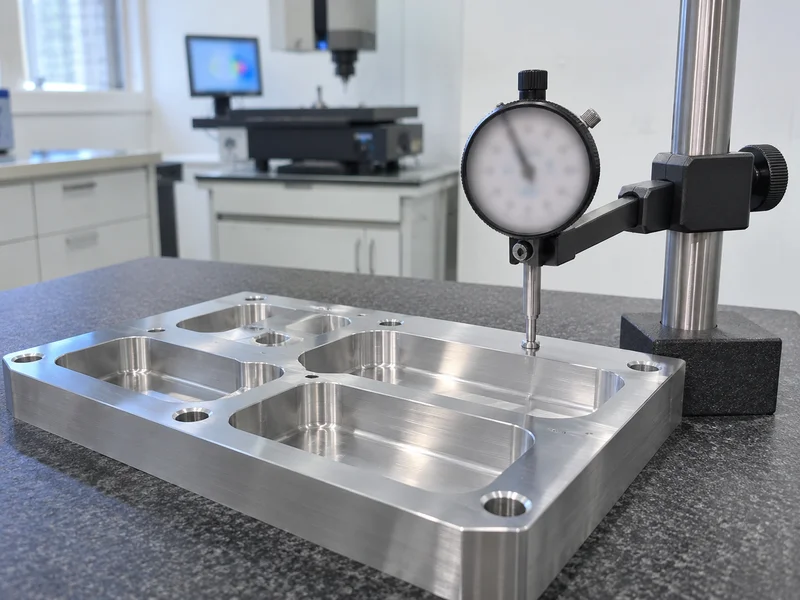
The difference between 6061-T6 and 6061-T651 is stress relief.
- T6: solution heat treated and artificially aged.
- T651: solution heat treated, stretched to relieve residual stress, then aged.
- Strength: essentially the same.
- Stability: T651 moves less during machining.
For example, a flat 6061 fixture plate with deep pockets should use T651, because T6 plate may bow as stress is released. Our guide to metals for large CNC machined parts explains stress-relieved stock.
Key Takeaway: Overall, specify T651 plate for flatness-critical machined parts.
How Do Aluminium Alloy 6061 Properties Affect Machining and Finishing?
Aluminium alloy 6061 properties make it machine, weld and finish well, which is why it is so widely used.
- Machining: good chip formation in T6; high speeds; good surface finish.
- Welding: weldable by TIG and MIG; strength drops in the heat-affected zone unless re-heat-treated.
- Anodizing: even color and good protection.
- Hard anodizing: works well for wear surfaces.
- Other finishes: chem film, powder coating, nickel plating with pretreatment.
For example, a 6061 manifold can be machined, bead blasted and black anodized with consistent results. Our CNC machining services machine 6061 and other aluminum alloys with anodizing and plating.
Key Takeaway: Equally, 6061 is the default when a part needs machining plus anodizing.
How Does 6061 Compare With Other Aluminum Alloys?
6061 compares with other aluminum alloys as the balanced middle choice.
| Alloy (typical) | Strength | Machinability | Anodizing | Typical use |
|---|---|---|---|---|
| 6061-T6 | Medium | Very good | Very good | General precision parts |
| 6082-T6 | Medium | Good | Good | European structural equivalent |
| 7075-T6 | High | Good | Good | Highly loaded parts |
| 2024-T3 | High | Good | Poor | Aerospace-style structures |
| 5083 | Medium | Fair | Good | Marine, vacuum plates |
| MIC-6 cast plate | Lower | Good | Fair | Flat tooling plates |
For example, a European drawing may specify 6082 instead of 6061; both machine similarly. Our guide to CNC machining materials compares more alloys.
Key Takeaway: As a rule, start with 6061 and move to another alloy only for a specific reason.
How Should 6061 Be Specified on a Drawing?
6061 should be specified with alloy, temper, product form and any certificate needs.
Specification items:
- Alloy and temper, for example “6061-T651” or “EN AW-6061-T6”
- Product form: plate, bar, extrusion
- Material certificate if required
- Finish: anodizing type and color
- Acceptable equivalents
For example, “Aluminum 6061-T651 plate, EN 10204 3.1 certificate, black anodize Type II” is clear. Our quality control and inspection process supplies certificates on request.
Key Takeaway: Finally, always include the temper; “6061” alone is incomplete.
FAQ
- Q: What are the main properties of 6061 aluminum?
- Medium strength (about 275 MPa yield in T6), good corrosion resistance, machinability, weldability and anodizing response.
- Q: Is 6061 strong?
- It is medium strength; 7075 is about twice as strong in yield.
- Q: What is the difference between 6061-T6 and T651?
- T651 is stretched to relieve stress, so it moves less during machining.
- Q: Does 6061 anodize well?
- Yes, it gives even color and good protection.
- Q: What is the density of 6061?
- About 2.70 g/cm³.
Conclusion
Aluminium alloy 6061 properties make it the balanced default for machined parts: medium strength, excellent machinability, weldability and anodizing. Choose T651 for stability, 7075 for strength, and specify temper and form clearly. To review an aluminum part, send your 3D model and 2D drawing to our engineers.