
Copper and Nickel Plating: Uses, Control and Masking
Copper and nickel plating are two of the most common metal finishes for machined parts. Copper plating adds conductivity, solderability or a base layer for further plating, while nickel plating adds corrosion and wear resistance and a bright or satin appearance. Together they often form a system, such as copper strike under nickel on steel or zinc, and they sit alongside other finishes such as anodizing, passivation and electropolishing.
The finish must match the function and the drawing. For example, a sealing face that is plated without control of thickness can lose its fit or roughness, and a threaded hole plated without masking may no longer accept a gauge. In this guide, we explain copper and nickel plating for machined parts, electroless nickel thickness and tolerance, how plating compares with anodizing, passivation and electropolishing, and how to specify sealing and cosmetic surfaces. For aluminum finishes, see our guide to anodized vs non anodized aluminum.
Copper and nickel plating are electroplated or chemically deposited metal layers. Copper plating (typically a few to 25 µm) improves conductivity and solderability and serves as an underlayer. Electrolytic nickel gives corrosion resistance and appearance, while electroless nickel (EN, typically 5–25 µm, with mid- or high-phosphorus grades) deposits a uniform layer even in holes and adds hardness and wear resistance. Plating changes dimensions, so thickness, masking and whether dimensions apply before or after plating must be stated. Anodizing suits aluminum; passivation and electropolishing suit stainless steel.
In short: choose the plating for the function, specify thickness and masking, and state when dimensions apply.
Key points:
- Copper: conductivity, solderability, underlayer.
- Nickel: corrosion, wear and appearance; EN is very uniform.
- Dimensions: plating adds thickness to every coated surface.
What Are Copper and Nickel Plating?
Copper and nickel plating are metal coatings deposited onto a part to change its surface properties.
- Electroplating: current deposits metal; thickness varies with geometry (thicker on edges, thinner in holes).
- Electroless plating: a chemical reaction deposits metal evenly, including inside holes and recesses.
- Copper strike: a thin copper layer improves adhesion of later layers.
- Nickel layers: bright, satin or electroless, often as a final finish.
For example, a brass connector may be copper-struck, then nickel-plated, then gold-flashed on contacts. Standards for electroplated and autocatalytic coatings are published by ISO, such as ISO 4527 for electroless nickel.
Key Takeaway: Above all, know whether the plating is electrolytic or electroless. It decides thickness uniformity.
When Should You Use Copper and Nickel Plating?
You should use copper and nickel plating when the part needs properties the base metal lacks.
| Need | Typical finish |
|---|---|
| Electrical conductivity, solderability | Copper, tin or silver over copper |
| Corrosion resistance on steel | Nickel or electroless nickel |
| Wear and hardness | Electroless nickel (heat treated if needed) |
| Uniform coating in holes | Electroless nickel |
| Decorative appearance | Bright nickel, often with chrome |
| Underlayer for other plating | Copper strike |
For example, a steel valve body may receive electroless nickel because it coats internal passages evenly. Our CNC machining services include nickel, chrome and zinc plating through our qualified finishing suppliers.
Key Takeaway: In other words, pick the finish by the function the surface must perform.
How Do You Control Electroless Nickel Plating Thickness and Tolerance?
You control electroless nickel plating thickness and tolerance by specifying the thickness range and machining the part to allow for it.
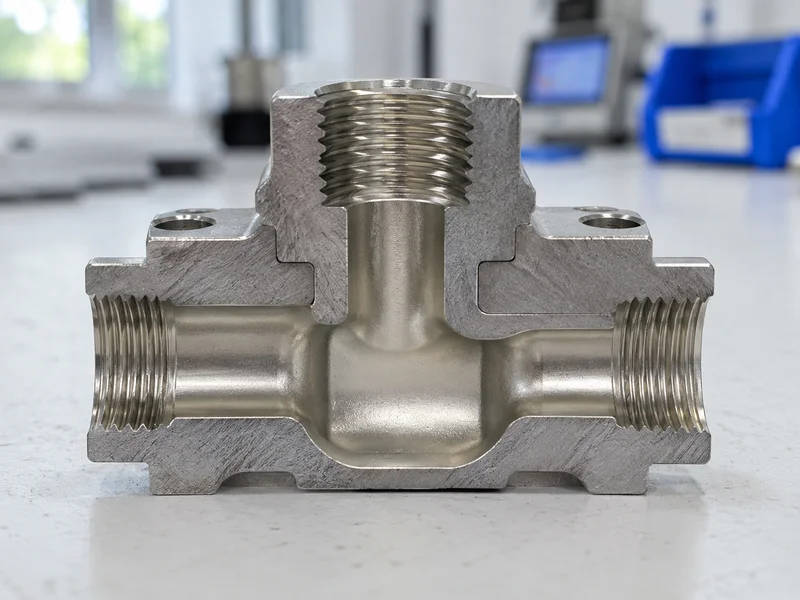
Practical rules:
- EN thickness: often 5–25 µm; thicker for wear or corrosion.
- Growth: EN adds its full thickness to each surface, so a 10 µm layer adds 20 µm to a diameter.
- Uniformity: EN is uniform, so allowances are predictable.
- Tight fits: machine bores oversize and pins undersize by the coating allowance.
- Phosphorus content: mid-phosphorus for general use, high-phosphorus for corrosion resistance.
For example, a Ø10 H7 bore that will receive 10 µm EN should be machined about 20 µm larger. Our guide to tight tolerance machining explains fit planning.
Key Takeaway: For this reason, always state whether drawing dimensions apply before or after plating.
How Does Plating Compare With Anodizing, Passivation and Electropolishing?
Plating compares with anodizing, passivation and electropolishing by what it does to the surface and which metals it suits.
| Finish | Suits | Adds thickness | Main purpose |
|---|---|---|---|
| Copper / nickel plating | Steel, brass, copper, zinc, some aluminum | Yes | Conductivity, corrosion, wear |
| Anodizing (Type II) | Aluminum | Yes, partly | Corrosion, color |
| Hard anodizing (Type III) | Aluminum | Yes, more | Wear, hardness |
| Passivation | Stainless steel | No (negligible) | Corrosion resistance |
| Electropolishing | Stainless steel | Removes material | Smoothness, cleanliness |
Key points:
- Type II vs Type III anodizing: Type II is thinner and dyeable; Type III is thicker, harder and darker.
- Anodizing dimensional tolerance: about half the coating grows outward.
- Passivation vs electropolishing: passivation removes free iron chemically; electropolishing removes a thin metal layer and smooths the surface.
For example, a 316 stainless fitting may be passivated, while a sanitary part is electropolished. Our guide to chemical conversion coating vs anodizing covers aluminum finishes.
Key Takeaway: Overall, match the finish to the base metal first, then to function.
How Should Threaded Holes Be Masked During Finishing?
Threaded holes should be masked during finishing when the coating would change thread fit or electrical contact.
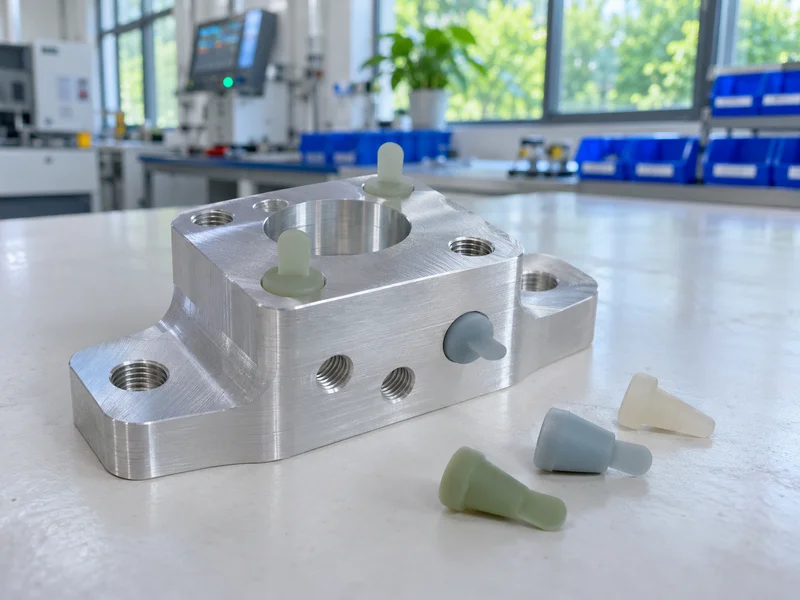
Masking options:
- Plugs or caps for anodizing and plating
- Masking lacquer for complex areas
- Oversize tapping before finishing when masking is impractical
- Post-finish thread chasing, if allowed
For example, anodizing masking of threaded holes keeps M4 threads within gauge, while unmasked hard anodizing can make them too tight. Our guide to threaded holes explains thread callouts.
Key Takeaway: Equally important, show masked areas on the drawing with clear limits.
How Should Machined Sealing and Cosmetic Surfaces Be Specified?
Machined sealing and cosmetic surfaces should be specified with roughness, lay, defect limits and finish requirements.
Sealing surfaces:
- Roughness, for example Ra 0.4–0.8 µm on O-ring grooves
- No radial scratches across the sealing path
- Plating thickness controlled if the face is plated
Cosmetic surfaces:
- Surface classes (A, B, C)
- Viewing distance and lighting
- Allowed defects: size and number of scratches, dents or pits
- Finish match across parts
For example, “A surface: no visible scratches at 500 mm under diffuse light, uniform satin nickel” is testable. Our guide to surface roughness Ra vs Rz explains roughness values.
Key Takeaway: As a rule, define sealing and cosmetic criteria before plating, because plating copies the surface underneath.
How Should You Specify Copper and Nickel Plating?
You should specify copper and nickel plating with the standard, layer system, thickness and test requirements.
Specification items:
- Standard or specification (for example ISO 4527 or ASTM B733 for electroless nickel)
- Layer system, such as “Cu 5 µm min + Ni 10 µm min”
- Thickness range and measurement location
- Masking areas
- Dimension status: before or after plating
- Tests: thickness, adhesion, salt spray if required
For example, “EN per ASTM B733, Type IV, 10–15 µm, mask M6 threads, dimensions after plating” is complete. Electroless nickel specifications are published by ASTM International. Our quality control and inspection process checks coating thickness when specified.
Key Takeaway: Finally, name the layer system and thickness; “nickel plated” alone is not enough.
FAQ
- Q: What is the difference between copper and nickel plating?
- Copper improves conductivity and adhesion; nickel improves corrosion, wear and appearance.
- Q: What is electroless nickel plating?
- A chemical nickel-phosphorus coating that deposits evenly, including inside holes.
- Q: How much does nickel plating add to dimensions?
- Its full thickness per surface; a 10 µm layer adds 20 µm to a diameter.
- Q: Can aluminum be nickel plated?
- Yes, with special pretreatment, though anodizing is more common.
- Q: What is the difference between passivation and electropolishing?
- Passivation chemically cleans stainless steel; electropolishing removes a thin layer and smooths it.
Conclusion
Copper and nickel plating add conductivity, corrosion and wear resistance when the layer system, thickness and masking are specified clearly. Compare them with anodizing, passivation and electropolishing by base metal and function. To review finishing on your part, send your 3D model and 2D drawing to our engineers.