
Anodized vs Non Anodized Aluminum: How to Pick the Best One and Save Money
Anodized vs non anodized aluminum is a common decision for machined parts. Bare (non-anodized) aluminum is conductive, cheaper and keeps exact machined dimensions, but it scratches and oxidizes unevenly. Anodized aluminum has a hard, protective oxide layer that resists corrosion and wear and can be colored, but it is electrically insulating and adds a small amount of thickness.
The right answer depends on what the part does and where it lives. For example, an internal mounting plate inside a dry enclosure may need no finish at all, while a handheld instrument cover needs anodizing for scratch resistance and appearance. In this guide, we compare anodized vs non anodized aluminum for machined parts: protection, conductivity, dimensions, appearance, cost and lead time, and when bare aluminum is good enough. For other finishes, see our comparison of chemical conversion coating vs anodizing.
Anodized vs non anodized aluminum: anodizing (for example Type II, about 5–25 µm, or hard anodizing Type III, about 25–75 µm) grows a hard, corrosion-resistant oxide that can be dyed, but it insulates electrically and changes dimensions slightly. Non-anodized (bare) aluminum keeps full conductivity and exact dimensions at lower cost and shorter lead time, but it forms a thin natural oxide that offers limited protection, scratches easily and stains with handling. Choose anodizing for exposed, handled or cosmetic parts; bare or conversion-coated aluminum for internal, conductive or low-cost parts.
In short: anodize when the part is seen, touched or exposed; leave bare or chem-film when conductivity, cost or exact dimensions matter more.
Key points:
- Protection: anodizing is far more resistant to corrosion and wear.
- Conductivity: bare aluminum conducts; anodized does not.
- Cost: bare is cheapest and fastest.
What Is the Difference Between Anodized vs Non Anodized Aluminum?
The difference between anodized vs non anodized aluminum is the surface layer: anodized aluminum has a thick, controlled oxide grown electrochemically, while bare aluminum only has a thin natural oxide.
| Feature (typical) | Non-anodized (bare) | Anodized Type II | Hard anodized Type III |
|---|---|---|---|
| Oxide thickness | a few nanometers | about 5–25 µm | about 25–75 µm |
| Corrosion resistance | Limited | Good | Good |
| Wear resistance | Low | Medium | High |
| Electrical | Conductive | Insulating | Insulating |
| Appearance | Machined metal, dulls over time | Clear or colored | Grey to dark |
| Dimensional change | None | Small | Significant |
| Cost and lead time | Lowest | Moderate | Higher |
Anodizing specifications such as MIL-A-8625 are widely used, and related coating standards are published by ISO, for example ISO 7599.
Key Takeaway: Bare aluminum is not unprotected, but its natural oxide is too thin for harsh use.
Anodized vs Non Anodized Aluminum: When Is Bare Good Enough?
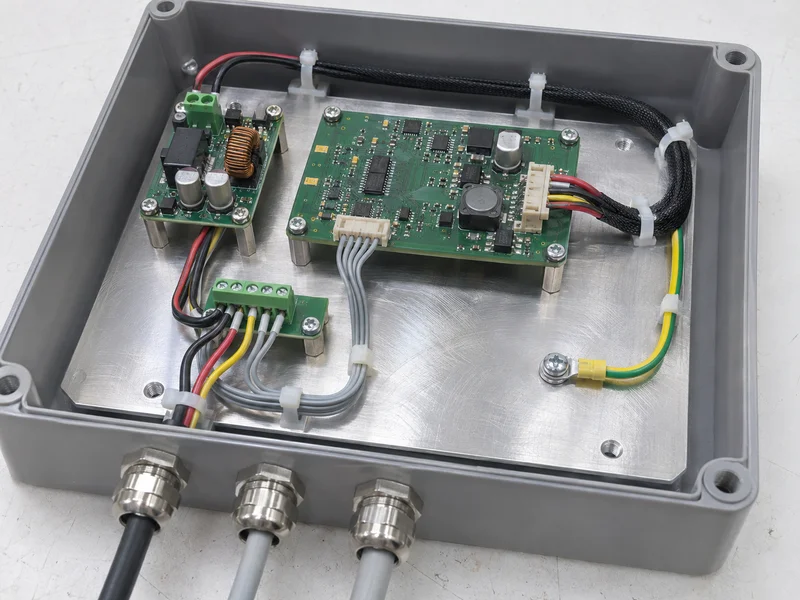
In the anodized vs non anodized aluminum decision, bare aluminum is good enough when the part is internal, dry, unhandled or needs electrical contact.
Typical cases:
- Internal brackets and plates in dry enclosures
- Grounding and electrical contact parts
- Fixtures and jigs used in a controlled shop
- Prototypes where finish is not being evaluated
- Parts that will be painted or chem-filmed later
For example, a 6061 mounting plate inside an electronics cabinet may be left bare or given a conversion coating for grounding. Our guide to 6061 T6 aluminum vs 7075 T6 explains alloy corrosion differences.
Key Takeaway: Do not pay for anodizing on parts nobody sees and nothing corrodes.
When Should You Choose Anodized Aluminum?
You should choose anodized aluminum when the part is exposed, handled, cosmetic or subject to wear.
Typical cases:
- Covers, panels and handles that are seen and touched
- Outdoor or humid environments
- Sliding or wearing surfaces (hard anodizing)
- Color-coded parts
- Parts needing electrical insulation at the surface
For example, a black anodized 6061 instrument cover resists fingerprints and scratches and keeps a uniform appearance. Anodizing and hard anodizing are part of our CNC machining services through our qualified finishing suppliers.
Key Takeaway: Anodize parts where appearance and durability are part of the function.
How Does Anodized vs Non Anodized Aluminum Affect Dimensions?
Anodized vs non anodized aluminum affects dimensions because anodizing grows partly outward from the surface, while bare aluminum keeps its machined size.
- Type II: about half the coating grows outward; a 10 µm coating adds about 5 µm per surface.
- Hard anodizing: a 50 µm coating adds about 25 µm per surface, or 50 µm on a diameter.
- Threads and fits: may tighten after anodizing.
- Bare: no change.
For example, an H7 bore that will be anodized must be machined oversize or masked. Our guide to tolerance for slip fit explains fit tolerances.
Key Takeaway: State on the drawing whether dimensions apply before or after anodizing.
How Do Alloy and Machining Affect Anodized Appearance?
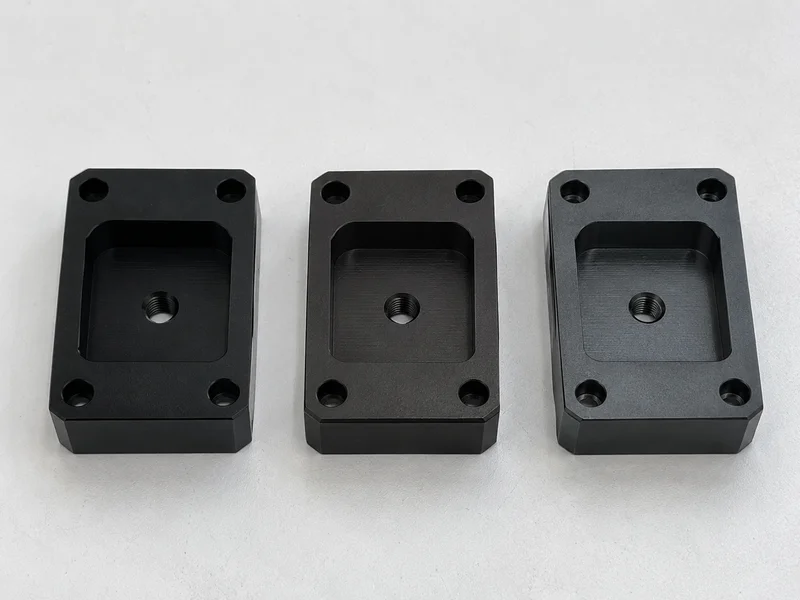
Alloy and machining affect anodized appearance because different alloys and surface conditions anodize differently.
- 6061 and 6063: anodize well with even color.
- 7075: anodizes well but can look slightly different in color.
- 2024 and high-copper alloys: give poorer, less uniform results.
- Cast alloys with high silicon: often dark and blotchy.
- Machining marks: remain visible through clear anodizing.
- Bead blasting: gives a uniform matte look before anodizing.
For example, two parts from different alloys may not match in black. Using one alloy and one finishing batch keeps color consistent. Our guide to surface roughness Ra vs Rz covers finish specification.
Key Takeaway: Use the same alloy and pre-finish for parts that must match in color.
How Do Cost and Lead Time Compare?
Cost and lead time favor non-anodized aluminum, because it skips the finishing step entirely.
- Bare: no finishing cost; ships after machining and cleaning.
- Type II anodizing: adds finishing cost and a few days of lead time.
- Hard anodizing: higher cost and longer process.
- Masking and color matching: add further cost.
For example, a batch of internal spacers may ship bare days earlier than anodized covers from the same order. We do not publish fixed finishing prices; they are quoted with the part.
Key Takeaway: Finish only the parts that need it, especially in mixed orders.
How Should You Specify Anodized or Non-Anodized Aluminum?
You should specify anodized or non-anodized aluminum clearly on the drawing, including what “no finish” means.
Specification items:
- Finish standard and type, such as “anodize per MIL-A-8625 Type II, Class 2, black”
- Or “no finish, clean and deburr, protect from corrosion during shipping”
- Masking areas for anodized parts
- Dimension status: before or after finish
- Cosmetic standard for visible faces
For example, a drawing note “no finish” without packaging rules can lead to stained parts on arrival. Adding “oil-free, VCI-bagged” protects bare parts. Our quality control and inspection process checks finish and coating thickness when specified.
Key Takeaway: “No finish” still needs cleaning and packaging rules.
FAQ
- Q: What is the difference between anodized and non-anodized aluminum?
- Anodized aluminum has a thick, hard oxide layer; non-anodized aluminum only has a thin natural oxide.
- Q: Does non-anodized aluminum corrode?
- It resists mild environments but can stain and pit in humid, salty or chemical conditions.
- Q: Is anodized aluminum conductive?
- No. The anodic layer is an electrical insulator.
- Q: Does anodizing change part dimensions?
- Yes. Type II adds a few microns per surface; hard anodizing adds more.
- Q: Is bare aluminum cheaper?
- Yes. It avoids finishing cost and shortens lead time.
Conclusion
Anodized vs non anodized aluminum depends on exposure, handling, appearance, conductivity and cost. Anodize exposed and cosmetic parts, and leave internal or conductive parts bare or conversion coated. To review finishing for your part, send your 3D model and 2D drawing to our engineers.