
Is Alloy Steel the Same as Stainless Steel: How to Pick the Best One and Save Money
Is alloy steel the same as stainless steel? No. Stainless steel is technically a type of alloy steel, but in engineering and purchasing, “alloy steel” usually means low-alloy steels such as 4140 or 4340, which contain small amounts of chromium, molybdenum or nickel for strength and hardenability. Stainless steel contains at least about 10.5% chromium, which forms a passive oxide layer and gives it corrosion resistance. Alloy steel rusts; stainless steel generally does not.
Mixing them up on a drawing causes real problems. For example, a shaft specified as “alloy steel” may arrive as 4140 and rust in a humid factory, while the designer expected stainless. On the other hand, a stainless part may not be hard or strong enough where a heat-treated 4140 would work. In this guide, we answer is alloy steel the same as stainless steel, and compare them for machined parts: composition, corrosion, strength, heat treatment, machining, cost and how to choose. For stainless grades, see our guide to 304 stainless steel versus 316 stainless steel.
Is alloy steel the same as stainless steel? Not in practice. Low-alloy steels such as 4140 (about 1% Cr, 0.2% Mo) or 4340 (about 0.8% Cr, 1.8% Ni, 0.25% Mo) are heat treated for high strength and toughness but are not rust proof and need coatings. Stainless steels contain at least about 10.5% chromium (often 16–18%), forming a passive layer that resists corrosion. Alloy steels usually reach higher strength and hardness at lower cost; stainless steels resist corrosion without coating. Some stainless grades, such as 17-4PH or 420, can also be hardened.
In short: alloy steel for strength and hardness at low cost; stainless steel for corrosion resistance.
Key points:
- Chromium: alloy steel about 0.5–2%; stainless at least about 10.5%.
- Rust: alloy steel rusts; stainless resists rust.
- Strength: heat-treated alloy steel is usually stronger for the cost.
Is Alloy Steel the Same as Stainless Steel?
Is alloy steel the same as stainless steel? No. Both contain alloying elements, but the amount and purpose differ.
| Feature (typical) | Low-alloy steel (e.g. 4140) | Stainless steel (e.g. 304, 17-4PH) |
|---|---|---|
| Chromium | about 0.5–2% | at least about 10.5%, often 16–18% |
| Main purpose of alloying | Strength, hardenability | Corrosion resistance |
| Rust resistance | Low; needs coating | High |
| Heat treatable | Yes (quench and temper) | Some grades (martensitic, PH) |
| Magnetic | Yes | Austenitic grades no; others yes |
| Relative cost | Lower | Higher |
Steel grade definitions come from standards such as those published by ASTM International and SAE. For example, “4140” and “304” are both alloyed steels, but they are used for very different jobs.
Key Takeaway: Never write only “alloy steel” on a drawing. Name the grade.
Is Alloy Steel Rust Proof?
Is alloy steel rust proof? No. Low-alloy steels do not contain enough chromium to form a protective passive layer, so they rust in humid or wet conditions.
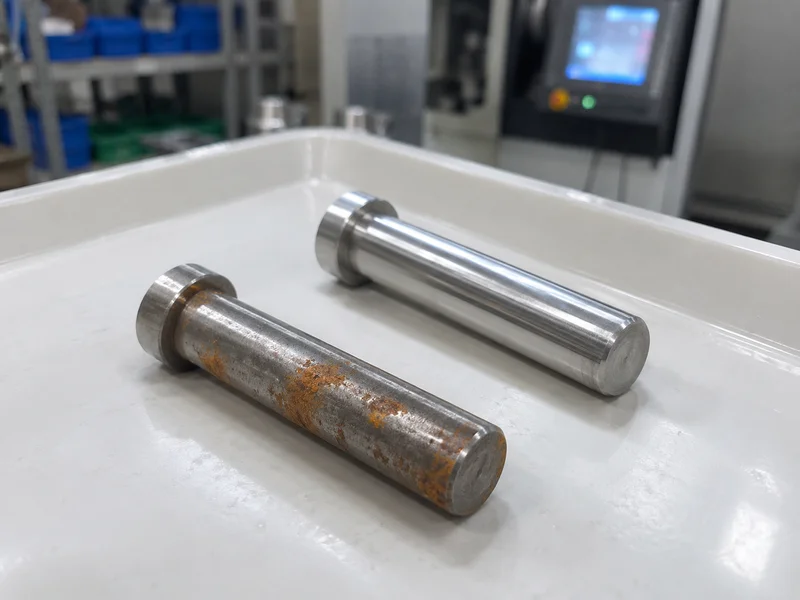
Protection options for alloy steel:
- Black oxide with oil, for light protection
- Zinc or nickel plating
- Phosphate coating with oil or paint
- Painting or powder coating
- Nitriding, which improves wear and some corrosion resistance
For example, a 4140 machine shaft inside an oiled gearbox needs little protection, while the same shaft exposed outdoors needs plating or paint. Black oxide, nickel, chrome and zinc plating are available through our qualified finishing suppliers.
Key Takeaway: Plan a coating for alloy steel parts that see moisture. Stainless avoids that step.
How Does Strength Compare Between Alloy Steel and Stainless Steel?
Strength between alloy steel and stainless steel depends on the grade and heat treatment, but heat-treated alloy steels usually give higher strength for the cost.
Typical comparison:
- 4140 quenched and tempered: yield often about 650–1,000 MPa.
- 4340 quenched and tempered: higher toughness at high strength.
- 304/316 annealed: yield about 205 MPa; cannot be hardened by heat treatment.
- 17-4PH H900: yield about 1,170 MPa, with good corrosion resistance.
- 420 hardened: high hardness, moderate corrosion resistance.
For example, a high-strength pin may be 4140 Q&T for cost, or 17-4PH if it must also resist corrosion. Our guide to strength of titanium vs steel compares steel grades by strength.
Key Takeaway: If you need both strength and corrosion resistance, look at precipitation-hardening stainless such as 17-4PH.
Is Alloy Steel the Same as Stainless Steel in Heat Treatment?
Heat treatment and hardness differ because most low-alloy steels are designed to be hardened, while the most common stainless steels are not.
- Alloy steels (4140, 4340): quench and temper to a wide range; surface harden by induction or nitriding.
- Austenitic stainless (304, 316): not hardenable by heat treatment; only by cold work.
- Martensitic stainless (420, 440C): hardenable for knives, valves and wear parts.
- PH stainless (17-4PH): aged to high strength with low distortion.
For example, a wear pin that needs 50 HRC can be 4140 induction hardened or 440C hardened, depending on corrosion needs. Hardness should be specified with its condition on the drawing.
Key Takeaway: Specify the heat treatment and hardness, not just the grade.
Is Alloy Steel the Same as Stainless Steel to Machine?
Alloy steel and stainless steel machine differently. Alloy steels in the annealed or pre-hardened condition usually machine more easily than austenitic stainless steels.
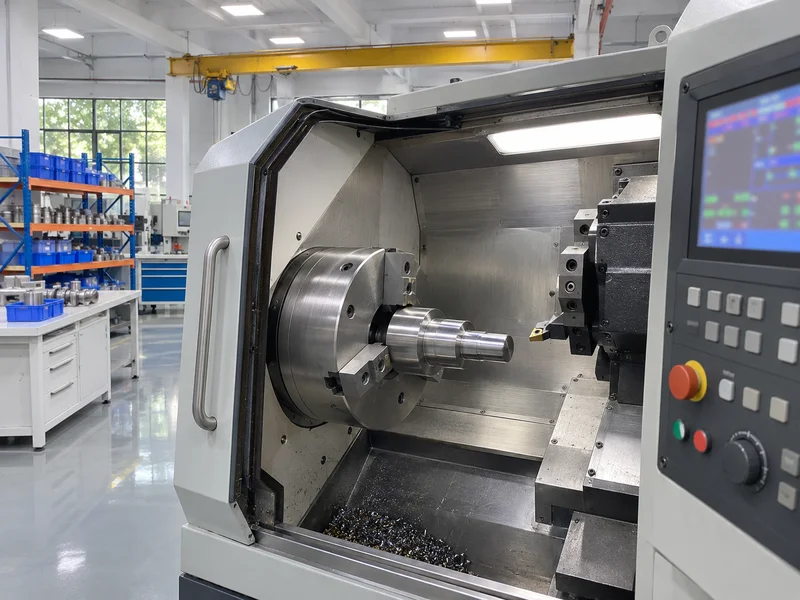
- 4140 pre-hardened (about 28–32 HRC): machines well; common for tooling and shafts.
- 4140 fully hardened: often ground or hard-turned.
- 304/316: work harden, gummy chips; need sharp tools and steady feed.
- 303: free-machining stainless, easier but less corrosion resistant.
- 17-4PH: machines well in condition A, then aged.
For example, a batch of shafts may be cheaper in 4140 pre-hard than in 316, because of faster machining and lower material cost. Our CNC turning and CNC machining services machine alloy, carbon, tool and stainless steels.
Key Takeaway: Include machining time when comparing costs. Stainless often costs more to machine.
Alloy Steel or Stainless Steel for a Machined Part?
You choose alloy steel or stainless steel for a machined part by the environment, strength and hardness needs, and cost.
- Dry or oiled environment, high strength needed? Alloy steel (4140, 4340).
- Wet, outdoor or washdown environment? Stainless steel (304, 316).
- High strength plus corrosion resistance? 17-4PH.
- Wear surface with some corrosion resistance? 420 or 440C.
- Lowest cost for a strong part? Alloy steel with a coating.
For example, a gearbox shaft is usually alloy steel, while a food machine shaft is usually stainless. Our guide to cast iron vs steel aluminium industrial components compares base materials more broadly.
Key Takeaway: Choose alloy steel for strength and cost, stainless for corrosion, and PH stainless when you need both.
FAQ
- Q: Is alloy steel the same as stainless steel?
- No. Stainless steel has at least about 10.5% chromium for corrosion resistance; low-alloy steels have much less.
- Q: Is alloy steel rust proof?
- No. It needs a coating or oil to resist rust in humid conditions.
- Q: Which is stronger, alloy steel or stainless steel?
- Heat-treated alloy steels are usually stronger than common stainless grades; PH stainless can match them.
- Q: Is 4140 a stainless steel?
- No. 4140 is a chromium-molybdenum low-alloy steel.
- Q: Can stainless steel be hardened?
- Martensitic and precipitation-hardening grades can; austenitic grades like 304 and 316 cannot by heat treatment.
Conclusion
Is alloy steel the same as stainless steel? No: alloy steel is chosen for strength and hardness at low cost, stainless for corrosion resistance, and PH stainless when both are needed. Name the exact grade, heat treatment and coating on the drawing. To review material for your part, send your 3D model and 2D drawing to our engineers.