
Injection Molding Flash: Tool, Press or Process?
Injection molding flash is a thin layer of excess plastic that escapes the cavity at the parting line, around ejector pins, slides or inserts. It looks like a small fin or film on the part edge. Flash may seem cosmetic, but it can stop assemblies from fitting, cut hands, shorten creepage paths and add trimming labor to every part.
The usual reaction, raising clamp force, often hides the real cause and damages the mold. For example, flash on one side of a part may come from a worn shutoff, not from low clamp force, and more tonnage only crushes vents and accelerates wear. In this guide, we explain how to trace injection molding flash to the tool, the press or the process, and how to fix each cause. For general defects, see our guide to common injection molding defects.
Injection molding flash occurs when melt escapes through a gap larger than the material can seal, typically about 0.02–0.05 mm for low-viscosity resins such as PA, PP or LCP. Tool causes include worn or damaged shutoffs, poor parting line fit, excessive vent depth and loose inserts or pins. Press causes include insufficient or uneven clamp force, platen deflection and worn tie bars. Process causes include excessive injection speed or pressure, late V/P switchover, high melt temperature and overpacking. Flash location, repeatability and response to process changes identify the cause.
In short: find where the flash forms and whether it changes with the process, then fix the tool, press or process accordingly.
Key points:
- Tool: shutoffs, parting line, vents, pins.
- Press: clamp force and platen condition.
- Process: speed, pressure, switchover and temperature.
What Causes Injection Molding Flash?
Injection molding flash is caused by a gap in the mold that is larger than the melt can seal, combined with enough pressure to push plastic into it.
Two conditions must be true:
- A gap exists: from wear, damage, poor fit or mold deflection.
- Melt can enter it: because of low viscosity, high pressure or high temperature.
Low-viscosity resins such as PA, PP and LCP flash through very small gaps, while stiffer resins such as PC need larger gaps. For example, a mold that runs ABS without flash may flash with PA66 because the nylon flows more easily. Our guide to parting line injection molding explains how parting lines are fitted.
Key Takeaway: Flash needs both a gap and pressure. Fix the gap first; reduce pressure second.
How Do You Know Injection Molding Flash Comes From the Tool?
You know injection molding flash comes from the tool when it appears at the same place every shot and does not disappear with reasonable process changes.
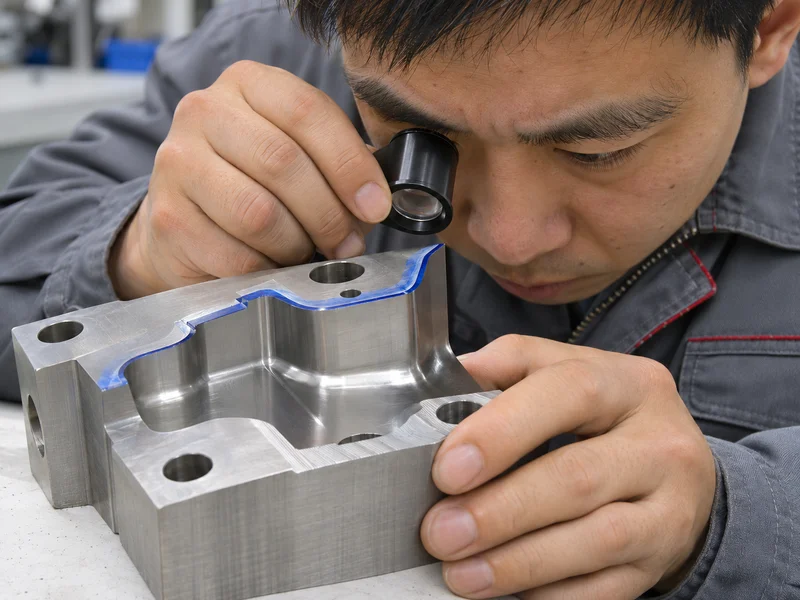
Tool-related signs:
- Same location every shot
- One cavity only in a multi-cavity mold
- At ejector pins, slides, lifters or inserts
- Visible damage or wear at the shutoff
- Flash grows over time as the mold wears
Common tool fixes:
- Re-fit or weld and re-cut worn shutoffs
- Correct vent depth for the resin
- Replace worn pins or bushings
- Re-seat inserts and clean pockets
- Add support pillars to stop plate deflection
For example, flash around one ejector pin usually means a worn pin hole. A new pin or bushing fixes it in hours. Our guide to injection mold venting gives vent depths by resin.
Key Takeaway: Check the mold where flash appears. Most persistent flash is a tool problem.
How Do You Know Flash Comes From the Press?
You know flash comes from the press when it changes with clamp setting, appears in a pattern linked to platen deflection, or the mold runs flash-free on another press.
Press-related signs:
- Flash around the whole parting line, especially in the center
- Flash on one side, suggesting uneven tie bar loading
- Mold runs clean on another machine
- Tonnage near the press limit
Checks:
- Clamp force calculation against the projected area
- Platen parallelism and tie bar stretch
- Mold size vs platen size: small molds on large platens can bend them
For example, a large mold on a press with barely enough tonnage may flash in the center, because the platens bend under pressure. A larger press or support pillars solve it. Our guide to decoupled molding explains clamp force calculation.
Key Takeaway: If the mold runs clean on another press, the press is the cause.
How Do You Know Flash Comes From the Process?
You know flash comes from the process when it changes with injection speed, switchover position, pack pressure or temperature.
Process causes and fixes:
- Late V/P switchover: switch earlier so the cavity is not overfilled at full speed.
- High pack pressure: reduce to the minimum that avoids sink.
- High injection speed: reduce speed at end of fill.
- High melt or mold temperature: lower within the resin’s window.
- Large shot or cushion problems: check consistency.
For example, flash that appears only at the end of fill, far from the gate, often comes from a switchover point set too late. Moving it earlier, so the part is about 95–98% full at switchover, removes the flash. Process principles are documented in industry references and standards from bodies such as ISO for molding of test specimens.
Key Takeaway: Run a fill-only short shot. If it already flashes, the process or tool gap is too large.
What Is a Fast Way to Diagnose Injection Molding Flash?
A fast way to diagnose injection molding flash is to map where it occurs and test a few process changes in order.
Diagnostic sequence:
- Map flash by location and cavity number.
- Inspect the mold at those locations for wear or damage.
- Run a fill-only short shot at about 95% full.
- Reduce pack pressure and check whether flash disappears.
- Check clamp force against the calculation.
- Compare with the trial record or another press if possible.
For example, if flash remains in the short shot at one corner, the tool gap is too large there. If flash appears only when pack is added, the process is overpacking. Our quality control and inspection process records defect locations during trials.
Key Takeaway: Diagnose before adjusting. Raising tonnage first can hide a tool problem and damage the mold.
How Do You Prevent Injection Molding Flash in Production?
You prevent injection molding flash in production by maintaining the mold, controlling the process window and checking flash-prone areas regularly.

Prevention steps:
- Preventive maintenance of shutoffs, pins and vents
- Clean parting lines, free of plastic residue and debris
- Validated process window with switchover and pack limits
- Flash checks in the control plan at critical edges
- Clamp force set correctly, not at maximum
For example, a small piece of plastic stuck on the parting line can hold the mold open by a fraction of a millimeter and flash the whole part. Cleaning the parting line at every mold change prevents it. Our guide to mold maintenance lists preventive checks.
Key Takeaway: Most production flash starts with dirt or wear. Clean and inspect the parting line regularly.
FAQ
- Q: What causes flash in injection molding?
- A gap in the mold larger than the melt can seal, plus enough pressure to push plastic into it.
- Q: Does increasing clamp force fix flash?
- Sometimes, but it often hides tool wear and damages vents and shutoffs. Diagnose first.
- Q: Which materials flash most easily?
- Low-viscosity resins such as PA, PP, PBT and LCP.
- Q: How small a gap causes flash?
- For low-viscosity resins, gaps of about 0.02–0.05 mm can flash.
- Q: How do you remove flash from parts?
- By trimming, deburring or tumbling, but fixing the cause in the mold or process is cheaper long term.
Conclusion
Injection molding flash comes from the tool, the press or the process, and the location and behavior of the flash tell you which. Map the flash, inspect the mold, test the process and fix the real cause rather than adding tonnage. To review a flash problem, send your 3D model and 2D drawing to our engineers.