
Low-Volume CNC Machining: Cost, Design and Quality
Low-volume CNC machining covers production runs from a handful of parts to a few thousand, where tooling for molding or casting would not pay back. It is the normal route for precision brackets, housings, manifolds, fixtures, test equipment parts and spare parts, and for products whose volumes are still uncertain. The economics are different from both prototyping and high-volume production, so planning matters.
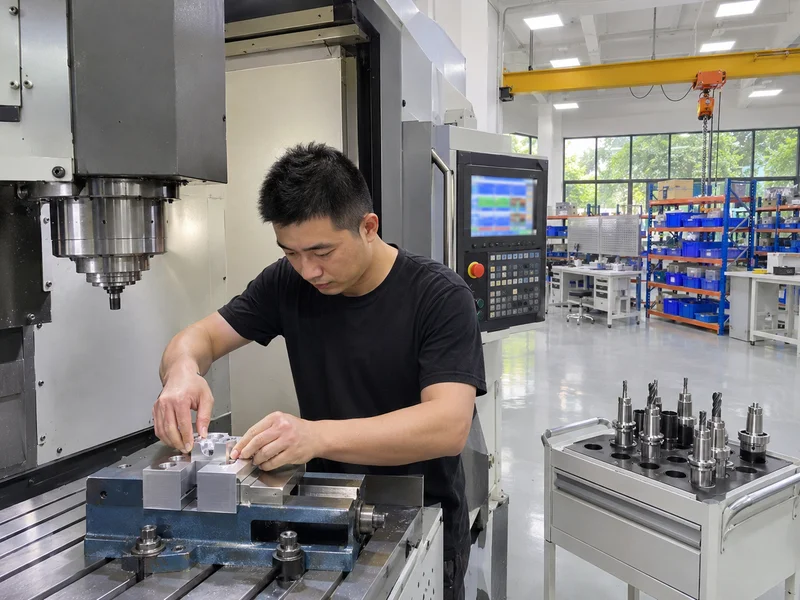
In low-volume work, setup and programming are a large share of the cost. For example, 20 aluminum housings ordered as four separate batches of 5 may cost much more per part than one batch of 20, because each batch repeats setup and first-piece inspection. In this guide, we explain low-volume CNC machining: when it is the right process, how cost behaves, design choices that help, materials and finishes, quality control and how to plan repeat orders. For the next stage, see our guide to high volume CNC machined parts.
Low-volume CNC machining produces small production quantities, typically from about 1 to a few thousand parts per order, without dedicated tooling. Unit cost is driven by setup, programming, fixtures and inspection spread over the batch, plus cycle time and material. It suits precision metal and plastic parts, uncertain or seasonal demand, frequent design changes and spare parts. Cost falls with batch consolidation, standard features, sensible tolerances and reusable fixtures. Above certain volumes, injection molding, die casting or stamping may become cheaper.
In short: low-volume CNC machining avoids tooling; manage setup cost by batching and simple design.
Key points:
- No tooling: design changes cost little.
- Setup-heavy: batch size strongly affects unit cost.
- Repeatability: keep programs and fixtures for repeat orders.
When Is Low-Volume CNC Machining the Right Choice?
Low-volume CNC machining is the right choice when quantities are too small for tooling, or when designs are still changing.
Good fits:
- Small production runs of precision metal parts
- Bridge production before molds or dies are ready
- Spare and replacement parts
- Test and automation equipment parts
- Products with uncertain demand
Less suitable:
- Very high volumes of simple plastic parts
- Parts with molded-only features such as living hinges
For example, a robotics company may machine 200 sensor brackets per year in aluminum rather than invest in a die-cast tool. Our guide to casting vs machining explains the break-even.
Key Takeaway: Above all, choose low-volume machining when flexibility is worth more than tooling savings.
How Does Cost Behave in Low-Volume CNC Machining?
Cost in low-volume CNC machining is dominated by fixed setup costs at small quantities and by cycle time as quantities grow.
| Quantity per batch | Main cost driver |
|---|---|
| 1–10 | Programming, setup, first-piece inspection |
| 10–100 | Setup plus cycle time |
| 100–1,000+ | Cycle time and material |
For example, a part with 2 hours of setup and 15 minutes of cycle time costs far more per piece at 5 pieces than at 100. Consolidating annual demand into fewer batches lowers unit cost. Our guide to CNC machining cost for custom parts explains cost drivers in detail.
Key Takeaway: In other words, batch size is the biggest lever in low-volume pricing.
How Should Parts Be Designed for Low-Volume CNC Machining?
Parts for low-volume CNC machining should be designed for simple setups and standard tools.
Design tips:
- Use standard hole sizes, threads and radii
- Keep features accessible from few directions
- Avoid unnecessary tight tolerances
- Use stock sizes that need little roughing
- Combine parts where it removes assembly
For example, designing a bracket from 10 mm plate with features on one face allows a single setup instead of three. Our engineering and DFM review suggests such changes before quoting.
Key Takeaway: For this reason, every setup removed saves cost on every batch.
Which Materials and Finishes Suit Low-Volume CNC Machining?
Materials and finishes for low-volume CNC machining should be readily available and easy to process.
Common materials:
- 6061 and 7075 aluminum
- 303, 304 and 316 stainless steel
- Carbon and alloy steels
- Brass and copper
- POM, nylon and PEEK
Common finishes:
- Anodizing and hard anodizing
- Nickel or zinc plating
- Passivation
- Bead blasting
For example, choosing 6061-T6 instead of a rare alloy avoids minimum-order surcharges on small batches. Our guide to CNC machining materials compares options.
Key Takeaway: Overall, common materials and finishes keep small batches fast and affordable.
How Is Quality Controlled in Low-Volume CNC Machining?
Quality in low-volume CNC machining is controlled with first-piece checks, targeted inspection and records that support repeat orders.
Practice:
- First article inspection on the first part of each batch
- Critical features checked on every part or by sampling
- Material certificates when required
- Inspection reports kept with the job
- Retained sample for future comparison
For example, a batch of 50 manifolds may have every sealing bore checked, while non-critical features are sampled. Our quality control and inspection process supplies reports on request. Our guide to the first article inspection report explains the format.
Key Takeaway: Equally, record what was checked so the next batch matches the last.
How Should Repeat Low-Volume Orders Be Planned?
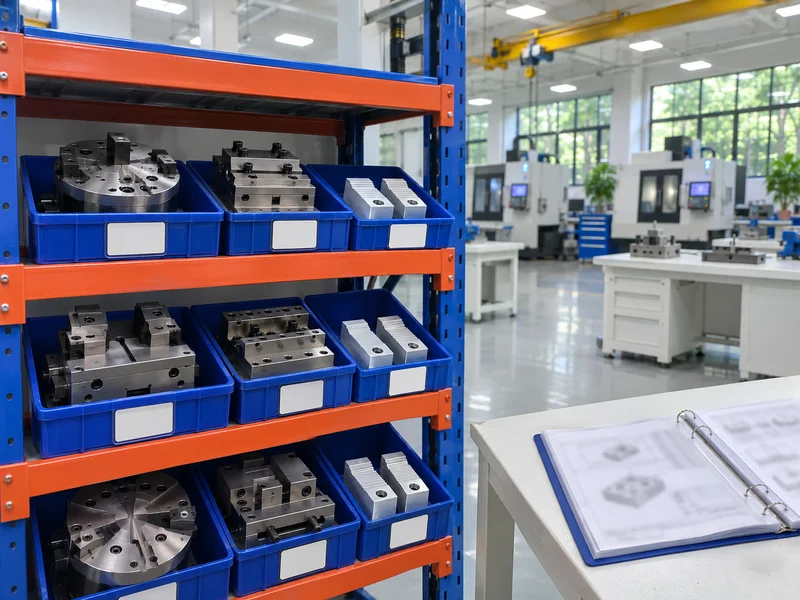
Repeat low-volume orders should be planned so programs, fixtures and approvals carry over.
Planning steps:
- Keep the approved program and setup sheet.
- Store fixtures for repeat parts.
- Share annual forecasts to allow batch consolidation.
- Agree a reorder point for stock parts.
- Notify design changes with revision numbers.
For example, a customer ordering 100 parts every quarter may agree to one batch of 400 per year with scheduled deliveries, lowering unit cost. Our guide to precision CNC machining services industrial production reliability covers repeat-production control.
Key Takeaway: As a rule, forecasts turn small orders into efficient batches.
When Should Low-Volume Parts Move to Another Process?
Low-volume parts should move to another process when volumes grow enough for tooling to pay back.
Options:
- Injection molding for plastic parts
- Die casting for complex aluminum or zinc parts
- Stamping for sheet metal shapes
- Investment casting for complex steel parts
For example, a plastic cover machined at 300 per year may move to injection molding at 10,000 per year. Our guide to low volume injection molding explains low-cost tooling options. General machining tolerances are described in ISO 2768.
Key Takeaway: Finally, review the process each time annual volume changes significantly.
FAQ
- Q: What is low-volume CNC machining?
- Machining small production quantities, typically up to a few thousand parts, without dedicated tooling.
- Q: Why are small CNC batches more expensive per part?
- Setup, programming and first-piece inspection are spread over fewer parts.
- Q: How can I reduce low-volume CNC cost?
- Consolidate batches, simplify setups, use standard features and common materials.
- Q: Is low-volume CNC machining good for spare parts?
- Yes. No tooling is needed, and programs can be reused.
- Q: When should I switch from CNC to molding?
- When annual volume is high enough for tooling cost to pay back.
Conclusion
Low-volume CNC machining offers precision parts without tooling. Manage cost through batching, simple design and common materials, keep programs and fixtures for repeats, and review the process as volumes grow. To quote a low-volume part, send your 3D model and 2D drawing to our engineers.