
Precision CNC Machining Services for Repeat Production
Precision CNC machining services industrial production reliability is what buyers really need once a part moves from samples to repeat orders: the same dimensions, the same finish and on-time delivery, lot after lot. Many suppliers can make good first articles. Fewer can keep small and medium precision parts stable over years of repeat production, through tool wear, staff changes, material lots and demand swings.
Reliability can be checked before you place volume orders. For example, a supplier that freezes programs, records tool changes and charts critical dimensions will usually show it in a short process review, while a supplier that relies on one skilled machinist will not. In this guide, we explain how to qualify a CNC supplier for repeat production: what reliability means, process control, measurement, material and change control, capacity and delivery, and the evidence to request. For the inspection side, see our guide to the supplier audit checklist.
Precision CNC machining services industrial production reliability depends on documented and frozen processes, controlled fixtures and tooling, planned tool changes, measurement systems suited to the tolerances, statistical monitoring of critical features, material traceability, formal change control, realistic capacity planning and clear communication. Buyers can qualify reliability by reviewing process documents, first article and capability data, inspection records, corrective-action history and delivery performance before releasing repeat production orders.
In short: reliable CNC production comes from controlled processes and evidence, not from excellent samples alone.
Key points:
- Process freeze: programs, fixtures and tools are fixed after approval.
- Data: critical features are measured and charted.
- Change control: no silent changes in material or process.
What Does Precision CNC Machining Services Industrial Production Reliability Mean?
Precision CNC machining services industrial production reliability means delivering parts that meet the same requirements in every lot, on the agreed schedule.
It covers:
- Dimensional consistency across lots and machines
- Surface and finish consistency
- Material consistency and traceability
- On-time delivery
- Fast, structured problem handling
For example, a sensor bracket with a ±0.02 mm hole pattern is reliable when every lot shows the pattern centered in tolerance, not only when one lot passes. Our CNC machining services focus on small and medium precision parts for repeat production.
Key Takeaway: Reliability is measured over many lots, not one sample.
How Do Process Controls Support Repeat Production?
Process controls support repeat production by removing variation from programs, fixtures, tools and operators.
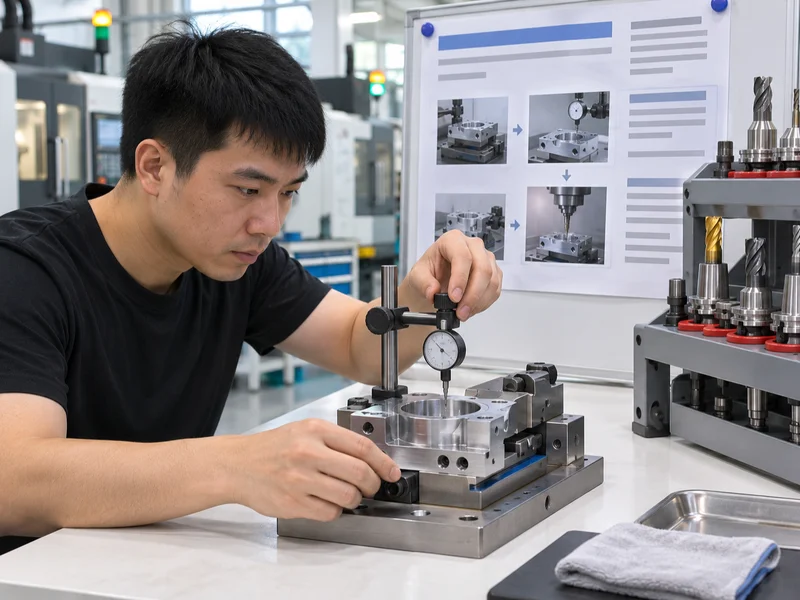
Key controls:
- Frozen CNC programs with revision control
- Dedicated or documented fixtures
- Tool lists and planned tool-change intervals
- Setup sheets with photos and offsets
- Work instructions for deburring and handling
- First-piece approval after every setup
For example, a setup sheet with fixture photos lets a second shift set up the same job identically. Our guide to high volume CNC machined parts explains volume process planning.
Key Takeaway: Ask to see a setup sheet. It shows quickly whether a process is controlled.
How Should Measurement Support Precision CNC Machining Services Industrial Production Reliability?
Measurement supports precision CNC machining services industrial production reliability by detecting drift before parts go out of tolerance.
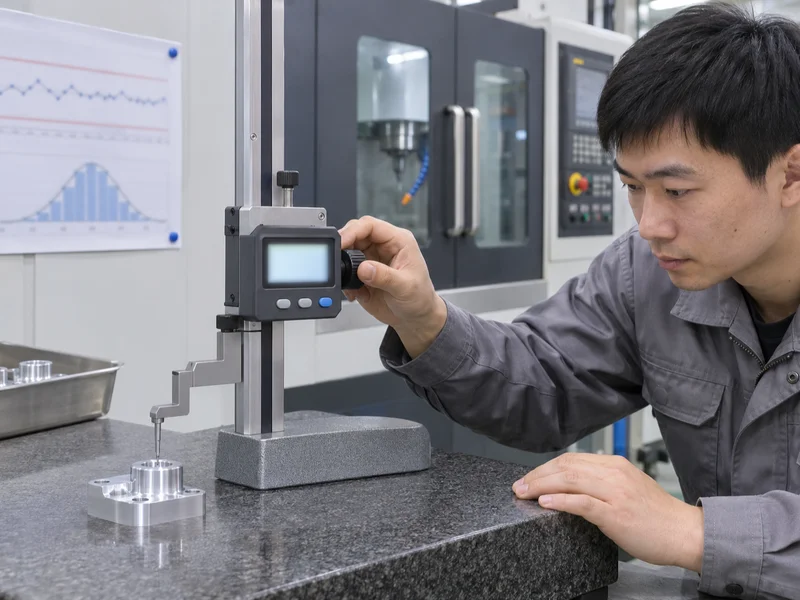
Measurement practice:
- Suitable gauges for each critical feature
- Gauge calibration records
- In-process checks at defined frequencies
- SPC charts on critical features
- CMM reports for complex geometry
- Retained first articles for comparison
For example, plotting a critical bore every 25 parts shows tool wear trends, so the offset is adjusted before rejects occur. Our quality control and inspection process supplies dimensional reports on request.
Key Takeaway: Trend data on critical features is the strongest reliability evidence.
How Do Material and Change Control Prevent Surprises?
Material and change control prevent surprises by ensuring nothing about the part changes without review.
Controls:
- Material certificates linked to each lot
- Approved material sources
- Change notification for material, process, machine or subcontractor changes
- Re-approval (first article) after significant changes
- Lot traceability from stock to shipment
For example, moving a part to another machine may change surface finish slightly. With change control, the customer reviews samples first. Our guide to the first article inspection report explains re-approval.
Key Takeaway: Agree in writing which changes need notification.
How Do Capacity and Planning Affect Delivery Reliability?
Capacity and planning affect delivery reliability because machining time, finishing and inspection must all fit the schedule.
Planning factors:
- Realistic cycle times from validated processes
- Machine capacity and backup machines
- Outsourced finishing lead times, such as anodizing or plating
- Material lead times
- Forecasts and safety stock agreements
For example, a part needing hard anodizing has a longer total lead time than its machining time suggests. Building finishing time into the plan avoids late lots. Our guide to anodized vs non anodized aluminum explains finishing choices.
Key Takeaway: Share forecasts. Reliable delivery depends on planning, not only machining.
What Evidence Proves Precision CNC Machining Services Industrial Production Reliability?
The evidence to request before repeat orders shows the supplier’s process is controlled and capable.
Evidence list:
- First article inspection report
- Process flow or routing
- Control plan or inspection plan
- Capability data (for example Cpk) on critical features when required
- Material certificates
- Corrective action examples, such as an 8D report format
- Delivery performance records
For example, a Cpk study on a critical diameter shows whether the process is centered and stable. Our guide to the control plan explains its content. Statistical methods are described in standards from ISO.
Key Takeaway: Ask for evidence that matches your risk. Critical parts need capability data.
How Should Problems Be Handled in Repeat Production?
Problems in repeat production should be handled with containment, root cause analysis and verified corrective action.
Steps:
- Contain suspect parts at both sites.
- Find the root cause with data.
- Correct the process, not only the parts.
- Verify the fix on following lots.
- Report using an 8D or similar format when required.
For example, a burr found at a customer leads to a deburring step change, a revised work instruction and checks on the next three lots. Our guide to the 8D report explains the format.
Key Takeaway: Judge a supplier by how it handles problems, not only by whether problems occur.
FAQ
- Q: How do you qualify a CNC supplier for repeat production?
- Review process controls, measurement, material traceability, change control and delivery performance.
- Q: What makes CNC production reliable?
- Frozen processes, planned tool changes, suitable measurement and statistical monitoring.
- Q: What documents show CNC process control?
- Setup sheets, control plans, first article reports and capability data.
- Q: Why is change control important?
- It prevents material or process changes from affecting parts without review.
- Q: How should CNC quality problems be handled?
- With containment, root cause analysis, corrective action and verification.
Conclusion
Precision CNC machining services industrial production reliability rests on controlled processes, measurement data, change control and realistic planning. Ask for evidence before repeat orders, and judge suppliers by how they handle problems. To discuss a repeat-production part, send your 3D model and 2D drawing to our engineers.