
Polyethylene Terephthalate vs Polypropylene: How to Pick the Best
Polyethylene terephthalate vs polypropylene is a choice between stiffness and dimensional stability on one side, and low cost, easy molding and chemical resistance on the other. PET, especially glass-filled PET, is stiff, strong and stable at high temperatures. PP is light, tough, cheap and easy to mold, but it is softer and shrinks more.
Most buyers know PET from bottles and PP from caps and containers. However, molded engineering parts are a different story. For example, a glass-filled PET connector housing can hold its shape near soldering and motor heat, while a PP housing of the same design would creep and warp. On the other hand, a PP clip or hinged cover costs less and molds without drying. In this guide, we compare polyethylene terephthalate vs polypropylene for injection molded engineering parts, including how each one molds. For a related comparison, see our guide to polypropylene vs polyethylene.
Polyethylene terephthalate (PET) has a density of about 1.38 g/cm³ and a melting point of about 250–260 °C. Glass-filled PET grades offer high stiffness, low creep and high heat resistance for engineering parts, but they need thorough drying and hot molds. Polypropylene (PP) has a density of about 0.90 g/cm³, a melting point of about 160–165 °C, excellent chemical resistance and living-hinge ability, and it molds easily without drying. Choose PET for stiffness, heat and precision; choose PP for low cost, toughness and chemical contact.
In short: PET for stiff, hot, precise parts; PP for low-cost, tough, chemically exposed parts.
Key points:
- Stiffness and heat: glass-filled PET is far stiffer and handles much higher heat.
- Cost and weight: PP is about 35% less dense and usually cheaper per part.
- Molding: PET needs drying and hot molds; PP does not.
What Is the Difference Between Polyethylene Terephthalate vs Polypropylene?
The difference between polyethylene terephthalate vs polypropylene starts with their chemistry. PET is a polyester, with stiff aromatic rings in its chain. PP is a polyolefin, with a simple carbon chain. As a result, PET is stiffer and more heat resistant, while PP is lighter and more flexible.
| Property (typical) | PET (unfilled) | PET-GF30 | PP homopolymer | PP-GF30 |
|---|---|---|---|---|
| Density | about 1.38 g/cm³ | about 1.55–1.60 g/cm³ | about 0.90 g/cm³ | about 1.12–1.14 g/cm³ |
| Melting point | about 250–260 °C | about 250–260 °C | about 160–165 °C | about 160–165 °C |
| Stiffness | Medium-high | Very high | Medium | High |
| Creep resistance | Good | Very good | Fair | Good |
| Chemical resistance | Good to many solvents, weak in hot alkali | Same | Excellent | Excellent |
| Drying before molding | Required | Required | Not normally | Not normally |
| Recycling code | 1 | — | 5 | — |
Properties like these are measured with standard test methods, such as those published by ISO, so always compare datasheets that use the same test standard.
Key Takeaway: Compare the grade, not the family. Unfilled and glass-filled versions of both materials behave very differently.
Polyethylene Terephthalate vs Polypropylene: Which Is Stiffer and Stronger?
In polyethylene terephthalate vs polypropylene comparisons, PET is stiffer and stronger than PP, both unfilled and glass-filled. Glass-filled PET is one of the stiffest common engineering plastics, which is why it is used for structural housings and brackets.
- PET-GF30: very high stiffness and strength, low creep under long-term load
- PP-GF30: good stiffness for a polyolefin, but more creep at temperature
- Unfilled PP: tough and flexible, with low stiffness
- Unfilled PET: rarely molded for engineering parts, because it crystallizes slowly
For example, a snap-fit cover that is opened often suits PP, because it flexes without cracking. A bracket that carries a constant load near a warm motor suits PET-GF, because PP would slowly creep and loosen.
Key Takeaway: For constant loads and tight fits over years, PET-GF holds its shape far better than PP.
How Do Heat Resistance and Dimensional Stability Compare?
Heat resistance and dimensional stability are where polyethylene terephthalate vs polypropylene differ most, and both favor PET. Glass-filled PET keeps its stiffness close to its melting point, while PP softens at much lower temperatures.
- Heat deflection: PET-GF grades reach much higher heat deflection temperatures than PP-GF grades.
- Shrinkage: PET-GF shrinks less than PP, though glass fibers make shrinkage directional.
- Moisture: both absorb little water, so dimensions stay stable in humid air.
- Thermal expansion: glass-filled grades of both expand less than unfilled grades.
As a result, PET-GF is used for electrical housings, sensor bodies, connector parts and appliance parts near heat. PP is better suited to parts that stay near room temperature. Our guide to plastics for hot temperatures compares more options.
Key Takeaway: If the part sees continuous heat or must hold tight tolerances, start with PET-GF and test PP only if cost demands it.
How Do Chemical Resistance and Hydrolysis Compare?
In polyethylene terephthalate vs polypropylene chemical comparisons, PP wins in most cases. PP resists acids, bases, salts and many solvents very well. PET resists many oils, fuels and solvents, but it can be attacked by hot water, steam and alkaline solutions.
The key difference is hydrolysis. PET is a polyester, so water at high temperature slowly breaks its chains. As a result, PET parts in hot, wet service can lose strength over time. PP does not hydrolyze.
- Detergents and alkaline cleaners: PP is usually safer.
- Hot water and steam: PP, or a hydrolysis-resistant PET grade.
- Oils and fuels: PET often performs well; PP can swell in some hydrocarbons.
- Food contact: both are used, with grade-specific compliance.
For food-contact parts, check the grade’s documents against the rules of the target market, such as the U.S. FDA requirements for food-contact materials.
Key Takeaway: List every chemical, temperature and exposure time. Hot, wet or alkaline service often rules out standard PET.
How Do Polyethylene Terephthalate vs Polypropylene Mold Differently?
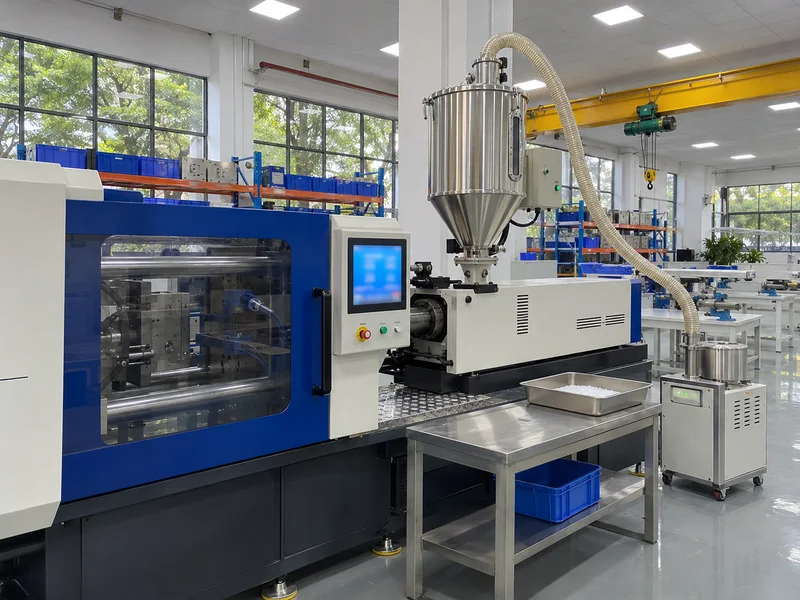
Polyethylene terephthalate vs polypropylene mold very differently. PP is one of the easiest resins to mold. PET needs careful drying, high melt temperatures and hot molds to crystallize properly.
| Molding factor (typical) | PET-GF | PP |
|---|---|---|
| Drying | Required, to very low moisture | Not normally required |
| Mold temperature | Hot, often well above 100 °C for crystallinity | Moderate |
| Shrinkage | Low, directional | Higher, about 1.0–2.5% unfilled |
| Flash tendency | Moderate | Higher, low viscosity |
| Cycle time | Moderate | Short to moderate |
If PET is not dried enough, moisture breaks the polymer chains during melting. The parts may look fine but become brittle. Our guide to plastic resin drying explains how to control this. PP, by contrast, is covered in our article on polypropylene injection molding.
In addition, PET-GF parts often show different shrinkage along and across the flow, because the glass fibers align with the flow. As a result, flat PET-GF parts can warp if the gate position and wall thickness are not planned together. PP parts, by contrast, warp mainly because of their high overall shrinkage, so ribs and uniform walls are the main tools.
Key Takeaway: A PET part needs a supplier that controls drying and mold temperature. Ask how they verify both.
Which Costs Less: Polyethylene Terephthalate or Polypropylene?
Polypropylene usually costs less than polyethylene terephthalate per part. PP resin is cheaper per kilogram, and its low density means more parts per kilogram.
For example, the same part volume weighs about 35% less in unfilled PP than in unfilled PET. In addition, PP needs no drying, runs with a cooler mold and often has shorter cycles. However, a PP-GF part may need thicker walls or more ribs to match PET-GF stiffness, which reduces the saving.
Cost drivers to compare:
- Resin price per kilogram and part weight
- Wall thickness needed for stiffness
- Cycle time and mold temperature
- Drying equipment and energy
- Scrap from brittle or warped parts
Key Takeaway: In polyethylene terephthalate vs polypropylene cost comparisons, compare cost per good part, not resin price. A cheaper resin that needs a heavier design may not save money.
Which Parts Suit Polyethylene Terephthalate vs Polypropylene?
The parts that suit polyethylene terephthalate vs polypropylene depend on load, heat and environment.
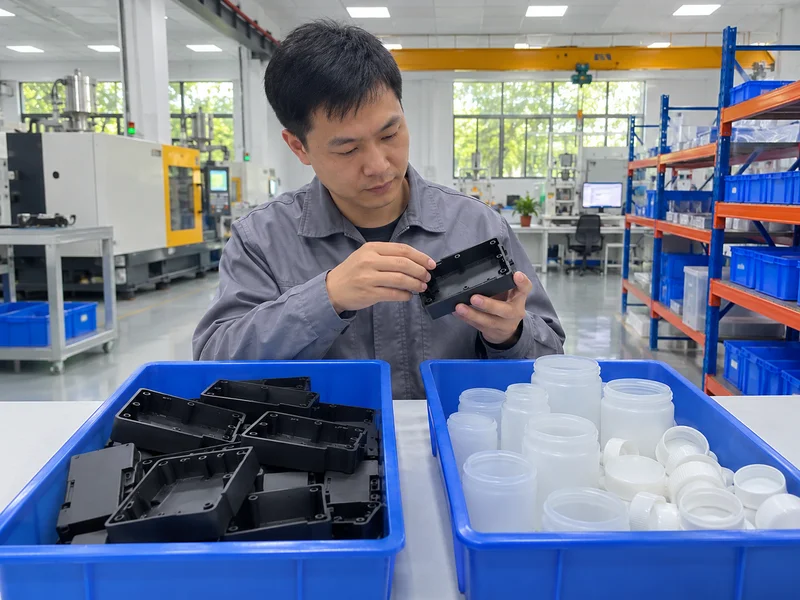
Typical PET-GF parts:
- Electrical housings and connector bodies
- Sensor and motor housings near heat
- Appliance brackets and handles
- Structural parts with tight tolerances
Typical PP parts:
- Caps, closures and hinged lids
- Containers, trays and storage parts
- Chemical and fluid-handling parts
- Low-cost covers, clips and interior trim
Both can be made in flame-retardant grades for electrical parts. Check the grade’s flammability rating, such as UL 94, for the thickness you will use.
Key Takeaway: Match the material to the worst condition the part will see, not the average one.
PET vs PP: Which Should You Choose?
You choose between PET vs PP by ranking stiffness, heat, chemicals and cost for your part.
- Constant load, heat or tight tolerances? PET-GF.
- Hot water, steam or alkaline cleaners? PP, or hydrolysis-resistant PET.
- Living hinge or snap-fit? PP.
- Lowest cost and weight? PP.
- Electrical housing near heat? PET-GF, usually flame-retardant.
We mold PP, PBT, PA, PC and other commodity and engineering resins, including glass-filled and flame-retardant grades. For a wider view, see our injection molding material selection guide and our comparison of ABS vs polypropylene.
Key Takeaway: If the part must stay stiff and accurate when hot, choose PET-GF. If it must be cheap, tough and chemical resistant, choose PP.
FAQ
- Q: Is PET stronger than PP?
- Yes. PET, and especially glass-filled PET, is stiffer and stronger than PP, with better creep resistance.
- Q: Which handles more heat, PET or PP?
- PET. It melts at about 250–260 °C, compared with about 160–165 °C for PP.
- Q: Does PET need drying before molding?
- Yes. PET must be dried to very low moisture, or it degrades during molding. PP normally does not need drying.
- Q: Which is cheaper, PET or PP?
- PP is usually cheaper per part, because the resin costs less and its density is about 35% lower.
- Q: Which resists chemicals better?
- PP resists most acids, bases and solvents better. PET can hydrolyze in hot water and alkaline solutions.
Conclusion
Polyethylene terephthalate vs polypropylene comes down to stiffness and heat against cost and chemical resistance. Choose PET-GF for stiff, hot, precise parts and PP for low-cost, tough parts. To confirm the right grade for your part, send your 3D model and 2D drawing to our engineers.
Planning a part like this? See our plastic injection molding service, or send your drawing for a free DFM review.