
Rapid CNC Machining: How to Get the Best Parts Fast
Rapid CNC machining means producing machined parts in days rather than weeks, by cutting the time spent on quoting, programming, fixturing, material sourcing and inspection. Speed rarely comes from faster spindles. Instead, it comes from complete data, simple geometry, stock material that is on the shelf and a supplier that can schedule the job at once.
Buyers usually need rapid CNC machining at the worst moments. For example, a prototype is due for a trade show, a production line is waiting for a replacement part, or a mold is late and bridge parts are needed. In those cases, a missing drawing note or an exotic alloy can cost more days than the machining itself. In this guide, we explain how to plan an expedited CNC machining order, what drives fixture cost, how high-mix low-volume work is scheduled, and how a fast prototype order can move into production. For the full range of processes, see our CNC machining services.
Rapid CNC machining is the fast production of machined prototypes and small batches, typically by quoting quickly, programming from a complete 3D model, using simple fixtures, choosing stock materials and limiting tight tolerances to functional features. Lead time depends more on data quality, material availability, number of setups, finishing and inspection than on machine speed. Expedited orders work best for simple to moderate parts in common alloys and plastics.
In short: send complete data, choose stock materials and keep tight tolerances where they matter, and rapid CNC machining becomes realistic.
Key points:
- Data first: a 3D model plus a 2D drawing removes days of questions.
- Material: stock alloys and plastics ship fast; special grades do not.
- Setups and finishing: each extra setup or coating adds time.
What Is Rapid CNC Machining?
Rapid CNC machining is a way of running a machining order so that every step, not only the cutting, happens quickly. The machining time of a small part is often only a few hours. However, the whole order can still take weeks if quoting, material and finishing are slow.
A typical order includes these steps:
- Quote and order confirmation
- Material purchase or stock check
- CAM programming and fixture planning
- Machining in one or more setups
- Deburring and finishing, such as anodizing
- Inspection and packing
- Shipping
Therefore, a rapid order shortens the waiting time between steps. Our guides to 3 axis CNC machining and 4 axis CNC explain how machine type affects setups.
Key Takeaway: Look at the whole order, not the cutting time. Most delays happen before and after the machine runs.
How Do You Plan a Rapid CNC Machining Order?
You plan a rapid CNC machining order by removing every question the supplier would otherwise need to ask. Each question can cost a day across time zones.
A complete expedited order includes:
- 3D model in STEP format
- 2D drawing with tolerances, threads, datums and surface finish
- Material grade, plus acceptable alternatives
- Finish, such as anodizing color or passivation
- Quantity and the required delivery date
- Inspection needs, such as a dimensional report on key features
- Shipping method, such as express courier
For example, writing “6061-T6 or 6082-T6 acceptable” lets the supplier use whichever alloy is in stock. Similarly, marking which dimensions are critical lets the supplier inspect quickly without guessing.
Key Takeaway: Give alternatives for material and finish. Flexibility is often the fastest way to gain days.
What Slows Down Rapid CNC Machining?
Rapid CNC machining slows down when the part or the order needs anything unusual. The most common delays are predictable.
| Delay source | Why it adds time | How to avoid it |
|---|---|---|
| Missing drawing or notes | Questions before quoting | Send 3D and 2D together |
| Special alloy or plastic | Material must be ordered | Accept a stock alternative |
| Many setups | More fixtures and programming | Simplify or combine features |
| Very tight tolerances | Slower finishing and more inspection | Limit them to functional features |
| External finishing | Coating queues | Use as-machined or common finishes |
| Heat treatment | Extra process and distortion checks | Buy pre-hardened stock if possible |
As a result, the fastest parts are usually simple, made from common stock and finished with a standard process.
Key Takeaway: Check the order against this table before sending it. Removing one delay source can save several days.
How Much Does Fixture Cost Add to a CNC Machining Order?
Fixture cost adds a fixed amount to a CNC machining order, regardless of quantity. For a small batch, it can be a large part of the price. For a large batch, it spreads across many parts.
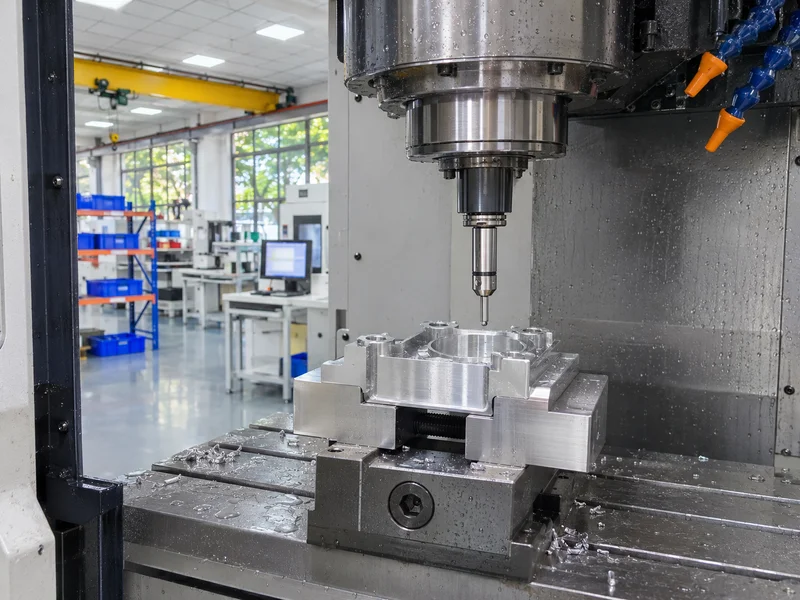
Common holding methods, from cheapest to most expensive:
- Standard vise: fast, cheap, suits square parts
- Soft jaws: machined to the part shape, low cost
- Modular fixture plates: reusable, quick to adapt
- Dedicated fixture: designed for one part, highest cost
- Rotary fixture: for multi-sided parts on four or five axes
For example, a bracket that fits a standard vise needs no fixture cost at all. A thin, curved part may need a dedicated fixture, which can cost more than the first few parts. Therefore, designing flat clamping surfaces or extra stock for holding can reduce the price of rapid orders.
Key Takeaway: Ask how the part will be held. A small design change can remove a dedicated fixture.
How Does High-Mix Low-Volume CNC Machining Work?
High-mix low-volume CNC machining means producing many different part numbers in small quantities. Most prototype and spare-part work falls into this category.
To run high-mix work efficiently, a shop uses:
- Standard tooling that fits most jobs without changes
- Quick-change fixtures and vises
- Reusable CAM templates for similar part families
- Batching by material to reduce stock changes
- Clear job documents, so each order starts without delay
For buyers, high-mix work means the order competes with many other small jobs. In practice, complete data and a clear priority help the supplier schedule it. Grouping several related parts into one order also helps, because they can share setups and inspection.
Key Takeaway: Combine related part numbers into one order. It reduces scheduling time and often the total price.
How Do You Move From CNC Prototype to Production?
You move from CNC prototype to production by fixing the design, the process and the inspection plan once the prototype is approved. The goal is to make the same part repeatably at a lower cost per piece.
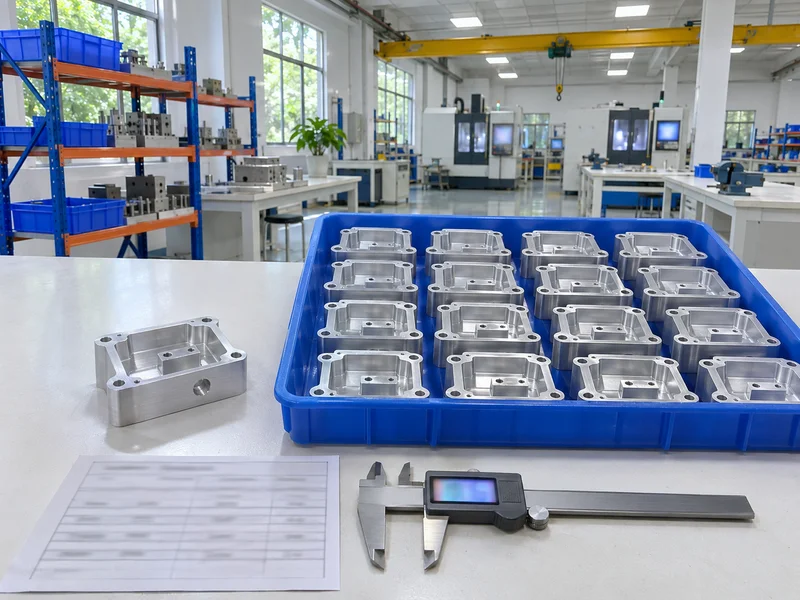
A practical sequence:
- Approve the prototype with any drawing changes recorded.
- Freeze the revision so production uses the approved design.
- Optimize the process: combine setups, use dedicated fixtures and better tooling.
- Define inspection: first article inspection and sampling for production.
- Plan material: confirm supply for the expected volume.
For example, a prototype made in three vise setups may move to a single setup on a fixture plate for production. That change lowers cost and improves consistency. For first-part approval, see our guide to the first article inspection report.
Key Takeaway: Treat the prototype as a process test, not only a part. Record what made it slow or costly before ordering volume.
How Do Blanket Orders and Raw Material Inventory Speed Up Repeat Parts?
Blanket orders and raw material inventory speed up repeat parts by removing material lead time and order processing from each release. They suit parts that are ordered regularly in known quantities.
A blanket order usually works like this:
- The buyer commits to an annual or long-term quantity.
- The supplier reserves or stocks raw material for that quantity.
- Parts are released in smaller batches when the buyer needs them.
- Price is fixed for the agreed period.
As a result, each release starts at the machining step, not at material purchase. This is especially useful for special alloys, which can take weeks to buy. However, the buyer usually carries some liability for stocked material if the part is cancelled.
Key Takeaway: For repeat parts in special materials, a blanket order can turn a slow part into a fast one.
How Should You Choose a Rapid CNC Machining Supplier?
You choose a rapid CNC machining supplier by checking how they handle the whole order, not only their machine list.
- Quote speed: how fast do they reply with a complete quote?
- Engineering questions: do they flag problems before cutting?
- Material access: can they source common alloys and plastics quickly?
- Finishing network: can they anodize, plate or passivate without long queues?
- Inspection: can they provide CMM or dimensional reports when needed?
- Communication: do they send progress updates?
Our machining covers milling, turning, EDM and grinding, with materials such as aluminum, stainless steel, titanium, PEEK, POM and nylon, from prototype to mass production. Machine capability is not the same as finished-part tolerance, which is controlled per drawing. General tolerance classes such as ISO 2768 are a good default for non-critical features.
Key Takeaway: Test a supplier with a small rapid order first. It shows how they handle data, questions and delivery.
FAQ
- Q: What is rapid CNC machining?
- It is the fast production of machined prototypes and small batches by shortening quoting, material, programming, setup, finishing and inspection time.
- Q: How can I get CNC parts faster?
- Send a 3D model and 2D drawing together, accept stock material alternatives, limit tight tolerances and avoid special finishes.
- Q: Why is fixture cost so high on small orders?
- Fixture cost is fixed, so a small batch carries all of it. Parts that fit a standard vise avoid most of this cost.
- Q: What is high-mix low-volume machining?
- It is producing many different part numbers in small quantities, typical for prototypes and spare parts.
- Q: How do blanket orders help lead time?
- The supplier stocks raw material in advance, so each release starts at machining instead of material purchase.
Conclusion
Rapid CNC machining depends on complete data, stock materials, simple holding and limited tight tolerances. Plan the order to remove questions and delays, then optimize the process when the part moves to production. To get a fast machining quote, upload your 3D model and 2D drawing for our engineers to review.