
Nylon 6 vs Nylon 66: How to Pick the Best One Without Waste
Nylon 6 vs nylon 66 is a choice between two very similar polyamides with a few important differences. Nylon 66 (PA66) has a higher melting point, slightly higher stiffness and better heat resistance. Nylon 6 (PA6) is a little tougher, has a better surface finish, processes more easily and usually costs less. Both absorb moisture, which changes their dimensions and properties.
For many molded parts, either grade works. However, the wrong one can fail at the edges of its range. For example, a glass-filled PA6 bracket near an engine may soften at peak temperature, while the same part in PA66 keeps its shape. On the other hand, a cosmetic housing may look better in PA6. In this guide, we compare nylon 6 vs nylon 66 for molded parts by heat, strength, moisture, molding, appearance and cost. For a general overview, see our guide to nylon injection molding.
Nylon 6 vs nylon 66: PA66 melts at about 260 °C and PA6 at about 220 °C, so PA66 keeps stiffness to higher temperatures, especially in glass-filled grades. PA66 is slightly stiffer and more wear resistant; PA6 is slightly tougher, gives a better surface, has a wider processing window and is usually cheaper. Both absorb moisture, typically up to about 2.5–3% at standard conditions, which lowers stiffness and increases size. Choose PA66 for heat and stiffness; choose PA6 for toughness, appearance and easier molding.
In short: PA66 for heat and stiffness; PA6 for toughness, surface and cost.
Key points:
- Heat: PA66 melts about 40 °C higher.
- Toughness and surface: PA6 is slightly better.
- Moisture: both absorb water and change properties.
What Is the Difference Between Nylon 6 vs Nylon 66?
The difference between nylon 6 vs nylon 66 comes from their chemistry. Nylon 6 is made from one monomer, caprolactam. Nylon 66 is made from two monomers, each with 6 carbon atoms. This gives PA66 a more regular structure, higher crystallinity and a higher melting point.
| Property (typical, dry as molded, unfilled) | PA6 | PA66 |
|---|---|---|
| Melting point | about 220 °C | about 260 °C |
| Density | about 1.13 g/cm³ | about 1.14 g/cm³ |
| Tensile strength | about 75–85 MPa | about 80–90 MPa |
| Flexural modulus | Slightly lower | Slightly higher |
| Impact strength | Slightly higher | Slightly lower |
| Moisture absorption (50% RH) | about 2.5–3% | about 2.5% |
| Mold shrinkage | about 1.0–1.5% | about 1.2–1.8% |
Properties are measured with standard methods, such as those from ISO, so compare datasheets on the same basis and in the same moisture condition.
Key Takeaway: Compare “dry as molded” with “dry as molded”, and “conditioned” with “conditioned”. Mixing them misleads.
Which Handles Heat Better: Nylon 6 or Nylon 66?
Nylon 66 handles heat better than nylon 6. Its higher melting point gives it a higher heat deflection temperature, especially in glass-filled grades.
In practice:
- Short-term heat: PA66-GF30 keeps stiffness closer to its melting point than PA6-GF30.
- Long-term heat aging: heat-stabilized grades of both are available; PA66 grades usually reach higher limits.
- Under-hood and electrical parts: PA66 is more common.
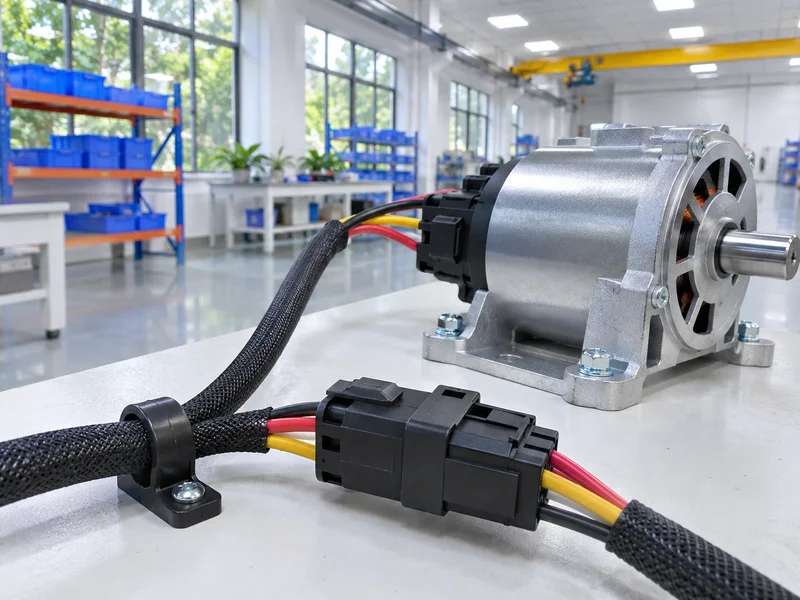
For example, a glass-filled connector housing near a motor often uses PA66-GF30. However, at room temperature the difference is small, so PA6 often meets the requirement. Our guide to plastics for hot temperatures compares higher-temperature options.
Key Takeaway: If the part sees more than about 150 °C peaks, start with PA66 or a higher-temperature polymer.
How Do Strength and Toughness Compare?
In nylon 6 vs nylon 66, strength is similar, with PA66 slightly stiffer and PA6 slightly tougher.
Practical points:
- Stiffness: PA66 is slightly stiffer, especially when dry.
- Impact strength: PA6 is slightly tougher, especially at low temperatures.
- Glass fiber grades: both gain large increases in strength and stiffness.
- Moisture: both become tougher and less stiff as they absorb water.
For example, a snap-fit clip may perform better in PA6 because it can flex more before breaking. A structural bracket that must stay stiff may suit PA66. Our comparison of Delrin vs nylon shows how nylon compares with acetal.
Key Takeaway: Test snap-fits and impact parts in the conditioned state. That is how they will be used.
How Does Moisture Affect Nylon 6 vs Nylon 66?
Moisture affects nylon 6 vs nylon 66 in a similar way. Both absorb water from the air after molding, which changes their properties and dimensions.
Effects of moisture:
- Lower stiffness and strength
- Higher toughness and elongation
- Dimensional growth, often a few tenths of a percent
- Lower electrical resistance
PA6 absorbs slightly more and slightly faster than PA66. For example, a PA6 gear may grow enough in humid conditions to tighten its mesh, while a PA66 gear grows a little less. Therefore, tight-tolerance parts need the moisture condition defined for measurement. Our guide to plastic resin drying covers drying before molding, which is separate from moisture uptake after molding.
Key Takeaway: State on the drawing whether dimensions apply dry as molded or after conditioning.
How Do Nylon 6 vs Nylon 66 Mold Differently?
Nylon 6 vs nylon 66 both mold well, but PA6 has a wider processing window and PA66 needs higher temperatures and tighter control.
| Molding factor (typical) | PA6 | PA66 |
|---|---|---|
| Melt temperature | about 240–280 °C | about 270–300 °C |
| Processing window | Wider | Narrower |
| Drying | Required | Required |
| Crystallization | Slower | Faster |
| Surface finish | Better, especially glass-filled | Fiber show more likely |
| Flash tendency | High (low viscosity) | High (low viscosity) |
Both have low melt viscosity, so the mold must have tight shutoffs to avoid flash. In addition, both must be dried before molding, because wet nylon degrades and gives brittle parts. Our guide to injection mold venting explains how to vent without flashing.
Key Takeaway: Tell the toolmaker which nylon will run. Shutoff and venting depend on it.
Which Gives a Better Surface Finish?
Nylon 6 usually gives a better surface finish than nylon 66, especially in glass-filled grades. Its slower crystallization lets the melt flow against the mold surface longer, so fewer fibers show.
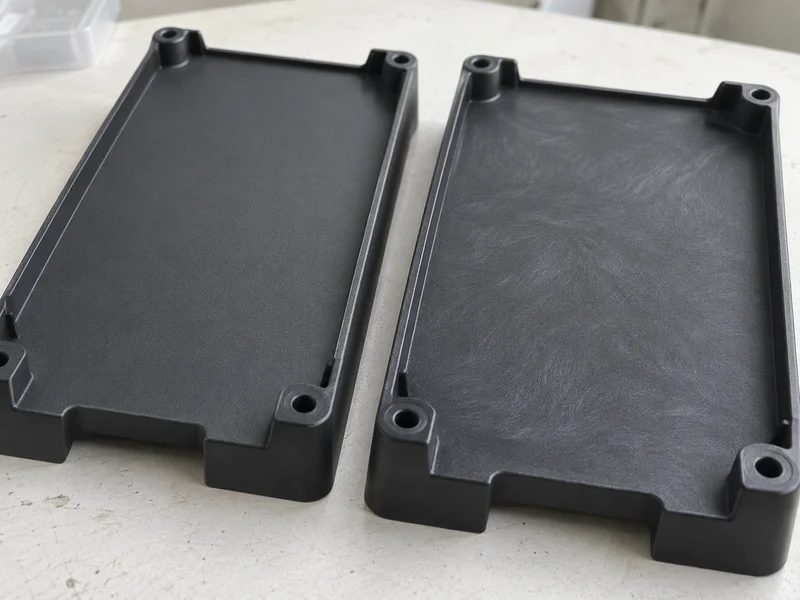
Ways to improve surface in both:
- Higher mold temperature
- Surface-optimized grades
- Textured mold surfaces to hide fiber marks
- Correct injection speed to avoid flow lines
For example, a visible PA6-GF30 power tool housing can show a smoother surface than a PA66-GF30 version under the same settings. Our guide to injection molding surface finishes explains texture choices.
Key Takeaway: For visible glass-filled parts, consider PA6 or a texture. Fiber show is hard to remove later.
Nylon 6 vs Nylon 66: Which Should You Choose?
You choose between nylon 6 vs nylon 66 by deciding whether heat and stiffness, or toughness, appearance and cost, are more important.
- High temperature or under-hood? PA66.
- Highest stiffness? PA66, often glass-filled.
- Impact and snap-fits? PA6.
- Visible surfaces? PA6.
- Lowest cost? Usually PA6.
- Electrical housings? Often PA66, sometimes flame-retardant grades.
We mold PA, PA+GF and flame-retardant grades in our plastic injection molding service. For other choices, see our injection molding material selection guide.
Key Takeaway: Choose PA66 for heat and stiffness, and PA6 for toughness, surface and cost.
FAQ
- Q: What is the difference between nylon 6 and nylon 66?
- PA66 has a higher melting point and slightly higher stiffness; PA6 is slightly tougher, gives a better surface and processes more easily.
- Q: Which nylon is stronger?
- They are similar. PA66 is slightly stiffer and stronger when dry; PA6 is slightly tougher.
- Q: Which nylon handles heat better?
- PA66, which melts at about 260 °C compared with about 220 °C for PA6.
- Q: Do both nylons absorb moisture?
- Yes. Both absorb about 2.5–3% at standard conditions, which lowers stiffness and changes size.
- Q: Is nylon 6 cheaper than nylon 66?
- Usually yes, although prices change with the market and grade.
Conclusion
Nylon 6 vs nylon 66 comes down to heat and stiffness against toughness, surface and cost. Choose PA66 for hot or stiff parts and PA6 for tough or visible parts, and always define the moisture condition. To review your part and grade, send your 3D model and 2D drawing to our engineers.