
Titanium Strength vs Aluminum: Weight, Stiffness, Fatigue
Titanium strength vs aluminum is a comparison of strength, weight, stiffness and cost. Ti-6Al-4V is roughly 1.7–3 times stronger than common aluminum alloys, but it is also about 60% heavier. By strength per weight, titanium still leads most aluminum alloys, though high-strength 7075-T6 comes closer than many people expect. Aluminum, meanwhile, is far cheaper and faster to machine.
That makes the choice for a strength-critical machined part a real engineering decision. For example, a thin lever that would yield in 6061 may work in 7075 at a fraction of the cost of titanium. In contrast, a part that must stay strong at 250 °C, or resist seawater, may need titanium. In this guide, we compare titanium strength vs aluminum for machined parts, covering strength, strength-to-weight, stiffness, fatigue, temperature, corrosion and cost. For a weight-focused view, see our guide to titanium weight vs aluminum weight.
Titanium strength vs aluminum: Ti-6Al-4V has a typical yield strength of about 880 MPa at 4.43 g/cm³. 6061-T6 has about 276 MPa and 7075-T6 about 503 MPa, both at about 2.7–2.8 g/cm³. Titanium is therefore about 3.2 times stronger than 6061-T6 and 1.75 times stronger than 7075-T6, and still stronger by weight. Titanium also keeps strength at higher temperatures and resists corrosion better. Aluminum is cheaper, machines much faster and is lighter for stiffness-limited parts.
In short: titanium for the highest strength per weight, heat and corrosion; aluminum for cost, machining speed and light, stiff parts.
Key points:
- Absolute strength: titanium is much stronger.
- Strength-to-weight: titanium leads, but 7075-T6 is close.
- Cost: aluminum is far cheaper to buy and machine.
How Does Titanium Strength vs Aluminum Compare?
Titanium strength vs aluminum depends on the alloy, but Ti-6Al-4V is much stronger than the common machining aluminum alloys.
| Material (typical) | Yield strength | Tensile strength | Density | Elastic modulus |
|---|---|---|---|---|
| 6061-T6 | about 276 MPa | about 310 MPa | 2.70 g/cm³ | about 69 GPa |
| 7075-T6 | about 503 MPa | about 572 MPa | 2.81 g/cm³ | about 72 GPa |
| CP titanium Grade 2 | about 275 MPa | about 345 MPa | 4.51 g/cm³ | about 105 GPa |
| Ti-6Al-4V (Grade 5) | about 880 MPa | about 950 MPa | 4.43 g/cm³ | about 114 GPa |
Notice that commercially pure titanium is not much stronger than 6061-T6, while being much heavier. Therefore, “titanium” should almost always mean an alloy such as Ti-6Al-4V when strength is the goal. Material specifications, such as those from ASTM International, give the guaranteed minimum values.
Key Takeaway: Specify the titanium grade. CP titanium is chosen for corrosion, not for strength.
What Is Titanium Strength vs Aluminum by Weight?
Yes. In titanium strength vs aluminum by weight, Ti-6Al-4V leads, but the gap against 7075-T6 is smaller than the absolute difference.
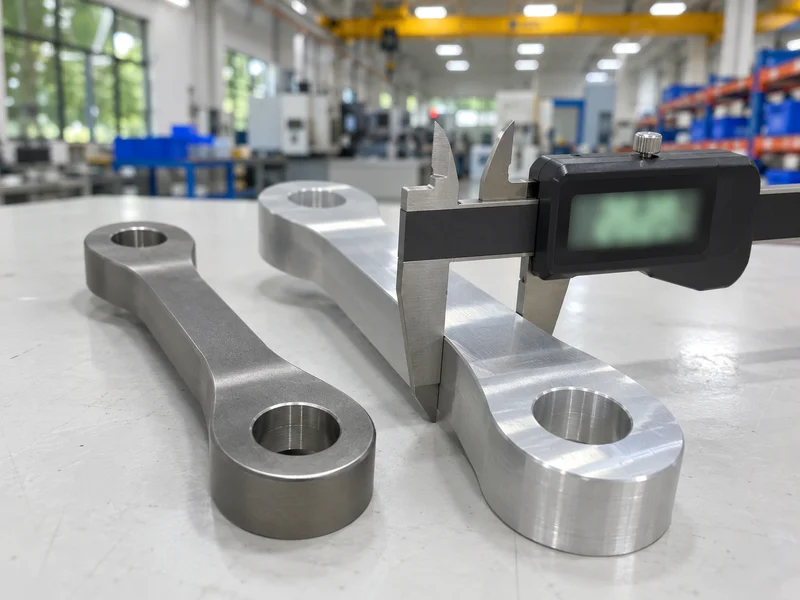
Yield strength divided by density:
- Ti-6Al-4V: 880 ÷ 4.43 ≈ 199
- 7075-T6: 503 ÷ 2.81 ≈ 179
- 6061-T6: 276 ÷ 2.70 ≈ 102
As a result, a strength-limited part in Ti-6Al-4V can be about 10% lighter than in 7075-T6, and about 50% lighter than in 6061-T6. For example, a tension link sized for strength saves little weight moving from 7075 to titanium, but a great deal moving from 6061.
Key Takeaway: Compare titanium with 7075-T6 before choosing it for weight. The saving may not justify the cost.
How Does Stiffness Affect Titanium vs Aluminum?
Stiffness affects titanium vs aluminum because titanium’s modulus is about 114 GPa, compared with about 69–72 GPa for aluminum. Titanium is about 1.6 times stiffer, but also about 1.6 times denser.
That means:
- Same shape: titanium deflects less.
- Same weight: stiffness is roughly similar, because aluminum can use a larger section.
- Thin walls: aluminum’s thicker walls for the same weight resist buckling better.
For example, a long beam designed for stiffness at a fixed weight performs about the same in either material. Therefore, titanium rarely saves weight in stiffness-limited parts. Our comparison of 6061 T6 aluminum vs 7075 T6 explains the same stiffness rule within aluminum.
Key Takeaway: For stiffness-limited parts, aluminum is usually lighter and cheaper.
How Does Fatigue Change Titanium Strength vs Aluminum?
In titanium strength vs aluminum, fatigue favors titanium. Ti-6Al-4V has a high fatigue limit, while aluminum alloys have no true fatigue limit and keep losing strength with more cycles.
Practical points:
- High-cycle parts: titanium often gives longer life at the same stress.
- Aluminum: design to a stress for a set number of cycles.
- Notches and finish: both are sensitive, titanium especially so.
- Shot peening and polishing: improve fatigue life in both.
For example, a lever cycling millions of times may last much longer in titanium. However, poor radii can remove that advantage. Therefore, specify generous radii and surface finish on fatigue-critical features.
Key Takeaway: If cycles are high and weight matters, titanium is strong. Still, design the details carefully.
How Do Temperature and Corrosion Change the Choice?
Temperature and corrosion often decide titanium strength vs aluminum in titanium’s favor.
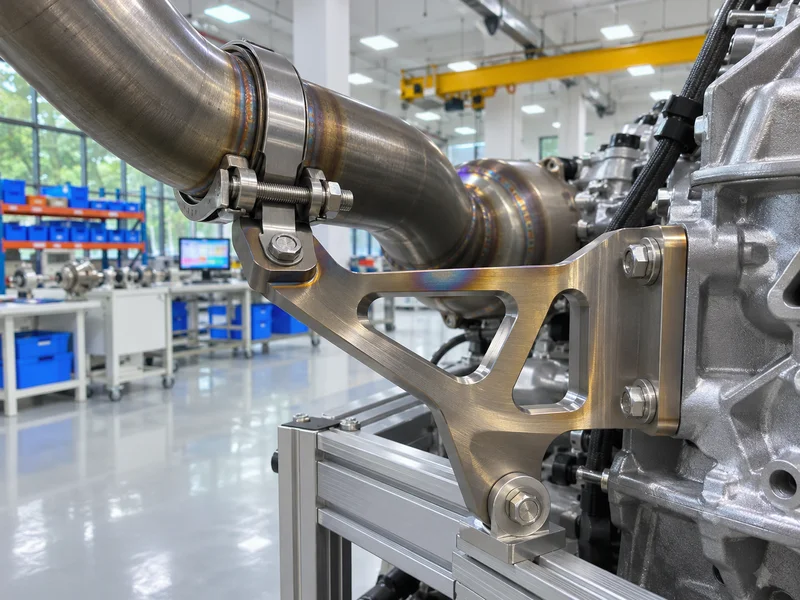
- Temperature: aluminum alloys lose strength quickly above about 150 °C. Ti-6Al-4V keeps useful strength to about 300–400 °C.
- Seawater and chlorides: titanium resists them very well; aluminum needs anodizing or coating.
- Galvanic corrosion: titanium in contact with aluminum in wet conditions can corrode the aluminum.
For example, a bracket near an exhaust or heater may lose much of its strength in 7075 but keep it in titanium. Likewise, a marine fitting may last years in titanium without coating. Our CNC machining services include anodizing and hard anodizing for aluminum parts in corrosive service.
Key Takeaway: Above about 150 °C, or in seawater, titanium is often the only light option.
How Does Machining Cost Compare?
Beyond titanium strength vs aluminum, machining cost strongly favors aluminum. Aluminum can be cut many times faster than titanium, with lower tool wear.
Cost drivers:
- Raw material price: titanium is many times more expensive per kilogram.
- Machining speed: aluminum allows high speeds and feeds.
- Tool life: titanium wears tools faster.
- Chips and scrap: expensive titanium scrap adds to cost.
For example, a pocketed bracket that takes a short time in aluminum may take several times longer in titanium, with higher tool costs. Our CNC milling service machines both, from prototype to production, with tolerances controlled per drawing.
Key Takeaway: Ask for quotes in both titanium and 7075-T6. The cost difference is often decisive.
Titanium or Aluminum for a Strength-Critical Machined Part?
You choose between titanium and aluminum for a strength-critical machined part by asking what limits the design.
- Strength per weight, with cost flexibility? Ti-6Al-4V.
- Strength per weight on a budget? 7075-T6.
- General parts, welded or anodized? 6061-T6.
- Temperature above about 150 °C? Titanium.
- Seawater or aggressive chemicals? Titanium.
- Stiffness-limited parts? Aluminum.
For example, a drone motor mount may use 7075-T6, while a high-temperature engine bracket may need titanium. Our guide to the strength of titanium vs steel compares titanium with steel as well.
Key Takeaway: Most strength-critical parts are well served by 7075-T6. Use titanium where heat, corrosion or fatigue demand it.
FAQ
- Q: Is titanium stronger than aluminum?
- Yes. Ti-6Al-4V is about 1.75 times stronger than 7075-T6 and about 3 times stronger than 6061-T6.
- Q: Is titanium stronger than aluminum by weight?
- Yes, but the gap against 7075-T6 is small, roughly 10%.
- Q: Is titanium stiffer than aluminum?
- Yes, about 1.6 times, but it is also about 1.6 times denser.
- Q: Why choose aluminum over titanium?
- For lower cost, faster machining and light, stiff parts.
- Q: When is titanium worth the cost?
- When strength per weight, temperature above about 150 °C, corrosion or fatigue life justify it.
Conclusion
Titanium strength vs aluminum favors titanium in absolute strength, heat, corrosion and fatigue, while aluminum wins on cost, machining speed and stiffness per weight. Compare real grades, especially Ti-6Al-4V and 7075-T6. To quote your part in both materials, send your 3D model and 2D drawing to our engineers.