
PEEK Injection Molding: Grades, Design and Process
PEEK injection molding produces high-performance plastic parts that work at high temperatures, resist aggressive chemicals and replace metal in demanding applications. PEEK (polyether ether ketone) is one of the most capable thermoplastics. However, it needs very high melt and mold temperatures, careful drying and a mold designed for it. As a result, a quote that ignores these needs can lead to weak, amorphous or warped parts.
The resin is expensive, so mistakes are costly. For example, a PEEK part molded in a cold mold may look fine but have low crystallinity, which lowers its chemical resistance and heat performance. Similarly, sharp corners can crack in glass-filled PEEK. In this guide, we explain PEEK injection molding for buyers and designers: grades, part design, mold and process needs, inspection and what to include in a supplier request. For a material comparison, see our guide to PEEK vs Torlon.
PEEK injection molding uses melt temperatures of about 360–400 °C and mold temperatures of about 170–200 °C to reach full crystallinity. PEEK must be dried, typically at about 150 °C for several hours. Grades include unfilled, glass-filled, carbon-filled and bearing grades. Parts need uniform walls, generous radii and good venting, and molds need hardened steel, high-temperature heating and insulation. A good supplier request includes the 3D model, 2D drawing, grade, operating conditions, critical dimensions and required documents.
In short: specify the grade and service conditions, design for uniform walls and radii, and confirm the supplier can heat the mold properly.
Key points:
- Temperatures: very high melt and mold temperatures.
- Crystallinity: a hot mold is essential for full properties.
- Inputs: grade, service conditions and critical features.
What Is PEEK Injection Molding?
PEEK injection molding is the injection molding of polyether ether ketone, a semi-crystalline high-performance thermoplastic. It offers:
- Continuous service up to about 250 °C
- Excellent chemical resistance, including most solvents, acids and bases
- Low moisture absorption and good dimensional stability
- High strength and stiffness, especially in filled grades
- Good wear and friction in bearing grades
- Inherent flame resistance and low smoke
PEEK parts are used in pump components, valve seats, bearings, electrical connectors, semiconductor equipment and medical devices. We mold PEEK and other high-performance resins in our plastic injection molding service.
Key Takeaway: PEEK is chosen for extreme conditions. Define those conditions so the grade and design match them.
Which PEEK Grades Are Used in Injection Molding?
PEEK grades used in injection molding include unfilled, glass-filled, carbon-filled and bearing grades.
| Grade (typical) | Main benefit | Typical parts |
|---|---|---|
| Unfilled PEEK | Toughness, chemical resistance | Seals, valve seats, connectors |
| Glass-filled (e.g. GF30) | Stiffness, strength, creep | Structural parts, housings |
| Carbon-filled (e.g. CF30) | Highest stiffness, lower weight, conductivity | Lightweight structural parts |
| Bearing grade (carbon, PTFE, graphite) | Low friction, wear | Bushings, thrust washers |
For example, a pump impeller exposed to hot chemicals may use glass-filled PEEK, while a dry-running bushing may use a bearing grade. Filled grades shrink less and more directionally than unfilled grades. Material properties are measured with standard test methods, such as those from ISO.
Key Takeaway: Name the exact grade on the drawing. Filled and unfilled PEEK behave very differently.
How Should Parts Be Designed for PEEK Injection Molding?
Parts should be designed for PEEK injection molding with uniform walls, generous radii and enough draft, because PEEK is stiff and notch sensitive.
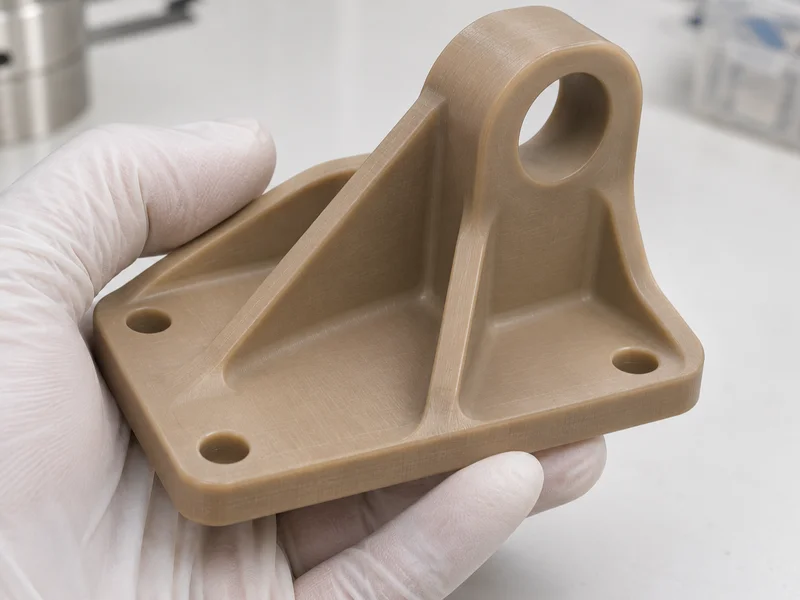
Design guidelines:
- Wall thickness: uniform, typically about 1–4 mm
- Radii: generous inside corners, especially in filled grades
- Draft: at least about 1°, more for textured surfaces
- Ribs: about 50–60% of the wall thickness
- Holes and bosses: avoid thick sections that cause voids
- Weld lines: keep them away from high-stress areas
For example, a sharp inside corner in a glass-filled PEEK bracket can crack under load, while a 0.5–1 mm radius greatly reduces stress. Our guide to basics of injection molding design covers general rules.
Key Takeaway: Radii and uniform walls matter even more in PEEK than in common plastics.
What Mold and Process Does PEEK Injection Molding Need?
PEEK injection molding needs a high-temperature mold, a machine able to reach high melt temperatures and careful process control.
Mold requirements:
- Mold heating: oil or electric heating to about 170–200 °C
- Insulation plates between mold and platens
- Hardened steel, especially for filled grades
- Venting at the end of fill
- Thermal expansion allowance for sliding parts
Process requirements:
- Drying: typically about 150 °C for several hours
- Melt temperature: about 360–400 °C
- Injection speed: fast enough to fill before freezing
- Cooling: enough time in the hot mold to crystallize
For example, a part molded at 120 °C mold temperature may come out partly amorphous and darker in color, with lower chemical resistance. Raising the mold temperature gives the expected tan color and properties. Our injection mold manufacturing team builds heated molds for high-temperature resins.
Key Takeaway: Ask the supplier how the mold will be heated and to what temperature. It decides part quality.
How Do You Check PEEK Part Quality?
You check PEEK part quality by measuring dimensions, checking appearance and confirming crystallinity when properties are critical.
Quality checks:
- Dimensions: critical features measured, often by CMM
- Appearance: uniform color; dark or glossy areas may show low crystallinity
- Crystallinity: confirmed by DSC testing when required
- Voids: checked by sectioning or X-ray for thick parts
- Mechanical tests: per customer requirement
For example, a part with uneven color across its surface may have cooled unevenly. A DSC test then confirms whether crystallinity is within range. Our quality control and inspection process includes dimensional reports and material certificates on request.
Key Takeaway: For critical PEEK parts, agree how crystallinity will be confirmed before production.
Can PEEK Parts Be Annealed or Machined After Molding?
Yes. PEEK parts can be annealed to relieve stress and complete crystallization, and they can be machined for tight features.
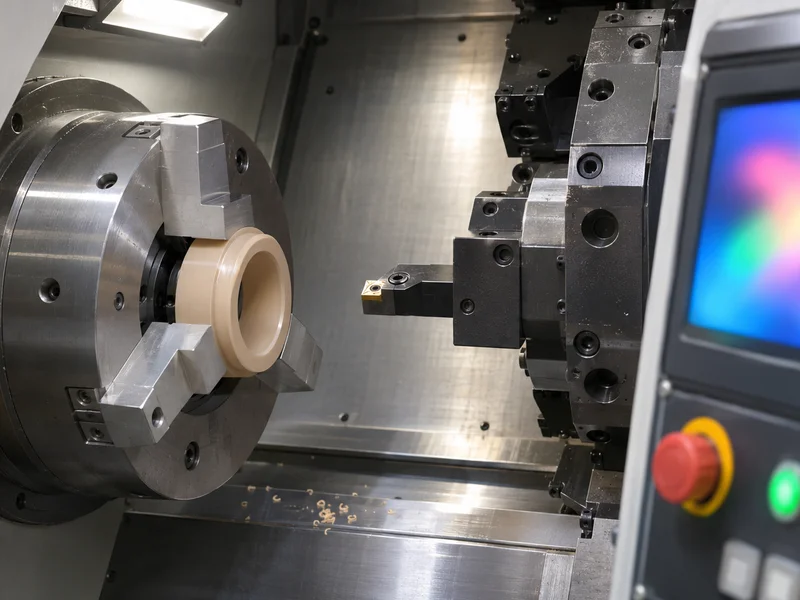
Post-molding options:
- Annealing: controlled heating and cooling, used for tight-tolerance or high-stress parts
- Machining: for features that cannot be molded accurately, such as fine bores
- Inspection after annealing: dimensions can shift slightly
For example, a molded PEEK valve seat may be annealed, then finish-machined on the sealing face. That combines molding economy with machined precision. We also machine PEEK in our CNC machining services for prototypes and low volumes.
Key Takeaway: For very tight tolerances, plan molding plus machining, rather than forcing the mold.
What Should You Send for a PEEK Injection Molding Quote?
For a PEEK injection molding quote, you should send the 3D model and 2D drawing first, then the information that defines the grade and quality.
Supplier inputs:
- 3D model and 2D drawing, with critical dimensions
- PEEK grade, or the requirements to select one
- Operating conditions: temperature, chemicals, load and wear
- Annual volume and lot sizes
- Cosmetic and color requirements
- Documents required, such as material certificates or FAI
For example, a quote request that states “250 °C continuous, steam exposure, 5,000 parts per year” lets the supplier suggest a grade and tool plan with confidence. Our guide to the injection molding quote and RFQ checklist lists more inputs.
Key Takeaway: Service conditions are the most useful information after the drawing. They drive grade and design.
FAQ
- Q: What temperature is PEEK injection molded at?
- Melt temperatures are typically about 360–400 °C, with mold temperatures of about 170–200 °C.
- Q: Why does PEEK need a hot mold?
- To reach full crystallinity, which gives its chemical resistance, heat resistance and dimensional stability.
- Q: Does PEEK need drying before molding?
- Yes, typically at about 150 °C for several hours.
- Q: What PEEK grades can be injection molded?
- Unfilled, glass-filled, carbon-filled and bearing grades.
- Q: Is PEEK injection molding expensive?
- The resin is expensive and the process needs high temperatures, so part cost is higher than for common plastics.
Conclusion
PEEK injection molding delivers high-performance parts when the grade, design, mold heating and process are matched. Specify service conditions, design with uniform walls and radii, and confirm crystallinity for critical parts. To review a PEEK part, send your 3D model and 2D drawing to our engineers.