
Polyethylene Injection Molding: Grades, Shrinkage, Warpage
Polyethylene injection molding makes tough, chemically resistant, low-cost parts such as caps, closures, containers, lids, housewares and industrial components. Polyethylene (PE) is easy to process and very tough, even at low temperatures. However, it is also soft, shrinks a lot and is prone to warpage, so grade and geometry must be chosen together.
Picking “PE” without a grade often leads to problems. For example, a lid molded in a low-melt-flow HDPE may fill poorly and warp, while a high-flow grade fills easily but cracks under stress in contact with detergents. In this guide, we explain polyethylene injection molding: LDPE, LLDPE and HDPE grades, melt flow and stress cracking, part design, shrinkage and warpage, and what to specify. For a material comparison, see our guide to polypropylene vs polyethylene.
Polyethylene injection molding uses mainly HDPE (density about 0.94–0.97 g/cm³) for stiffer parts and LDPE or LLDPE (about 0.91–0.94 g/cm³) for flexible parts. Melt temperatures are typically about 180–280 °C, and PE needs no drying. Shrinkage is high, often about 1.5–3% for HDPE, and is direction dependent, so warpage is a common risk. Grade selection balances melt flow index (for filling thin walls) against environmental stress crack resistance (ESCR) and impact strength. Parts need uniform walls, generous radii, good cooling and gates placed to balance shrinkage.
In short: choose the PE type and melt flow for the part, and design for high, uneven shrinkage.
Key points:
- Grades: HDPE for stiffness; LDPE/LLDPE for flexibility.
- Trade-off: high melt flow fills easily but may lower stress crack resistance.
- Shrinkage: high and direction dependent; design against warpage.
What Is Polyethylene Injection Molding?
Polyethylene injection molding is the injection molding of PE resins, the most widely used family of plastics. PE is semi-crystalline, tough and chemically inert.
| Type (typical) | Density | Properties | Typical parts |
|---|---|---|---|
| LDPE | about 0.91–0.93 g/cm³ | Soft, flexible | Lids, flexible closures |
| LLDPE | about 0.92–0.94 g/cm³ | Tough, flexible | Lids, containers |
| HDPE | about 0.94–0.97 g/cm³ | Stiffer, chemical resistant | Caps, crates, housings |
| UHMW-PE | about 0.93 g/cm³ | Very wear resistant | Usually machined, not injection molded |
For example, a snap-on lid often uses LDPE or LLDPE for flexibility, while a screw cap uses HDPE for stiffness and thread strength. Our guide to injection molding for polypropylene parts covers a closely related material.
Key Takeaway: Specify the PE type and density. They decide stiffness, flexibility and shrinkage.
How Do You Choose a Polyethylene Grade for Injection Molding?
You choose a polyethylene grade for injection molding by balancing flow, toughness and stress crack resistance for the part.
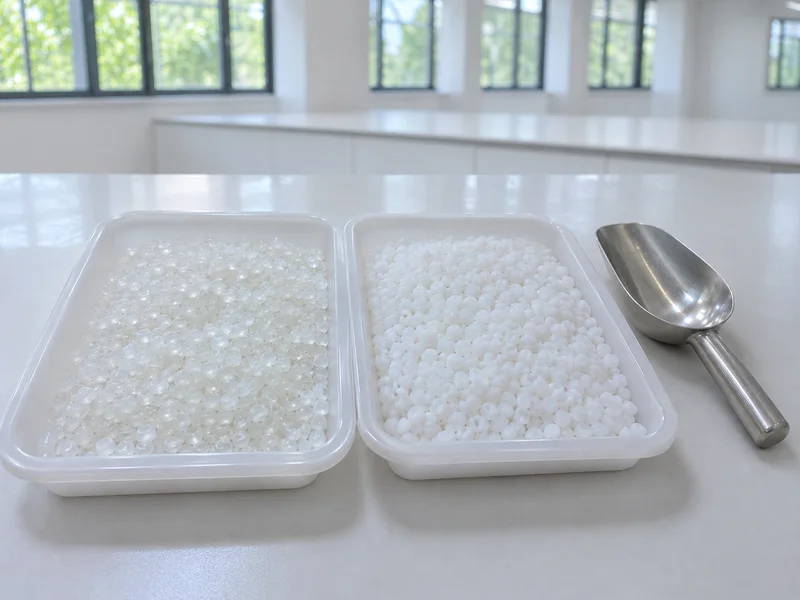
Key grade properties:
- Melt flow index (MFI): higher MFI fills thin walls more easily.
- ESCR: resistance to cracking under stress with detergents or oils.
- Impact strength: especially at low temperature.
- Stiffness: rises with density.
- Food contact or regulatory status, if required.
For example, a thin-walled container may need a high-MFI grade to fill, but a cap that will hold a detergent under thread stress needs a grade with good ESCR. Melt flow is measured by standard methods such as ISO 1133 from ISO.
Key Takeaway: For parts under stress in contact with chemicals, check ESCR, not only melt flow.
How Should Parts Be Designed for Polyethylene Injection Molding?
Parts should be designed for polyethylene injection molding with uniform walls, generous radii and features that tolerate high shrinkage.
Design guidelines:
- Wall thickness: uniform, typically about 1–3 mm.
- Radii: generous inside corners to reduce stress cracking.
- Ribs: about 50–60% of the wall to avoid sink.
- Draft: about 1° or more; soft PE can sometimes be stripped from small undercuts.
- Living hinges: possible in some PE grades, though PP is usually better.
- Snap-fits: PE’s flexibility suits them well.
For example, an LDPE lid with a small internal bead can often be stripped off the core without a collapsible core, because the material flexes. Our guide to undercuts in molded parts explains stripping.
Key Takeaway: Use PE’s flexibility to simplify the tool, but keep walls uniform to control shrinkage.
How Do You Control Shrinkage and Warpage in PE Parts?
You control shrinkage and warpage in PE parts by balancing flow, cooling and wall thickness, because PE shrinks a lot and unevenly.
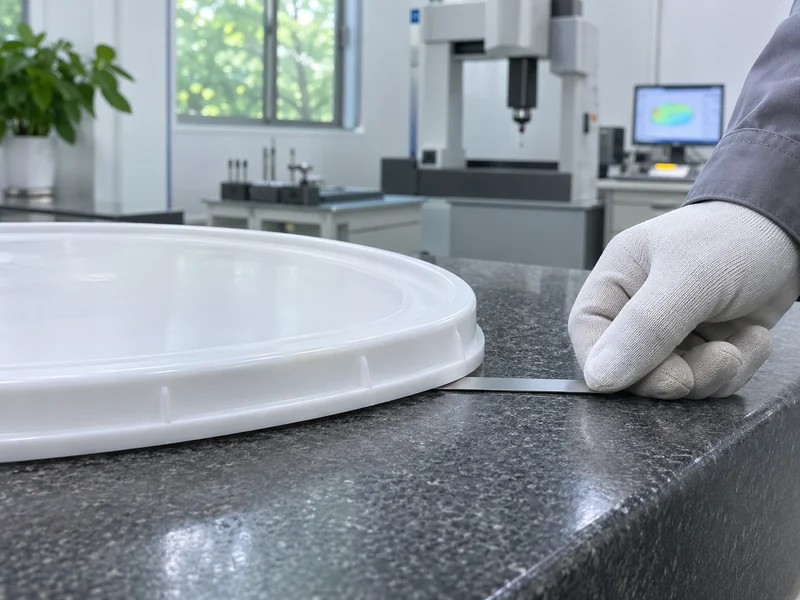
Methods:
- Gate placement: central or balanced gating for even shrinkage.
- Uniform cooling: core and cavity at similar temperatures.
- Uniform walls: avoid thick and thin areas side by side.
- Ribs and geometry: stiffen flat areas against warpage.
- Process: consistent mold temperature and pack pressure.
For example, a flat HDPE lid gated at one edge often dishes or bows, because shrinkage differs along and across the flow. A center gate and balanced cooling make it flatter. Our guide to plastic shrinkage explains shrinkage behavior.
Key Takeaway: Plan gate and cooling for even shrinkage. PE warps more easily than many plastics.
What Mold and Process Does Polyethylene Need?
Polyethylene needs a mold with good cooling and venting and a straightforward process, since PE is stable and does not need drying.
Mold and process points:
- Cooling: often the limiting factor for cycle time.
- Venting: PE fills fast, so vents prevent burns and short shots.
- Steel: pre-hardened steel is usually enough for unfilled PE.
- Melt temperature: about 180–280 °C depending on grade and part.
- Drying: not normally required.
For example, a 4-cavity HDPE cap mold may have a cycle mainly set by cooling of the thread core. Good core cooling shortens the cycle. Our guide to practical mold cooling explains how.
Key Takeaway: Invest in cooling for PE molds. It drives both cycle time and flatness.
What Should You Specify for Polyethylene Injection Molding?
You should specify polyethylene injection molding requirements so the supplier can choose a grade and process with confidence.
Specification items:
- PE type and grade, or required properties (density, MFI, ESCR)
- Regulatory needs, such as food contact
- Color and appearance
- Critical dimensions and flatness
- Service conditions: temperature, chemicals, loads
- Annual volume and cavity count
For example, “HDPE, food contact compliant, ESCR suitable for detergent, flatness 0.5 mm” is much clearer than “PE”. PE is not one of our standard listed resins, so we confirm grade availability and the process route for each PE project before quoting; our plastic injection molding page lists our standard materials.
Key Takeaway: State service chemicals and stress in the RFQ. They decide the PE grade.
FAQ
- Q: Can polyethylene be injection molded?
- Yes. LDPE, LLDPE and HDPE are widely injection molded.
- Q: Does polyethylene need drying before molding?
- Normally no, because PE absorbs very little moisture.
- Q: Why do polyethylene parts warp?
- PE shrinks a lot and unevenly, especially with uneven flow, cooling or walls.
- Q: What is ESCR?
- Environmental stress crack resistance: the ability to resist cracking under stress in contact with chemicals.
- Q: Which is stiffer, HDPE or LDPE?
- HDPE, because of its higher density and crystallinity.
Conclusion
Polyethylene injection molding gives tough, low-cost parts when the PE type, melt flow and stress crack resistance match the part, and the design controls high shrinkage. Specify grade or properties, service chemicals and flatness needs. To review a PE part, send your 3D model and 2D drawing to our engineers.