
Torlon 4301 Machinability: Tools, Stress and Tolerances
Torlon 4301 machinability is good compared with many high-performance plastics, but it rewards careful planning. Torlon 4301 is a polyamide-imide (PAI) grade filled with PTFE and graphite for low friction and wear resistance. It is used for bearings, thrust washers, seals, valve seats and wear parts that run hot, under load and sometimes without lubrication. Because the stock is expensive and the material is stiff and somewhat brittle, mistakes are costly.
Most problems come from internal stress, heat during cutting, chipping at edges and the post-cure condition of the stock. For example, a thin bearing ring machined in one aggressive pass may crack or move after release, while staged roughing with rest periods keeps it stable. In this guide, we explain Torlon 4301 machinability: what the grade is, how it machines, tooling, stress and annealing, tolerances, and the drawing and grade checks to make before quoting. For a material comparison, see our guide to PEEK vs Torlon.
Torlon 4301 machinability is generally good: the PTFE and graphite fillers help chip formation and give smooth surfaces, but the material is stiff, notch sensitive and abrasive to tools. Use sharp carbide or diamond-tipped tools, moderate speeds, light finishing passes and air or compatible coolant. Rough first, then anneal or rest before finishing to relieve stress, following the stock supplier’s guidance. Chamfer edges, avoid sharp internal corners and allow realistic tolerances for wall thickness and temperature. Confirm the exact grade, stock form and cure condition before quoting.
In short: Torlon 4301 machines cleanly with sharp tools and staged roughing, but stress, chipping and grade confirmation need attention.
Key points:
- Grade: 4301 is a bearing grade with PTFE and graphite.
- Process: rough, relieve stress, then finish.
- Edges: chamfer to avoid chipping.
What Is Torlon 4301?
Torlon 4301 is a bearing-grade polyamide-imide (PAI) compound containing PTFE and graphite.
Key properties (typical, confirm with data sheet):
- High continuous-use temperature, around 250 °C range for PAI
- High compressive strength and stiffness
- Low friction and wear from PTFE and graphite
- Low thermal expansion compared with many plastics
- Low moisture absorption, but some dimensional change with humidity
For example, a dry-running thrust washer in a hot gearbox is a typical 4301 use. Test methods for plastic properties are published by ASTM International.
Key Takeaway: Choose 4301 for wear and friction at high temperature, not for impact strength.
How Does Torlon 4301 Machinability Compare With Other Plastics?
Torlon 4301 machinability compares well with other high-performance plastics, but its stiffness and cost demand more care.
| Material (typical) | Machinability | Main issue | Typical uses |
|---|---|---|---|
| Torlon 4301 (PAI, bearing grade) | Good | Chipping, stress, tool wear | Bearings, seals, wear parts |
| Torlon 4203 (PAI, unfilled) | Good | Stress, notch sensitivity | Electrical and structural parts |
| PEEK | Good | Heat, stress | Structural and chemical parts |
| PTFE | Easy to cut, hard to hold size | Creep, expansion | Seals, insulators |
| POM | Very good | Warpage in thin parts | General precision parts |
For example, a 4301 bushing may hold size better than PTFE but needs gentler edge handling than POM. Our guide to machining acetal covers POM.
Key Takeaway: Expect good surface finish from 4301, but plan for chipping and stress.
Which Tools and Settings Improve Torlon 4301 Machinability?
Tools and settings that improve Torlon 4301 machinability should cut cleanly, limit heat and resist abrasion from fillers.
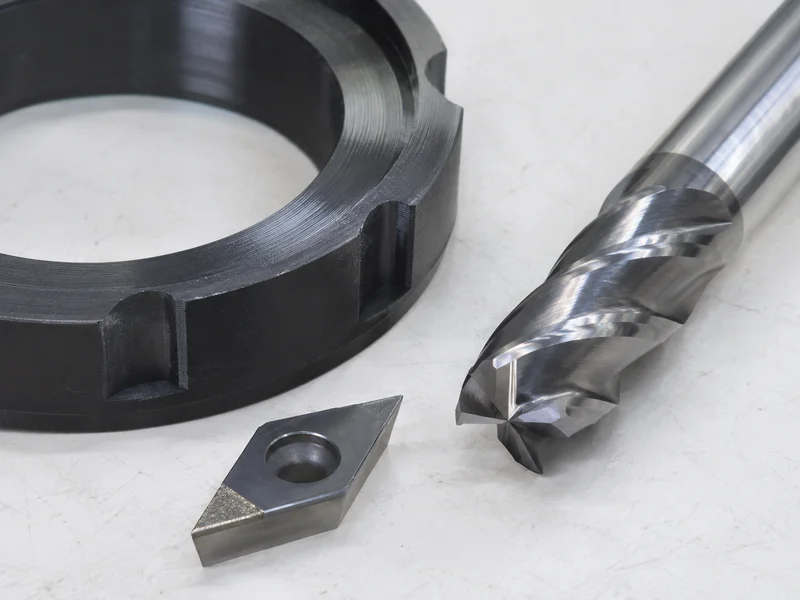
Practical guidance:
- Tools: sharp carbide; diamond-tipped (PCD) for long runs
- Geometry: positive rake, sharp edges, polished flutes
- Speeds: moderate, to limit heat
- Feeds: steady, avoiding rubbing
- Coolant: air or a coolant confirmed compatible with the material
- Drilling: peck cycles and reduced feed at breakthrough
For example, a worn tool can chip the exit edge of a hole in a 4301 seal. Fresh tools for finishing passes keep edges clean. Our guide to CNC plastic machining explains general plastic tooling.
Key Takeaway: Use fresh, sharp tools for finishing. Filled PAI wears edges quickly.
How Do You Control Stress When Machining Torlon 4301?
You control stress when machining Torlon 4301 by starting with properly cured stock, removing material in stages and relieving stress before finishing.
Methods:
- Confirm the stock is fully cured as supplied.
- Rough evenly on all sides, leaving finishing stock.
- Anneal or rest the roughed part, following the stock supplier’s guidance.
- Finish with light passes.
- Avoid heavy clamping on thin walls.
For example, a thin-walled 4301 ring finished straight from bar stock may become oval after release. Staged machining reduces this movement. Our guide to tight tolerance machining explains tolerance planning.
Key Takeaway: Staged roughing and stress relief matter more for PAI than for most plastics.
How Do Tolerances and Edges Affect Torlon 4301 Machinability?
Tolerances and edges affect Torlon 4301 machinability because realistic values depend on size, wall thickness and operating temperature, not only on machine capability.
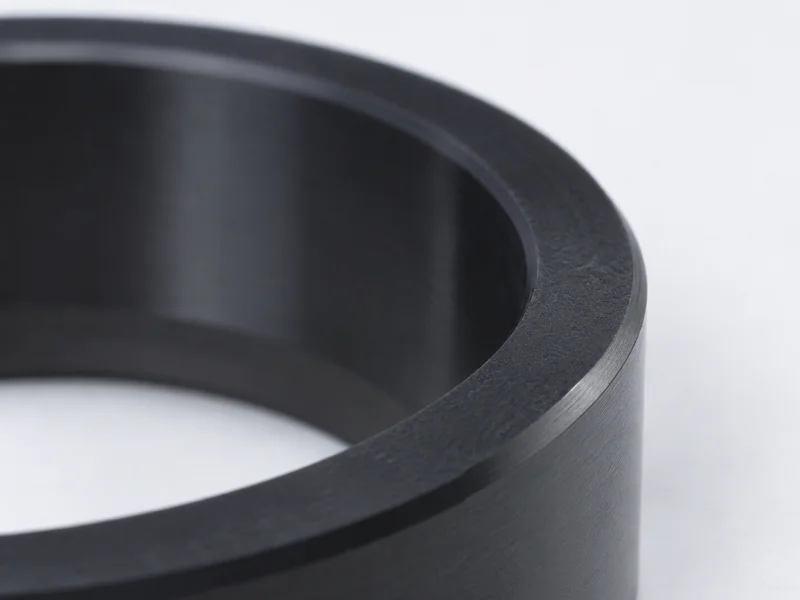
General guidance:
- Small, thick parts: tight tolerances are practical after stress relief.
- Thin walls and rings: allow more for movement.
- Bearing clearances: account for thermal expansion and moisture.
- Edges: chamfer about 0.2–0.5 mm to prevent chipping.
- Internal corners: add radii; avoid sharp notches.
For example, a 4301 bearing running at 200 °C needs a larger cold clearance than the same bearing at room temperature. Machine capability is not finished-part tolerance; tolerances are confirmed per drawing.
Key Takeaway: Size bearing clearances for operating temperature, not shop temperature.
What Grade and Drawing Checks Should You Make Before Quoting?
Before quoting, check the grade, stock form and drawing requirements, because PAI stock is costly and not all forms are always available.
Checks:
- Exact grade: 4301, 4203 or another PAI grade
- Stock form: rod, plate or near-net shape, and available sizes
- Cure condition: as supplied by the stock producer
- Material certificate requirement
- Critical tolerances and operating temperature
- Edge and surface requirements
For example, a drawing that says “Torlon” without a grade could mean an unfilled or a bearing grade with very different properties. For any PAI part, grade availability, stock and process are confirmed per project during drawing review. See our CNC machining services for the materials we machine routinely.
Key Takeaway: Always state the exact PAI grade on the drawing.
FAQ
- Q: Is Torlon 4301 easy to machine?
- Yes, relatively, with sharp tools and staged roughing. Chipping and stress are the main risks.
- Q: What is Torlon 4301 used for?
- Bearings, thrust washers, seals and wear parts at high temperature.
- Q: Does Torlon need annealing after machining?
- Stress relief between roughing and finishing is often recommended; follow the stock supplier’s guidance.
- Q: What tools are best for Torlon 4301?
- Sharp carbide, or diamond-tipped tools for longer runs.
- Q: What is the difference between Torlon 4301 and 4203?
- 4301 contains PTFE and graphite for wear; 4203 is an unfilled grade with higher toughness.
Conclusion
Torlon 4301 machinability is good when tools are sharp, roughing is staged and stress is relieved before finishing. Chamfer edges, size clearances for temperature and confirm the exact grade before quoting. To review a high-performance plastic part, send your 3D model and 2D drawing to our engineers.