
Hot Runner System: How to Pick the Best One and Save Money
A hot runner system keeps plastic molten from the machine nozzle to each gate, so the mold produces parts without a solid runner to regrind or discard. For production molds, especially multi-cavity molds for small precision parts, a well-chosen hot runner shortens cycles, saves material and improves gate quality. A poorly chosen one causes leaks, stringing, imbalanced cavities and expensive downtime.
The choice is not only “hot or cold”. It includes nozzle type, gating method, manifold layout, controller, the brand’s local service and how the system will be balanced at trial. For example, a 16-cavity medical-style housing in PC may need valve gates and careful thermal balance, while a 4-cavity PP cap may run well with open tips. In this guide, we explain how to choose a hot runner system for a production mold: components, when it pays back, gating options, material fit, balance studies at mold trial, maintenance and what to specify. For the comparison, see our guide to hot runner vs cold runner molds.
A hot runner system consists of a heated manifold, heated nozzles, gate tips or valve pins, heaters, thermocouples and a temperature controller. It suits production molds with high volumes, multiple cavities, expensive resins or cosmetic gating needs, because it removes runner waste and often shortens cycle time. Selection depends on resin (heat sensitivity, fillers), gate type (open tip, hot edge, valve gate), shot size, cavity count and balance, color-change needs and service support. Balance is verified at mold trial with short-shot and weight studies per cavity.
In short: choose the hot runner system for the resin, gate quality and cavity count, then prove balance at trial.
Key points:
- Payback: volume, cavity count and resin cost.
- Gating: open tips, hot edge or valve gates.
- Balance: verified with drop balance studies.
What Is a Hot Runner System?
A hot runner system is the heated assembly inside the mold that delivers molten plastic from the machine nozzle to the gates.
Main components:
- Manifold: distributes melt to the drops
- Nozzles (drops): carry melt to each gate
- Tips or valve pins: control gate opening
- Heaters and thermocouples: keep temperatures stable
- Controller: regulates each heating zone
For example, an 8-drop system has one manifold feeding eight nozzles, each with its own heating zone. Our guide to the hot runner manifold explains manifold design in detail.
Key Takeaway: A hot runner system is a set of heating zones. Each zone must be controlled and maintained.
When Does a Hot Runner System Pay Back?
A hot runner system pays back when material savings, cycle time and quality gains exceed its higher cost and maintenance.
Good candidates:
- High annual volumes
- Multi-cavity molds
- Expensive resins where runner waste is costly
- Thin-wall parts needing short flow lengths
- Cosmetic parts needing small, clean gates
- Automated production without runner handling
Less suitable:
- Low volumes or prototype tools
- Frequent color changes in some systems
- Highly heat-sensitive resins without suitable design
For example, a 16-cavity PP closure mold usually pays back quickly, while a single-cavity low-volume part may not. Our guide to low volume injection molding covers simpler tools.
Key Takeaway: Calculate runner weight, cycle time and annual volume before choosing.
Which Gate Types Can a Hot Runner System Use?
A hot runner system can use several gate types, each with different gate quality and control.
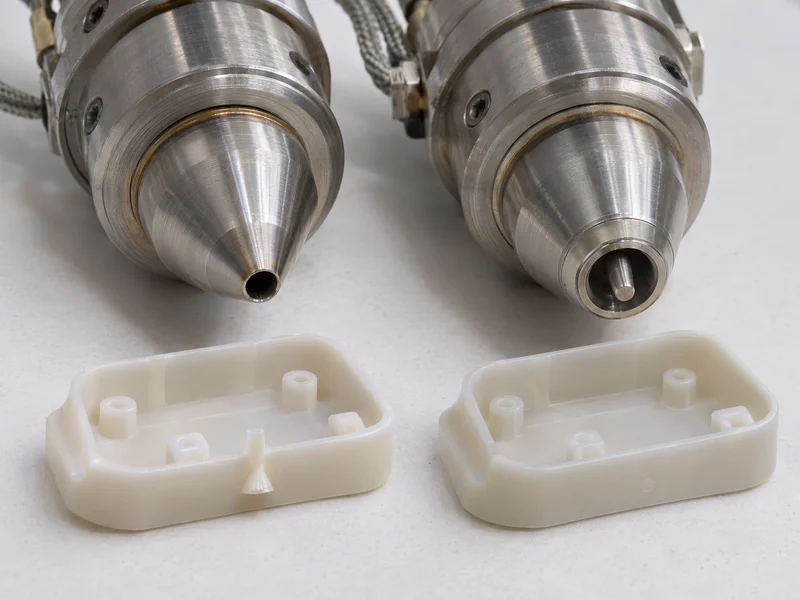
| Gate type | Gate vestige | Control | Typical uses |
|---|---|---|---|
| Open tip (thermal gate) | Small nub | Temperature only | PP, PE, simple parts |
| Hot tip / sprue gate | Small to medium | Temperature | General parts |
| Hot edge gate | Side gating | Temperature | Small parts, side entry |
| Valve gate | Very small, clean | Mechanical pin | Cosmetic, sequential filling |
For example, a cosmetic PC cover often uses a valve gate for a clean, flush vestige, while a PP container may use open tips. Our guide to valve gate injection molding explains pin control.
Key Takeaway: Choose the gate type by vestige requirement and resin behavior.
How Do Resin and Part Requirements Affect Hot Runner System Selection?
Resin and part requirements affect hot runner system selection because temperature, fillers and appearance needs vary.
Considerations:
- Heat-sensitive resins (PVC, POM, some FR grades): need uniform temperature and short residence time.
- Glass-filled resins: need wear-resistant tips.
- Crystalline resins (PA, POM, PBT): need precise gate temperature to avoid freeze-off or drool.
- Color changes: need flow paths without dead spots.
- Small shots: need small-volume manifolds to limit residence time.
For example, a glass-filled PA66 connector mold may use hardened tips and precise gate heating. Our guide to injection molding gate types compares gate marks.
Key Takeaway: Give the hot runner supplier the exact resin grade, not just the family.
How Is Hot Runner Drop Balance Studied at Mold Trial?
Hot runner drop balance is studied at mold trial by checking how evenly each drop fills its cavity.
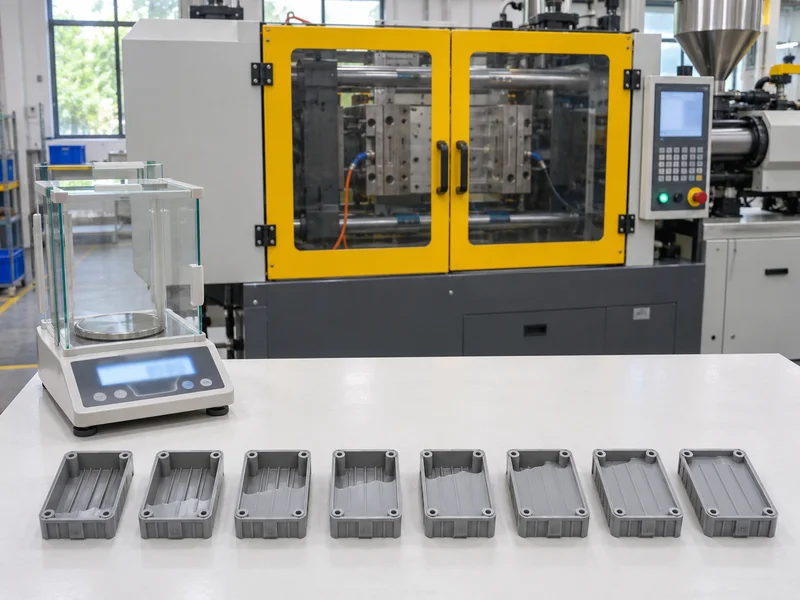
Study steps:
- Run short shots at reduced shot size.
- Compare fill level of each cavity.
- Weigh full parts per cavity.
- Adjust zone temperatures within limits to balance.
- Record final settings and cavity weights.
For example, if cavity 7 in an 8-cavity mold fills last, its nozzle temperature may be raised slightly, or the manifold’s thermal balance checked. Balance records should be part of the trial report. Our guide to multi-cavity injection molding explains cavity balance.
Key Takeaway: Ask for a short-shot balance study and cavity weights in the trial report.
How Do You Maintain It in Production?
You maintain a hot runner in production by preventing leaks, monitoring heaters and keeping spare parts ready.
Maintenance practice:
- Heat up and cool down following the supplier’s sequence.
- Check for leaks at nozzle seals and manifold.
- Monitor heater and thermocouple resistance and readings.
- Clean or replace tips when wear affects gate quality.
- Keep spares: heaters, thermocouples, tips, seals.
- Document zone settings and repairs.
For example, starting injection before the manifold is fully heated can cause leaks between the manifold and nozzles. A heat-soak delay prevents it. Our guide to maintenance of molds covers general mold care.
Key Takeaway: Most hot runner leaks come from start-up mistakes. Train operators on the sequence.
What Should You Specify for a Hot Runner System?
You should specify a hot runner system with the brand preference, gate type, controller and documentation needed.
Specification items:
- Preferred brand or approved list
- Gate type per cavity
- Controller type and connector standard
- Wiring and plug layout
- Spare parts to be supplied
- Documentation: drawings, wiring diagrams, zone list
- Balance study at trial
Machine-to-mold interfaces are standardized by EUROMAP. We build hot runner molds with YUDO, Mold-Masters, HASCO or Synventive systems per customer requirement. See our injection mold manufacturing service.
Key Takeaway: Specify the brand and connector standard your plant can service.
FAQ
- Q: What is a hot runner system?
- A heated manifold and nozzles that keep plastic molten from the machine nozzle to the gates.
- Q: When is a hot runner worth it?
- For high volumes, multi-cavity molds, expensive resins and cosmetic gating needs.
- Q: What is a valve gate hot runner?
- A hot runner where a pin opens and closes each gate mechanically.
- Q: How is hot runner balance checked?
- With short-shot studies and part weights per cavity at mold trial.
- Q: What causes hot runner leaks?
- Often incorrect heat-up sequence, damaged seals or overheating.
Conclusion
A hot runner system pays back on production molds when it suits the resin, gate quality and cavity count, and when balance is proven at trial. Specify brand, gates, controller and documents clearly. To review a production mold, send your 3D model and 2D drawing to our engineers.