
CNC Milling Titanium Components: Grades, Tools and Design
CNC milling titanium components is slower and more demanding than milling aluminum or steel, but titanium’s strength-to-weight ratio, corrosion resistance and biocompatibility make it worth it for many precision parts. Brackets, housings, fittings, instrument parts, robotic components and medical-style parts are often milled from Ti-6Al-4V (Grade 5) or commercially pure titanium. The challenge is heat, tool wear and cost, which must be planned into the quote.
Titanium punishes vague requirements. For example, a drawing that asks for Ra 0.4 µm on all faces of a Grade 5 bracket can double the machining time, while specifying fine finish only on functional faces keeps cost reasonable. In this guide, we explain CNC milling titanium components: grades, why titanium is difficult, tooling and strategies, design tips, tolerances, finishing and the inputs needed for an accurate quote. For material comparisons, see our guide to titanium strength vs aluminum.
CNC milling titanium components requires rigid machines and fixtures, sharp coated carbide tools, low cutting speeds (often about 40–80 m/min for Ti-6Al-4V roughing, grade-dependent), high-pressure coolant and strategies such as trochoidal milling that limit heat and tool engagement. Titanium’s low thermal conductivity concentrates heat at the cutting edge, its low modulus causes springback and chatter in thin walls, and it reacts with tools at high temperature. Quotes depend on grade, stock form, material removal, finish, tolerances and certification needs.
In short: titanium mills well with rigid setups, sharp tools, low speeds and good coolant, but cost depends on how much you ask for.
Key points:
- Heat: stays at the tool, so speeds are low.
- Rigidity: thin walls chatter and spring back.
- Quote inputs: grade, finish and tolerances drive cost.
Which Titanium Grades Are Used in CNC Milling Titanium Components?
The titanium grades used in CNC milling titanium components are mainly commercially pure grades and Ti-6Al-4V.
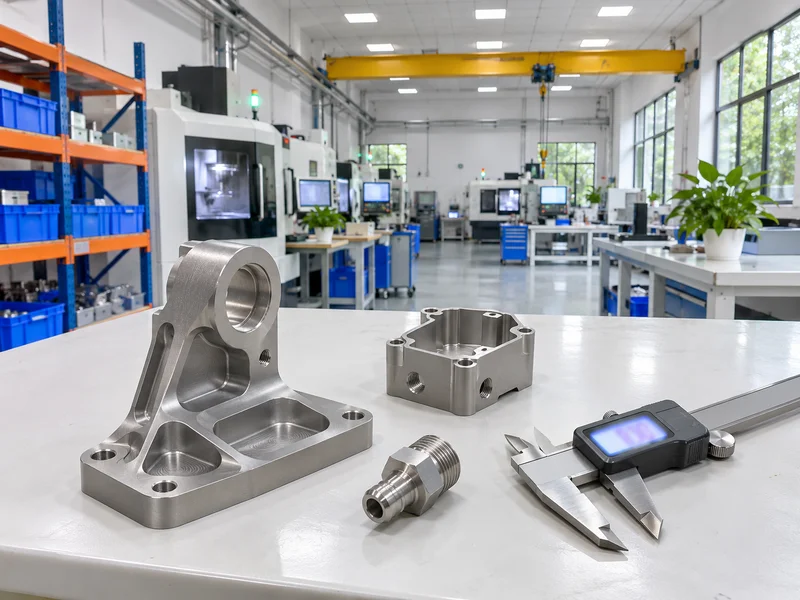
| Grade (typical) | Type | Strength | Machinability | Typical uses |
|---|---|---|---|---|
| Grade 2 | Commercially pure | Moderate | Better | Chemical, marine, general parts |
| Grade 4 | Commercially pure | Higher | Moderate | Higher-strength CP parts |
| Grade 5 (Ti-6Al-4V) | Alloy | High | More difficult | Structural, robotic, aerospace-style parts |
| Grade 23 (Ti-6Al-4V ELI) | Alloy, low interstitial | High | More difficult | Medical-style parts |
For example, a corrosion-resistant fitting may use Grade 2, while a lightweight high-strength robot bracket uses Grade 5. Titanium specifications are published by ASTM International, such as ASTM B348 for bar.
Key Takeaway: Use Grade 2 unless strength demands Grade 5. It machines faster.
Why Is CNC Milling Titanium Components Difficult?
CNC milling titanium components is difficult because titanium holds heat at the cutting edge, reacts with tools and deflects under load.
Main challenges:
- Low thermal conductivity: heat concentrates on the tool, not the chip.
- Chemical reactivity at high temperature: tool wear and galling.
- Low elastic modulus: springback and chatter in thin sections.
- Work hardening if the tool rubs.
- High cutting forces relative to aluminum.
For example, a tool that dwells in a corner can overheat and fail within seconds. Smooth toolpaths with constant engagement avoid this. Our guide to strength of titanium vs steel explains titanium’s properties.
Key Takeaway: Heat management is the core of titanium milling.
What Makes Machining Titanium Ti-6Al-4V Different?
Machining titanium is different from steel or aluminum mainly because Ti-6Al-4V (Grade 5) keeps heat at the cutting edge and springs back under load.
| Property (Ti-6Al-4V, annealed) | Typical value | Effect on machining |
|---|---|---|
| Tensile strength | ≥ about 895 MPa | High cutting forces |
| Thermal conductivity | about 7 W/m·K | Heat stays at the tool edge |
| Elastic modulus | about 114 GPa | Spring-back and chatter on thin walls |
| Density | 4.43 g/cm³ | Light parts with high strength |
| Chemical reactivity | High at cutting temperature | Built-up edge and tool wear |
For example, a Ti-6Al-4V bracket cut at steel-like speeds can glaze the surface and dull the tool within minutes. Material properties are listed in standards such as ASTM B348 from ASTM, and our guide to titanium strength vs aluminum compares light metals.
Key Takeaway: Above all, plan machining titanium around heat control and stiffness, not just speed.
Which Tools and Strategies Work for Titanium Milling?
Tools and strategies for titanium milling should keep engagement constant, heat low and chips moving.
Practical guidance:
- Tools: sharp carbide with suitable coatings (such as AlTiN), variable helix to reduce chatter
- Toolpaths: trochoidal or adaptive roughing with low radial engagement
- Speeds: low; feeds steady to avoid rubbing
- Coolant: high-pressure flood or through-tool coolant
- Climb milling for cleaner cutting
- Tool life monitoring with planned changes
For example, adaptive roughing with 10% radial engagement and full flute length can remove material faster and more safely than slotting. Our CNC milling service programs titanium with these strategies.
Key Takeaway: Constant, light engagement beats heavy slotting in titanium.
How Should Titanium Parts Be Designed for Milling?
Titanium parts should be designed to keep walls stiff, corners accessible and finishing limited to functional surfaces.
Design tips:
- Wall thickness: keep walls as thick as function allows; thin walls chatter.
- Internal radii: larger radii reduce tool load in corners.
- Pocket depth: shallow pockets allow shorter, stiffer tools.
- Tolerances: tight only where needed.
- Surface finish: fine finish only on functional faces.
- Near-net stock: plate or forgings close to size.
For example, increasing a pocket corner radius from 2 mm to 4 mm lets a larger, stiffer tool finish the pocket with less chatter. Our guide to tight tolerance machining explains tolerance placement.
Key Takeaway: Design titanium parts for stiff tools, not just minimum weight.
What Tolerances and Finishes Are Realistic for Titanium Components?
Realistic tolerances and finishes for titanium components depend on part stiffness, size and process, not only on machine capability.
General guidance:
- Stiff, small parts: tight tolerances are practical with stable setups.
- Thin walls: allow for springback and distortion.
- Surface roughness: milled surfaces often around Ra 0.8–1.6 µm; finer needs extra passes or polishing.
- Finishes: passivation, anodizing (color or Type II-style for titanium), bead blasting or polishing.
For example, a thin titanium housing wall may move after release from the fixture, so flatness tolerances need allowance. Machine capability is not finished-part tolerance; tolerances are confirmed per drawing.
Key Takeaway: Tell the supplier which faces need fine finish. It drives cycle time.
How Is CNC Milling Titanium Components Inspected?
CNC milling titanium components is inspected with dimensional checks, surface checks and material verification.
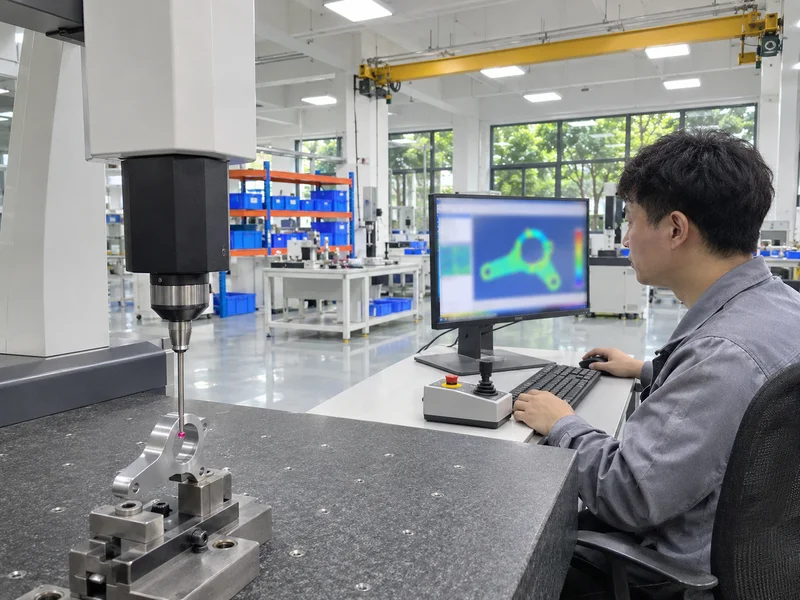
Inspection points:
- Dimensions by CMM or gauges at stable temperature
- Surface roughness on specified faces
- Burrs and edge breaks
- Material certificates linking to the stock lot
- Visual checks for discoloration or overheating marks
For example, blue or straw discoloration on a machined face can indicate overheating. It should be investigated before parts ship. Our quality control and inspection process supplies reports and certificates on request.
Key Takeaway: Require material certificates for titanium; grade mix-ups are expensive.
What Inputs Are Needed to Quote Titanium Milling?
Inputs needed to quote titanium milling are the ones that drive machining time, tool use and documentation.
Quote inputs:
- 3D model and 2D drawing
- Grade and stock form (bar, plate, forging)
- Quantity and repeat volume
- Critical tolerances and surface finishes
- Finishing such as passivation or anodizing
- Certificates and inspection reports needed
For example, a quote for Grade 5 brackets with full CMM reports will differ from the same parts with sampling inspection. Our guide to CNC machining cost for custom parts explains cost drivers.
Key Takeaway: Complete inputs give accurate titanium quotes and avoid surprises later.
FAQ
- Q: Is titanium hard to CNC mill?
- It is more difficult than aluminum or steel because of heat, tool wear and chatter, but it mills well with the right setup.
- Q: Which titanium grade is easiest to machine?
- Commercially pure grades such as Grade 2 machine more easily than Grade 5.
- Q: What tools are best for titanium milling?
- Sharp, coated carbide tools with variable helix, used with high-pressure coolant.
- Q: Why is titanium machining expensive?
- Low cutting speeds, faster tool wear and costly stock increase cost.
- Q: What finishes suit titanium parts?
- Passivation, anodizing, bead blasting and polishing.
Conclusion
CNC milling titanium components works when heat, rigidity and tool engagement are controlled, and when grade, finish and tolerances are specified carefully. Ask for fine finishes and tight tolerances only where needed. To review a titanium part, send your 3D model and 2D drawing to our engineers.