
Aluminum Powder Coating vs Anodizing: How to Pick the Best One and Save Money
Aluminum powder coating vs anodizing is a frequent finishing choice for machined and sheet aluminum parts. Powder coating applies a thick polymer layer that is sprayed and cured, giving a wide range of colors and textures. Anodizing grows a thin, hard oxide layer from the aluminum itself, giving a metallic look, good wear resistance and tight dimensional control. Each solves different problems.
The best choice depends on the part’s environment, dimensions and appearance. For example, an outdoor enclosure panel may favor powder coating for thick color coverage, while a precision instrument housing with tight bores favors anodizing because it adds only microns. In this guide, we compare aluminum powder coating vs anodizing: how each works, durability, appearance, dimensions, cost, suitable parts and how to specify them. For anodized vs bare aluminum, see our guide to anodized vs non anodized aluminum.
Aluminum powder coating vs anodizing: powder coating is a sprayed and oven-cured polymer layer, typically about 50–120 µm thick, offering many colors and textures and good weather resistance, but it adds significant thickness, can chip and needs masking of fits and threads. Anodizing is an electrochemical oxide layer, typically about 5–25 µm (Type II) or 25–75 µm (hard anodizing), which is harder, thinner and integral with the metal, keeps tight tolerances and a metallic look, but has a narrower color range and is less suited to strong UV exposure in some dyed colors. Choose powder coating for color and coverage; anodizing for precision and wear.
In short: powder coat for color and thick coverage; anodize for precision, hardness and metallic appearance.
Key points:
- Thickness: powder is much thicker than anodizing.
- Appearance: powder gives more colors; anodizing keeps metal look.
- Durability: anodizing resists wear; powder resists weather and impact well but can chip.
What Is the Difference Between Aluminum Powder Coating vs Anodizing?
The difference between aluminum powder coating vs anodizing is that powder coating adds a polymer layer on top, while anodizing converts the surface into oxide.
| Feature (typical) | Powder coating | Anodizing (Type II) | Hard anodizing |
|---|---|---|---|
| Process | Spray and oven cure | Electrochemical oxidation | Electrochemical, colder |
| Thickness | about 50–120 µm | about 5–25 µm | about 25–75 µm |
| Bond | Adhesion to surface | Integral with metal | Integral with metal |
| Colors | Very wide, textures | Dyed colors, metallic | Grey to dark |
| Wear resistance | Moderate | Good | Very high |
| Chipping | Possible | Not applicable | Not applicable |
| Electrical | Insulating | Insulating | Insulating |
Coating standards are published by ISO, for example ISO 7599 for anodizing.
Key Takeaway: Above all, powder sits on the metal; anodizing becomes part of it.
When Should You Choose Aluminum Powder Coating?
You should choose aluminum powder coating when color choice, thick coverage and weather resistance matter more than tight dimensions.
Good uses:
- Enclosures and cabinets
- Outdoor brackets and frames
- Sheet metal covers
- Parts needing specific RAL colors
- Textured finishes that hide surface marks
For example, a sheet metal control box may be powder coated in a specified RAL grey with a fine texture. Our CNC machining services include powder coating through our qualified finishing suppliers.
Key Takeaway: In other words, powder coating is the color and coverage choice.
When Should You Choose Anodizing?
You should choose anodizing when precision, wear resistance or a metallic appearance matters.
Good uses:
- Precision machined housings with tight bores
- Handles and covers that are touched and scratched
- Sliding or wearing parts (hard anodizing)
- Parts needing a thin, uniform finish
- Metallic cosmetic parts
For example, an instrument housing with H7 bores is usually anodized rather than powder coated, because powder thickness would close the bores. Our guide to chemical conversion coating vs anodizing covers other thin finishes.
Key Takeaway: For this reason, anodizing is the precision choice.
How Do Aluminum Powder Coating vs Anodizing Affect Dimensions?
Aluminum powder coating vs anodizing affect dimensions very differently because of thickness.
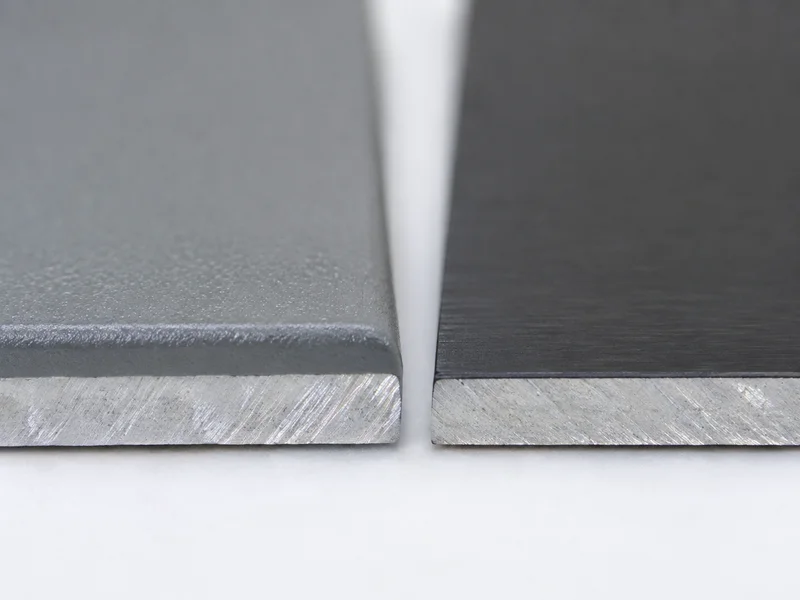
- Powder coating: adds about 50–120 µm per surface; fits, threads and holes need masking.
- Type II anodizing: adds a few microns per surface.
- Hard anodizing: adds about half its thickness per surface.
- Edges: powder can build up or thin at sharp edges.
For example, a Ø6 mm hole powder coated without masking may shrink by about 0.2 mm, while anodizing changes it by microns. Our guide to tolerance for slip fit explains fit tolerances.
Key Takeaway: Overall, mask all fits, threads and contact faces before powder coating.
How Do Aluminum Powder Coating vs Anodizing Compare in Durability?
Aluminum powder coating vs anodizing compare differently in durability and appearance depending on the type of exposure.
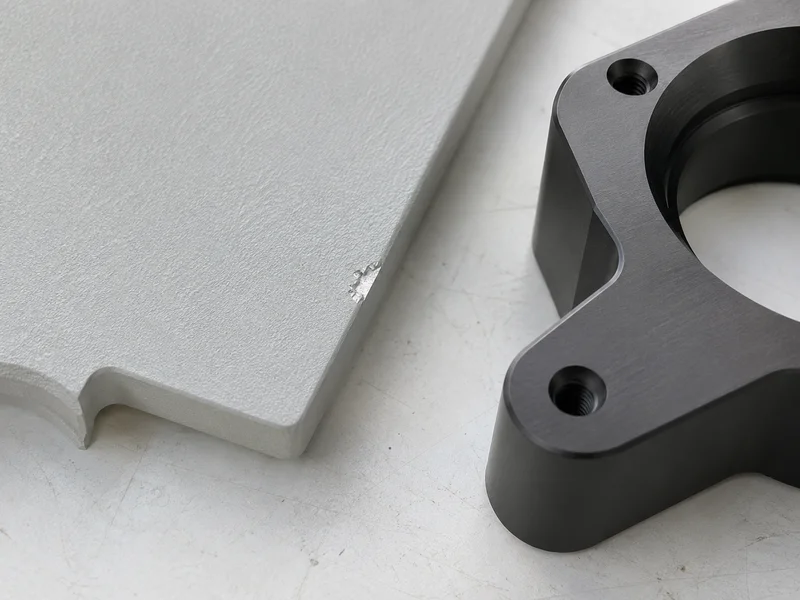
- Abrasion and wear: anodizing, especially hard anodizing, performs better.
- Impact: powder can chip; anodizing does not chip but can craze.
- UV and weather: quality outdoor powders perform well; some anodizing dyes fade in sunlight.
- Corrosion: both protect well when properly applied; damage to powder can allow creep corrosion.
- Appearance: powder hides machining marks; anodizing shows the metal texture.
For example, an outdoor sign bracket may use powder coating, while a handheld device frame uses anodizing for scratch resistance. Our guide to surface roughness Ra vs Rz explains how surface texture shows through finishes.
Key Takeaway: Equally, match the finish to the type of wear the part will see.
How Do Cost and Lead Time Compare?
Cost and lead time for aluminum powder coating vs anodizing depend on batch size, color and masking.
- Powder coating: economical for large surfaces and standard colors; masking adds cost.
- Type II anodizing: economical for small machined parts in batches.
- Hard anodizing: higher cost.
- Custom colors: add time for both.
For example, a batch of small precision housings is often cheaper to anodize, while large panels are often cheaper to powder coat. We do not publish fixed finishing prices; they are quoted with the part.
Key Takeaway: As a rule, small precision parts favor anodizing; large panels favor powder coating.
How Should You Specify Powder Coating or Anodizing?
You should specify powder coating or anodizing with the standard, thickness, color and masking.
Powder coating items:
- Color (RAL code) and gloss level
- Texture
- Thickness range
- Masking areas
- Pretreatment (conversion coating)
Anodizing items:
- Type and class, for example MIL-A-8625 Type II, Class 2
- Color and thickness
- Masking areas
- Dimension status before or after finish
For example, “Powder coat RAL 7035, fine texture, 60–90 µm, mask all threads and Ø8 bores” is complete. Our quality control and inspection process checks coating thickness when specified.
Key Takeaway: Finally, name the color standard, thickness and masked areas for either finish.
FAQ
- Q: Which is more durable, powder coating or anodizing?
- Anodizing resists wear better; powder coating resists impact and weather well but can chip.
- Q: Which finish is thicker?
- Powder coating, typically about 50–120 µm vs 5–25 µm for Type II anodizing.
- Q: Can anodized aluminum be powder coated?
- It is possible but uncommon; conversion coating is the usual pretreatment for powder.
- Q: Which finish offers more colors?
- Powder coating, with a wide RAL range and textures.
- Q: Which finish is better for precision parts?
- Anodizing, because it adds only microns.
Conclusion
Aluminum powder coating vs anodizing depends on color, coverage, precision and wear. Powder coat for color and large surfaces; anodize for tight tolerances, hardness and metallic appearance, and always specify thickness and masking. To review finishing for your part, send your 3D model and 2D drawing to our engineers.