
Engineering Change Order (ECO): Workflow and Validation
An engineering change order (ECO) is the formal document that requests, approves and records a change to a released part, drawing or process. For molded parts, an ECO might change a dimension, a material grade, a color, a gate location, packaging or a supplier. Without one, changes happen informally, the mold, the drawing and the inspection plan drift apart, and nobody can say which revision a shipped part belongs to.
Changes to molded parts are more complex than drawing edits because the mold itself must change. For example, adding 0.3 mm to a snap hook may need steel welding and re-machining, a new trial, new samples and updated inspection, not just a new drawing. In this guide, we explain the engineering change order for molded parts: what it contains, the workflow, how to assess impact on the mold, process and validation, revision control, and related changes such as packaging and two-shot color issues. For process records, see our guide to the control plan.
An engineering change order (ECO) for molded parts records what is changing, why, which revision it affects, its impact on mold steel, process, material, inspection and cost, the validation needed (trial, samples, dimensional and functional tests) and the effective date or lot. A good ECO workflow moves from request to impact review, approval, implementation, validation and release, with drawings, models, control plans and labels updated together. Packaging, color and material changes deserve ECOs as well, because they can affect quality as much as geometry.
In short: an ECO keeps the mold, drawing, process and inspection aligned when anything changes.
Key points:
- Scope: geometry, material, color, process, packaging, supplier.
- Impact: mold steel, trial, validation, cost and timing.
- Control: revision and effective lot recorded.
What Is an Engineering Change Order?
An engineering change order is a controlled request and record for changing a released design or process.
Typical contents:
- Change description with before and after
- Reason for the change
- Affected items: part numbers, drawings, models, molds
- Impact assessment: cost, timing, quality
- Validation plan
- Approvals
- Effective date or lot
For example, an ECO might change “wall thickness 2.0 → 2.2 mm at rib R3, reason: cracking in drop test, effective from lot 2611”. Our guide to the 8D report shows how corrective actions often lead to ECOs.
Key Takeaway: Above all, an ECO turns an informal request into a traceable decision.
What Is the Engineering Change Order Workflow for Molded Parts?
The engineering change order workflow for molded parts moves from request to release in defined steps.
- Request: customer or supplier proposes a change.
- Impact review: tooling, process, material, inspection, cost, timing.
- Approval: customer and supplier agree.
- Implementation: steel work, process changes, document updates.
- Validation: trial, samples, measurement, functional tests.
- Release: updated revision approved for production.
- Cut-in: first lot with the change identified.
For example, a dimension change needing steel removal may take a few days, while one needing steel addition (welding) takes longer and adds risk. Our injection mold manufacturing team quotes ECO steel work with timing.
Key Takeaway: In other words, approval comes after impact review, not before.
How Do You Assess an Engineering Change Order’s Impact on the Mold?
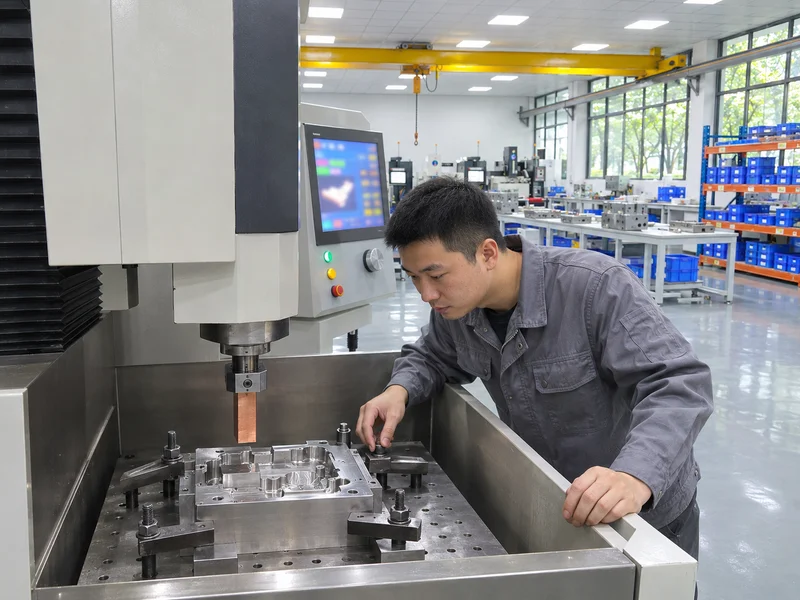
You assess an engineering change order’s impact on the mold by checking whether steel must be removed or added and which components are affected.
| Change type | Mold impact | Risk |
|---|---|---|
| Steel-safe (remove steel) | Machining, EDM | Low |
| Add steel | Welding or new insert | Medium to high |
| Gate or runner change | Re-machining, new trial | Medium |
| Cooling change | Drilling, plugs, testing | Medium |
| New feature with undercut | Slide or lifter | High |
For example, making a hole smaller requires adding steel to a core pin, often by replacing the pin, while making it larger only needs machining. Our guide to injection mold tooling explains mold acceptance after changes.
Key Takeaway: For this reason, design early molds steel-safe so later ECOs only remove steel.
How Should Validation Be Planned for an ECO?
Validation for an ECO should match the risk of the change.
Validation options:
- Dimensional check of changed features
- Full layout if the change affects datums or many features
- Functional and assembly tests
- Material tests for grade changes
- Process study for gate or cooling changes
- Customer sample approval
For example, a color change may need only color approval and appearance checks, while a material grade change may need full dimensional, mechanical and flame-rating evidence. Our guide to recycled plastic injection molding explains material change qualification.
Key Takeaway: Overall, scale validation to the risk, and write it into the ECO.
How Should Revisions Be Controlled?
Revisions should be controlled so every document and the mold match the same approved state.
Control points:
- Drawing and model revisions updated together
- Mold revision recorded, sometimes engraved as a revision mark
- Control plan and inspection sheets updated
- Labels and packaging showing the new revision
- Old stock quarantined or approved for use-up
- Effective lot recorded
For example, a part label showing “Rev C” tells receiving inspection which drawing to use. Our quality control and inspection process records revision with each lot.
Key Takeaway: Equally, update every document in one release, not piece by piece.
Should Packaging and Color Changes Use an ECO?
Packaging and color changes should use an ECO because they can affect quality and fit as much as geometry.
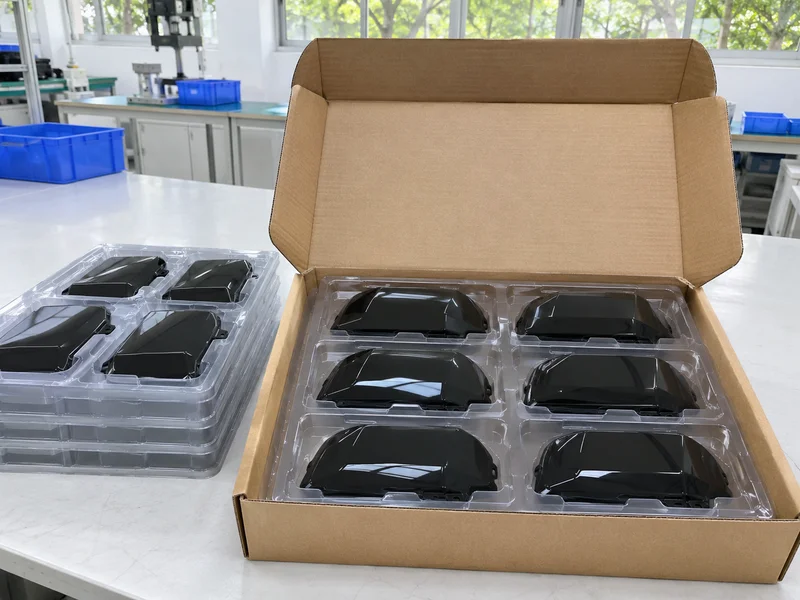
Packaging changes:
- Packaging injection molded parts for shipping affects scratches, deformation and contamination.
- Changing trays, bags or layers may cause cosmetic damage or warpage.
- Count per box affects receiving and line feeding.
Color and two-shot changes:
- New colors can change shrinkage and flame-rating evidence.
- Two-shot molding color bleeding can appear when a new color pair or material is introduced; it needs process and tool review.
For example, switching from separated trays to bulk bags may scratch glossy covers. An ECO with sample shipping tests prevents complaints. Our guide to two-shot molding covers 2K interfaces.
Key Takeaway: As a rule, any change the customer would notice deserves an ECO.
What Makes an ECO Process Work Well?
An ECO process works well when it is simple, fast and complete.
Good practices:
- One ECO form used by both customer and supplier
- Clear owner for each ECO
- Impact review checklist covering mold, process, material, inspection, packaging
- Timing and cost agreed before work starts
- Closed-loop confirmation when the first changed lot ships
For example, a shared ECO log listing status, owner and effective lot lets both sides see where each change stands. Change management principles are described in quality standards from ISO.
Key Takeaway: Finally, close every ECO with the first changed lot identified.
FAQ
- Q: What is an engineering change order?
- A formal document that requests, approves and records a change to a released part or process.
- Q: Why do molded part changes need ECOs?
- Because changes affect the mold, process, inspection and cost, not just the drawing.
- Q: What is a steel-safe change?
- A change that only removes mold steel, which is easier and lower risk than adding steel.
- Q: Should packaging changes have an ECO?
- Yes, because packaging can affect scratches, deformation and cleanliness.
- Q: How is an ECO validated?
- With measurements, tests and samples scaled to the risk of the change.
Conclusion
An engineering change order keeps molded part changes controlled: impact assessed, mold and documents updated together, validation completed and the effective lot recorded. Use ECOs for geometry, material, color and packaging changes. To discuss a change to a molded part, send your 3D model and 2D drawing to our engineers.