
PEEK 450G Machinability: Tools, Stress and Tolerances
PEEK 450G machinability is good for a high-performance plastic, which is one reason this unfilled PEEK grade is widely used for precision parts in semiconductor equipment, medical-style devices, fluid handling, analytical instruments and high-temperature assemblies. However, PEEK is expensive, retains heat during cutting and can hold internal stress from extrusion, so it rewards careful planning.
Most PEEK machining problems involve stress, heat and dimensional stability. For example, a thin PEEK insulator finished straight from rod stock may bow after release, while the same part roughed, annealed and then finished stays flat. In this guide, we explain PEEK 450G machinability: what the grade is, how it machines, tools and settings, stress relief and annealing, realistic tolerances, cleanliness and inspection, and what to check before quoting. For a comparison, see our guide to PEEK vs Torlon.
PEEK 450G machinability is generally good: the unfilled grade cuts cleanly with sharp carbide or diamond tools, gives smooth surfaces and holds stable dimensions compared with many plastics. Keep cutting heat low with moderate speeds, sharp tools and air or compatible coolant, because PEEK conducts heat poorly. Use annealed stock where possible, rough first and anneal or rest before finishing to relieve stress, following the stock supplier’s guidance. Allow realistic tolerances for thin walls and temperature, protect parts from contamination and confirm grade, stock form and certification needs before quoting.
In short: PEEK 450G machines cleanly; control heat and stress to keep dimensions stable.
Key points:
- Grade: unfilled PEEK with good toughness and chemical resistance.
- Stability: better than most plastics, but stress still matters.
- Value: expensive stock makes first-time-right important.
What Is PEEK 450G?
PEEK 450G is a general-purpose, unfilled grade of polyetheretherketone, a semi-crystalline high-performance thermoplastic.
Key properties (typical, confirm with data sheet):
- High continuous-use temperature, around 250 °C
- Excellent chemical resistance
- Good strength and toughness
- Low moisture absorption
- Good dimensional stability
- Electrical insulation
For example, PEEK 450G is used for wafer-handling components, valve seats and insulators that must survive heat and chemicals. Plastic property test methods are published by ASTM International.
Key Takeaway: Above all, choose 450G when heat, chemicals and stability matter together.
How Does PEEK 450G Machinability Compare With Other Plastics?
PEEK 450G machinability compares well with other plastics, with better stability than many and higher cost.
| Material (typical) | Machinability | Stability | Relative cost |
|---|---|---|---|
| PEEK 450G | Good | Good | High |
| PEEK GF30 / CF30 | Good, abrasive | Very good | High |
| POM | Very good | Good | Low |
| Nylon | Good | Moisture-sensitive | Low |
| PTFE | Easy to cut, hard to hold size | Low | Medium |
| PAI (Torlon) | Good | Very good | Very high |
For example, a precision insulator might be POM for cost, but PEEK when it must run at 150 °C. Our guide to machining acetal covers POM.
Key Takeaway: In other words, PEEK costs more but holds size where cheaper plastics would not.
Which Tools and Settings Improve PEEK 450G Machinability?
Tools and settings that improve PEEK 450G machinability keep the cut clean and cool.
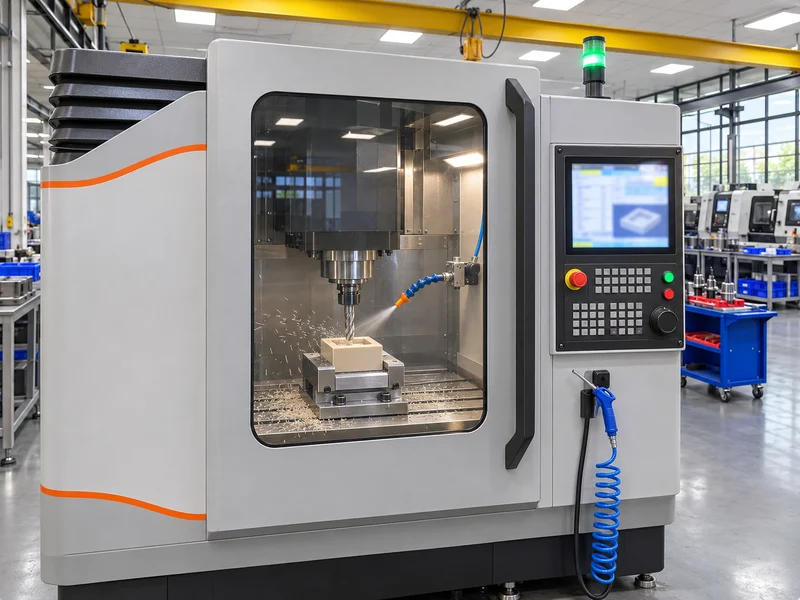
Practical guidance:
- Tools: sharp carbide; diamond-tipped for long runs or filled grades
- Geometry: positive rake, polished flutes
- Speeds: moderate to limit heat
- Feeds: steady, no dwelling
- Coolant: air or a coolant confirmed compatible with PEEK
- Drilling: peck cycles, sharp drills
For example, a worn drill can leave a raised, stressed ring around a hole. Fresh tools for finishing passes keep holes clean. Our CNC machining services machine PEEK, POM and nylon parts to drawing.
Key Takeaway: For this reason, sharp tools matter more than speed with PEEK.
How Do You Control Stress When Machining PEEK 450G?
You control stress when machining PEEK 450G by using annealed stock, staged roughing and annealing before finishing.
Methods:
- Use annealed rod or plate where available.
- Rough evenly on all sides.
- Anneal or rest roughed parts, following supplier guidance.
- Finish with light passes.
- Avoid heavy clamping on thin walls.
For example, a thin-walled PEEK sleeve can become oval if finished in one aggressive operation. Staged roughing with annealing keeps it round. Our guide to tight tolerance machining explains tolerance planning.
Key Takeaway: Overall, stress relief is the key step for tight PEEK parts.
How Does PEEK 450G Machinability Affect Realistic Tolerances?
PEEK 450G machinability affects tolerances, but realistic values depend on size, wall thickness, stress relief and measurement temperature, not only machine capability.
General guidance:
- Small, thick parts: tight tolerances are practical after annealing.
- Thin walls: allow for movement.
- Temperature: PEEK expands several times more than steel; measure at a defined temperature.
- Service temperature: size clearances for operating conditions.
For example, a PEEK bushing running at 150 °C needs more cold clearance than one at room temperature. Machine capability is not finished-part tolerance; tolerances are confirmed per drawing.
Key Takeaway: Equally, state the measurement temperature for tight PEEK fits.
How Should PEEK Parts Be Cleaned and Inspected?
PEEK parts should be cleaned and inspected carefully, because they often go into clean or sensitive applications.
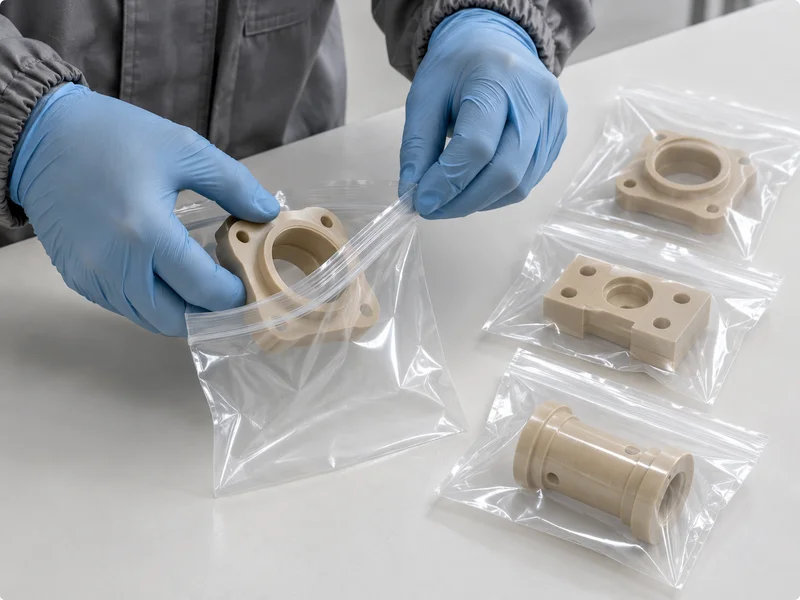
Practice:
- Cleaning: remove coolant and chips with compatible cleaners
- Packaging: clean bags, sometimes double-bagged
- Inspection: dimensions, burrs, surface finish
- Material traceability: certificates linked to stock lot
- Handling: gloves for clean applications
For example, a semiconductor equipment part may require ultrasonic cleaning and double-bagging after inspection. Our quality control and inspection process supplies reports and certificates on request.
Key Takeaway: As a rule, agree cleaning and packaging requirements before machining.
What Should You Check Before Quoting PEEK 450G Parts?
Before quoting PEEK 450G parts, check grade, stock form, certification and requirements, because stock is costly.
Checks:
- Exact grade: 450G, filled grade or medical grade
- Stock form and size: rod, plate, tube
- Certificates required
- Critical tolerances and service temperature
- Cleaning and packaging requirements
- Quantity and repeat demand
For example, a drawing that says “PEEK” without a grade may lead to a quote for a different filled grade. Our guide to CNC plastic machining explains other plastic options.
Key Takeaway: Finally, write the exact grade and any certificate needs on the drawing.
FAQ
- Q: Is PEEK 450G easy to machine?
- Yes, relatively. It cuts cleanly with sharp tools; heat and stress need control.
- Q: Does PEEK need annealing?
- Annealed stock and annealing between roughing and finishing help keep tight parts stable.
- Q: What tools are best for PEEK?
- Sharp carbide, or diamond-tipped tools for long runs and filled grades.
- Q: What tolerances can PEEK hold?
- Tight tolerances on small, stress-relieved parts; more allowance on thin walls.
- Q: What is PEEK 450G used for?
- Insulators, seals, valve parts and components exposed to heat and chemicals.
Conclusion
PEEK 450G machinability is good when heat and stress are controlled. Use annealed stock, sharp tools and staged machining, set realistic tolerances for temperature and confirm grade and cleanliness needs. To review a PEEK part, send your 3D model and 2D drawing to our engineers.