
Aluminum Casting Alloys: Grades, Machining and Porosity
Aluminum casting alloys are formulated to flow into molds and solidify into sound shapes, which is why they differ from the wrought alloys used for machined plate and bar. They are used for housings, covers, brackets, pump bodies and heat sinks, often cast close to shape and then CNC machined on critical faces, bores and threads. Choosing the right casting alloy, and knowing how it machines and finishes, prevents porosity problems, poor anodizing and unexpected costs.
Cast-and-machined parts combine two processes, and problems often appear at the interface. For example, a die-cast A380 housing may machine well but anodize poorly and reveal porosity when a sealing face is cut. In this guide, we explain aluminum casting alloys: common grades, how casting processes affect them, machinability, finishing, porosity, when casting plus machining makes sense compared with machining from plate, and how to specify cast blanks. Our focus is small and medium cast-and-machined parts. For the process comparison, see our guide to casting vs machining.
Aluminum casting alloys are mainly Al-Si based, with silicon (about 5–12%) for fluidity, plus magnesium or copper for strength. Common grades include A356/A356-T6 (sand and permanent mold, good strength, heat-treatable, anodizes fairly), A380 and ADC12 (die casting, excellent castability, higher porosity, poor anodizing), A413 (pressure tightness) and 319 (general purpose). Machining is generally good, though high silicon increases tool wear. Porosity can open on machined faces, so critical sealing areas need sound casting design and inspection. Wrought 6061-T6 or T651 machined from plate is the alternative at lower volumes.
In short: choose the casting alloy by process, strength, sealing and finish needs, and plan machining around porosity.
Key points:
- Al-Si alloys: silicon gives castability.
- Die-cast alloys: good castability, poor anodizing.
- Porosity: critical for machined sealing faces.
What Are Aluminum Casting Alloys?
Aluminum casting alloys are aluminum alloys designed for pouring or injecting into molds, rather than rolling or extruding.
Characteristics:
- High silicon for fluidity and reduced shrinkage
- Lower ductility than many wrought alloys
- Designations: Aluminum Association (A356, A380) and EN (AC-42100, AC-46000)
- Some heat-treatable grades (A356-T6)
For example, A356-T6 is used for structural cast parts, while A380 is the most common die-casting alloy. Casting alloy specifications are published by ASTM International, such as ASTM B26 and B85.
Key Takeaway: Above all, casting alloys trade some ductility for castability.
Which Aluminum Casting Alloys Are Common?
Common aluminum casting alloys differ by process, strength and finish.
| Alloy (typical) | Process | Strength | Anodizing | Typical uses |
|---|---|---|---|---|
| A356-T6 / AlSi7Mg | Sand, permanent mold | Good | Fair | Structural housings, brackets |
| A380 / ADC12 | High-pressure die casting | Moderate | Poor | Housings, covers |
| A413 | Die casting | Moderate | Poor | Pressure-tight parts |
| 319 | Sand, permanent mold | Moderate | Poor–fair | General castings |
| 535 / Almag | Sand, permanent mold | Good | Good | Cosmetic anodized castings |
For example, a die-cast A380 enclosure is economical at high volume but usually painted or powder coated rather than anodized. Our guide to aluminum powder coating vs anodizing explains finish choices.
Key Takeaway: In other words, alloy and casting process are chosen together.
How Do Aluminum Casting Alloys Machine?
Aluminum casting alloys machine well overall, with a few differences from wrought alloys.
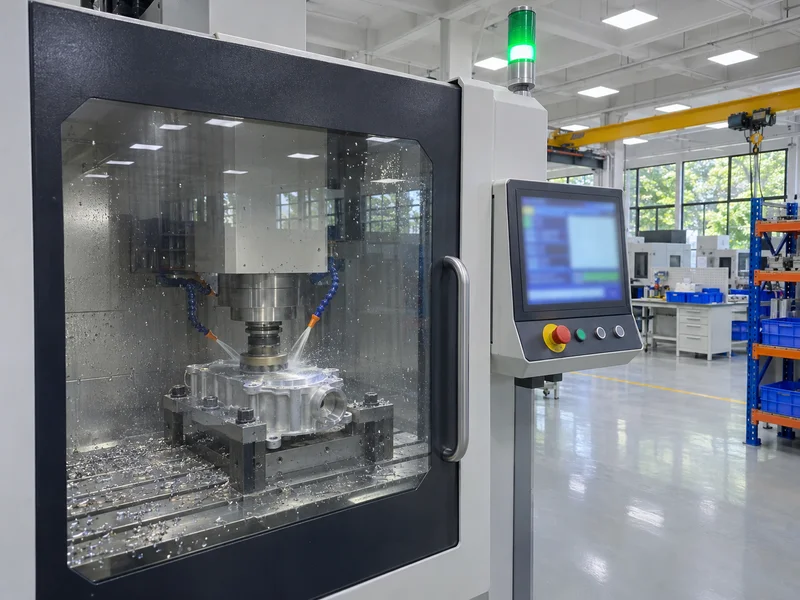
- Silicon content increases abrasive tool wear; carbide or PCD tools help.
- Chip formation is usually good.
- Skin and parting lines need first-cut planning.
- Porosity may open on machined faces.
- Datums must come from stable cast features, then move to machined datums.
For example, machining an A380 housing starts from cast locating points, then establishes machined datums for all critical features. Our CNC machining services machine cast blanks to drawing.
Key Takeaway: For this reason, plan the first datum setup on cast features carefully.
How Does Porosity Affect Cast and Machined Parts?
Porosity affects cast and machined parts because machining can open hidden voids on functional surfaces.
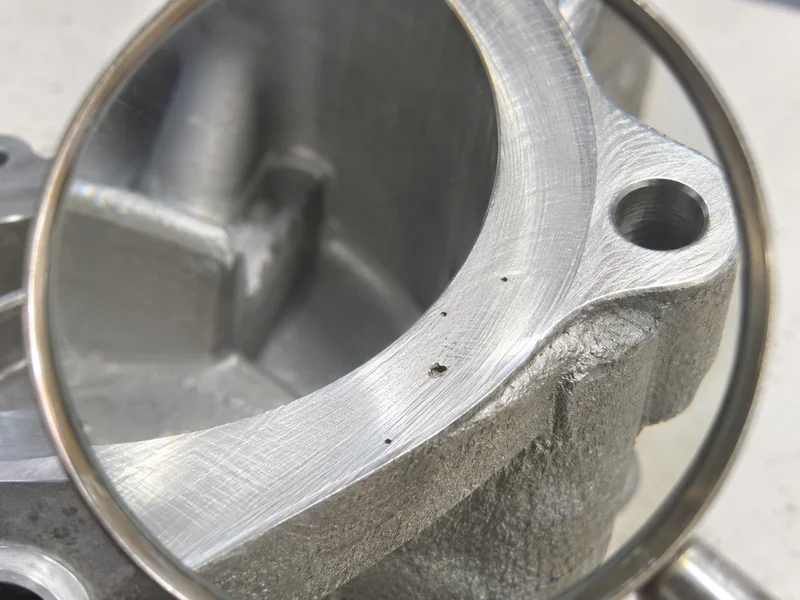
Risks:
- Leaks through sealing faces or ports
- Cosmetic defects on visible faces
- Thread weakness in porous areas
- Coating defects where pores trap fluids
Controls:
- Casting design with uniform walls and good feeding
- Minimal machining stock on sealing faces
- Impregnation to seal porosity
- Leak testing of finished parts
- X-ray or sectioning for qualification
For example, a pump housing may be vacuum impregnated after machining and pressure tested to guarantee sealing. Our quality control and inspection process records leak tests when specified.
Key Takeaway: Overall, design sealing areas with minimal machining stock.
When Is Casting Plus Machining Better Than Machining From Plate?
Casting plus machining is better than machining from plate when volume is high enough to pay for the casting tool and the shape wastes a lot of plate.
Comparison:
| Factor | Cast + machined | Machined from plate (6061-T6 / T651) |
|---|---|---|
| Tooling | Pattern or die needed | None |
| Volume | Medium to high | Prototype to medium |
| Material waste | Low | Higher |
| Strength and consistency | Lower, porosity risk | Higher, consistent |
| Anodizing | Often poor | Very good |
| Lead time to first part | Longer | Shorter |
For example, a housing at 200 per year is usually machined from 6061 plate, while at 20,000 per year it may be die cast and machined on critical faces. The difference between 6061-T6 and T651 matters for plate: T651 is stress relieved and moves less. Our guide to aluminium alloy 6061 properties explains tempers.
Key Takeaway: Equally, compare total cost at your real annual volume.
How Should Cast Aluminum Parts Be Finished?
Cast aluminum parts should be finished with methods suited to their silicon content and porosity.
- Powder coating or painting: most common for die castings
- Chemical conversion coating: good paint base, conductive
- Anodizing: suits low-silicon alloys such as 535; poor on A380
- Impregnation before finishing for porous parts
- Bead blasting for uniform appearance
For example, an A356 bracket may be bead blasted and powder coated, while a 535 cosmetic cover can be anodized. Our guide to metal surface finishing techniques compares options.
Key Takeaway: As a rule, do not expect die-cast alloys to anodize like 6061.
How Should Cast Blanks for Machining Be Specified?
Cast blanks for machining should be specified with alloy, process, machining stock and quality requirements.
Specification items:
- Alloy and temper, such as A356-T6
- Casting process
- Machining stock on critical faces
- Datum targets on the casting
- Porosity requirements for sealing areas
- Leak test or impregnation needs
- Material certificate
For example, “A356-T6 permanent mold, 1.5 mm stock on sealing face, porosity grade per agreed standard, leak test 3 bar” gives a clear basis. Casting defect standards are also described by ISO.
Key Takeaway: Finally, define datum targets so casting and machining use the same references.
FAQ
- Q: What are aluminum casting alloys?
- Aluminum alloys, usually Al-Si based, designed for casting rather than rolling or extrusion.
- Q: Which aluminum casting alloy is most common?
- A380 (ADC12) for die casting and A356 for sand and permanent mold casting.
- Q: Can cast aluminum be anodized?
- Low-silicon alloys can; high-silicon die-cast alloys anodize poorly.
- Q: Why do machined castings leak?
- Machining can open internal porosity on sealing faces.
- Q: When is machining from plate better than casting?
- At low to medium volumes, or when strength, consistency and anodizing matter.
Conclusion
Aluminum casting alloys suit higher-volume parts when the alloy matches the casting process, sealing and finish needs, and machining is planned around datums and porosity. At lower volumes, 6061 plate is often better. To review a cast or machined aluminum part, send your 3D model and 2D drawing to our engineers.