
Heat Treatment of Steel: Sequencing and Distortion Control
Heat treatment of steel changes its hardness, strength, toughness and internal stress by heating and cooling it under control. For machined parts, it also changes dimensions, surface condition and machinability, so the order of machining and heat treatment matters as much as the process itself. A shaft hardened after finish machining may warp out of tolerance; one finished before stress relief may move later.
The right sequence depends on the steel, the required hardness and the tolerances. For example, a 4140 shaft can often be machined from pre-hardened bar with no further heat treatment, while a D2 punch must be roughed annealed, hardened and then ground. In this guide, we explain heat treatment of steel for machined parts: main processes, how to sequence machining and heat treatment, stress relief, distortion control, material certificates and traceability, and corrosion protection afterward. For grade background, see our guide to difference between carbon steel and alloy steel.
Heat treatment of steel includes annealing (softening), normalizing (refining structure), stress relieving (reducing residual stress), hardening by quenching followed by tempering (strength and hardness), case hardening (carburizing, nitriding, induction) and precipitation hardening for some stainless grades. For machined parts, a common sequence is rough machine, stress relieve or harden, then finish machine or grind critical features. Pre-hardened steels (about 28–32 HRC) can be machined directly. Specify hardness, case depth and process on the drawing, request certificates and plan corrosion protection after treatment.
In short: choose the treatment for the property needed, then sequence machining so final dimensions come after distortion.
Key points:
- Processes: anneal, normalize, stress relieve, harden and temper, case harden.
- Sequence: rough, treat, finish.
- Records: hardness and material certificates.
What Is Heat Treatment of Steel?
Heat treatment of steel is controlled heating and cooling to change its microstructure and properties.
Main processes:
- Annealing: softens steel for machining
- Normalizing: refines grain and evens properties
- Stress relieving: reduces residual stress without changing hardness much
- Hardening and tempering (QT): raises strength and hardness, then adjusts toughness
- Case hardening: hard surface, tough core (carburizing, nitriding, induction)
- Precipitation hardening: aging of grades such as 17-4PH
For example, a gear made from 8620 may be carburized and hardened, while a 4140 shaft is quenched and tempered. Heat treatment terms are defined in standards from ISO, such as ISO 4885.
Key Takeaway: Above all, each process targets a different property.
How Should Machining and Heat Treatment of Steel Be Sequenced?
Machining and heat treatment of steel should be sequenced so distortion is removed before final dimensions are cut.
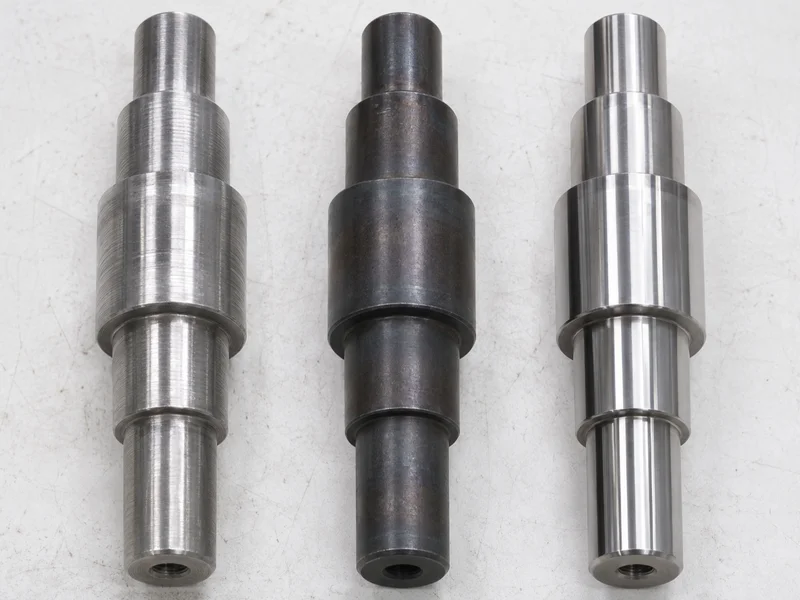
Common sequences:
| Situation | Typical sequence |
|---|---|
| Pre-hardened steel (28–32 HRC) | Machine complete |
| Through-hardened parts with tight tolerances | Rough → harden and temper → grind or hard-machine |
| Case-hardened parts | Machine → carburize/harden → grind critical features |
| Nitrided parts | Machine and stress relieve → nitride (low distortion) |
| Weldments | Weld → stress relieve → machine datums and features |
For example, a hardened tool steel insert is roughed with grinding stock left on, hardened and then finished by grinding and EDM. Our guide on how to choose mold steel covers tool steel sequences.
Key Takeaway: In other words, finish critical features after the last distortion-causing step.
Why Is Stress Relief Important Before Finish Machining?
Stress relief is important before finish machining because residual stress releases as material is removed, moving the part.
When to stress relieve:
- After heavy roughing of steel parts
- After welding of steel blanks
- Before precision finishing of long or thin parts
- For aluminum, stress-relieved plate (T651) or thermal stress relief is used
For example, a welded steel base machined without stress relief may move after its datums are cut. Machining datums for welded steel blanks after stress relief keeps them stable. Our guide to aluminium alloy 6061 properties explains T651 stress relief for aluminum.
Key Takeaway: For this reason, stress relieve before finishing anything that must stay flat or straight.
How Do You Control Distortion From Heat Treatment of Steel?
You control distortion from heat treatment of steel through material choice, design and process.
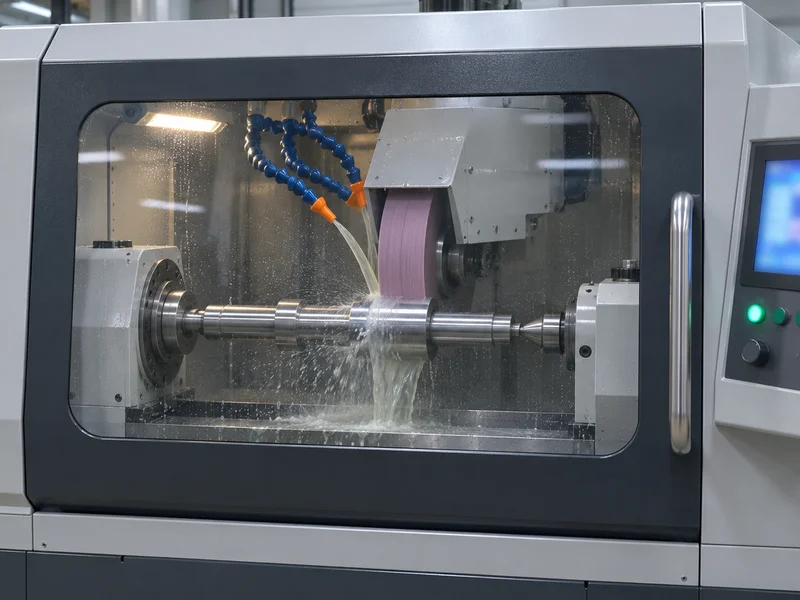
Methods:
- Air- or oil-hardening steels distort less than water-hardening ones
- Symmetrical design and uniform sections
- Grinding allowance on critical features
- Proper fixturing during heating and quenching
- Vacuum heat treatment for clean, low-distortion results
- Nitriding for low-distortion surface hardening
For example, leaving 0.2–0.3 mm grinding stock on bearing seats allows a hardened shaft to be ground true. Our guide to high precision CNC turning explains finishing turned parts.
Key Takeaway: Overall, plan grinding stock where tight tolerances follow hardening.
How Do Material Certificates Support Heat Treatment?
Material certificates support heat treatment by confirming chemistry, which decides how the steel responds.
Certificate checks:
- Chemical composition within the grade range
- Heat number traceable to the bar lot
- Supply condition, such as annealed or QT
- Mechanical properties where listed
Traceability practice:
- Link each part lot to the material heat number
- Record heat treatment batch and hardness results
- Approve substitutions, such as a different temper or grade, in writing
For example, a 42CrMo4 certificate with chromium below range would explain poor hardening. Our quality control and inspection process supplies certificates on request.
Key Takeaway: Equally, keep heat numbers linked to parts for every heat-treated lot.
How Should Heat-Treated Steel Parts Be Protected From Corrosion?
Heat-treated steel parts should be protected from corrosion because hardened carbon and alloy steels rust readily.
Options:
- Black oxide and oil for dry indoor use
- Zinc or nickel plating for humid environments (watch hydrogen embrittlement on high-hardness parts)
- Nitriding adds some corrosion resistance
- Phosphating and oil
- VCI packaging for storage and shipping
For example, a hardened 4140 shaft for a humid plant may be nickel plated after grinding, with baking to reduce embrittlement risk. Our guide to black oxide coating explains its limits.
Key Takeaway: As a rule, plan corrosion protection together with heat treatment.
How Should Heat Treatment Be Specified on Drawings?
Heat treatment should be specified on drawings with process, hardness and inspection details.
Specification items:
- Process, such as “quench and temper”
- Hardness range, such as 28–32 HRC
- Case depth for case hardening, with hardness
- Areas to be hardened or protected
- Test locations for hardness
- Certificates required
For example, “42CrMo4, QT to 28–32 HRC, hardness test on end face, EN 10204 3.1 certificate” is complete. Hardness test methods are published by ASTM International.
Key Takeaway: Finally, specify hardness ranges and test locations, not just “hardened”.
FAQ
- Q: What is heat treatment of steel?
- Controlled heating and cooling to change hardness, strength, toughness and stress.
- Q: Should steel be machined before or after heat treatment?
- Usually roughed before and finished after, unless pre-hardened steel is used.
- Q: What is stress relieving?
- Heating below the transformation range to reduce residual stress with little hardness change.
- Q: Does heat treatment cause distortion?
- Yes, so critical features are often ground after hardening.
- Q: How should hardness be specified?
- As a range with the test method and location.
Conclusion
Heat treatment of steel delivers the properties machined parts need when the process, sequence and records are planned together. Rough, treat, then finish; relieve stress before precision work; keep certificates linked; and protect hardened parts from corrosion. To review a heat-treated part, send your 3D model and 2D drawing to our engineers.