
Black Oxide Coating: Types, Corrosion and Dimensions
Black oxide coating is a conversion finish that turns the surface of steel into a thin black layer of magnetite. It gives machined steel parts a uniform black appearance, reduces glare and, when sealed with oil or wax, offers mild corrosion protection, all with almost no change in dimensions. That makes it popular for precision steel parts such as fixtures, shafts, fasteners, gauge components and tooling.
Its limits are often misunderstood. For example, black-oxided parts shipped dry in humid conditions may show rust spots on arrival, because the coating relies on its oil seal for protection. In this guide, we explain black oxide coating: how it works, types, corrosion performance, dimensional effects, how it compares with other finishes, packaging and corrosion protection, and how to specify it. We also cover bead blasting and powder coating effects on threads and tolerances. For finish families, see our guide to metal surface finishing techniques.
Black oxide coating converts the surface of steel (and also stainless steel, copper and brass with different chemistries) into a black oxide layer about 0.5–1.5 µm thick, so dimensions are essentially unchanged and threads usually need no masking. Hot black oxide (about 140 °C) is most common; mid-temperature and room-temperature (cold blackening) variants also exist. Corrosion resistance comes mainly from the post-treatment oil, wax or lacquer, and is suitable for dry indoor environments, not outdoor or wet use. Specify the standard, base metal, sealant and any salt spray or appearance requirements.
In short: black oxide gives a black, dimension-neutral finish; its corrosion protection depends on the oil seal.
Key points:
- Thin: about 1 µm, no fit changes.
- Protection: mild, mainly from the sealant.
- Use: dry, indoor precision steel parts.
What Is Black Oxide Coating?
Black oxide coating is a chemical conversion of the steel surface into black iron oxide (magnetite).
Key features:
- Conversion, not deposition: the surface reacts rather than receiving a new layer
- Thickness: about 0.5–1.5 µm
- Appearance: uniform matte to semi-gloss black
- Post-treatment: oil, wax or lacquer seal
For example, a hardened steel locating pin can be black oxided without changing its ground diameter. Black oxide specifications such as MIL-DTL-13924 and ISO 11408 are widely used; ISO standards are published by ISO.
Key Takeaway: Above all, black oxide is a conversion coating, so it adds almost no thickness.
Which Types of Black Oxide Coating Exist?
Types of black oxide coating differ by process temperature and base metal.
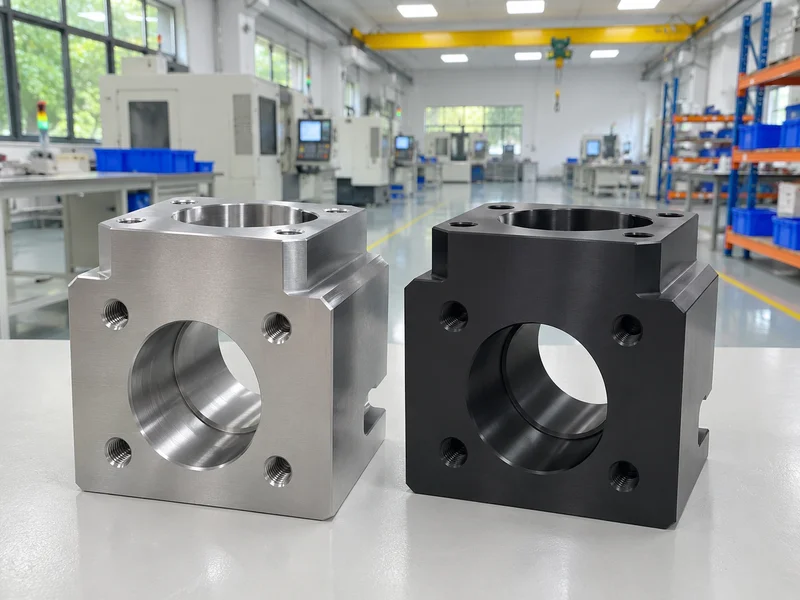
| Type | Temperature | Notes |
|---|---|---|
| Hot black oxide | ~140 °C | True magnetite, durable, most common for steel |
| Mid-temperature | ~90–120 °C | Fewer fumes, similar appearance |
| Room-temperature (cold blackening) | Ambient | Copper selenide deposit, less durable |
| Stainless steel black oxide | Special baths | For 300 and 400 series |
| Copper and brass blackening | Special baths | Decorative, electrical parts |
For example, production fixtures often use hot black oxide for durability, while touch-up uses cold blackening. Our CNC machining services include black oxide through our qualified finishing suppliers.
Key Takeaway: In other words, hot black oxide is the durable choice for steel parts.
How Well Does Black Oxide Coating Resist Corrosion?
Black oxide coating resists corrosion only mildly; most protection comes from the sealant.
- Without oil: minimal protection; rust can form quickly in humidity
- With oil or wax: suitable for dry indoor environments
- With lacquer: improved handling resistance
- Not suitable: outdoor, wet or salt environments
For example, black-oxided gauge blocks in a climate-controlled lab perform well, while the same finish on an outdoor bracket would rust. Zinc or nickel plating is better outdoors. Our guide to plating thickness explains plating options.
Key Takeaway: For this reason, choose black oxide for dry indoor parts only.
How Does Black Oxide Coating Affect Dimensions?
Black oxide coating affects dimensions negligibly, which is its main advantage for precision parts.
- Thickness: about 1 µm or less
- Threads: usually no masking needed
- Fits: H7 bores and g6 shafts stay in tolerance
- Surface finish: follows the machined finish
For comparison:
- Bead blasting: slightly roughens surfaces and rounds edges; dimensional effect is small but mask fits and sealing faces.
- Powder coating: adds about 50–120 µm; threaded holes must be masked or chased afterward.
For example, a machined steel fixture with tapped holes can be black oxided without masking, but powder coating would close the threads. Our guide to thread gauge explains gauging after finishing.
Key Takeaway: Overall, black oxide is the finish to choose when dimensions must not change.
How Does Black Oxide Compare With Other Finishes for Steel?
Black oxide compares with other finishes for steel by protection, thickness and appearance.
| Finish | Thickness | Corrosion | Appearance |
|---|---|---|---|
| Black oxide + oil | ~1 µm | Low–moderate (indoor) | Black |
| Zinc plating | 5–25 µm | Good | Silver, yellow, black options |
| Nickel / EN | 5–25 µm | Good | Silver |
| Phosphate + oil | 5–15 µm | Moderate | Grey-black |
| Powder coating | 50–120 µm | Good | Any color |
For example, a black fastener for an indoor machine may be black oxided, while a black outdoor fastener may be black zinc plated. Our guide to heat treatment of steel covers protection of hardened parts.
Key Takeaway: Equally, choose plating when corrosion matters more than dimensions.
How Should Black-Oxided and Machined Parts Be Packaged?
Black-oxided and machined parts should be packaged to protect against humidity, contact and handling.
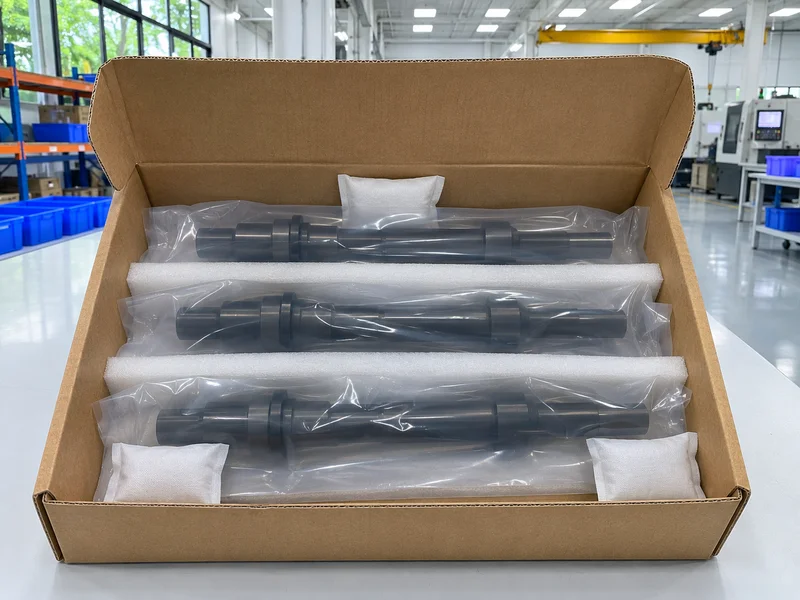
CNC machining packaging and corrosion protection:
- Keep the oil film intact; avoid degreasing before packing
- VCI bags or paper for steel parts
- Desiccant for sea freight
- Separators to prevent contact marks
- Sealed cartons and pallets for export
For example, black-oxided shafts shipped by sea in VCI bags with desiccant arrive rust-free, while loosely packed parts may show spots. Our quality control and inspection process includes packaging checks when specified.
Key Takeaway: As a rule, plan packaging as part of the black oxide finish.
How Should Black Oxide Coating Be Specified?
Black oxide coating should be specified with standard, base metal, sealant and requirements.
Specification items:
- Standard, such as MIL-DTL-13924 class or ISO 11408
- Base metal class (steel, stainless, copper)
- Sealant, such as water-displacing oil or wax
- Appearance requirements
- Salt spray hours if required
- Packaging requirements
For example, “Black oxide per MIL-DTL-13924 Class 1, supplementary oil treatment, VCI packaging” is complete. Corrosion test methods such as salt spray are described in standards from ASTM International.
Key Takeaway: Finally, always specify the oil or wax seal with black oxide.
FAQ
- Q: What is black oxide coating?
- A conversion finish that turns the steel surface into a thin black iron oxide layer.
- Q: Does black oxide change dimensions?
- Negligibly; it is about 1 µm thick.
- Q: Is black oxide rust proof?
- No. It offers mild protection, mainly from its oil seal, for dry indoor use.
- Q: Can stainless steel be black oxided?
- Yes, with special baths.
- Q: Do threads need masking for black oxide?
- Usually not, because the coating is so thin.
Conclusion
Black oxide coating gives precision steel parts a black, dimension-neutral finish with mild protection from its sealant. Use it for dry indoor parts, specify the oil seal and packaging, and choose plating where corrosion is serious. To review finishing on your part, send your 3D model and 2D drawing to our engineers.