
Is Stainless Steel a Ferrous Material? The Best Simple Answer
Is stainless steel a ferrous material? Yes. Stainless steel is iron-based, so it is a ferrous metal, even though it resists rust far better than ordinary steel. “Ferrous” means containing mainly iron, not “magnetic” or “rusts easily”. The confusion matters for machined parts, because buyers often use magnetism, corrosion or scrap categories to judge materials, and these do not always line up with the ferrous label.
The magnetic question causes the most mistakes. For example, an incoming inspector may reject 304 stainless fittings because a magnet sticks slightly to a machined thread, although cold work can make 304 mildly magnetic. In this guide, we answer whether stainless steel is a ferrous material, explain stainless families, magnetism and how machining affects it, how to specify magnetic requirements, how stainless compares with non-ferrous metals and how to verify grades. For grade comparisons, see our guide to 304 stainless steel versus 316 stainless steel.
Is stainless steel a ferrous material? Yes: stainless steels are iron-based alloys with at least about 10.5% chromium, so they are ferrous. Their corrosion resistance comes from a thin chromium oxide layer, not from lacking iron. Magnetism depends on microstructure: austenitic grades (304, 316) are essentially non-magnetic when annealed but can become slightly magnetic after cold work or machining; ferritic (430) and martensitic (410, 420, 440C) grades are magnetic; duplex grades are magnetic; precipitation-hardening 17-4PH is magnetic. Non-ferrous metals such as aluminum, copper, brass and titanium contain little or no iron.
In short: all stainless steels are ferrous; only some are magnetic, and machining can change that.
Key points:
- Ferrous: iron-based, including all stainless steels.
- Magnetism: depends on grade and cold work.
- Specify: magnetic permeability if it matters.
Is Stainless Steel a Ferrous Material?
Stainless steel is a ferrous material because iron is its main element.
Composition basics:
- Iron: typically the majority of the alloy
- Chromium: at least about 10.5%, forming the passive layer
- Nickel: in austenitic grades such as 304 and 316
- Molybdenum: in 316 for pitting resistance
- Carbon: low in most grades, higher in martensitic grades
For example, 304 contains roughly 18% chromium and 8% nickel, with iron making up most of the rest. Stainless steel specifications are published by ASTM International.
Key Takeaway: Above all, “stainless” describes corrosion behavior, not the absence of iron.
Which Stainless Steel Families Exist?
Stainless steel families differ in microstructure, magnetism and properties.
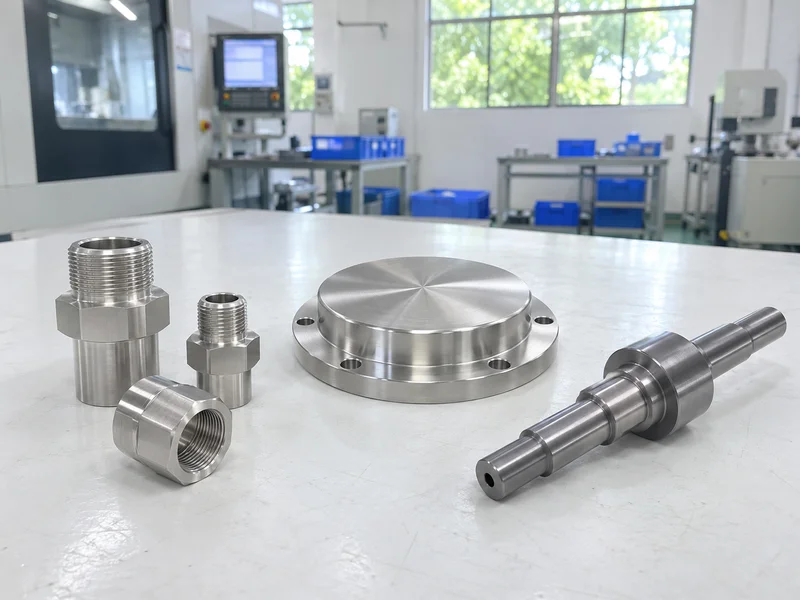
| Family | Example grades | Magnetic | Hardenable | Typical machined uses |
|---|---|---|---|---|
| Austenitic | 303, 304, 316 | No (annealed) | No (by cold work only) | Fittings, food and fluid parts |
| Ferritic | 430 | Yes | No | Trim, covers |
| Martensitic | 410, 420, 440C | Yes | Yes | Shafts, blades, wear parts |
| Duplex | 2205 | Yes | No | Chemical, marine parts |
| Precipitation hardening | 17-4PH | Yes | Yes (aging) | High-strength parts |
For example, a pump shaft needing hardness may be 420 or 17-4PH, while a fluid fitting is usually 316. Our guide to 316L SS vs 316 SS compares low-carbon grades.
Key Takeaway: In other words, family decides magnetism and hardenability.
Is Stainless Steel a Ferrous Material Even When Non-Magnetic?
Yes. Some stainless steels are magnetic because their microstructure is ferritic or martensitic.
- Austenitic structure: non-magnetic
- Ferritic and martensitic structures: magnetic
- Duplex: mixed, therefore magnetic
- Cold work: can transform some austenite to martensite, adding magnetism
For example, 304 bar is essentially non-magnetic, but its machined or cold-formed areas may attract a magnet slightly. This does not mean the material is wrong. Our guide to is alloy steel the same as stainless steel explains composition differences.
Key Takeaway: For this reason, a magnet test cannot confirm a stainless grade.
How Does Machining Affect Magnetism in Stainless Parts?
Machining affects magnetism in stainless parts because cutting and forming cold-work the surface.
Effects:
- Austenitic grades (304 more than 316) can become slightly magnetic at machined surfaces, threads and bends.
- Heavy cold work such as rolling threads increases the effect.
- Annealing can restore non-magnetic behavior, with dimensional risk.
- Grade choice: 316 and higher-nickel grades stay less magnetic.
For example, a sensor housing near a magnetic sensor may need 316L and controlled machining to keep magnetic permeability low. Our CNC machining services machine 303, 304, 316 and other stainless grades.
Key Takeaway: Overall, choose 316 or specify permeability when low magnetism matters.
How Should Magnetic Requirements Be Specified?
Magnetic requirements should be specified with measurable permeability limits, not “non-magnetic”.
Specification items:
- Maximum relative magnetic permeability, for example μr ≤ 1.05
- Measurement method and instrument
- Grade, such as 316L
- Condition, such as annealed after machining if required
- Areas where the limit applies
For example, “316L, μr ≤ 1.05 measured on machined surfaces” is testable, while “non-magnetic stainless” leads to disputes. Our quality control and inspection process records such checks when specified.
Key Takeaway: Equally, write a number for magnetism, not a word.
Is Stainless Steel a Ferrous Material Compared With Non-Ferrous Metals?
Yes, and stainless steel compares with non-ferrous metals by weight, conductivity, cost and machinability.
| Material | Ferrous | Density | Corrosion | Machinability |
|---|---|---|---|---|
| Stainless steel | Yes | ~7.9 g/cm³ | Very good | Moderate |
| Aluminum | No | ~2.7 g/cm³ | Good (with finish) | Very good |
| Brass | No | ~8.5 g/cm³ | Good | Excellent |
| Lead-free brass | No | ~8.5 g/cm³ | Good | Good |
| Titanium | No | ~4.5 g/cm³ | Excellent | Difficult |
For example, a drinking-water fitting may use lead-free brass or 316 stainless. Lead-free brass machining is slower than leaded brass but still efficient. Our guide to brass material composition covers lead-free grades.
Key Takeaway: As a rule, choose non-ferrous metals when weight, conductivity or machining speed matter more than stainless strength.
How Do You Verify a Stainless Grade?
You verify a stainless grade with certificates and analysis, not with a magnet.
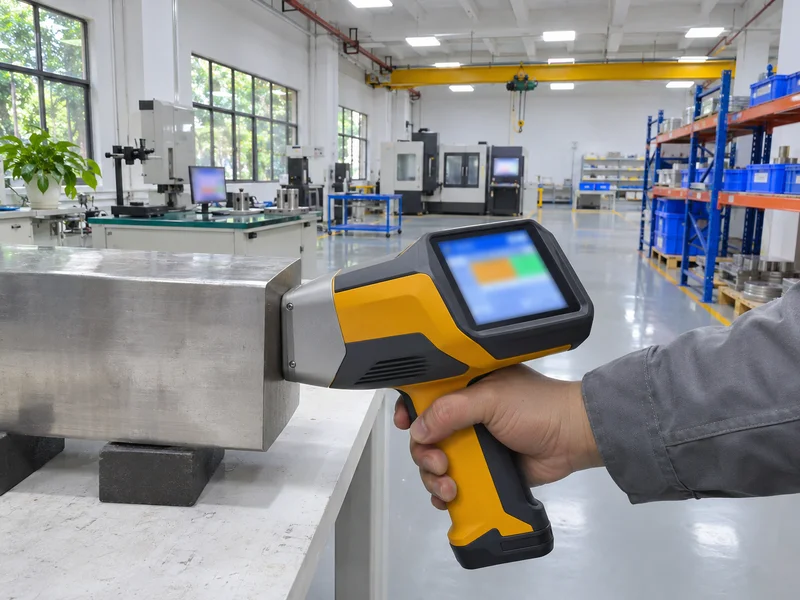
Methods:
- Material certificate linked to the bar lot
- XRF or spark analysis for chromium, nickel and molybdenum
- Molybdenum spot test to distinguish 316 from 304
- Permeability meter if magnetism is specified
For example, an XRF check can quickly confirm molybdenum content in 316 fittings. Our guide to steel alloy composition explains alloying elements.
Key Takeaway: Finally, confirm grade by chemistry and certificate.
FAQ
- Q: Is stainless steel a ferrous material?
- Yes. It is iron-based, so it is ferrous.
- Q: Why is some stainless steel magnetic?
- Ferritic, martensitic and duplex grades are magnetic; austenitic grades can become slightly magnetic after cold work.
- Q: Is 304 stainless magnetic?
- Essentially not when annealed, but machined or cold-worked areas can be slightly magnetic.
- Q: Does magnetism mean stainless will rust?
- No. Magnetism and corrosion resistance are separate properties.
- Q: How can I confirm a stainless grade?
- With a material certificate and chemical analysis such as XRF.
Conclusion
Is stainless steel a ferrous material? Yes, but its magnetism depends on family and cold work. Specify permeability numerically when it matters, verify grades by chemistry, and choose non-ferrous metals when weight or machinability is the priority. To review material for a part, send your 3D model and 2D drawing to our engineers.