
Brass Material Composition: Grades and C360 Explained
Brass material composition is mainly copper and zinc, but the exact proportions and small additions such as lead, tin, aluminum or silicon decide how a brass machines, resists corrosion, conducts electricity and whether it can be used in drinking water or consumer products. For machined fittings, connectors, valve parts, inserts and instrument components, knowing the composition behind a brass grade avoids both overpaying and compliance problems.
The same word “brass” covers grades with very different behavior. For example, free-cutting CuZn39Pb3 (C360) machines beautifully but contains lead, while a lead-free brass may machine more slowly but meet drinking-water rules. In this guide, we explain brass material composition: the role of copper, zinc and additions, common grades, how composition affects machining, corrosion and dezincification, lead-free brass, and how to specify brass on a drawing. For a comparison with bronze and copper, see our guide to bronze vs brass vs copper alloy.
Brass material composition is typically about 55–90% copper with zinc as the main alloying element. Alpha brasses (above about 63% Cu) are ductile and good for cold forming; alpha-beta brasses (about 55–63% Cu) are stronger and better for hot forging and machining. Small additions change behavior: lead (up to about 3%) improves machinability, tin improves corrosion resistance (naval brass), arsenic or antimony inhibits dezincification (DZR brass), and silicon or bismuth replace lead in lead-free grades. Composition is defined by standards such as EN 12164/12165 and ASTM B16 and confirmed by material certificates.
In short: copper and zinc set the base; small additions decide machinability, corrosion behavior and compliance.
Key points:
- Copper/zinc ratio: sets ductility and strength.
- Lead: improves machining but is restricted in some uses.
- Additions: tin, arsenic, silicon and bismuth tune behavior.
What Is Brass Material Composition?
Brass material composition is the proportion of copper, zinc and minor elements in the alloy.
Main elements:
- Copper (Cu): about 55–90%; more copper, more ductility and corrosion resistance
- Zinc (Zn): the main alloying element; more zinc, more strength and lower cost
- Lead (Pb): chip breaker for machining
- Tin (Sn): corrosion resistance, especially in seawater
- Arsenic (As) or antimony: dezincification resistance
- Silicon (Si), bismuth (Bi): lead replacements
For example, C360 free-cutting brass contains roughly 61.5% Cu, 35.5% Zn and 3% Pb. Copper alloy standards are published by ASTM International.
Key Takeaway: Above all, read the alloy designation to know the composition.
Which Common Grades Show Brass Material Composition Differences?
Common grades show clear brass material composition differences.
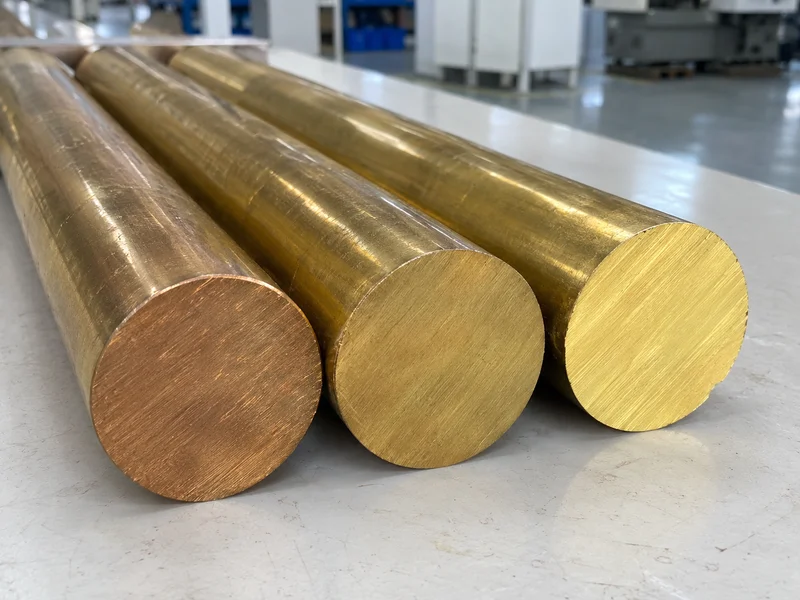
| Grade (EN / UNS, typical) | Approx. composition | Main property | Typical uses |
|---|---|---|---|
| CuZn39Pb3 / C360 | 58–62% Cu, ~3% Pb, bal. Zn | Best machinability | Fittings, turned parts |
| CuZn40Pb2 / C377 | ~59% Cu, ~2% Pb | Forging and machining | Forged valve bodies |
| CuZn37 / C272 | ~63% Cu, low Pb | Cold forming | Stamped, drawn parts |
| CuZn30 / C260 (cartridge brass) | ~70% Cu | Ductility | Deep drawing |
| CuZn36Pb2As (DZR) | Cu, Zn, Pb, As | Dezincification resistance | Water fittings |
| CuZn21Si3P (lead-free) | Cu, Zn, Si | Lead-free machining | Drinking-water parts |
| Naval brass C464 | ~60% Cu, ~1% Sn | Seawater resistance | Marine hardware |
Values vary by standard. For example, a drinking-water fitting in Europe may need a DZR or lead-free grade rather than C360.
Key Takeaway: In other words, choose the grade by machining needs and service environment together.
How Does Brass Material Composition Affect Machining?
Brass material composition affects machining mainly through lead or its replacements.
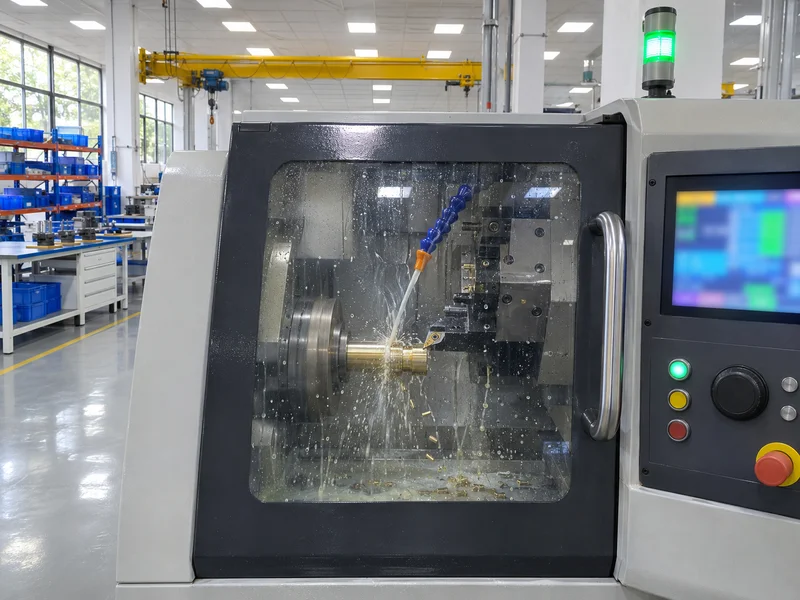
- Leaded brasses (C360): short chips, high speeds, excellent finish; the machinability reference (100%)
- Low-lead brasses: longer chips, lower speeds
- Silicon and bismuth lead-free brasses: machinable but usually slower than C360
- Alpha brasses: gummy, harder to machine
For example, switching a turned fitting from C360 to a silicon lead-free brass may increase cycle time and change tool choice. Our CNC turning service machines brass fittings and inserts to drawing. Our guide to high precision CNC turning covers turned-part accuracy.
Key Takeaway: For this reason, account for slower machining when moving to lead-free brass.
What Is C360 Brass and When Should You Use It?
C360 brass is the free-cutting leaded brass most shops use as the default for turned and milled brass parts, because its lead content breaks chips into small pieces and allows high speeds.
| Property | C360 brass (C36000, typical) |
|---|---|
| Equivalents | CuZn39Pb3 (EN), C3604 (JIS), HPb59-3 (GB, close) |
| Copper | about 60–63% |
| Lead | about 2.5–3.7%, depending on standard |
| Zinc | Balance |
| Tensile strength | about 340–470 MPa, by temper |
| Machinability rating | 100% (reference for free-cutting alloys) |
| Density | about 8.5 g/cm³ |
For example, small fittings, inserts, valve stems and connector pins are usually turned from C360 bar on CNC lathes or Swiss machines. It is less suitable where lead is restricted, such as some drinking-water and food-contact parts, or where the part must be cold formed after machining. Lead limits for electrical products are set by RoHS on EUR-Lex. Our guides to Swiss machining and CNC turned parts explain how C360 parts are made.
Key Takeaway: In other words, choose C360 brass for machining speed, and a lead-free grade where regulations require it.
How Does Brass Material Composition Affect Corrosion?
Brass material composition affects corrosion, especially dezincification and stress corrosion cracking.
- Dezincification: zinc leaches out in certain waters, leaving porous copper; higher zinc grades are more prone.
- DZR brasses: arsenic or antimony additions inhibit it.
- Stress corrosion cracking: can occur with ammonia and residual stress.
- Naval brass: tin improves seawater resistance.
For example, a standard C360 fitting in aggressive water may dezincify, while a DZR brass fitting resists it. Our guide to copper and nickel plating explains protective plating options.
Key Takeaway: Overall, specify DZR or suitable grades for water service.
What Should You Know About Lead-Free Brass?
You should know that lead-free brass meets restrictions on lead content but behaves differently in machining.
- Regulations: limits on lead in drinking-water and consumer products in many markets
- RoHS: restricts lead in electrical and electronic equipment, with specific exemptions for copper alloys; see EUR-Lex for current rules
- Replacements: silicon (e.g. CuZn21Si3P) or bismuth
- Machining: slower, different chip form, tool adjustments
- Cost: usually higher material cost
For example, a brass insert for an electrical product may be acceptable with lead under an exemption, while a tap fitting may require a lead-free grade. Compliance should be checked for each application.
Key Takeaway: Equally, confirm lead limits for the product’s market and use before choosing brass.
How Does Composition Affect Physical Properties?
Composition affects physical properties such as strength, conductivity and color.
- Strength: increases with zinc up to about 40%
- Electrical conductivity: about 25–30% IACS for common brasses, falling as zinc rises
- Color: from reddish (high copper) to yellow (higher zinc)
- Ductility: higher in high-copper alpha brasses
For example, a brass connector with high copper content conducts slightly better and forms more easily, while C360 is chosen for machining. Our guide to machinability of copper compares copper grades.
Key Takeaway: As a rule, choose high-zinc brasses for strength and machining, high-copper brasses for forming.
How Should Brass Be Specified on a Drawing?
Brass should be specified with the exact grade, standard, condition and compliance requirements.
Specification items:
- Grade and standard, such as “CuZn39Pb3 per EN 12164” or “C36000 per ASTM B16”
- Temper or condition, such as half hard
- Compliance: lead-free, DZR, RoHS
- Material certificate, if traceability is needed
- Finish, such as nickel plating
For example, “CuZn21Si3P lead-free brass, EN 12164, RoHS compliant, nickel plated 5–8 µm” is complete. Our quality control and inspection process supplies certificates on request.
Key Takeaway: Finally, “brass” alone is not a specification; name the grade.
FAQ
- Q: What is brass made of?
- Mainly copper and zinc, with small additions such as lead, tin, arsenic, silicon or bismuth.
- Q: What is the composition of C360 brass?
- About 61.5% copper, 35.5% zinc and 3% lead.
- Q: What is DZR brass?
- Dezincification-resistant brass with arsenic or antimony, used for water fittings.
- Q: Is lead-free brass harder to machine?
- Usually slower than leaded brass, but still machinable.
- Q: Does brass conduct electricity well?
- Moderately, about 25–30% IACS, much less than copper.
Conclusion
Brass material composition, copper and zinc plus small additions, decides machinability, corrosion behavior and compliance. Choose the grade for machining and service, check lead and dezincification requirements, and specify the exact grade. To review a brass part, send your 3D model and 2D drawing to our engineers.