
A2 vs D2 Tool Steel: How to Pick the Best
A2 vs D2 tool steel is a common choice for punches, dies, wear parts, gauges, fixtures and mold components. Both are cold-work tool steels hardened to around 57–62 HRC, but A2 is tougher and more stable, while D2 is far more wear resistant because of its high chromium carbide content. The right choice depends on whether the part is more likely to chip and crack or to wear out.
The wrong choice shows up quickly in service. For example, a D2 punch with sharp corners may chip under impact, while an A2 punch of the same design lasts longer; conversely, an A2 wear plate sliding against glass-filled plastic may wear much faster than D2. In this guide, we compare A2 vs D2 tool steel: composition, hardness and toughness, wear resistance, dimensional stability, machinability and grinding, applications and how to specify them. For mold steels, see our guide to how to choose mold steel.
A2 vs D2 tool steel: A2 (1.2363) is an air-hardening, 5% chromium cold-work steel with good toughness, excellent dimensional stability during hardening and moderate wear resistance, typically used at about 57–62 HRC. D2 (1.2379) is a high-carbon, about 12% chromium steel with large chromium carbides that give much higher wear resistance but lower toughness, and it is harder to machine and grind. Choose A2 for impact, chipping risk and complex shapes; D2 for abrasive wear, long production runs and cutting edges under low impact.
In short: A2 for toughness and stability; D2 for wear resistance.
Key points:
- A2: tougher, stable, easier to machine.
- D2: much more wear resistant, less tough.
- Choice: chipping risk vs wear.
What Is the Difference Between A2 vs D2 Tool Steel?
The difference between A2 vs D2 tool steel is mainly chromium and carbon content, which changes carbides.
| Property (typical) | A2 | D2 |
|---|---|---|
| Carbon | ~1.0% | ~1.5% |
| Chromium | ~5% | ~12% |
| Molybdenum | ~1% | ~0.8% |
| Vanadium | ~0.2% | ~0.9% |
| Working hardness | ~57–62 HRC | ~58–62 HRC |
| Toughness | Higher | Lower |
| Wear resistance | Moderate | High |
| Machinability (annealed) | Better | Harder |
Tool steel specifications such as ASTM A681 are published by ASTM International.
Key Takeaway: Above all, D2’s high chromium carbides give wear resistance at the cost of toughness.
A2 vs D2 Tool Steel: How Do Hardness and Toughness Compare?
Hardness and toughness compare with similar hardness but different toughness.
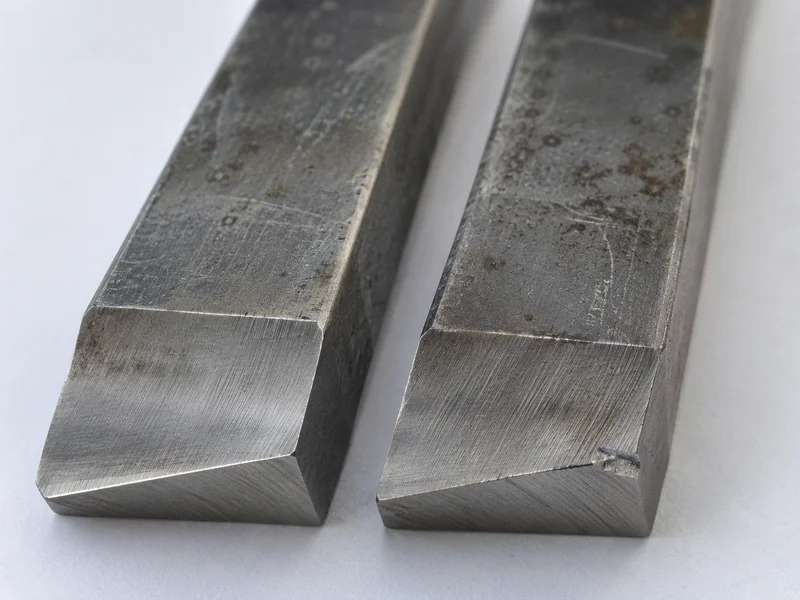
- Both reach about 58–62 HRC after hardening and tempering
- A2: better toughness, more resistant to chipping and cracking
- D2: brittle under impact, especially at sharp corners
- Tempering can trade hardness for toughness in both
For example, a forming punch with a sharp radius under shock loads is safer in A2. Our guide to heat treatment of steel explains hardening and tempering.
Key Takeaway: In other words, choose A2 when impact or chipping is the risk.
A2 vs D2 Tool Steel: How Does Wear Resistance Compare?
Wear resistance compares strongly in favor of D2.
- D2: large chromium carbides resist abrasive wear
- A2: moderate wear resistance
- Abrasive materials: D2 lasts longer cutting or contacting filled plastics, paper or thin sheet
- Coatings (PVD, nitriding) can further improve both
For example, a gate insert or wear plate in contact with glass-filled nylon often uses D2 or a similar high-wear steel. Our guide to mold inserts explains wear inserts.
Key Takeaway: For this reason, choose D2 when abrasion limits life.
How Do Dimensional Stability and Heat Treatment Compare?
Dimensional stability and heat treatment favor A2 for complex shapes.
- A2: air hardening, very low distortion
- D2: air hardening with low distortion, but may show more size change
- Deep cryogenic treatment can help stability for both
- Grinding allowance needed for both after hardening
For example, a complex A2 fixture with thin sections usually keeps its shape well through hardening. Our guide to surface grinding explains post-hardening finishing.
Key Takeaway: Overall, A2 is the safer choice for intricate, distortion-sensitive parts.
How Do Machining and Grinding Compare?
Machining and grinding compare in favor of A2.
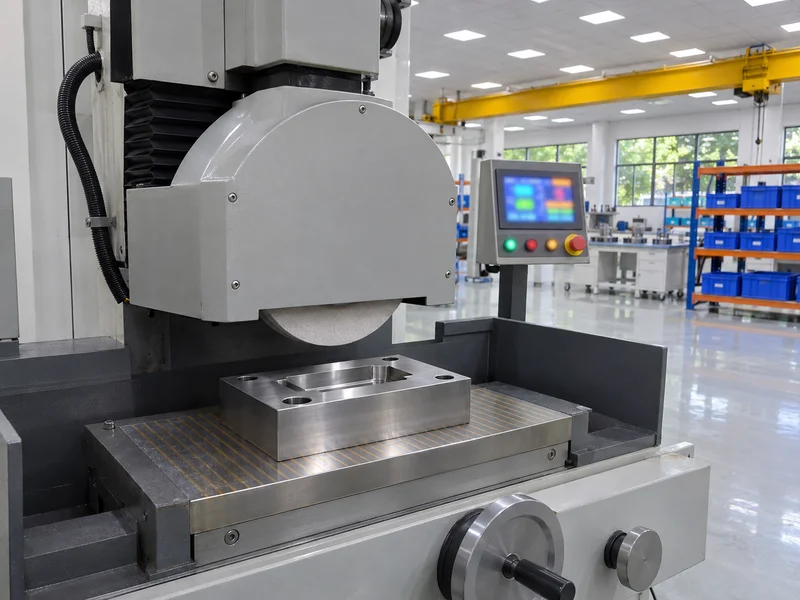
- Annealed machining: A2 easier; D2 more abrasive to tools
- Grinding: D2 harder to grind; risk of burn and cracks
- Wire EDM: both cut well after hardening
- Finishing: D2 polishes to a fine finish but takes longer
For example, a hardened D2 punch profile is often wire EDM’d and then ground, while A2 can sometimes be hard-milled. Our guide to wire EDM explains cutting hardened steels.
Key Takeaway: Equally, account for longer machining and grinding time with D2.
Which Applications Suit A2 and Which Suit D2?
Applications suit A2 or D2 according to impact and wear.
A2 suits:
- Forming and bending punches
- Fixtures and gauges
- Parts with sharp corners or thin sections
- Moderate-volume dies
D2 suits:
- Blanking and trimming dies for thin material
- Wear plates and guides
- Slitting knives
- Gate and wear inserts for abrasive plastics
For example, a gauge for repeated inspection may use A2 for stability, while a trimming blade uses D2 for edge life. Our CNC machining services machine tool steels with wire EDM and grinding.
Key Takeaway: As a rule, match the steel to the dominant failure mode.
How Should A2 or D2 Be Specified?
A2 or D2 should be specified with grade, hardness, treatment and finish.
Specification items:
- Grade and standard, such as “D2 / 1.2379 per ASTM A681”
- Hardness range, such as 58–60 HRC
- Heat treatment and tempering requirements
- Surface treatment, such as PVD or nitriding
- Material certificate and hardness report
For example, “A2 / 1.2363, harden and temper to 58–60 HRC, grind functional faces, hardness report” is complete. Our quality control and inspection process supplies hardness checks and certificates on request.
Key Takeaway: Finally, always specify the hardness range, not just the grade.
FAQ
- Q: What is the difference between A2 and D2 tool steel?
- A2 is tougher and more stable; D2 is more wear resistant but less tough.
- Q: Which is harder, A2 or D2?
- Both reach similar hardness; D2 is more wear resistant at that hardness.
- Q: Which is better for punches?
- A2 for impact and chipping risk; D2 for abrasive wear with low impact.
- Q: Is D2 harder to machine?
- Yes, in both annealed machining and grinding.
- Q: Which steel distorts less in heat treatment?
- A2 generally has excellent dimensional stability.
Conclusion
A2 vs D2 tool steel comes down to toughness versus wear resistance. Choose A2 for impact, complex shapes and stability, and D2 for abrasive wear and long runs, then specify hardness and treatment clearly. To review a tool steel part, send your 3D model and 2D drawing to our engineers.