
Soft Tooling vs Hard Tooling: How to Pick the Best
Soft tooling vs hard tooling is a choice between a faster, cheaper mold with a short life and a hardened steel mold built for long production. Soft tooling usually means aluminum or unhardened, pre-hardened steel molds; hard tooling means cavities and cores in through-hardened steel such as H13 or S136. The right choice depends on volume, resin, tolerance, finish and how stable the design is.
The wrong choice costs money either way. For example, a hard tool for a part that changes three times in its first year wastes steel and time, while a soft tool for a 1,000,000-part glass-filled clip wears out early and causes dimensional drift. In this guide, we compare soft tooling vs hard tooling: definitions, materials, life, cost and lead time, part quality, when to choose each, and middle options. For related routes, see our guide to bridge tooling.
Soft tooling vs hard tooling: soft tools use aluminum or pre-hardened steel (about 28–36 HRC) and suit prototypes and low to medium volumes, with shorter lead times and lower cost. Hard tools use hardened steel inserts (about 48–54 HRC) and suit high volumes, abrasive or filled resins, tight tolerances and fine finishes, with longer lead times and higher cost but long life. Many molds combine both, using a pre-hardened base with hardened inserts where wear is concentrated. SPI mold classes (101 to 105) are a common way to express expected life.
In short: soft tooling for speed and change, hard tooling for volume and durability.
Key points:
- Soft: aluminum or pre-hardened steel, shorter life.
- Hard: hardened steel, long life.
- Choice: volume, resin, tolerance, design stability.
What Is the Difference Between Soft Tooling vs Hard Tooling?
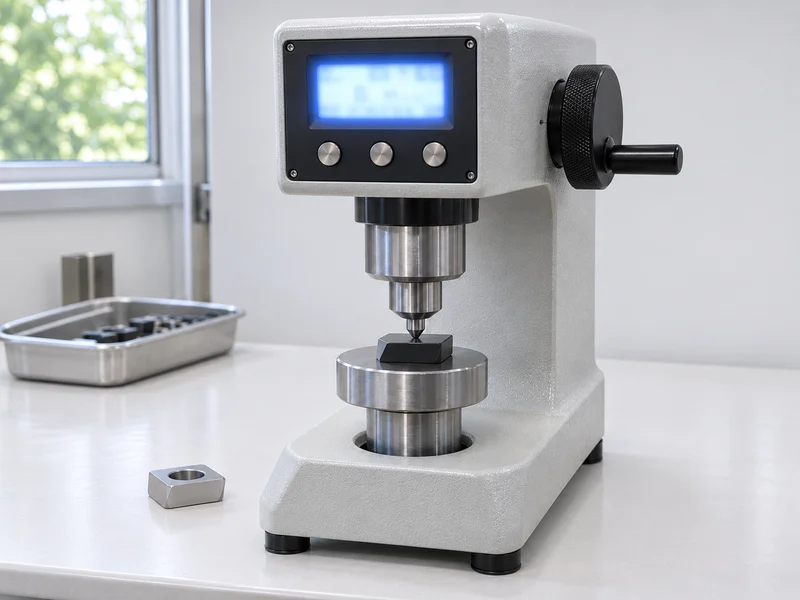
The difference between soft tooling vs hard tooling is mainly the steel hardness and the expected life.
| Feature | Soft tooling | Hard tooling |
|---|---|---|
| Material | Aluminum, P20 / 718H | H13, S136, other hardened steels |
| Hardness | Low to about 36 HRC | About 48–54 HRC |
| Typical life | Thousands to a few hundred thousand shots | Hundreds of thousands to millions |
| Lead time | Shorter | Longer |
| Tool cost | Lower | Higher |
| Changes | Easy to modify | Harder to modify |
For example, a P20 cavity can be welded and re-cut quickly for a design change; a hardened H13 cavity needs more careful repair. Our guides to P20 steel and H13 tool steel explain the materials.
Key Takeaway: Above all, hardness sets both the tool life and how easily the tool can change.
How Does Tool Life Compare?
Tool life compares by steel, resin and maintenance, and is often expressed with SPI classes.
| SPI class | Expected life | Typical steel |
|---|---|---|
| 101 | 1,000,000+ cycles | Hardened |
| 102 | Up to 1,000,000 | Hardened |
| 103 | Up to 500,000 | Pre-hardened or hardened |
| 104 | Up to 100,000 | Mild or pre-hardened steel, aluminum |
| 105 | Under 500 | Prototype materials |
For example, a 103-class mold in 718H suits a medium-volume consumer part, while a 101-class mold is used for high-volume caps. Mold classifications are published by the Plastics Industry Association; general standards are listed by ISO.
Key Takeaway: In other words, agree the mold class with the supplier before quoting.
How Do Soft Tooling vs Hard Tooling Compare on Cost and Lead Time?
Soft tooling vs hard tooling differ in cost and lead time mainly through heat treatment and machining.
- Soft tools skip hardening, so machining runs straight through
- Hard tools add heat treatment, hard milling, EDM and grinding
- Hard tools often have more cavities, adding cost
- Part cost is lower on hard tools at high volume
For example, a single-cavity soft tool may reach samples in a few weeks, while a hardened multi-cavity tool for the same part takes longer but makes parts at lower piece cost. Our guide to understanding injection mold cost explains the trade-off.
Key Takeaway: For this reason, compare total cost over the product’s life, not only tool price.
How Does Part Quality Compare?
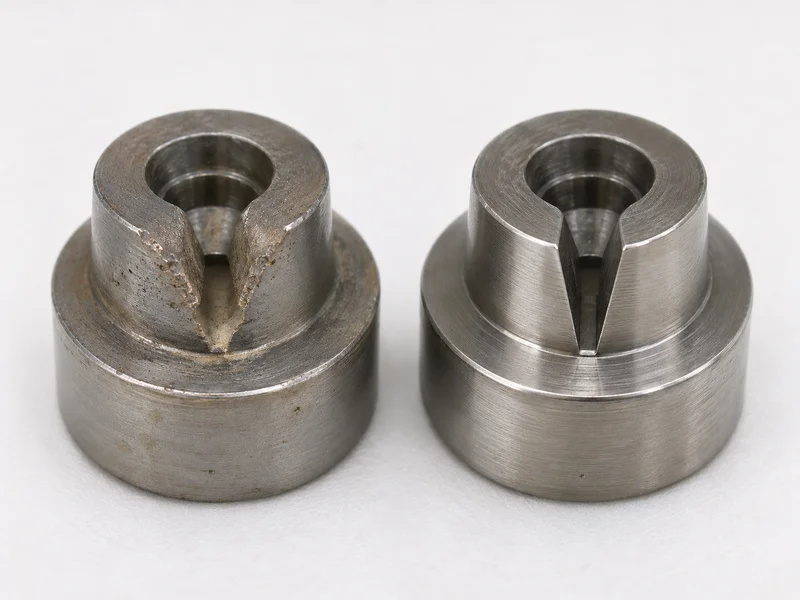
Part quality from soft and hard tools can be the same at first; the difference appears over time.
- Dimensions: both can meet tolerances when new
- Wear: soft tools wear at gates and shutoffs, causing flash and drift
- Finish: hard and stainless steels hold mirror polish longer
- Abrasive resins: wear soft tools quickly
For example, a soft tool running PA66 GF30 may begin to flash at the gate after a few tens of thousands of shots, while hardened inserts hold. Our guide to injection molding flash explains wear-related flash.
Key Takeaway: Overall, soft tools need more maintenance as shot count rises.
When Should You Choose Soft Tooling vs Hard Tooling?
You should choose soft tooling vs hard tooling based on volume, resin and design stability.
Choose soft tooling when:
- Volumes are low to medium
- The design may still change
- Speed to market matters most
- Resins are non-abrasive
Choose hard tooling when:
- Volumes are high or long-term
- Resins are filled or abrasive
- Tolerances and finishes are tight
- The design is frozen
For example, a startup’s first 10,000 housings suit a soft tool; the same part at 500,000 per year needs a hard tool. Our guide to prototype tooling covers earlier stages.
Key Takeaway: Equally, plan the switch from soft to hard tooling as part of the product roadmap.
Is There a Middle Option Between Soft and Hard Tooling?
There is a middle option: a pre-hardened mold with hardened inserts where wear is concentrated.
- Pre-hardened base and main cavities (P20 / 718H)
- Hardened inserts at gates, shutoffs and fine features
- Replaceable inserts for wear areas
- Nitriding of pre-hardened surfaces
For example, a medium-volume connector mold uses a 718H base with H13 inserts around the pins and gates. Our precision mold making projects often use this mixed approach for small and medium parts.
Key Takeaway: As a rule, harden only where the mold wears; keep the rest pre-hardened.
FAQ
- Q: What is soft tooling?
- Molds in aluminum or pre-hardened steel for prototypes and low to medium volumes.
- Q: What is hard tooling?
- Molds with hardened steel cavities and cores for high-volume production.
- Q: How long does a soft tool last?
- From thousands to a few hundred thousand shots, depending on material and resin.
- Q: Is hard tooling more accurate?
- Both can be accurate when new; hard tooling holds accuracy longer.
- Q: Can a soft tool be upgraded?
- Wear areas can be converted to hardened inserts in some designs.
Conclusion
Soft tooling vs hard tooling comes down to speed and flexibility versus life and durability. Use soft tools for early or changing designs, hard tools for high volume and abrasive resins, and consider a mixed design in between. To choose the right tooling for your part, send your 3D model and 2D drawing to our engineers.
Need support on your own project? Learn more about our injection mold manufacturing service or request a quote.